Quick Answer
Some people are better candidates for dental implants than others because implants rely on more than just replacing a missing tooth. Dentists look closely at jawbone density, gum health, bite alignment, overall health, and daily habits like smoking or teeth grinding to decide whether an implant is likely to heal well and stay stable over time. A person with healthy bone, stable gums, good oral hygiene, and no uncontrolled medical issues is usually a stronger candidate than someone with bone loss, active gum disease, or habits that put extra stress on the implant. The good news is that many factors can be improved before treatment, which is why a full evaluation matters so much.
If you're looking into dental implants, you're probably wondering whether you're a good candidate or whether you've already been ruled out. Candidates for implants don't need a simple yes or no. They need a clear explanation of what dentists look for.
That's why why some people are better candidates for dental implants than others comes down to evaluation, not guesswork. A strong implant candidate usually has the right mix of bone support, healthy gums, a manageable bite, and medical factors that allow the area to heal well.
Jawbone Density and Bone Health
A common surprise during an implant consultation is hearing that the missing tooth is only part of the story. The question is whether the bone underneath still has the height, width, and density needed to hold an implant steady while it heals.
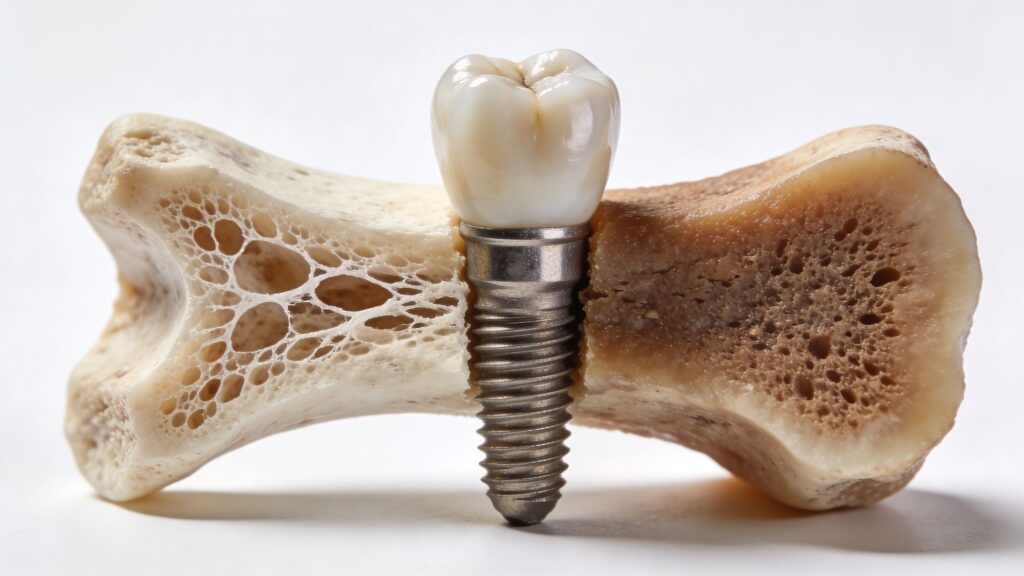
An implant works like a post set into the jaw. For that post to stay firm, the surrounding bone has to be thick enough and strong enough to bond to it. Dentists call that bond osseointegration. If the bone is too thin, too soft, or shaped poorly, the implant may not get the stable start it needs.

Why bone changes after a tooth is lost
The jawbone stays active when a tooth root is present because chewing sends pressure into the bone and tells the body to keep that area in use. Once a tooth is removed, that signal drops. Over time, the body may shrink the unused bone, especially in the area where the tooth once sat.
Patients often assume an empty space is mainly a cosmetic issue. In reality, the space can slowly become a structural issue too. A site that looked adequate right after an extraction may look very different months or years later.
What dentists are actually checking
Bone health is not a simple yes-or-no finding. A dentist is looking at several details at once:
| Bone factor | Why it affects implant planning |
|---|---|
| Height | The implant needs enough vertical bone to fit safely without getting too close to nearby structures |
| Width | The bone must be wide enough to surround the implant, not just hold it in a narrow ridge |
| Density | Denser bone usually gives better initial stability during healing |
| Shape | Uneven contours or defects can change implant position or require added treatment |
This is one reason the evaluation process matters so much. Two patients can both be missing a molar, but one may have a broad, healthy ridge while the other has a thin ridge that calls for a different plan.
Why 3D imaging changes the conversation
A standard exam and regular dental X-rays can raise useful clues, but they do not always show the full shape of the bone. Cone-beam computed tomography, or CBCT, gives a 3D view, which helps the dentist measure bone from multiple angles and spot limits that are easy to miss on a flat image.
At West Bell Dental Care, that technology-driven evaluation helps turn implant recommendations into something patients can understand. Instead of hearing a vague answer like "you may not have enough bone," patients can be shown where the bone is narrow, where it is strong, and what options still exist. If you want a simple overview of the treatment itself before getting into candidacy details, this guide on what are dental implants can help.
Helpful way to frame it: The question is not just whether bone is present. The question is whether there is enough healthy bone, in the right location and shape, to support the implant predictably.
If bone volume is low, that does not always end the discussion
Low bone volume does not automatically rule someone out. It often means the plan needs to be adjusted.
For one patient, the dentist may recommend a smaller implant or a different position. For another, bone grafting may be the safer route before implant placement. The overlooked part for many patients is that candidacy is often a process of measuring, comparing, and planning, not a snap judgment made from a quick glance.
Bone health can also connect to broader health habits, including nutrition. Patients who want to understand that bigger picture sometimes look into resources such as Benefits of Vitamin K2 for Your Health, though supplement questions should always be reviewed with your dental and medical team.
Gum Health and Periodontal Stability
Strong bone alone isn't enough. The gum tissue around an implant has to be healthy and stable too.
If bone is the foundation, gums are the seal around the foundation. When gums are inflamed or infected, bacteria can keep irritating the area around the implant and make healing less predictable.
Healthy gums versus irritated gums
Healthy gums usually look firm and fit snugly around the teeth. They shouldn't bleed easily during brushing or flossing.
Gums affected by periodontal disease often bleed, swell, recede, or pull away from the teeth. Some people don't notice much pain, which is one reason gum disease gets missed until the damage is more advanced.
A patient may say, "My tooth is gone, so why do the gums matter now?" They matter because implants still need healthy surrounding tissue. An implant doesn't get decay the way a natural tooth does, but the tissue around it can still become inflamed.
Why dentists may treat the gums first
If there's active periodontal disease, many dentists will want that under control before moving ahead. That's not a delay for the sake of delay. It's risk reduction.
Common pre-implant steps may include:
- Professional cleaning: To remove buildup and reduce inflammation.
- Scaling and root planing: To clean deeper below the gumline when periodontal disease is present.
- Home care improvements: Better brushing, flossing, and cleaning around the gum margin.
- Monitoring: To make sure the tissue stays stable before surgery.
Healthy gums don't just help you qualify for implants. They help protect the investment after the implant is placed.
For patients who want to strengthen daily habits before an implant consultation, this guide on how to maintain healthy gums can help you understand what stable gum care looks like at home.
The long-term issue
An implant needs a clean, low-inflammation environment to heal well and stay healthy over time. If the tissue is already struggling, the implant starts with a disadvantage.
That's one reason candidacy isn't just about replacing a missing tooth. It's about whether the mouth can support the implant before, during, and after healing.
Medical and Lifestyle Factors That Affect Candidacy
Two people can lose the same tooth and ask for the same treatment, yet one is approved for an implant right away while the other is asked to pause, treat a medical issue, or change a daily habit first. The difference often comes down to healing capacity, not how the tooth gap looks.
An implant works like a post that must bond with living bone over time. If the body has trouble delivering oxygen, controlling inflammation, or fighting infection, that bond can be harder to achieve and protect. This is one of the most overlooked parts of the evaluation process. At West Bell Dental Care, implant recommendations are based on more than a quick look at the mouth. They also depend on medical history, healing risk, and diagnostic findings that show whether the body is ready for surgery.
Smoking can slow the healing process
Smoking narrows blood vessels and reduces blood flow to healing tissue. Bone and gum tissue need that blood supply the way a construction site needs steady deliveries of lumber and concrete. If supplies keep arriving late, the project can still happen, but delays and weak points become more likely.
That is why dentists look closely at tobacco use before recommending implants. A patient who smokes may still qualify, but the plan may need more caution, clearer risk discussion, and better timing around surgery.
Health conditions can change how predictable healing will be
Some medical issues affect candidacy because they interfere with the body's repair system.
Common examples include:
- Uncontrolled diabetes: Healing may take longer, and infection can be harder to control.
- Active infections: Treatment often needs to wait until the infection is cleared.
- Immune-related conditions or medications: The healing response may be less predictable.
- Vitamin deficiencies or poor nutrition: Bone and soft tissue may not rebuild as efficiently.
- Inconsistent follow-up care: Small problems can grow before anyone catches them.
Patients are often surprised that an implant decision can involve primary care history, medications, and lab-related concerns. That is not overcautious dentistry. It is the evaluation process doing its job.
Healing is a months-long test, not a one-day event
Implant surgery is only the starting point. The question is whether the body can support healing week after week while the implant integrates with the bone.
That is why dentists ask about blood sugar control, smoking, autoimmune conditions, past radiation therapy, and medications that affect bone turnover. Each one can change the odds of stable healing. None of these factors automatically rules out treatment, but each may change the treatment sequence or the level of risk.
Daily habits shape candidacy too
Lifestyle is part of the medical picture. Home care, missed cleanings, and delayed follow-up visits may not sound as serious as a diagnosis, but they affect the environment around an implant after placement.
Regular dental visits are important for catching inflammation, infection, or early tissue breakdown before those problems threaten treatment. Patients who stay consistent with maintenance usually give implants a better long-term setting.
For older adults comparing age with overall health, this guide to dental implants for elderly patients explains why age alone is rarely the deciding factor.
A strong implant candidate does not need perfect health. They need a body, a routine, and a treatment plan that can support steady healing over time.
Bite Alignment and Bruxism
A patient can have enough bone, healthy gums, and a medical history that looks favorable on paper, then still run into trouble because of one overlooked factor. How the teeth meet, and how much force the jaw creates, can change whether an implant is being placed into a calm setting or a high-stress one.

Why your bite matters before the implant goes in
An implant is anchored in bone, but it does not have the same cushioning system as a natural tooth. Natural teeth are suspended by a ligament that helps absorb pressure. An implant is more like a post fixed directly into the jaw. That design is strong, but it also means poorly directed force matters more.
If your bite hits unevenly, one area may take repeated pressure every time you chew. If you clench or grind, that pressure rises even more, often during sleep when you are not aware of it. The evaluation process is meant to catch those patterns early, not after an implant has already been overloaded.
Signs of bruxism patients often miss
Many people who grind their teeth do not know they do it. The clues are often indirect and easy to dismiss as stress, a bad pillow, or a normal headache.
Common warning signs include:
- Flattened, worn, or chipped tooth edges
- Jaw tightness or soreness after waking
- Headaches near the temples
- Sensitive teeth without a clear cavity
- A partner hearing grinding at night
If those signs sound familiar, our guide on how to stop grinding teeth explains what causes bruxism and what can reduce the strain.
What dentists look for during implant screening
This part of candidacy is often overlooked because patients usually focus on bone quantity. Bite analysis asks a different question. Can the future implant live in a stable force pattern day after day?
At West Bell Dental Care, that review may include checking wear facets on the teeth, testing how the upper and lower teeth contact, examining jaw muscle tenderness, and using imaging to study implant position in relation to the bite. A small design choice, such as angle, width, location, or the shape of the final crown, can affect how force travels into the implant.
That is why bruxism does not automatically rule out treatment. It changes the planning.
How grinding is managed without ruling implants out
Patients with clenching or grinding often still receive implants, but the case may need extra protection. That can include a nightguard, bite adjustment, careful implant sizing, or changes to the crown so the implant is not asked to take more force than it should.
A simple comparison helps here. If an implant is the foundation post, the bite is the traffic pattern around it. A strong post still performs better when the traffic is directed evenly instead of hitting one side over and over.
Implant candidacy is not only about whether an implant can be placed. It is also about whether the bite will support it once everyday chewing and nighttime grinding begin.
Advanced Solutions for Low Bone Volume
A patient can hear "you do not have enough bone" and assume the door has closed. In many cases, a more specific answer applies. The question is not only how much bone is there. The question is whether the site has the right height, width, shape, and strength to hold an implant safely over time.
That difference matters.
Low bone volume is often treated like a simple yes-or-no problem, but implant planning works more like checking whether a house site can support a foundation. A narrow ridge, a shallow sinus area, or bone that has thinned after years without a tooth may call for different solutions. At West Bell Dental Care, the evaluation often focuses on matching the solution to the anatomy instead of assuming every patient needs the same path.
Comparing the main paths
Here is a practical look at options that may come up when bone is limited:
| Option | Best fit | Main trade-off |
|---|---|---|
| Traditional bone grafting | When the site needs more bone volume before an implant can be placed predictably | Longer healing period before the final implant stage |
| Short implants | When there is limited vertical bone and the area may still support an implant without building as much new bone | Case selection is strict, and bite forces still have to be managed carefully |
| Bioactive surfaces and newer materials | When the goal is to support healing and integration in a site with less-than-ideal conditions | Material choice helps, but it does not replace careful planning |
The main point is simple. Low bone does not always mean "no implant." It often means the dentist has to measure more carefully and choose a different strategy.
How dentists sort out which option fits
Bone grafting adds support where support is missing. Short implants reduce the amount of depth needed. Surface technologies and implant design may help the implant integrate with bone more effectively. Each option solves a different problem, so they are not interchangeable.
A useful comparison is a fence post. If the ground is shallow, you can sometimes use a shorter post in the right setting. In other spots, the ground itself has to be built up first. The right answer depends on the site, not just the label of "bone loss."
That is why this stage of implant candidacy is often overlooked by patients. People tend to focus on one phrase from an X-ray report, while the dentist is studying several details at once. Bone width, bone height, proximity to nearby anatomy, and expected chewing forces all affect the recommendation.
Where this matters for long-term planning
Bone can shrink gradually after a tooth is lost, especially over many years. That makes timing important. A site that could accept one type of implant today may need grafting later if more bone is lost.
General bone health also matters. Patients who are working on how to improve bone density naturally may already be thinking about the bigger picture, but jawbone quality still needs to be checked directly with dental imaging and an exam.
The practical takeaway
Some patients need grafting before implant placement. Some may qualify for a shorter implant. Others may be better served by a different tooth-replacement option.
Low bone volume is one finding, not a final verdict. The overlooked part of implant candidacy is the evaluation process behind the recommendation, where anatomy, healing ability, and technology-guided measurements help determine what is realistic and what is likely to last.
Clinical Evaluation Process at West Bell Dental Care
Most patients expect an implant consultation to be a quick look and a yes or no. A proper evaluation is much more detailed than that.
The first goal is to understand why the tooth was lost, what the surrounding tissue looks like now, and whether the area can support a replacement predictably. That's where digital records and a structured exam become useful.

What a full implant workup usually includes
A thorough consultation may involve several pieces of information collected together, not one single test.
That often includes:
A clinical exam
The dentist checks the missing-tooth area, neighboring teeth, gum condition, and overall oral health history.Digital X-rays or 3D imaging
These images help assess bone shape, bone availability, and nearby structures.Bite analysis
The dentist checks how the teeth meet and whether heavy force may be concentrated in one area.Medical review
Smoking, diabetes control, medications, and healing risks all matter.
Why this process helps patients
This kind of evaluation reduces surprises. Instead of hearing "you need an implant," the patient learns what has to be true for the implant to work well.
At West Bell Dental Care, implant consultations begin with a thorough evaluation and digital diagnostics so patients can understand whether implants fit their specific situation. That matters for families, working adults, and retirees who want clarity before committing to treatment.
A good implant consultation should answer two questions clearly. "Can this work?" and "What needs to happen first if it can't work yet?"
What patients often learn at this visit
Some patients find out they're ready now. Others learn they need gum treatment, bite adjustment, or more healing time first.
That's not bad news. It's useful information. In many cases, a careful workup turns an uncertain situation into a realistic plan with defined next steps.
Improving Your Candidacy Before Treatment
Implant candidacy can often be improved before treatment starts. For many patients, the goal is not to force the implant to happen right away. The goal is to prepare the mouth and body so the implant has a better chance to heal and stay stable for years.

Steps that can move you closer
A delayed green light is still a plan.
At this stage, the question changes from "Am I a candidate right now?" to "What needs to improve first?" That shift helps patients understand why dentists sometimes recommend a short period of treatment, healing, or habit changes before placing an implant.
Common next steps include:
- Stopping smoking or cutting back: Healing depends on blood supply, and smoking can interfere with it.
- Treating gum disease: Inflamed gums are poor support for any long-term dental work, just like soft ground is poor support for a fence post.
- Improving control of medical conditions: Better blood sugar control and regular medical follow-up can support healing.
- Managing clenching or grinding: A nightguard or bite adjustment can lower the repeated pressure placed on an implant.
- Supporting bone health: Diet, daily habits, and your physician's guidance may help maintain stronger bone over time.
Preventive care also plays a role. Ongoing gum infection can lead to tooth loss and bone shrinkage, which makes future implant planning harder. For patients working on overall bone health, general education on how to improve bone density naturally can be useful alongside advice from a dentist and physician.
Bone support takes time
Bone rarely changes overnight. It behaves more like a garden bed than a light switch. If the area has lost volume, it may need grafting and healing time before it can support an implant securely.
In some cases, the issue is timing after an extraction. In others, the bone has thinned enough that the site needs to be rebuilt first. As noted earlier, one outside dental source explains that grafting can extend treatment by several months, which helps set realistic expectations for patients instead of making the process feel like a surprise.
What this means in real life
A patient may come to West Bell Dental Care worried that waiting has closed the door on implants. Often, the evaluation shows something more encouraging. The door may still be open, but a few conditions need to be corrected first.
That is what makes the evaluation process so important. It turns a vague "maybe" into a sequence of practical steps. Get the gums healthier. Reduce excess bite force. Improve healing conditions. Recheck the site with imaging. Then decide whether the foundation is ready.
Alternatives When Implants Aren't Suitable
Implants are a strong option for many people, but they aren't the only way to replace missing teeth. If your evaluation shows that implants aren't the right fit right now, you still have workable choices.
Bridges
A bridge fills the gap by attaching to neighboring teeth. This can be a useful option when the teeth next to the space are healthy enough to support it and the bite is favorable.
The trade-off is that a bridge depends on adjacent teeth. It doesn't function the same way as an implant placed directly in the bone.
Dentures and partial dentures
Removable dentures replace missing teeth without implant surgery. For some patients, especially those replacing many teeth, dentures are the most practical path.
They do require adjustment over time, and some people find them less stable than fixed options. Still, they remain an important restorative choice.
Overdentures and other hybrid options
Some patients do best with a removable option designed for more support and function than a traditional denture. The right choice depends on bone, dexterity, comfort preferences, and budget.
If you're comparing fixed and non-fixed options, this page on dental implants vs bridges gives a clearer side-by-side look at one of the most common decisions.
FAQ
Q: Am I too old for dental implants?
A: Age alone usually isn't the deciding factor. Bone quality, gum health, healing ability, and your medical history matter more than the number on your birthday. Many older adults are candidates after a proper evaluation.
Q: Can I get dental implants if I've had gum disease?
A: Sometimes, yes. Active gum disease usually needs treatment first because inflamed or infected tissue can affect healing and long-term stability. Once the gums are healthy and stable, the dentist can reassess candidacy.
Q: What if I don't have enough jawbone for an implant?
A: That doesn't always mean implants are impossible. Some patients need bone grafting, while others may qualify for a different implant design or a different tooth replacement option. The decision depends on imaging, bite forces, and the location of the missing tooth.
Q: Does smoking automatically disqualify me?
A: Not automatically, but it raises the risk level. Smoking can interfere with blood flow and healing, so your dentist may recommend quitting or reducing smoking before treatment. The more predictable the healing environment, the better.
Q: How do I know if I grind my teeth?
A: Common clues include flattened teeth, chipped edges, jaw soreness, and morning headaches. Some people only find out because a partner hears grinding at night. Your dentist can often spot wear patterns during an exam.
Q: How long does it take to become a better implant candidate?
A: It depends on what's being corrected. Gum treatment may take less time than rebuilding bone, and bone grafting can add several months to the process. Your timeline should be based on your specific exam findings.
Q: Are dental implants painful?
A: Most patients are more concerned about the idea of implant surgery than the actual experience. Discomfort levels vary, but the procedure is planned carefully and aftercare instructions are given to support healing. Your dentist can explain what to expect based on your case.
Q: If implants aren't right for me, do I still have good options?
A: Yes. Bridges, dentures, and other restorative options can still replace missing teeth and improve function. The best choice depends on your oral health, goals, and what kind of maintenance you want.
Dr. Jennifer Wynn's approach combines modern digital imaging with clear, pressure-free conversations, which is especially helpful when implant candidacy isn't obvious on the surface. Patients from Surprise, Sun City, Marley Park, and nearby West Valley neighborhoods can get a careful evaluation built around their real anatomy, health history, and goals.
West Bell Dental Care also offers a wide range of confirmed restorative and supportive services, including implants, bridges, dentures, X-rays, preventive care, anxiety-friendly treatment, and Botox. That gives patients a practical advantage when the best solution isn't the same for every person.
If you'd like help figuring out whether dental implants make sense for your situation, West Bell Dental Care is located at 16581 W. Bell Rd., Suite 108, Surprise, AZ. You can learn more or request a visit through westbelldentalcare.com/contact/ or start with westbelldentalcare.com/schedule-your-next-appointment/.
Sources
Northpointe Family Dental. "Am I a Candidate for Dental Implants?" Year not provided. https://www.northpointefamilydental.com/am-i-a-candidate-for-dental-implants.php
Smile Solutions of Maine. "Why Are More People Getting Dental Implants?" Year not provided. https://smilesolutionsofmaine.com/why-are-more-people-getting-dental-implants/
Spectrum Dental. "When Implants Aren't an Option. Factors That Make You a Bad Candidate for Implants." Year not provided. https://www.spectrum-dental.com/post/when-implants-arent-an-option-factors-that-make-you-a-bad-candidate-for-implants
Dr. Wudds. "What Makes a Good Candidate for Dental Implants?" Year not provided. https://www.drwudds.com/what-makes-a-good-candidate-for-dental-implants/
Lifetime Smile DDS. "Is Age a Factor in Being a Good Candidate for Dental Implants?" Year not provided. https://www.lifetimesmiledds.com/blog/is-age-a-factor-in-being-a-good-candidate-for-dental-implants/