
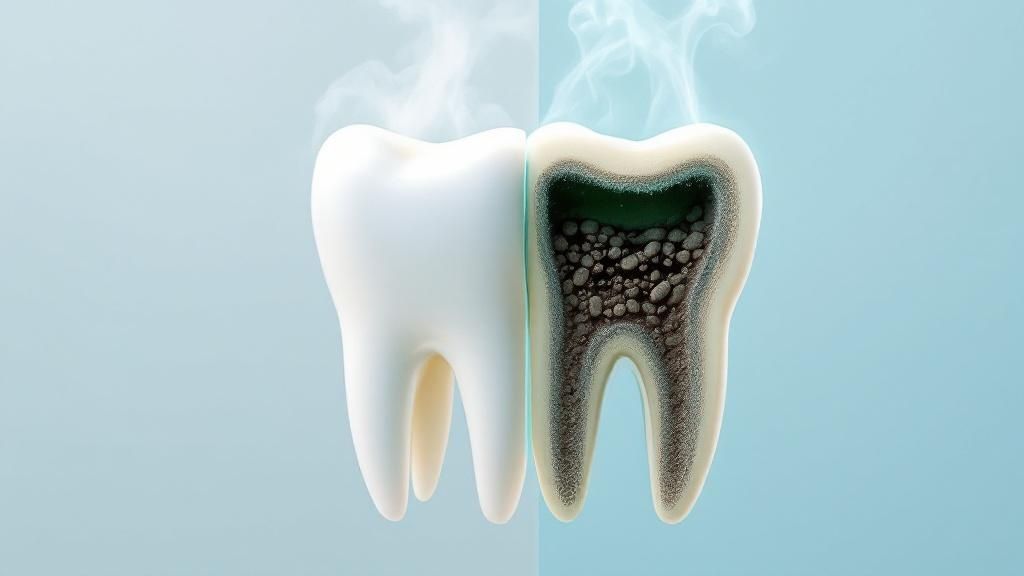
Let's get straight to the point: yes, a cavity is a very common cause of persistent bad breath. If you've been brushing, flossing, and using mouthwash but a foul odor just won't go away, a hidden cavity could absolutely be the culprit.
We understand this can be a frustrating and sensitive issue. At West Bell Dental Care, we want to empower our patients in Surprise, AZ, with clear, friendly information to get their confidence back.
How a Simple Cavity Causes Bad Breath
Think of a cavity less like a simple hole and more like a sheltered hideout. It's a place where odor-causing bacteria can thrive, completely safe from your toothbrush and floss.
When tooth decay breaks through your tooth's hard outer enamel, it creates a tiny cave. This space becomes the perfect trap for food particles and, more importantly, a breeding ground for harmful oral bacteria.
These bacteria feast on trapped food particles. As they digest these leftovers, they release smelly sulfur compounds that cause bad breath, clinically known as halitosis. It's a very real biological process happening right inside the tooth.
As decay worsens, it creates the ideal environment for these bacteria to multiply and produce the gases that create that distinct, foul smell. This simple chart breaks down exactly how a cavity can lead to these malodorous gases.
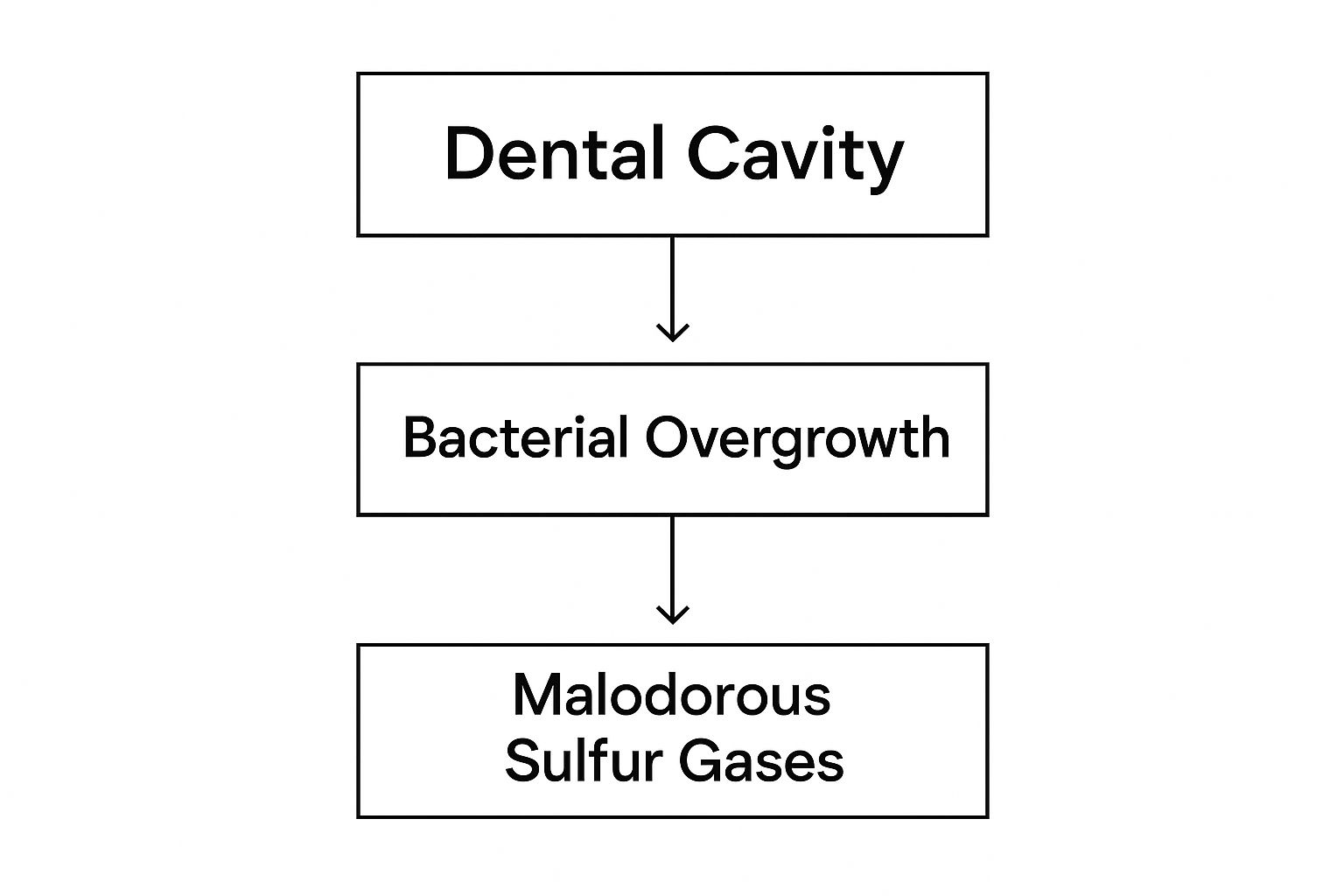
How Cavities Create Bad Breath at a Glance
| The Problem | How It Happens | The Resulting Odor |
|---|---|---|
| Bacterial Overgrowth | A cavity forms a protected pocket where bacteria can multiply without being disturbed by brushing or flossing. | A general musty or sour smell from the sheer number of bacteria. |
| Trapped Food Particles | The hole in the tooth traps tiny bits of food, providing a constant food source for bacteria to break down. | A rotting food smell, which can be quite potent and noticeable. |
| Sulfur Compound Release | As bacteria consume sugars and food debris, their metabolic process releases volatile sulfur compounds (VSCs). | The classic "rotten egg" or sulfurous smell directly associated with halitosis. |
As you can see, the connection is direct and biological. The decay itself creates the perfect storm for bad breath. This guide will walk you through why this happens, what other signs to look for, and how we provide gentle, effective solutions right here at West Bell Dental Care.
Why Tooth Decay and Bad Breath Go Hand in Hand
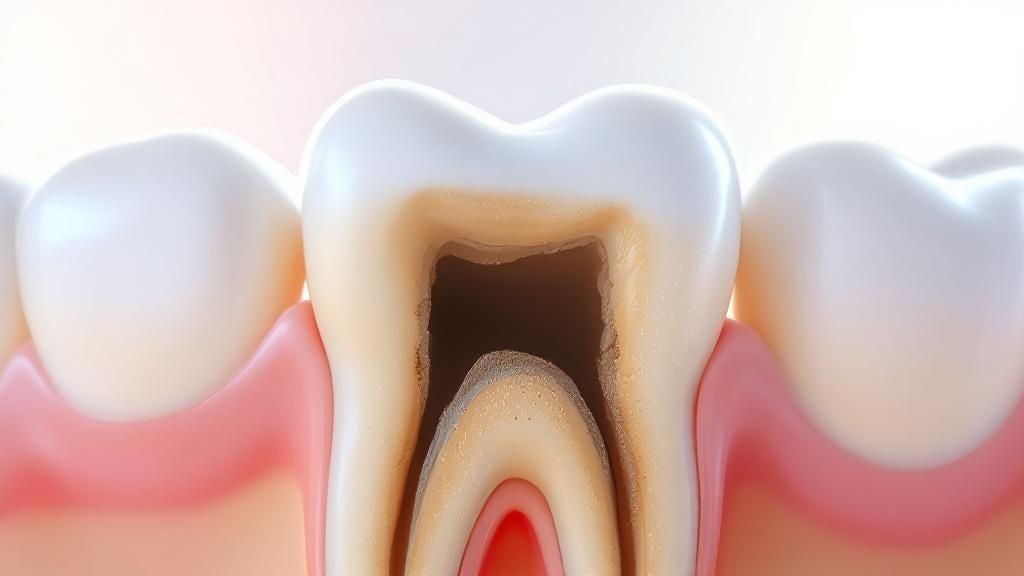
Think of your tooth's enamel as a perfectly smooth, protective wall. When tooth decay starts, it’s like a tiny crack appearing in that wall, creating a small cave that’s impossible to clean with your toothbrush or floss.
This new hideout becomes the perfect sheltered home for harmful bacteria. Safe from your daily hygiene routine, they multiply and feast on sugars and starches left behind from your meals.
As the bacteria chow down, they release waste products known as Volatile Sulfur Compounds (VSCs). These compounds are the direct source of that distinct and unpleasant "rotten egg" smell often linked to halitosis, or chronic bad breath. It's a real biological process happening right inside that cavity.
The Science Behind the Smell
The connection between cavities and bad breath is a well-documented dental reality. According to the CDC, over 90% of U.S. adults have had a cavity, making it an incredibly common source of bad breath.
When plaque bacteria build up, they produce acids that eat away at tooth enamel, creating those smelly pockets. The cavity itself is a symptom of the same bacterial activity that generates the foul odor.
This is exactly why mouthwash and mints are only temporary fixes. They simply mask the smell but can’t get to the root of the problem—the thriving colony of bacteria tucked away inside the tooth. The only way to stop the smell for good is to have a dentist professionally treat the decay.
Key Takeaway: A cavity is far more than just a hole; it's an active bacterial infection. The bad breath you notice is a direct byproduct of this infection, and it won’t go away until the decay is professionally removed.
If you suspect a hidden cavity might be the reason for persistent bad breath, it helps to know what to look for. You can learn more by checking out our guide on what cavities look like.
Other Warning Signs of a Hidden Cavity
Bad breath is often just one piece of the puzzle. A cavity can announce its presence in several other ways, and we often hear from patients in Peoria and Sun City West who notice a combination of these signs.
You might feel a sudden, sharp pain when you sip a hot coffee or bite into ice cream. That tooth sensitivity is a classic signal that your enamel—the tooth's protective outer layer—has been weakened.
Another common red flag is a persistent foul or even metallic taste in your mouth that just won't go away, no matter how much you brush. Sometimes, you might even see a small hole or a dark spot on your tooth's surface.
Common Symptoms Beyond Bad Breath
While a cavity can certainly make your breath stink, it's crucial to look for the other clues that point toward tooth decay. Recognizing these signals is the first step toward getting the care you need at West Bell Dental Care.
Keep an eye out for these tell-tale signs:
- Tooth Sensitivity: A sudden, sharp pain when your tooth hits anything hot, cold, or sweet.
- Persistent Pain or a Toothache: This can be a mild, dull ache that just hangs around or a throbbing pain that makes it hard to focus.
- Pain When Biting Down: If you feel a jolt of pain just from chewing, it’s a strong indicator that decay has compromised the tooth’s structure.
- Visible Holes or Pits: Sometimes you can actually see or feel a hole in your tooth with your tongue.
Halitosis, or bad breath, is incredibly common and affects many people. Cavities are a major contributor because they create the perfect hiding spots for bacteria. You can discover more insights about bad breath on Healthline.com.
Ultimately, treating the decay at its source with modern dental fillings in Surprise, AZ is the only truly effective way to restore both your tooth's health and your confidence.
How We Treat Cavities to Restore Fresh Breath
When we find a cavity, the good news is that the fix is usually straightforward, and we design the whole process for your comfort. Here in our Surprise, AZ, dental office, our focus is on gentle, effective treatment that gets rid of the decay and the bad breath it causes.
The process is often much simpler than people think. First, we’ll carefully numb the area around the tooth to ensure your experience is completely pain-free. We understand that dental anxiety is real, and our team is committed to making you feel comfortable and at ease.
Next, your dentist will gently clear out the decayed portion of the tooth, meticulously cleaning away all the harmful bacteria and debris. This step is crucial for getting rid of bad breath because it removes the source—that colony of bacteria hiding inside the cavity.
Restoring Your Tooth and Your Smile
Once all the decay is gone, the last step is to rebuild the tooth’s strength and shape with a strong filling. We use modern, tooth-colored composite fillings that blend in perfectly with your natural teeth.
This procedure does more than just patch up the tooth; it permanently evicts the bacteria's hiding spot. By sealing the area, we get rid of the source of the persistent odor, letting your breath get back to normal.
In some cases, decay can be deeper, reaching the tooth's sensitive inner pulp. This can cause a lot of pain and a particularly strong odor. Even then, to save the tooth and stop the infection, we might perform a root canal here in our Surprise, AZ office.
You’ll walk out of our office with a tooth that’s not only healthier and stronger but also with the confidence that comes from having genuinely fresh breath.
Preventing Cavities for Lasting Oral Health
The old saying "an ounce of prevention is worth a pound of cure" couldn't be more true when it comes to cavities. The best way to deal with bad breath from tooth decay is to stop it from starting in the first place.
This all boils down to a simple, consistent daily routine: brushing your teeth twice a day for a full two minutes and flossing every single day. Flossing is non-negotiable because it’s the only way to clear out plaque from between your teeth.
What you eat and drink plays a huge role, too. Cutting back on sugary sodas and acidic foods helps starve the very bacteria that cause all the trouble.
The Critical Role of Saliva and Hydration
Here's a simple but powerful strategy: stay hydrated. Drinking plenty of water helps your body produce enough saliva, which is your mouth's built-in cleaning crew. It constantly washes away food particles and neutralizes the acids that attack your tooth enamel.
Saliva is a true unsung hero in the fight against cavities. When saliva production drops—a condition we call dry mouth—your risk for both cavities and halitosis skyrockets.
A Proactive Approach: Your diet is a cornerstone of prevention. To support lasting oral health, understanding the broader benefits of reducing sugar intake can be a huge motivator.
For our patients here in El Mirage and the surrounding areas, our guide to avoiding cavities offers a deeper dive into at-home care. Still, nothing takes the place of your regular six-month check-ups and cleanings here at West Bell Dental Care. These visits are essential for spotting potential issues long before they become bigger problems.
Frequently Asked Questions
We hear a lot of the same questions from our patients in the Surprise, AZ area when it comes to cavities, bad breath, and what treatment really involves. Here are some of the most common ones we answer.
If I get my cavity filled, will my bad breath go away?
Yes, in most cases, filling a cavity resolves the bad breath it was causing. By cleaning out the decay and bacteria and sealing the tooth, we eliminate the source of the odor. You should notice a significant improvement almost immediately.
What if my bad breath continues after my cavity is treated?
If bad breath persists after your filling, it could be a sign of another issue, like gum disease or bacteria on your tongue. We encourage you to schedule a follow-up visit at our Surprise office so we can help identify the underlying cause and find the right solution.
Can mouthwash cure bad breath from a cavity?
Mouthwash is only a temporary fix. While it can mask the odor for a short time, it cannot treat the source of the problem—the bacteria thriving inside the decayed tooth. A dental filling is the only way to permanently solve cavity-related bad breath.
How often should I get a dental check-up in Surprise, AZ?
We recommend that all our patients, from families in Surprise to retirees in Sun City West, visit West Bell Dental Care for a check-up and professional cleaning every six months. These regular appointments are key to preventing cavities and catching any issues early. You can learn more about our general dental care in Surprise, AZ.
Does West Bell Dental Care offer emergency dental appointments?
Yes, we do. We understand that dental emergencies like a severe toothache can't wait. We set aside time in our schedule to help patients from Surprise, El Mirage, and surrounding communities with urgent dental needs.
If you think a cavity might be the cause of your bad breath, please don't wait for it to get worse. Contact West Bell Dental Care today to schedule a comfortable, judgment-free consultation. Let us help you get your healthy smile and fresh breath back. Book your appointment online or give our Surprise office a call.