
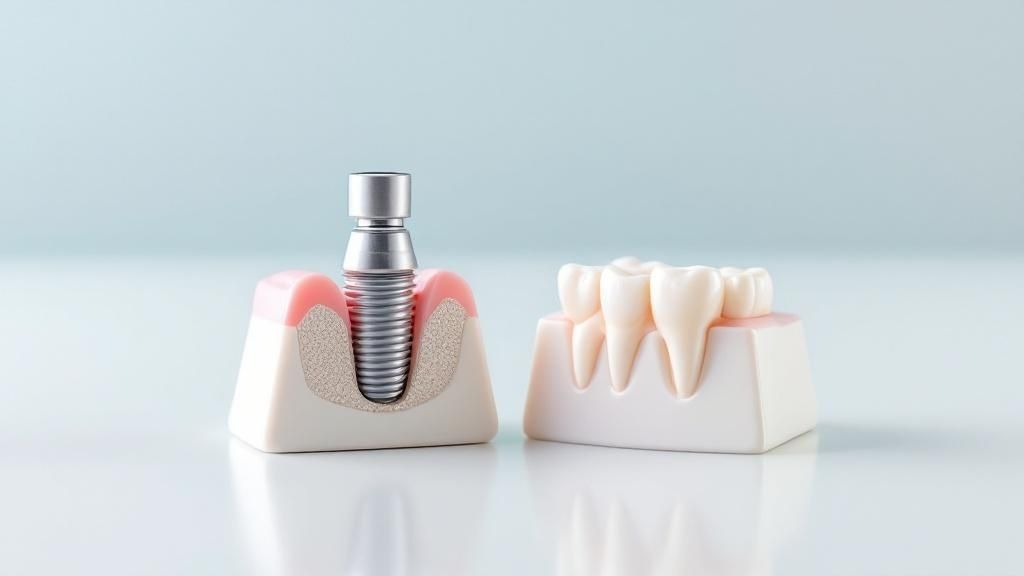
When you have a gap in your smile, the decision on how to fix it can feel overwhelming. The choice usually boils down to two excellent solutions: dental implants and dental bridges. At its core, the difference is simple: a dental implant acts as a completely new, standalone tooth with its own artificial root, while a dental bridge uses the neighboring teeth as anchors to quite literally "bridge" the empty space.
Deciding which is right for you depends on your long-term health goals, your budget, and what feels most comfortable for you personally. At West Bell Dental Care, we're here to guide our neighbors in Surprise, Sun City, and Peoria through this important choice.
Restoring Your Smile: A Guide to Dental Implants and Bridges
Choosing how to replace a missing tooth is a big deal. It’s about more than just filling a gap—it’s about restoring your bite, protecting your jawbone, and feeling confident in your smile again. For our patients in Surprise, AZ, understanding the real-world differences between implants and bridges is the first step.
This isn't just a local issue. According to the American College of Prosthodontists, an estimated 178 million Americans are missing at least one tooth, which shows just how many people are facing this same decision. It’s a common problem with very effective solutions. You can dive deeper into these dental market trends at Precedence Research if you're curious.
At West Bell Dental Care, we want to give our patients clear, honest information. Let's break down these two popular restorative options.
Quick Look: Dental Implants vs. Bridges
To get a clearer picture, it helps to see the two options side-by-side. This table gives you a quick snapshot of the key differences.
| Feature | Dental Implant | Dental Bridge |
|---|---|---|
| Structure | A titanium post is surgically placed in the jawbone, acting as a new root for a crown. It's a standalone unit. | An artificial tooth (pontic) is held in place by crowns attached to the two adjacent natural teeth (abutments). |
| Impact on Other Teeth | Doesn't affect or rely on neighboring teeth, preserving their natural structure. | Requires permanently altering the adjacent healthy teeth by filing them down to fit the support crowns. |
| Jawbone Health | Actively stimulates and preserves jawbone density, preventing the bone loss that occurs after tooth loss. | Does not stimulate the jawbone, which can lead to gradual bone deterioration under the bridged gap over time. |
| Lifespan & Durability | Considered a permanent solution, often lasting a lifetime with proper oral hygiene and regular dental checkups. | Typically lasts 5-15 years before it may need to be replaced due to wear or issues with the supporting teeth. |
Think of it this way: an implant rebuilds a tooth from the root up without involving any other teeth. A bridge, on the other hand, is more of a team effort, relying on its neighbors for support. Both are fantastic solutions, but they get the job done in very different ways.
What Is a Dental Implant? The Gold Standard Solution
When you're looking to replace a missing tooth, it's best to think about rebuilding the entire structure—not just the part you see when you smile. A dental implant does exactly that. It's what dentists consider the gold standard because it's a complete, permanent replacement built from the root up.
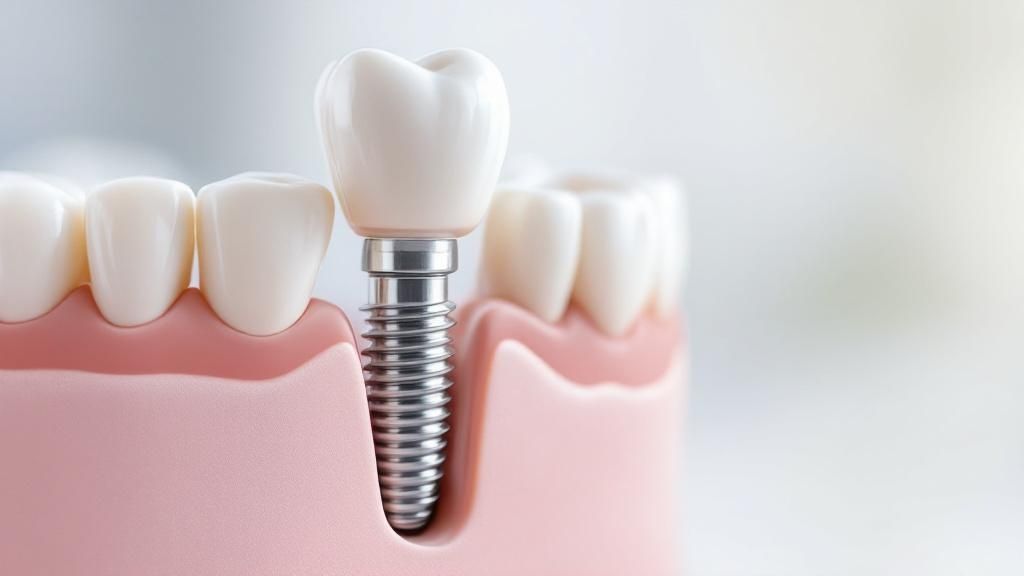
An implant is a standalone solution that doesn’t need any support from its neighbors. This is a huge difference when comparing dental implants vs. bridges, as it preserves the integrity of your healthy, natural teeth.
The Three Parts of a Dental Implant
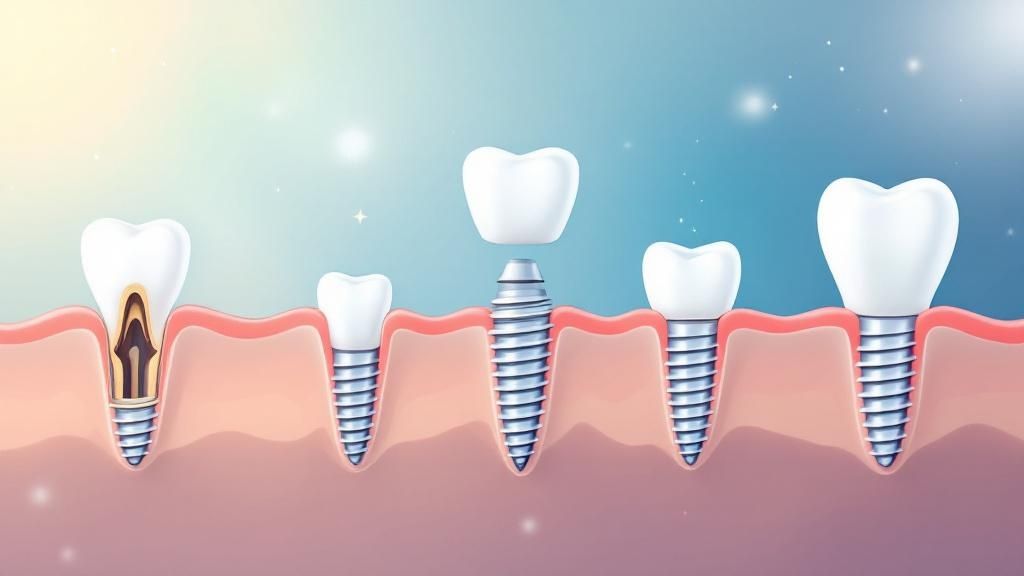
A dental implant is a sophisticated device, but it breaks down into three core components that work together to perfectly mimic a natural tooth. Understanding how these parts function helps explain why this solution is so incredibly effective and durable.
- The Titanium Post (Fixture): This is the very foundation of your new tooth. It's a small, biocompatible screw—usually made of titanium—that we surgically place into your jawbone. It quite literally acts as the new tooth root.
- The Abutment: Think of this as a small connector piece. It attaches to the top of the implant post after it has healed and sits right at the gumline. Its job is to serve as the bridge between the implant post and the final crown.
- The Crown: This is the part everyone sees—the tooth-colored part of the replacement. We custom-make the crown to match the color, shape, and size of your surrounding teeth. It's securely attached to the abutment, completing your beautiful and functional new smile.
The Magic of Osseointegration
The real genius behind a dental implant is a natural biological process called osseointegration. This is where the magic really happens. After the titanium post is placed, your jawbone naturally grows around and fuses with it over a few months.
Key Insight: Osseointegration is what makes a dental implant feel and function exactly like a natural tooth. The implant becomes a permanent, integrated part of your jaw, providing unparalleled stability that no other tooth replacement option can offer.
This fusion is critical. It does more than just hold the implant securely in place; it actively stimulates the jawbone, just like a natural tooth root would. This stimulation prevents the bone loss that inevitably occurs when a tooth is missing, helping to maintain your facial structure and overall oral health for years to come. It’s a key reason why so many patients in Surprise and Sun City West choose this option for their long-term health.
The success rate for dental implants is incredibly high, often above 95%, making it one of the most reliable procedures in modern dentistry. With the right care, an implant is truly designed to last a lifetime.
At West Bell Dental Care, we specialize in helping patients figure out if this is the right solution for them. You can learn more about our approach by exploring our guide to dental implants in Surprise, where we detail the process from start to finish. Our team is here to ensure you receive a permanent, beautiful tooth that restores your confidence and ability to eat, speak, and smile without a second thought.
Understanding Dental Bridges: The Trusted Alternative
While dental implants are a fantastic modern solution, dental bridges are the trusted, time-tested, and highly effective alternative. For many of our patients here in Surprise, AZ, and the surrounding communities, a bridge is an excellent choice that restores both function and aesthetics, often much more quickly.
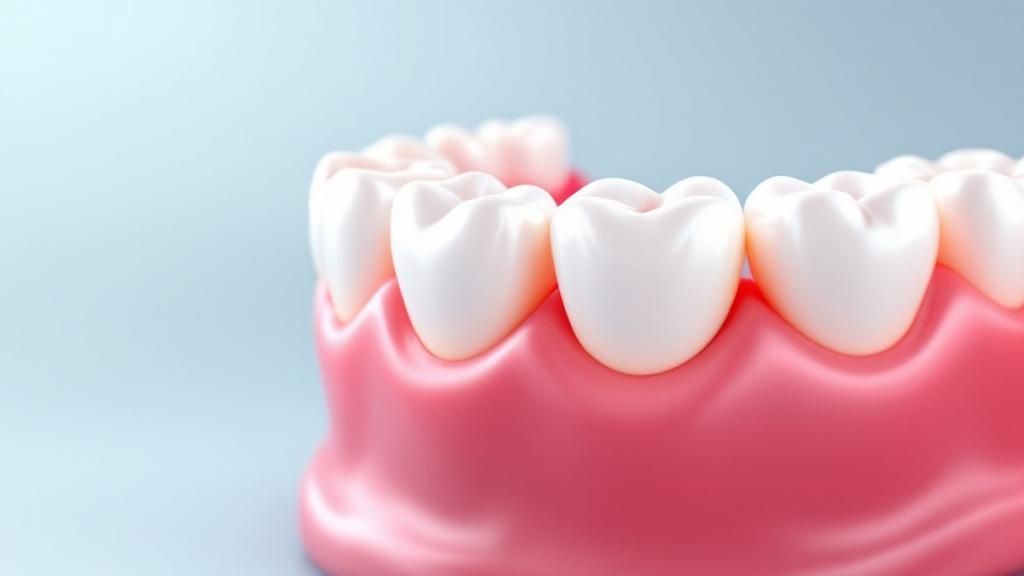
Think of it literally—a bridge that 'bridges the gap' left by one or more missing teeth. It works by anchoring a custom-made artificial tooth, called a pontic, between two dental crowns. Those crowns are then fitted onto the healthy teeth on either side of the gap, known as abutment teeth, giving your new smile strong and stable support.
The Mechanics of a Dental Bridge
The process for getting a dental bridge is quite straightforward and is usually finished in just a couple of visits to our Surprise office. First, we need to carefully prepare the abutment teeth. This involves reshaping them slightly to ensure the support crowns will have a precise and secure fit.
After that, we take detailed impressions of the area, which the dental lab uses to craft your custom bridge. Once your permanent bridge is ready, it's cemented firmly into place. This instantly fills the gap, restoring your ability to chew and speak with complete confidence. There's a reason this method has been a cornerstone of restorative dentistry for so long—it simply works.
Key Insight: One of the biggest advantages of a dental bridge is the speed of treatment. An implant needs months to fully integrate with the jawbone, but a custom dental bridge can often be designed, created, and permanently placed within just a few weeks.
Different Types of Dental Bridges
The traditional bridge is definitely the most common, but depending on your specific situation, our dentists at West Bell Dental Care might recommend another type. We always take the time to evaluate each patient's unique needs, from Sun City to Peoria, to find the perfect fit.
- Cantilever Bridge: This type is a great solution when there's only one healthy tooth next to the gap to act as an anchor. The pontic is supported on just one side, making it a viable choice for certain areas of the mouth.
- Maryland Bridge: A more conservative approach, the Maryland bridge uses a metal or porcelain framework that is bonded to the back of the adjacent teeth. This is a big plus because it avoids the need to place full crowns on those abutment teeth.
Each type of bridge has a specific purpose, and the best choice really depends on factors like where the missing tooth is and the health of the surrounding teeth. Understanding these options is a critical part of the conversation when you're weighing dental implants vs. bridges.
Why Choose a Bridge
Bridges are a popular and reliable way to replace missing teeth, and they aren't going away anytime soon. The global dental bridges market was valued at $1.06 billion and is expected to grow as more people look for ways to restore their smiles.
A bridge is often a fantastic choice for patients who want a quicker solution or for those who might not be good candidates for implant surgery. At West Bell Dental Care, we expertly craft and place these restorations to make sure they look completely natural and last for many years to come. To learn more about how we can help restore your smile, you can find detailed information on our page about dental bridges in Surprise.
Procedure vs. Long-Term Health: A Critical Comparison
When you're looking at filling a gap in your smile, the decision between a dental implant and a bridge goes much deeper than just the final result. You’re choosing between two completely different journeys, each with its own significant, long-term impact on your overall oral health. Understanding these differences is key to making a choice you'll be happy with for years.
The path for a dental bridge is relatively straightforward and doesn't involve surgery. It usually takes just two appointments at our Surprise, AZ, office. In the first visit, we’ll prepare the teeth next to the gap, take some precise impressions, and fit you with a temporary bridge. A couple of weeks later, your permanent, custom-made bridge is bonded into place. That's it.
On the other hand, getting a dental implant is a more involved, multi-stage surgical process. It begins with the placement of a titanium post directly into your jawbone. This is followed by a healing period of several months, which allows the bone to fuse to the implant—a critical process called osseointegration. Only after this fusion is solid can we attach the final crown.
This image helps break down some of the key decision points when comparing these two excellent options.
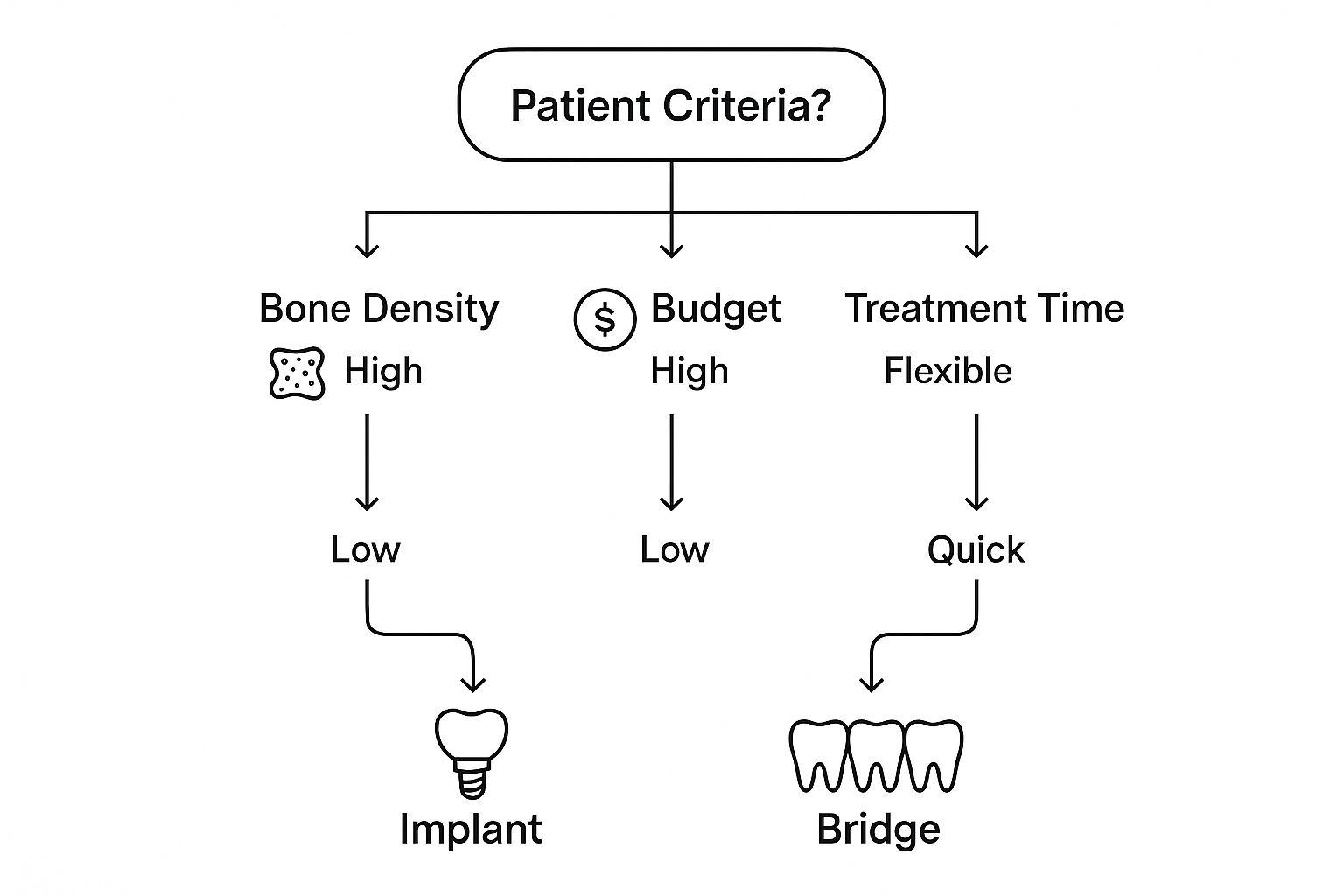
As you can see, factors like the health of your jawbone, your budget, and how quickly you need a solution all play a huge role in guiding you toward one option over the other.
The Critical Role of Jawbone Preservation
Here’s where we see the most significant long-term health difference between an implant and a bridge: jawbone health. When a tooth is lost, the root that once stimulated the jawbone is also gone. Without that stimulation, the bone naturally begins to shrink and deteriorate over time in a process called resorption.
The Most Important Takeaway: A dental implant is the only tooth replacement option that actively prevents this bone loss. By fusing with the jawbone, the implant post acts just like a natural tooth root, giving the bone the stimulation it needs to stay strong and healthy.
A dental bridge is great at filling the empty space, but it essentially "bridges" the gap by sitting on top of the gums. It doesn't provide any stimulation to the bone underneath. Over time, the jawbone below the pontic (the artificial tooth) will slowly recede, which can alter the look of your smile and even affect the bridge's stability.
Impact on Adjacent Teeth
Another crucial point to consider is how each option affects the neighboring teeth. A dental implant is a completely standalone restoration. It doesn’t rely on or alter any other teeth in your mouth, which is a massive benefit for preserving your natural, healthy tooth structure.
A dental bridge, by its very design, requires permanently altering the two teeth on either side of the gap. These abutment teeth have to be filed down to make room for the crowns that will anchor the bridge. While this is a perfectly safe and common procedure, it does mean removing healthy enamel and making those teeth part of a larger restoration, which can make them more vulnerable to issues down the road.
Choosing what's right for you means balancing your immediate needs with your long-term dental health goals. For a deeper dive into all the solutions available, you can explore our guide on dentures, bridges, and implants to see a full comparison.
Let's break down the key differences in a simple table to help you weigh the factors that matter most to you.
Decision Matrix Implants vs. Bridges
| Evaluation Criteria | Dental Implants | Dental Bridges |
|---|---|---|
| Jawbone Health | Actively prevents bone loss by stimulating the jaw. | Does not stimulate the jawbone, leading to gradual bone resorption. |
| Adjacent Teeth | Standalone; does not impact neighboring teeth. | Requires permanent alteration (filing down) of two healthy adjacent teeth. |
| Procedure Time | Multi-stage surgical process over several months. | Non-surgical process completed in just 2 visits. |
| Durability & Lifespan | Designed to be a permanent, lifelong solution. | Typically lasts 5-15 years before needing replacement. |
| Long-Term Success | Success rates are typically above 95%. | Success depends on the health of the two supporting (abutment) teeth. |
| Maintenance | Cared for just like a natural tooth (brushing and flossing). | Requires special cleaning tools (like floss threaders) to clean underneath. |
This table makes it clear that the "best" choice really depends on individual priorities and health considerations.
Long-Term Success and Potential Complications
Both implants and bridges are fantastic, highly successful restorations when properly cared for, but their long-term prospects are different.
- Dental Implants: With a success rate soaring above 95%, implants are truly designed to be a permanent fix. The risk of failure is quite low but is often tied to issues like gum disease or insufficient bone density, which is why your initial evaluation at our Surprise office is so thorough.
- Dental Bridges: A well-made bridge typically has a lifespan of 5 to 15 years. Its longevity is directly tied to the health of the supporting abutment teeth. If one of those anchor teeth gets a cavity or develops gum problems, the entire bridge can be compromised and may need to be replaced.
Ultimately, the choice between an implant and a bridge comes down to what you value most. Are you looking for a faster, more affordable initial fix? Or are you aiming for a permanent investment in your long-term bone health and the preservation of your natural teeth? At West Bell Dental Care, we help patients from Sun City West to El Mirage navigate this decision every single day, ensuring the final choice is a perfect match for their health, lifestyle, and goals.
Comparing Cost, Durability, And Daily Maintenance
When you're deciding between a dental implant and a bridge, it's the practical, everyday questions that really matter. How much is this going to cost? How long will it actually last? And what's it going to take to keep it clean? For our patients here in Surprise, AZ, getting clear answers is key to making a confident, long-term investment in their smile.
This isn't just about the procedure itself. It's about the real-world impact on your wallet and your daily routine. So, let’s get into the specifics of the financial commitment, the expected lifespan, and the necessary upkeep for each option.
The Financial Investment: Upfront vs. Lifetime Value
The initial price tag is usually the first thing people look at, and it's true that a dental implant generally has a higher upfront cost than a traditional dental bridge. This is because it’s a surgical procedure involving multiple, high-quality components that are custom-made for a permanent fix.
But you have to look at the bigger picture—this is a long-term investment in your health. An implant is designed to be a one-and-done solution. A bridge, while less expensive at the start, will almost certainly need to be replaced down the road.
Key Financial Insight: A bridge might seem more affordable today, but when you factor in the cost of replacing it every 5 to 15 years, the expenses can really add up. Over a lifetime, the single investment in a permanent implant often proves to be the more cost-effective choice.
We get it. Budget is a major consideration for families and retirees in our Sun City and Peoria communities. At West Bell Dental Care, we'll walk you through all the costs and help you explore any financing options to make your best choice a manageable one.
Durability And Lifespan: How Long Will Your Smile Last?
When it comes to durability, dental implants are the clear winner. The magic is in how the implant post fuses directly with your jawbone, a process that makes it an incredibly strong and stable part of your own anatomy. If you take good care of it, a dental implant can—and should—last a lifetime.
A dental bridge, by its nature, has a more limited lifespan. Here’s a quick breakdown of what you can expect:
- Dental Implant: Engineered to be a permanent solution. The crown on top might need a replacement someday from normal wear and tear, but the implant post itself is for life.
- Dental Bridge: Has a typical lifespan of 5 to 15 years. How long it lasts really depends on the health of the neighboring teeth holding it in place and how well you stick to your oral hygiene routine.
The need for eventual replacement is a big deal. It's one reason the global market for dental crowns and bridges is growing so fast—it's expected to jump from $3.5 billion to $5.5 billion by 2032, partly driven by these ongoing replacements.
Daily Maintenance And Oral Hygiene
Your daily cleaning routine is another area where these two options are quite different. And honestly, the simpler the routine, the better your chances are for long-term success.
Caring for an implant is as straightforward as it gets—you treat it just like a natural tooth. No special gadgets are needed. Just keep up with diligent brushing and flossing around the implant crown, the same way you do for all your other teeth. This simplicity makes it very easy to maintain fantastic oral hygiene.
A dental bridge, however, needs a bit of more specialized attention. The artificial tooth (called a pontic) rests on top of your gums, creating a space where food particles and plaque can easily get trapped.
To clean under a bridge properly, you’ll need to:
- Use a floss threader to guide floss underneath the pontic.
- Think about getting a water flosser to flush out debris from that tricky spot.
- Be extra careful when cleaning the gumline around the supporting teeth to stop decay.
Taking this extra step is critical. It helps prevent gum disease and cavities in the very teeth that are holding your bridge in place. If those anchor teeth fail, the entire bridge is compromised. For a closer look at this restoration, check out our guide on dental bridge services.
No matter which path you choose, our team at West Bell Dental Care will make sure you leave our office with all the knowledge and tools you need to take great care of your new smile.
How to Choose the Right Option for Your Smile
Deciding between dental implants and bridges isn't about which one is "better" in general, but which one is better for you. This is a personal decision, and your unique situation—everything from the health of your other teeth to your long-term goals—is the most important factor.
The best choice often becomes clear when we look at specific scenarios. For a single missing tooth surrounded by completely healthy teeth, an implant is usually the top recommendation. Why? Because it’s a standalone solution that doesn't rely on its neighbors for support, preserving that healthy tooth structure.
When a Bridge Might Be the Better Fit
But what if the teeth next to the gap are already weak or have large, old fillings? In that case, those teeth probably need crowns anyway. This is a perfect situation where a dental bridge becomes a smart, efficient solution. It solves multiple problems at once.
A Practical Takeaway: If the teeth next to your gap already need restorative work, a dental bridge is an excellent choice. It lets us restore the damaged teeth and fill the space in a single, streamlined process.
Thinking through these options means asking yourself a few key questions:
- Your Timeline: Are you looking for a solution in just a few weeks (a bridge), or can you wait a few months for a permanent result (an implant)?
- Your Health: Is your jawbone healthy and strong enough to support an implant, or would a less invasive option be a better fit for you?
- Your Budget: Is a lower upfront cost your priority (bridge), or are you thinking about a greater long-term investment (implant)?
Partnering for Your Perfect Smile
Ultimately, the best decision is always made in partnership with your dentist. Here at West Bell Dental Care, we take the time to get to know our neighbors in Surprise, Sun City West, and Peoria. We’ll look at your overall oral health, talk about what you want to achieve, and walk you through all your options—including fantastic restorations like our custom dental crowns and bridges.
Our goal is to give you clear, honest information so you can choose a solution that restores not just your bite, but your confidence and quality of life for years to come.
Frequently Asked Questions about Dental Implants vs. Bridges
Choosing between a dental bridge and an implant is a big decision, and it’s natural to have questions. At West Bell Dental Care, we find that clear, straightforward answers help our patients in Surprise, AZ, feel confident about their choices. Here are a few of the most common questions we hear.
Does getting a dental implant hurt?
We understand that the idea of dental surgery can be nerve-wracking. Your comfort is our top priority, which is why the implant placement procedure is done using a very effective local anesthetic. You will not feel any pain during the procedure. Most of our patients report only mild soreness for a few days, easily managed with over-the-counter pain relievers.
Am I a good candidate for dental implants in Surprise, AZ?
Most adults in good general health with healthy gums are great candidates for dental implants. The most critical factor is having enough strong, healthy jawbone to securely support the implant post. During your consultation at West Bell Dental Care, we use advanced imaging to assess your jawbone and determine if an implant is the best and safest option for you.
How long does a dental bridge last compared to an implant?
A dental implant is designed to be a permanent, lifelong solution. In contrast, a traditional dental bridge typically lasts between 5 and 15 years before it may need to be replaced. The lifespan of a bridge depends heavily on the health of the neighboring teeth that anchor it and your daily oral hygiene.
Which is more affordable, an implant or a bridge?
Initially, a dental bridge has a lower upfront cost than a dental implant. However, because a bridge will likely need to be replaced one or more times, a dental implant often proves to be the more cost-effective choice over a lifetime. We're happy to discuss all costs and payment options with you at our Surprise office.
Do I need to see a specialist for a dental implant?
While some complex cases may require an oral surgeon, many general dentists with advanced training, like our team at West Bell Dental Care, are highly qualified to place and restore dental implants. We manage the entire process right here in our comfortable Surprise, AZ, office, providing convenience and continuity of care for our patients from Sun City to Peoria.
Your smile is one of your best features, and at West Bell Dental Care, we're committed to helping you restore it with confidence. Whether you’re leaning toward dental implants, a bridge, or just want to explore your options, our friendly team is here to help. Schedule your personal consultation with us today and let's get started on bringing back your healthy, beautiful smile.