

That sharp, sudden shock of pain when you sip a cold drink or bite into something sweet is a familiar feeling for many. So, what causes tooth sensitivity? At its core, the answer is exposed dentin.
When the protective outer layer of your tooth wears down or your gums recede, it leaves tiny pathways to your tooth's nerve wide open, causing that jolt of discomfort. Understanding this is the first step toward finding relief right here in Surprise, AZ.
Understanding That Sudden Twinge of Tooth Pain
If you've ever winced after a spoonful of ice cream or a sip of hot coffee, you’ve experienced tooth sensitivity, also known as dentin hypersensitivity. It’s one of the most common complaints we hear from patients at West Bell Dental Care, and it can really get in the way of enjoying your favorite foods and drinks.
To get a clear picture of what's happening, let's look at your tooth's structure. The outside is covered by a tough, protective layer called enamel. Think of enamel like the hard, glossy paint job on a new car—it's there to shield everything underneath.

Right beneath that enamel is a softer, more porous layer called dentin. This part is filled with thousands of microscopic tubes (or tubules) that lead directly to the tooth's nerve center, the pulp. As long as your enamel is intact and your gums are covering the tooth roots, these tubules stay sealed off.
But when the enamel wears away or your gums pull back, those tiny pathways become exposed. This is the moment sensitivity begins.
When dentin is exposed, external triggers like temperature or sweetness can travel through these tiny tubes and stimulate the nerve inside the tooth, resulting in the sharp, short pain you feel.
For our patients in Sun City West and Peoria, figuring out what sets off this discomfort is the first step toward relief. We've created a quick reference table to help you identify what might be causing your pain.
Common Triggers for Tooth Sensitivity
| Trigger Type | Examples |
|---|---|
| Thermal | Hot coffee, iced tea, ice cream, or even breathing in cold air. |
| Chemical | Sweet foods like candy, acidic items like soda, citrus fruits, and wine. |
| Mechanical | Brushing too hard, using a hard-bristled toothbrush, or dental cleanings. |
Understanding these triggers is crucial. At West Bell Dental Care, our first goal is to help you pinpoint why this is happening. Once we identify the root cause, we can put together a personalized plan to protect your teeth and finally stop the pain.
The Two Main Causes of Exposed Dentin
So, we know that exposed dentin is what’s directly behind that zinging pain of tooth sensitivity. But what causes the dentin to get exposed in the first place? It really boils down to two main pathways for most people: enamel erosion and gum recession.
Understanding these two processes is key to figuring out the source of your discomfort, whether you're a family in Surprise or a retiree in Sun City.
Think of enamel erosion like the protective paint on your car slowly wearing away, exposing the vulnerable metal underneath. Over time, things like acidic foods, sugary drinks, or even chronic teeth grinding can gradually strip away this vital outer layer. As your enamel thins out, the sensitive dentin underneath gets closer to the surface, making it much more likely to react to hot or cold triggers.
Gum recession, on the other hand, is when your gum tissue pulls back or wears away from your teeth. This uncovers the tooth roots, which were never meant to see the light of day. Unlike the crowns of your teeth, roots aren't protected by hard enamel. Instead, they’re covered by a softer material called cementum, which wears away easily and leaves the dentin completely exposed.
Pathway 1: Enamel Erosion
The gradual wearing down of your tooth's enamel is an incredibly common problem that’s a major contributor to tooth sensitivity. This isn't something that happens overnight. Instead, it’s usually the result of long-term habits and dietary choices that slowly chip away at your tooth’s defenses.
Some of the most frequent culprits include:
- Acidic Foods and Drinks: Regularly consuming items like citrus fruits, sodas, and wine can soften and literally dissolve your enamel.
- Aggressive Brushing: It might feel like you're doing a good job, but using a hard-bristled toothbrush or just scrubbing too hard can physically wear away enamel over the years.
- Teeth Grinding (Bruxism): Many people in the Surprise area clench or grind their teeth, often while sleeping, which puts immense pressure on the enamel and causes it to wear down prematurely.
Pathway 2: Gum Recession
When your gums recede, they expose parts of your tooth that are naturally sensitive. It’s a very common cause of sensitivity, especially in adults. In fact, many people don’t even realize their gums are receding until the sensitivity kicks in.
The image below gives a great visual of how both enamel erosion and gum recession ultimately lead to exposed dentin.
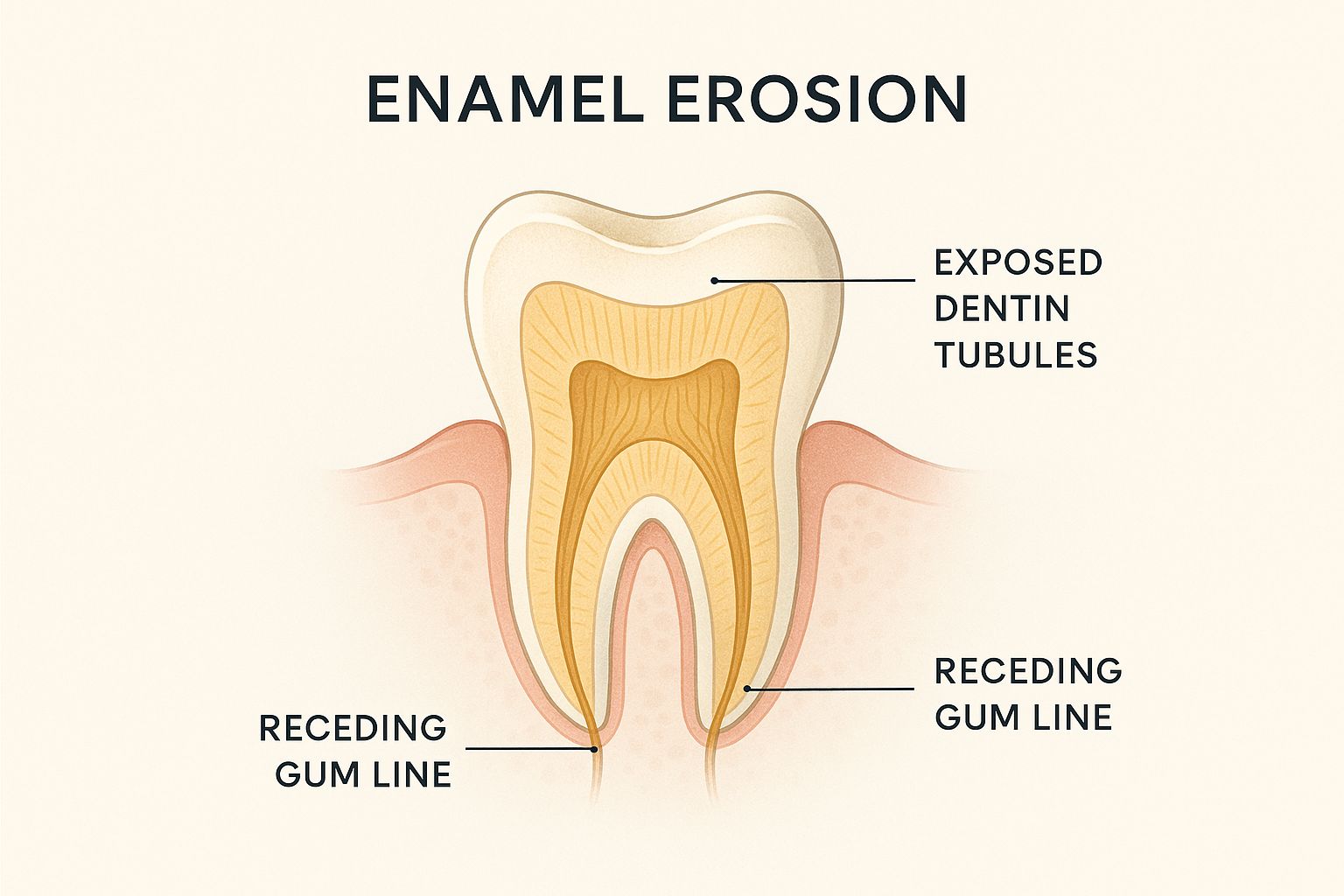
As you can see, different problems can lead to the exact same painful result—open pathways straight to the tooth's nerve center.
Factors that lead to gum recession often include gum disease (like gingivitis or periodontitis), genetics, and certain lifestyle choices. Tooth sensitivity is incredibly widespread; in fact, the Centers for Disease Control and Prevention (CDC) reports that over 47% of adults aged 30 and older have some form of gum disease, a primary cause of recession. This really highlights why regular check-ups right here at West Bell Dental Care are so important for everyone in our community.
You can learn more about damaging habits in our article on bad habits for your teeth and gums.
Everyday Habits That Can Damage Your Teeth
Sometimes, the culprit behind tooth sensitivity isn't a major dental issue, but the small things we do every single day. Many common habits can quietly wear away your enamel and cause your gums to recede, setting the stage for that all-too-familiar jolt of pain. By identifying these habits, you can make a few simple tweaks to protect your smile.
For many of us here in Arizona, grabbing a cold soda or a sports drink is second nature when trying to beat the heat. But a diet loaded with acidic foods and sugary drinks can seriously speed up enamel erosion. These items soften your tooth's hard outer shell, leaving it vulnerable to damage from normal activities like chewing and brushing.
Your Brushing Technique Matters More Than You Think
It might sound strange, but your very efforts to keep your teeth clean could be making them more sensitive. Brushing too hard or using a toothbrush with firm bristles can be just as harmful as a sugary diet. This is a common issue we see in patients from Peoria all the way to El Mirage.
Scrubbing your teeth aggressively doesn't actually get them any cleaner. Instead, it can physically wear down your enamel and push your gums back. Think of it like taking sandpaper to a delicate piece of furniture—that’s what you’re doing to your teeth over time with the wrong technique.
The point of brushing is to gently wipe away plaque, not to scrub off your enamel. Simply switching to a soft-bristled brush and using light, circular motions can make a massive difference in stopping sensitivity and protecting your gums.

Other Lifestyle Factors to Consider
Beyond what you eat and how you brush, a few other lifestyle choices can play a big part in causing tooth sensitivity. Making smarter decisions in these areas is key for your long-term oral health.
Keep an eye out for these common culprits:
- Tobacco Use: Whether it's smoking or using other tobacco products, it reduces blood flow to your gums. This makes them much more likely to recede and develop disease, which directly exposes the sensitive roots of your teeth.
- Teeth Grinding (Bruxism): A lot of people grind their teeth, often because of stress, and don't even know they're doing it—especially at night. This habit places incredible force on your teeth, wearing down enamel and sometimes even leading to chips or cracks.
- Acid Reflux: Medical issues like GERD can bring harsh stomach acid up into your mouth. This acid is extremely corrosive and can do serious damage to your tooth enamel.
These habits create the perfect storm for sensitivity by attacking both your enamel and your gums. For a deeper dive into protecting your enamel, take a look at our guide on avoiding cavities and decay. Spotting these patterns is your first step toward finding real, lasting relief.
When Sensitivity Signals a Deeper Problem
While a quick zing from ice cream is pretty common, it's important to know when that jolt of pain is more than a simple annoyance. That familiar twinge can sometimes be your body’s way of waving a big red flag, signaling a deeper issue that really needs a dentist's eye. Ignoring it can let a small problem snowball into something much more complex and painful down the road.
Think of it like this: a brief shiver when a cold breeze hits is normal. But a sharp, lingering pain focused on one spot is like a fire alarm that won't turn off. If your sensitivity is stuck on a single tooth, if the pain is severe, or if it hangs around for more than 30 seconds after that hot coffee or cold drink, it's time to pay attention. This kind of pain isn't usually about general enamel wear—it's pointing to something specific.
Differentiating Annoyance from an Alert
For our patients in Surprise and the surrounding areas, learning to tell the difference between everyday sensitivity and a real dental problem is key. It’s easy to fall into the trap of self-diagnosing, but what feels like a minor issue could be a sign of something that needs professional care, and fast.
Here are a few of the more serious problems that can disguise themselves as simple sensitivity:
- A Dental Cavity: A cavity is literally a hole eating its way through your tooth's protective enamel, creating a direct line to the sensitive dentin underneath.
- A Cracked or Chipped Tooth: Even a microscopic crack—one you can't see or feel—can be a superhighway for hot, cold, or sweet things to hit the nerve.
- A Worn or Leaky Filling: Over time, old fillings can break down or shrink away from the tooth. This creates tiny gaps where bacteria and other triggers can seep in and cause trouble.
- A Dental Abscess: This is a pocket of pus from a bacterial infection at the root of the tooth. An abscess can cause intense, throbbing pain and is a true dental emergency. If the infection gets into the tooth's pulp, you can see how we handle it by reading about our root canal therapy.
Key Takeaway: If your tooth sensitivity is new, suddenly gets worse, is located in one specific spot, or involves intense, lingering pain, it’s not something to "wait and see" about.
At West Bell Dental Care, we always encourage you to treat these symptoms as important messages from your body. A professional evaluation is the only way to figure out what's really going on. By investigating the true cause of your tooth sensitivity, we can make sure you get the right treatment and stop a minor alert from becoming a major emergency.
Effective Treatments for Sensitive Teeth
The good news is that you don’t have to put up with the zing of sensitive teeth forever. Finding real relief is completely possible, and the path forward is clear. It starts with simple changes at home and can lead to effective professional treatments right here at West Bell Dental Care.
For many people, significant relief comes from making just a few tweaks to their daily oral care routine. These first steps are easy to adopt and can make a world of difference. The goal is to protect your enamel and calm down the nerve endings in any exposed dentin.
Starting with At-Home Care
Your journey toward a less sensitive smile often starts right in your own bathroom. Making small, consistent adjustments can build a much stronger defense against those painful zaps.
Here are some of the most effective strategies you can try today:
- Switch to a Desensitizing Toothpaste: These toothpastes are made with special compounds that help block pain signals from traveling from the tooth's surface to the nerve.
- Use a Soft-Bristled Toothbrush: Brushing too hard is a top cause of enamel wear and gum recession. A soft-bristled brush cleans your teeth just as well without causing unnecessary damage. Just remember to use gentle, circular motions.
- Add a Fluoride Mouth Rinse: Using a fluoride rinse every day can help strengthen your tooth enamel, making your teeth more resistant to acid attacks from food and drinks.
Professional Solutions at West Bell Dental Care
If you’ve tried the at-home route and still aren't getting enough relief, or if your sensitivity is on the severe side, it’s time to come see us. At our Surprise, AZ, office, we can get to the bottom of what’s causing your pain and recommend a professional treatment that’s right for your situation. When you seek professional care, you want a team that prioritizes safety; that's why our staff undergoes essential training like basic life support and CPR training for dentists.
Your comfort is our top priority. We have a range of treatments that directly tackle the underlying causes of sensitivity, providing lasting relief and protecting your teeth for the long haul.
Our professional solutions include:
- In-Office Fluoride Varnish: We can apply a highly concentrated fluoride varnish directly to your teeth. This powerhouse treatment helps remineralize your enamel and provides a strong barrier against sensitivity triggers.
- Dental Bonding: If you have areas with significant enamel loss or exposed roots, we can apply a tooth-colored resin to cover the sensitive dentin. This procedure effectively seals off those microscopic tubules and stops the pain signals.
- Custom-Fit Nightguards: If teeth grinding (bruxism) is the real culprit, a custom-made nightguard will shield your teeth from the intense pressure of grinding while you sleep, preventing more enamel from being worn away.
- Gum Grafts: For patients dealing with significant gum recession, a gum graft is an excellent solution. This procedure can cover exposed roots, which not only eliminates sensitivity but also restores the health and look of your gum line.
Don't try to solve tooth sensitivity on your own. Contact West Bell Dental Care today to schedule an appointment, and let us help you find a clear, achievable path back to comfort.
How to Prevent Tooth Sensitivity in the Future
Prevention is always the best medicine. Rather than just reacting to that sharp zing of pain, you can take proactive steps to keep tooth sensitivity from ever starting. It all boils down to a simple, consistent strategy: protect your enamel and your gums.
The two main culprits we've talked about are enamel erosion and gum recession. Defending against them starts with your daily routine. Proper brushing isn't about aggressive scrubbing; it's about using a soft-bristled toothbrush with gentle, circular motions that clean your teeth without wearing down enamel or irritating your gums.
A Proactive Checklist for Your Smile
Protecting your teeth is an ongoing commitment, especially since this problem is more common than you might think. A 2023 study found that more than 50% of adults deal with tooth sensitivity, while a staggering 98% show at least some signs of dental erosion. These numbers really drive home why taking preventive action is so important. If you're curious, you can read about the study's findings here.
Here’s an actionable checklist to keep your teeth strong and free from sensitivity:
- Limit Acidic and Sugary Foods: Items like sodas, citrus fruits, and candies can soften your enamel. When you do treat yourself, rinse with water afterward to help neutralize the acids before brushing.
- Master Your Brushing and Flossing: Always use a soft brush and a good fluoride toothpaste. Daily flossing is just as crucial—it removes plaque from between teeth and along the gumline, which helps prevent the gum disease that leads to recession.
- Stay Hydrated with Water: Sipping water throughout the day helps wash away food particles and acids, keeping the pH balance in your mouth healthy.
The single most important preventive step is maintaining regular dental check-ups. Catching problems early is always easier and more effective than fixing them later.
Regular cleanings and exams at West Bell Dental Care are essential. These visits give our team in Surprise, AZ, the chance to spot the earliest signs of enamel wear or gum issues long before they start causing you pain. By partnering with us, you can build a solid defense for lifelong dental wellness. You can learn more about our philosophy by exploring our guide on preventive dentistry for stronger teeth.
Frequently Asked Questions
We get it—when your teeth hurt, you have questions. It's one of the most common issues we see from our patients here in Surprise, AZ, and the nearby communities of Sun City and Peoria. Let's tackle some of the biggest questions we hear every day.
Why did my teeth suddenly become sensitive?
Sudden sensitivity can be triggered by a few things. It could be due to recent gum recession, developing a new cavity, or even a small crack in a tooth. Sometimes, using a new whitening product or eating highly acidic foods can also cause a sudden onset of sensitivity.
Will teeth whitening make my teeth sensitive forever?
This is a big worry, but the good news is that sensitivity from professional teeth whitening is almost always temporary. The whitening agents make your teeth a bit more porous for a short time, which can cause that zinging feeling. At West Bell Dental Care, we take extra steps to ensure your whitening treatment is as comfortable as possible.
Does sensitive teeth always mean I have a big problem?
Not necessarily. A lot of the time, it's just from everyday wear on your enamel or slightly receded gums. However, because sensitivity can also signal a cavity or cracked tooth, it's always smart to get it checked by a professional to rule out anything serious.
If my tooth hurts with cold, do I need a root canal?
It’s easy to jump to that conclusion, but sensitivity to cold doesn't automatically mean a root canal is in your future. That's a classic symptom of having exposed dentin. A root canal is usually only needed when the tooth's nerve is infected or seriously inflamed, which typically causes a much more severe, lingering ache.
Can I make an appointment at West Bell Dental Care for tooth sensitivity?
Absolutely. We take tooth sensitivity seriously because we know how much it can impact your daily life. We have dedicated appointments available for our patients all over Surprise and the surrounding areas to diagnose the cause of your sensitivity and create a personalized plan for relief. It's so important to address the common dental health mistakes that could be making things worse. For other healthcare practices wanting to improve their patient communication, using effective patient education resources can make a significant difference.
Find Relief for Your Sensitive Teeth in Surprise, AZ
Don't let tooth sensitivity dictate what you can eat, drink, or enjoy. The team at West Bell Dental Care is here with the compassionate, expert care you need to finally find relief. Call us today to schedule your appointment and start your journey toward a comfortable, happy smile.