

It’s a thought we’ve all had: “If nothing hurts, everything must be okay.” This seems logical, but when it comes to your teeth, it’s one of the most dangerous ideas you can believe. The surprising truth is that many of the most serious dental issues start with absolutely no pain at all.
Waiting for a toothache to tell you there’s a problem is like waiting for smoke to pour out from under your car’s hood before checking the oil. By then, a simple fix has often turned into a much bigger and more expensive repair.
Your Smile Might Be Silent, But Is It Truly Healthy?
Many of our patients here in Surprise, AZ, share a common question: “If nothing hurts, why is my dentist recommending treatment?” People often fear being upsold on services they don't need, which can make them delay or even avoid dental care.
This is a valid concern, but it comes from a misunderstanding of how dental problems develop. Most issues, like early decay, hairline cracks, or mild gum disease, are painless in their early stages. In fact, while 59% of people fear pain during dental work, waiting for pain to appear often leads to more painful and complex treatments later on.
At West Bell Dental Care, our goal is to be your trusted partner in spotting these silent issues long before they grow. What this means for you is that we aren't trying to scare you—we're trying to help you avoid worse problems down the road. A "deep cleaning" today can prevent bone loss, and a tiny filling now can prevent a crown or root canal tomorrow.
Throughout this guide, we'll walk you through:
- The most common “silent” dental threats that don't cause any pain.
- Why these problems can grow without you feeling a single thing.
- The modern tools we use to see what you can’t see or feel.
- How being proactive saves you from pain, time, and money down the road.
Our mission is to give you peace of mind. By taking care of small concerns today, we help you sidestep major procedures tomorrow, ensuring your smile stays as healthy as it looks.
The Unseen Threats: Common Dental Problems Without Pain
It’s a common belief: if my mouth doesn’t hurt, everything must be fine. But in dentistry, some of the biggest problems sneak up on you without any pain at all. These silent issues can develop for months or even years before they send out a warning signal.
By the time you feel that first twinge of pain, the problem has usually become more advanced. For our patients here in Surprise, Sun City, and Peoria, understanding what could be happening behind the scenes is the first step toward proactive care. Let’s look at the most common culprits that hide in plain sight.
Early Tooth Decay (Cavities)
A cavity doesn't just appear overnight. It starts when acids from plaque bacteria begin to dissolve the tooth's hard outer layer, called enamel. Here’s the catch: enamel has no nerves, so this early stage of decay is completely painless.
You won't feel a thing as a small weak spot quietly grows into a cavity. It's only when the decay digs deep enough to reach the inner dentin layer—which is far more sensitive—that you might start to feel something. Our guide on what happens to a cavity if left untreated dives deeper into this process.
This visual captures the disconnect perfectly—the feeling of "no pain" versus the reality of a hidden problem brewing beneath the surface.
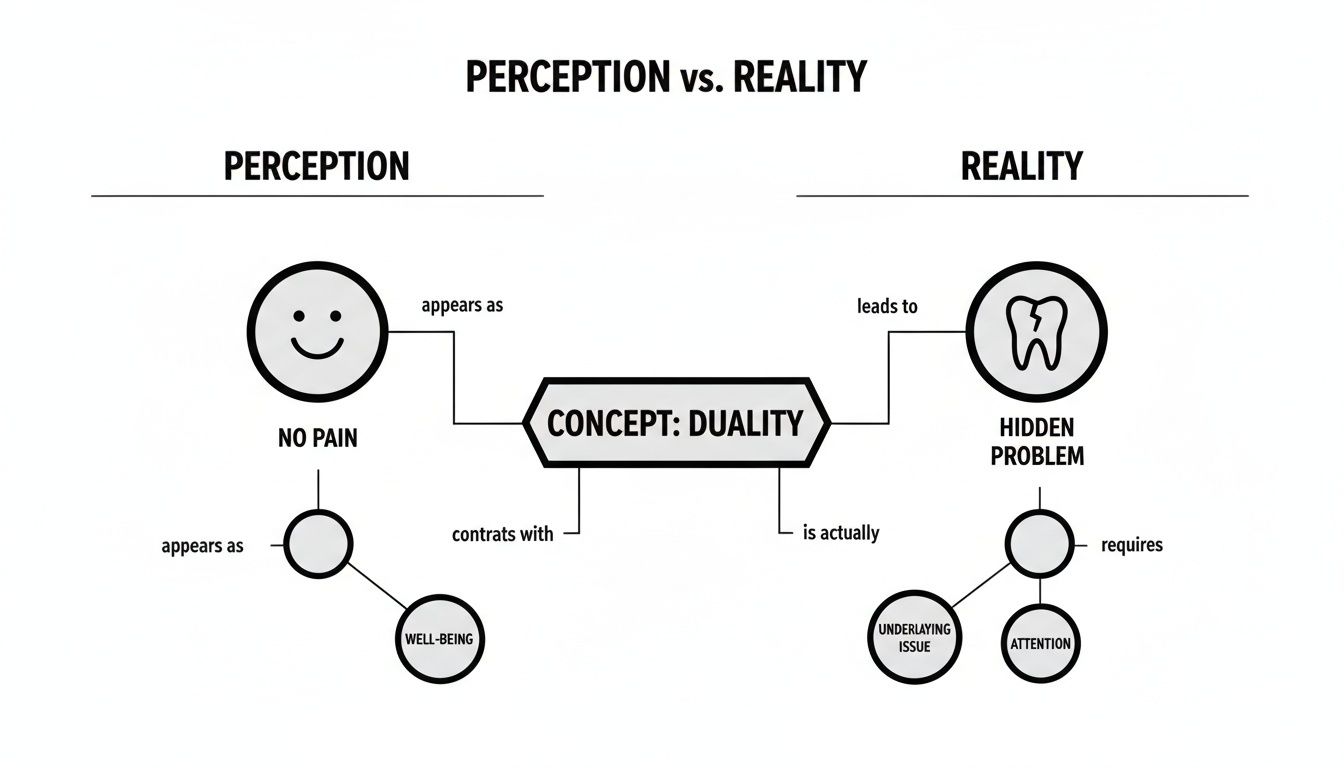
The key takeaway is that how you feel isn't always a reliable sign of your oral health. Regular dental check-ups are essential for uncovering what's really happening.
Periodontal (Gum) Disease
Gum disease is one of the most common silent problems in dentistry. It starts as gingivitis, which is a mild inflammation of the gums caused by plaque. You might notice a little redness or see some pink on your toothbrush, but usually, there’s no pain to sound the alarm.
If left unchecked, gingivitis can progress to periodontitis, a much more serious stage where the infection begins to destroy the bone that holds your teeth in place. According to the CDC, nearly 47% of adults over 30 show signs of gum disease, yet many don't get treatment because they feel no discomfort.
Key Takeaway: By the time your teeth feel loose—a late-stage sign of severe periodontitis—a lot of irreversible bone loss has already happened. The only way to stop it is with early detection during your regular dental check-ups.
A Dying Tooth Nerve (Pulp Necrosis)
Have you ever had a tooth that ached badly, only for the pain to suddenly disappear? While it might feel like a relief, this can be a serious red flag. An intense toothache often means the nerve inside your tooth, called the pulp, is infected or inflamed.
If that pain vanishes without treatment, it can mean the nerve has died. The infection, however, is still there and can quietly form a painful abscess at the root, spreading into your jawbone. At this point, the problem has become much more dangerous, all without the warning signal of pain.
Other Silent Conditions
Several other issues can fly under the radar without causing pain, which is why no pain doesn’t always mean no problem in dentistry.
- Oral Cancer: Early on, oral cancer often shows up as small, painless white or red patches that are easy to ignore.
- Impacted Wisdom Teeth: A wisdom tooth can be stuck in the jawbone without causing pain, all while potentially damaging the molar next to it.
- Hairline Cracks: Tiny cracks in a tooth might not hurt until they deepen over time, allowing bacteria to finally reach the nerve.
Even issues like dry mouth can harm your oral health without causing immediate discomfort. Learning how to treat dry mouth can be an important step in preventing bigger problems.
Why You Don’t Feel Pain When a Problem Is Growing
We hear this question all the time: “If there’s really a problem with my tooth, why doesn’t it hurt?” The answer is that many dental problems are stealthy and develop in ways that bypass your body's alarm system.
The main reason comes down to the structure of your teeth. The outermost layer, called enamel, is the hardest substance in your body, but it has no nerves. A cavity can eat away at this protective shield for months without you feeling a single thing.
It’s only when decay breaks through the enamel and reaches the softer layer underneath, called dentin, that you might start to feel that first twinge of sensitivity. By then, a small problem has already become much more significant.
The Slow and Silent Progression
Another key factor is how chronic conditions work. Unlike a sudden injury that triggers sharp pain, many dental issues progress so gradually you don’t notice them. This is especially true for gum disease.
Think of it like a shoreline slowly eroding over years. The change is so gradual day-to-day that you don't notice it until a huge chunk of land has disappeared. In the same way, gum disease can slowly cause bone loss around your teeth without sending the sharp pain signals you’d expect. You can learn more about what causes gum disease and its silent progression in our detailed guide.
This slow-burn process is why no pain doesn’t always mean no problem in dentistry.
A Note on Contained Infections
Sometimes, an infection can develop at the root of a tooth, and your body’s immune system will build a wall around it to contain the problem. While this sounds helpful, this process can hide all the symptoms—including pain—while the infection continues to damage your jawbone silently.
The absence of pain isn’t a sign of health; it's just a feature of how these dental diseases work. This is why regular check-ups at our Surprise, AZ, office are so important for spotting trouble early.
How We See What You Cannot Feel
At West Bell Dental Care, we believe you should be an active partner in your oral health. Our recommendations are never based on guesswork. They’re grounded in clear evidence that we are always happy to show you, so you feel confident and in control.
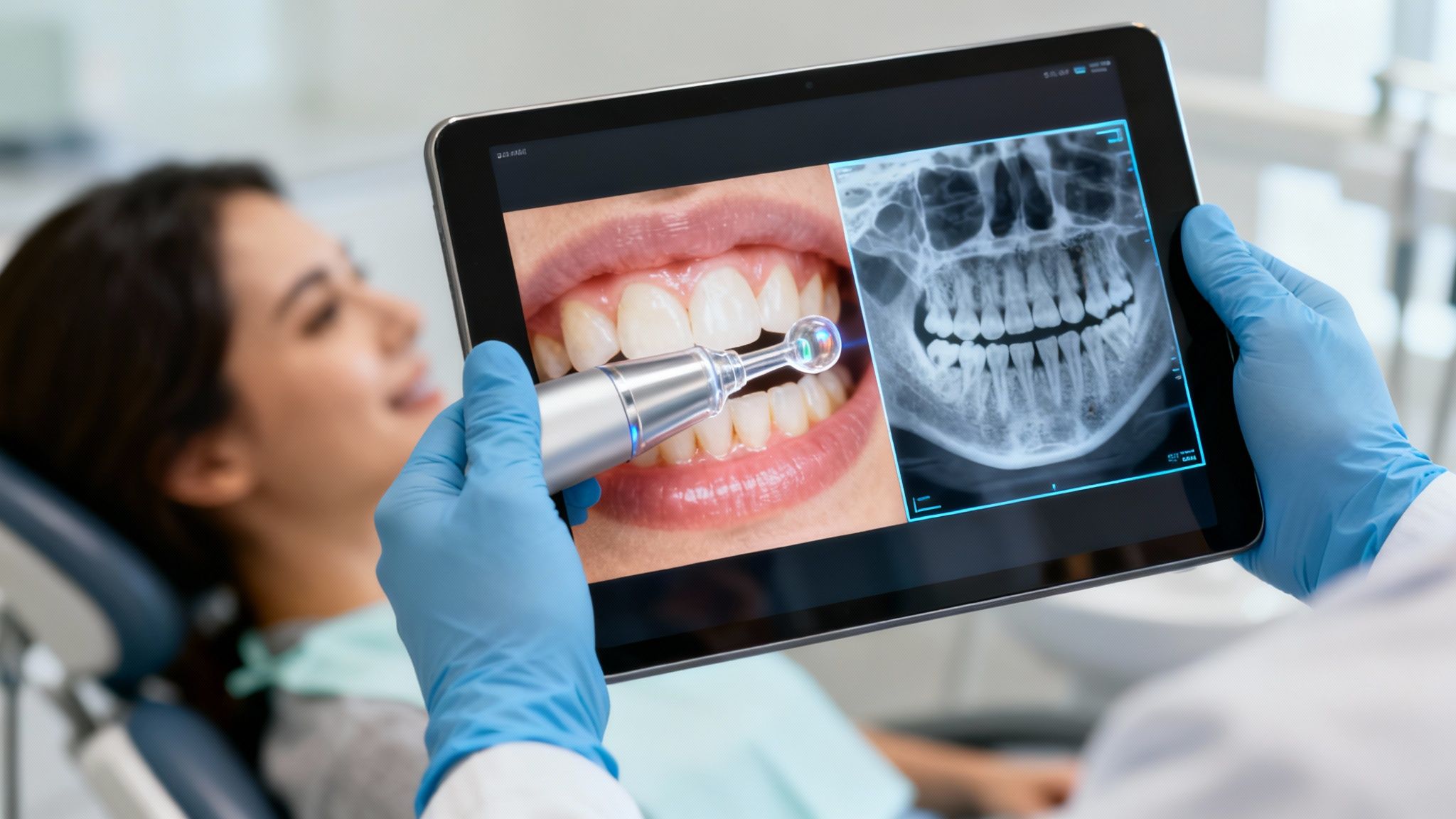
Digital X-Rays: A Window Into Your Oral Health
Digital X-rays are one of our most powerful tools for spotting silent problems. They let us look between your teeth and underneath your gums—areas that are impossible to inspect with the naked eye.
These detailed images can reveal things like:
- Hidden Decay: We can catch cavities just starting to form between your teeth.
- Bone Loss: X-rays clearly show the bone levels around your teeth, a key sign of gum disease.
- Impacted Teeth: We can see wisdom teeth trapped under the jawbone before they cause bigger issues.
If you ever feel unsure about a treatment plan, ask your dentist to show you the X-rays and explain the diagnosis in plain language. You can also check out our simple guide on how to read dental X-rays to learn more.
Intraoral Cameras: A Magnified Tour of Your Mouth
Have you ever wished you could see exactly what your dentist sees? With our intraoral camera, you can. This tiny, pen-sized camera gives us a magnified, real-time view of every single tooth.
We can show you the images on a screen right in front of you, pointing out hairline cracks, old fillings that are failing, or the first signs of decay. This technology makes you part of the process and removes the mystery.
The idea that "no pain means no problem" is flawed. Research shows that asymptomatic apical periodontitis (AAP)—a serious, symptom-free infection at the root of a tooth—affects about 42.6% of dental patients. You can discover more insights about these findings on just how common silent infections are.
Advanced tools like CBCT scans in dentistry also give us 3D views to uncover issues hidden in 2D images. We use these tools to make sure our recommendations are based on a complete and accurate picture of your oral health.
Turning a Small Issue Into a Non-Issue
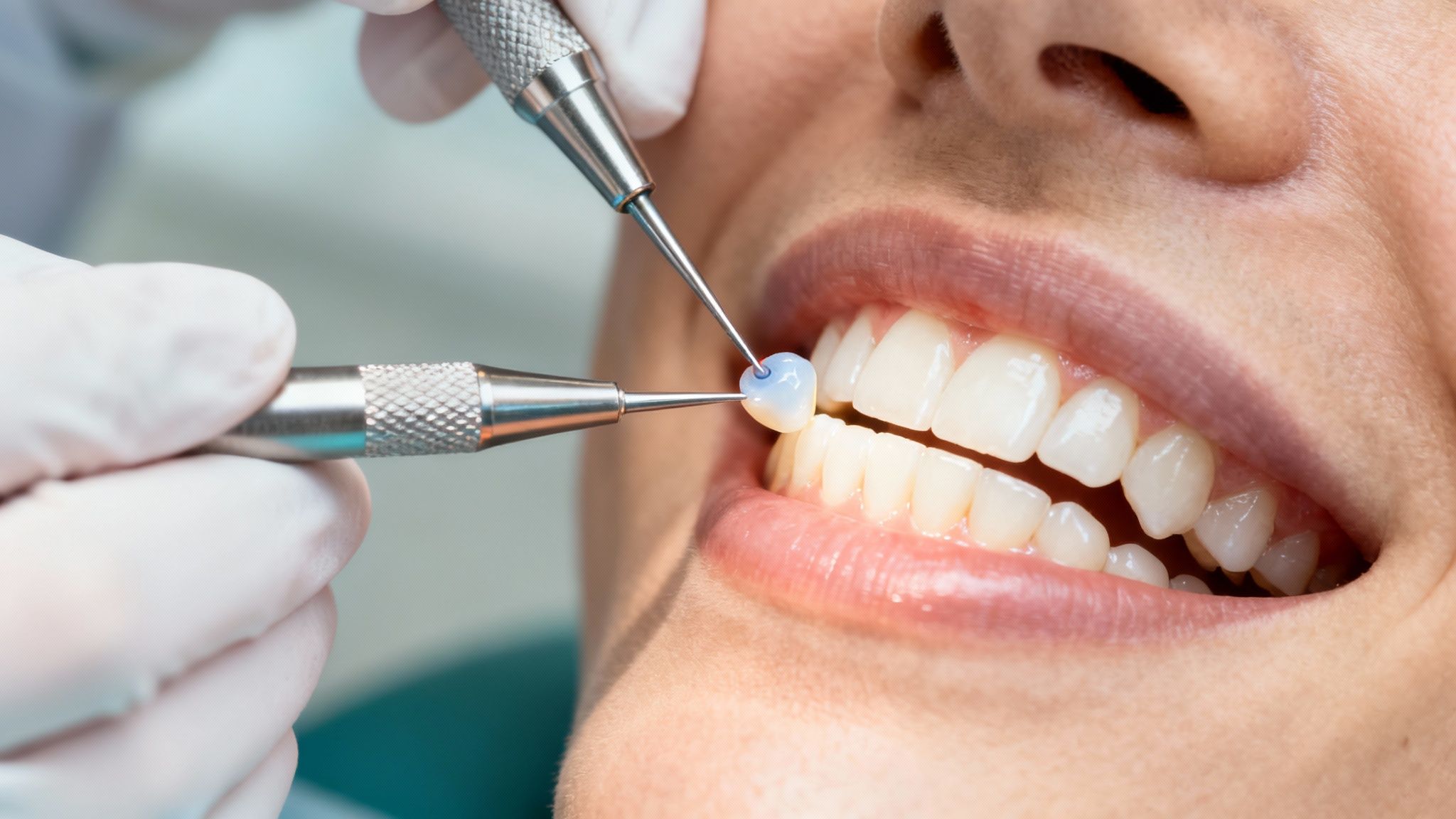
Understanding that silent problems can grow is the first step. The next is taking smart, proactive steps to stop them. Think of preventive care as an investment in your future health and finances. It’s all about turning a small issue today into a non-issue tomorrow.
This mindset is especially important for the families and retirees we serve in Surprise and Sun City West. We know your budget and well-being are top priorities. That’s why we emphasize that preventive dentistry is the best way to protect both.
The True Cost of Waiting
Delaying dental care often feels like it saves money, but it almost always does the opposite. Tooth decay is the most common chronic disease in the United States, and most cases progress without pain until they are severe. Frighteningly, 46% of adults admit to delaying dental care due to cost, which only lets a painless problem get worse. You can learn more about dental care statistics in the U.S. to see how widespread this is.
The small cost of a routine cleaning is minor compared to the expense and discomfort of major restorative work. A simple check-up allows us to fix issues when they are at their smallest and most affordable stage.
Simple Steps with a Big Impact
Preventing silent problems doesn’t require complex procedures. It starts with simple, consistent actions.
Here are the most effective strategies we recommend:
- Routine Check-ups and Cleanings: Visiting our Surprise office every six months is the best way to catch hidden decay and early gum disease before they cause pain.
- Preventive Treatments: For children and even some adults, protective measures like dental sealants can be a game-changer by blocking out cavity-causing bacteria.
- A "Deep Cleaning" When Needed: If we spot early gum disease, a treatment called scaling and root planing can stop it from progressing and causing irreversible bone loss.
By choosing preventive care, you’re not just avoiding future toothaches. You’re saving yourself from stress, missed work, and costly treatments down the road.
Putting You in the Driver's Seat of Your Dental Care
We get it. Hearing you need dental work when you feel fine can be confusing. It’s natural to wonder, “Do I really need this?” At West Bell Dental Care, we believe the best patient is an informed patient, and our practice is built on a partnership of transparency and trust.
A trustworthy dentist will always welcome your questions and concerns. Dr. Wynn is always happy to pull up your X-rays, use an intraoral camera to show you a tiny crack, and explain every finding in plain, simple language.
Taking Control of Your Oral Health Decisions
Feeling in control of your healthcare is vital. If you ever feel uncertain about a recommended treatment—from our office or another—getting a second opinion is a smart and responsible step. Ethical dentists always support informed patients.
Our Surprise, AZ, practice is built on a foundation of honesty. We are confident in our diagnoses because they are based on clear evidence from modern tools.
Still unsure if a recommended treatment is necessary? West Bell Dental Care offers second opinions—no pressure, just honest answers. We’re happy to walk you through your options so you can make a choice that feels right for you.
Ultimately, understanding the why behind a recommendation is what empowers you. If you're looking for a new dental home, our guide on How to Find the Best Dentist in Surprise AZ can help you understand what transparency and trust really look like. Our goal is for you to feel secure and in charge every step of the way.
Frequently Asked Questions
It's completely normal to have questions about your dental health, especially when everything feels fine. Here are some of the most common concerns we hear from our patients right here in Surprise, AZ.
Why do I need a filling if my tooth doesn't hurt?
A cavity starts by silently dissolving your tooth's outer enamel layer, which has no nerves. A filling is recommended at this early, painless stage to stop the decay before it reaches the sensitive inner parts of your tooth, preventing a future toothache and the need for more extensive treatment like a root canal.
How often should I see a dentist in Surprise, AZ if I have no problems?
For most adults in Surprise, Sun City, and our surrounding communities, we strongly recommend a professional cleaning and check-up every six months. These routine visits are your best defense against silent problems, allowing us to catch issues when they are small, easy, and much more affordable to treat.
Another dentist recommended a lot of treatment, but I feel fine. What should I do?
Feeling confident in your healthcare is non-negotiable. If you've been given a treatment plan that feels overwhelming, getting a second opinion is always a smart move. At West Bell Dental Care, we’re happy to offer honest, no-pressure second opinions so you can make a decision you feel good about.
Is a "deep cleaning" really necessary if my gums don’t hurt?
Yes, it absolutely can be. The type of gum disease that requires a deep cleaning happens below the gumline, where it quietly destroys the bone that holds your teeth in place. A deep cleaning is the primary way we can stop the disease from progressing and protect the foundation of your smile, even if you feel no pain.
I have dental anxiety, and the thought of a hidden problem makes it worse. Can you help?
Of course. We understand that dental anxiety is very real, and you are not alone. Our entire Surprise team is known for providing compassionate, gentle care. We will explain every step, make sure you feel in control, and work at your pace to turn that fear into a feeling of confidence.
At West Bell Dental Care, your peace of mind is just as important as your oral health. If you have questions or just want an honest second opinion, we're here to provide the clear answers you deserve.
Give us a call or schedule your consultation online today.