
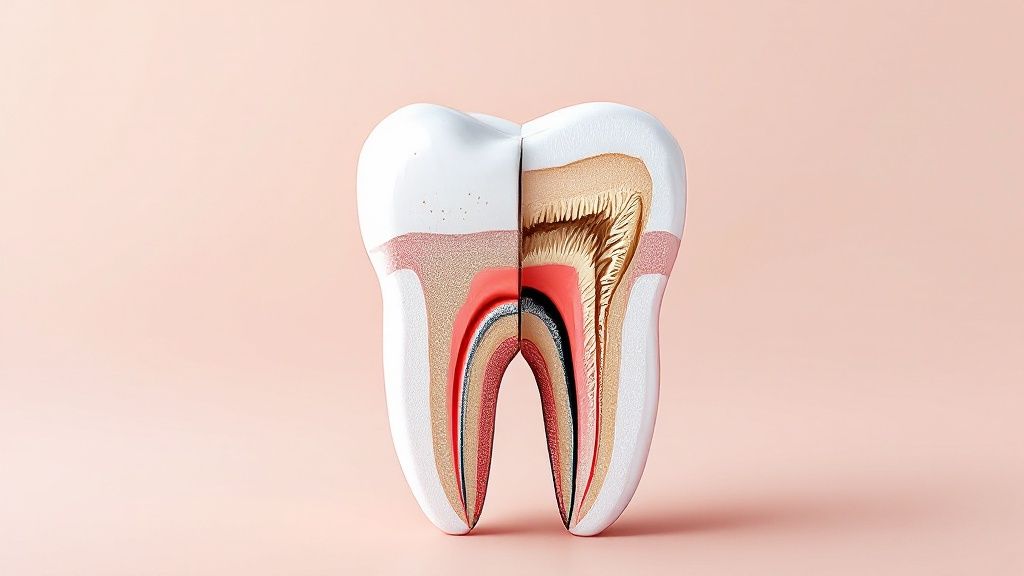
That little sting you feel when you eat something sweet might not seem like a big deal. But it's often your tooth’s first warning sign. If you’ve ever wondered, "what happens to a cavity if left untreated?" the answer is simple: it always gets worse. Ignoring a small cavity starts a chain reaction. It can turn a simple fix into a major problem that affects your whole body.
The Hidden Journey of an Untreated Cavity
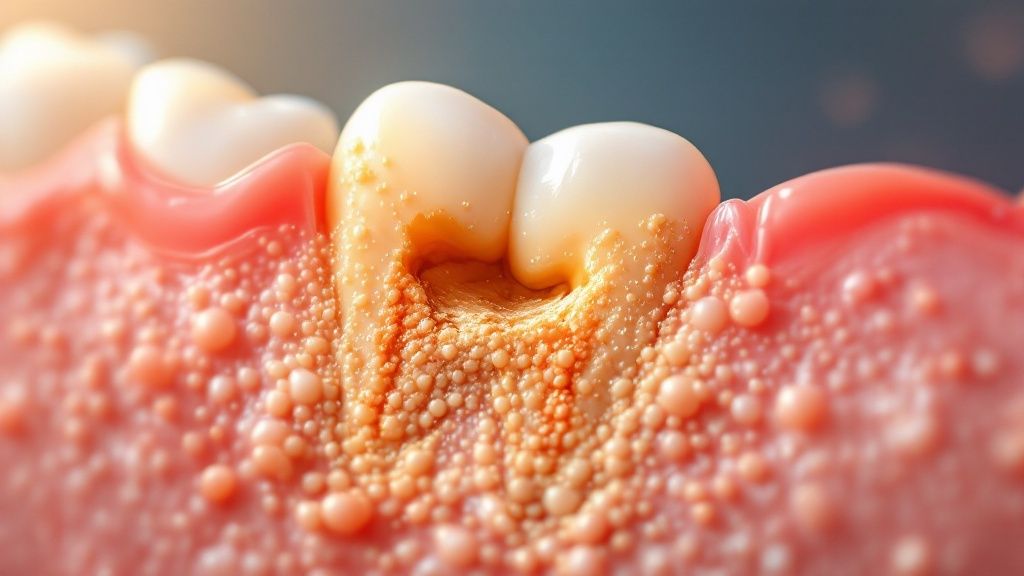
Many of our patients here in Surprise, AZ, come to us with problems that started small. It’s a common story. Someone notices a bit of sensitivity but decides to wait and see if it goes away. But a cavity isn’t like a cold; it’s a disease that won't stop without professional help.
At West Bell Dental Care, Dr. Jennifer Wynn’s entire approach is built on catching these things early. Her preventive philosophy is perfect for Surprise, AZ families. We believe proactive care is the best way to protect your smile and avoid costly treatments later. An untreated cavity doesn't just sit there; it digs deeper into your tooth, layer by layer.
From Minor Annoyance to Major Problem
What starts as a tiny weak spot on your tooth can get worse surprisingly fast. We often have patients from Sun City and Peoria come in thinking a small dark spot is just a stain. Knowing what cavities look like is key to getting help early.
When you ignore the first signs, you give decay a green light to cause serious damage. The stages are pretty predictable:
- Enamel Decay: The decay starts on the tough, outer layer of your tooth. You probably won't feel any pain at this point.
- Dentin Decay: The cavity breaks through the enamel and reaches the softer layer underneath, called dentin. This is when you'll start to feel sensitivity to hot, cold, or sweet things.
- Pulp Infection: The decay reaches the tooth's nerve center. This stage usually brings severe, constant pain and can lead to a dangerous infection called an abscess.
"A cavity is a journey, not a destination. The sooner we intercept it, the simpler the solution. Waiting only complicates the path and increases the risks to your health." – Dr. Jennifer Wynn
This guide will show you what happens at each stage. You'll see how a simple filling can turn into a root canal or worse. Our goal is to give you the knowledge you need to protect your smile and long-term health.
How a Small Cavity Becomes a Big Problem
A cavity doesn't just show up one day. It’s a slow process that often starts long before you feel anything. Think of your tooth's enamel as its armor. The problem begins when acids from plaque start to weaken this armor.
If we catch it at this early point, the damage can sometimes be reversed with fluoride treatments. But if it's left alone, the decay punches through the enamel. It gets into the softer, more sensitive layer called the dentin.
This is when the damage really speeds up. This is usually when our patients from Sun City and Peoria start to feel that first sting of sensitivity.
The Point of No Return
Once decay hits the dentin, it spreads much faster. The tooth's structure is now weaker and at a higher risk of breaking. That sensitivity you're feeling is a signal that the decay is getting dangerously close to the tooth's nerve.
Eventually, the decay makes its way to the very core of the tooth—the pulp. This is the soft tissue inside that contains nerves and blood vessels. When bacteria get into the pulp, it becomes infected and inflamed. This leads to a severe, throbbing toothache that won't go away.
This infographic shows how quickly a small problem can get worse, which is why early treatment is so important.
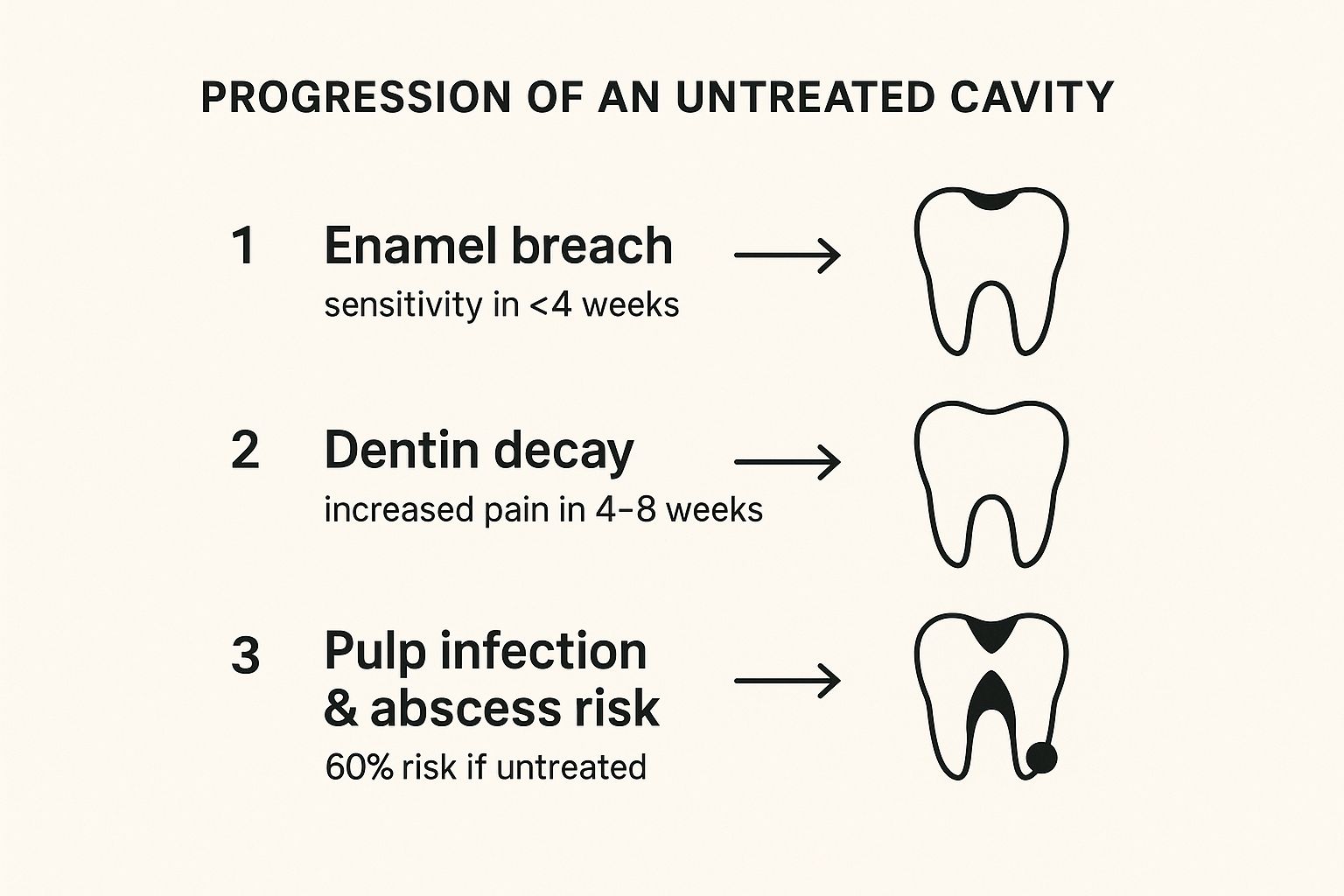
As you can see, serious pain and infection can develop in just months. Taking a "wait and see" approach with a cavity is a huge gamble for your health.
When Infection Takes Hold
An infected pulp is a serious dental emergency. If the decay is still ignored, the infection can spread out the tip of the tooth's root. This can lead to a painful abscess and require more invasive procedures.
At this advanced stage, a simple filling won't work. To save the tooth, the infection has to be cleaned out. This means a more involved procedure like root canal therapy is needed. This treatment removes the infection, saves your tooth, and relieves the intense pain.
Your Mouth Is the Gateway to Your Body
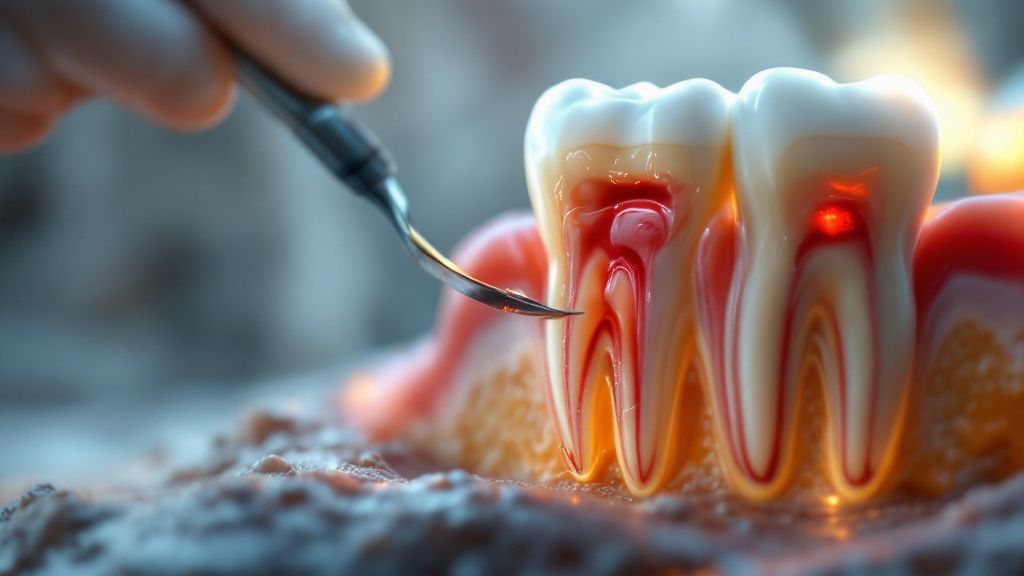
It’s easy to think of a cavity as just a "tooth problem." But your oral health and your overall wellness are deeply connected. What happens in your mouth rarely stays there.
When a cavity is left untreated, it can lead to an infection. The bacteria from a dental abscess can travel through your bloodstream. This creates major health risks for your entire body.
How a Single Tooth Infection Can Affect Your Body
Once harmful bacteria from tooth decay enter your bloodstream, they can cause inflammation and other problems. This is something we always stress to our patients in Surprise and Sun City West, especially those with other health conditions. You can learn more about how oral health impacts your entire body here.
Bacteria from untreated cavities are known to increase the risk for serious health events. These include heart attacks and strokes. Oral infections also make it harder to manage conditions like diabetes because they interfere with blood sugar control.
The Ripple Effect on Systemic Health
A chronic oral infection puts a constant strain on your immune system. Your body is always in fight mode, which can leave you open to other illnesses. This is why we see dental care as a key part of your overall health plan.
Here are some key health risks linked to poor oral health:
- Heart Disease: Bacteria from your mouth can contribute to clogged arteries, raising your risk for heart problems. (American Dental Association)
- Diabetes Complications: Gum inflammation can disrupt your body's ability to regulate blood sugar.
- Respiratory Infections: Inhaling bacteria from infected teeth can lead to lung infections, a big concern for older adults.
- Adverse Pregnancy Outcomes: Studies show a link between gum disease and complications like premature birth.
At West Bell Dental Care, Dr. Jennifer Wynn’s preventive care philosophy is designed for Surprise, AZ families. We don’t just treat teeth; we care for the whole person, helping you understand how a healthy mouth supports a healthy life.
Treating a small cavity isn't just about saving a tooth. It’s about protecting your heart and feeling your best for years to come.
Real Patient Stories from Our Surprise Dental Office
Facts are one thing, but real stories often hit home. At West Bell Dental Care, we see every day how a small problem can grow. These stories from our Surprise, AZ, patients (names kept private) show why catching things early is so important.
We share these to remind you that it's never too late to get back to a healthy smile. With the right care, we can help.
From Minor Sensitivity to Emergency Care
One patient, a busy professional from Sun City West, noticed a sharp twinge in a molar when he drank cold water. It seemed minor, so he put it off for months. One night, that small sensitivity turned into a severe, throbbing toothache that kept him up all night.
By the time he came in for an emergency visit, the decay had reached the tooth's nerve. What would have been a simple filling a few months before now required a root canal to save his tooth. His story is a powerful example of how fast decay can move.
The "Small" Cavity That Led to an Implant
Another patient, a retiree right here in Surprise, had a small cavity on a back tooth she could see but didn't feel. Since it didn't hurt, she assumed it was no big deal. Over the next year, that decay was silently weakening the tooth from the inside. One day at lunch, a large piece of the tooth just broke off.
"Many people think 'no pain' means 'no problem,' but that's one of the biggest misconceptions about tooth decay. The most critical damage often happens silently." – Dr. Jennifer Wynn
Sadly, the break was too severe to fix, and the tooth had to be removed. We created a plan for a dental implant, which restored her ability to chew and smile. Her journey shows that even a painless cavity can lead to losing a tooth. These are the situations Dr. Wynn’s preventive approach helps our community avoid.
We are proud to serve our neighbors throughout the area. For those interested, you can find general information about the Surprise area here.
Recognizing the Warning Signs: When to Seek Treatment

Knowing when to call for help is the most important step in stopping a small cavity from becoming a huge problem. Your body is pretty good at sending warning signs when tooth decay gets serious. Ignoring them just gives decay more time to cause damage.
If you are wondering if you have a cavity, listen to what your mouth is telling you. The moment you notice any of these signs, it's time to schedule a visit with your dentist in Surprise, AZ.
Key Warning Signs of a Worsening Cavity
You don’t have to wait until you're in terrible pain to get help. In fact, please don't! Catching a cavity early usually means a much simpler, quicker fix. Here are the red flags that should have you calling West Bell Dental Care:
- Lingering Sensitivity: Does the zing from hot, cold, or sweet things last for more than a few seconds? That’s a sign decay may have reached the sensitive inner layer of your tooth.
- Sharp Pain When Biting Down: A sudden pain when you chew often means the decay has weakened the tooth.
- A Visible Hole or Pit: Sometimes, you can see a small, dark spot or feel a little crater with your tongue. This is a clear sign that the enamel has been damaged.
- Persistent Bad Taste or Odor: A bad taste or breath that won't go away could be a sign of infection. You can learn about the link between cavities and bad breath in our detailed guide.
What to Expect During Your Visit
We understand that dental anxiety is real. That’s why our process is designed to be as comfortable as possible for our patients in Surprise and El Mirage.
When you come in, we start with a gentle, thorough exam. Dr. Jennifer Wynn will then sit down and clearly explain what she finds. We use cameras so you can see exactly what we see on a screen.
From there, we’ll discuss all your treatment options in an easy-to-understand way. Our goal is to make sure you feel confident and in control of your dental care.
Your Partner in Preventive Dental Care
The best way to deal with tooth decay is to stop it before it starts. While it’s good to know the warning signs, focusing on proactive care is the real secret to lifelong oral health. At West Bell Dental care, that preventive mindset is at the heart of everything we do.
Dr. Jennifer Wynn and our team provide education and regular check-ups for families across Surprise, AZ. A simple cleaning and exam every six months can stop decay in its tracks. This can happen long before it has a chance to cause pain or bigger problems.
A Proactive Approach to Your Smile
Our team is committed to giving you the tools to protect your smile between visits. We believe that empowering our patients is the most effective form of dental care.
Here are a few ways we partner with you:
- Personalized Home Care Plans: We help you perfect your brushing and flossing technique for the best results.
- Early Detection Technology: We use modern tools to spot the earliest signs of decay, when it can often be reversed.
- Protective Treatments: For many patients, dental sealants provide an extra layer of defense against cavities on chewing surfaces.
"Our goal isn't just to fix problems—it's to prevent them. A healthy smile is a team effort, and we are proud to be your trusted partners in that journey." – Dr. Jennifer Wynn
Your long-term oral health is our top priority. Don’t wait for a problem. Contact West Bell Dental Care today to schedule your consultation and take the first step toward a healthier smile for life.
Frequently Asked Questions
Can a cavity go away on its own?
No, once a cavity has broken through the tooth's enamel, it cannot heal itself. At the very earliest stage, called demineralization, fluoride can sometimes stop it. But once a hole forms, professional treatment is needed to clean out the decay and restore the tooth.
How long does it take for a cavity to get serious?
This varies from person to person depending on diet, oral hygiene, and the cavity's location. For some, it might take a couple of years for a cavity to become a serious infection. For others, it could happen in just a few months, which is why regular check-ups at our Surprise office are so important.
Does getting a cavity filled hurt?
Your comfort is our top priority at West Bell Dental Care. Before we start, we use a local anesthetic to completely numb the area around the tooth. You might feel some light pressure, but you should not feel any pain during the filling procedure.
What does it cost to treat a cavity in Surprise, AZ?
The cost depends on how large the cavity is and the type of filling material used. Treating a small cavity with a simple filling is always much more affordable than waiting for it to get worse. Waiting could lead to needing a more expensive crown or root canal.
How often should I see a dentist to prevent cavities?
The American Dental Association recommends a dental check-up and professional cleaning every six months for most people. This schedule allows Dr. Wynn to catch potential issues, like the first signs of a cavity, long before they can cause you any pain.
Don't let a small cavity turn into a major health issue. At West Bell Dental Care, we're committed to providing compassionate, preventive care to keep your smile healthy for life. Schedule your appointment today by visiting us online.