

When you notice a new spot on one of your front teeth, it's easy to worry. You're probably wondering, what does a front tooth cavity look like? It doesn't always start as a dark hole. In fact, the first sign is often a small, chalky white spot on your tooth's surface.
This little white spot is a warning. It means the tooth is starting to lose important minerals. If you don't take care of it, that spot can get darker over time, turning into a light brown or even a black stain as the decay gets worse.
Spotting the Signs of a Front Tooth Cavity
A cavity on a front tooth can look different as it grows. Learning to spot these signs is the best way to know when it's time to see your dentist. Your smile is the first thing people see, so catching these signs early is important for keeping it healthy.
This timeline shows how quickly a small spot on a front tooth can turn into serious decay.
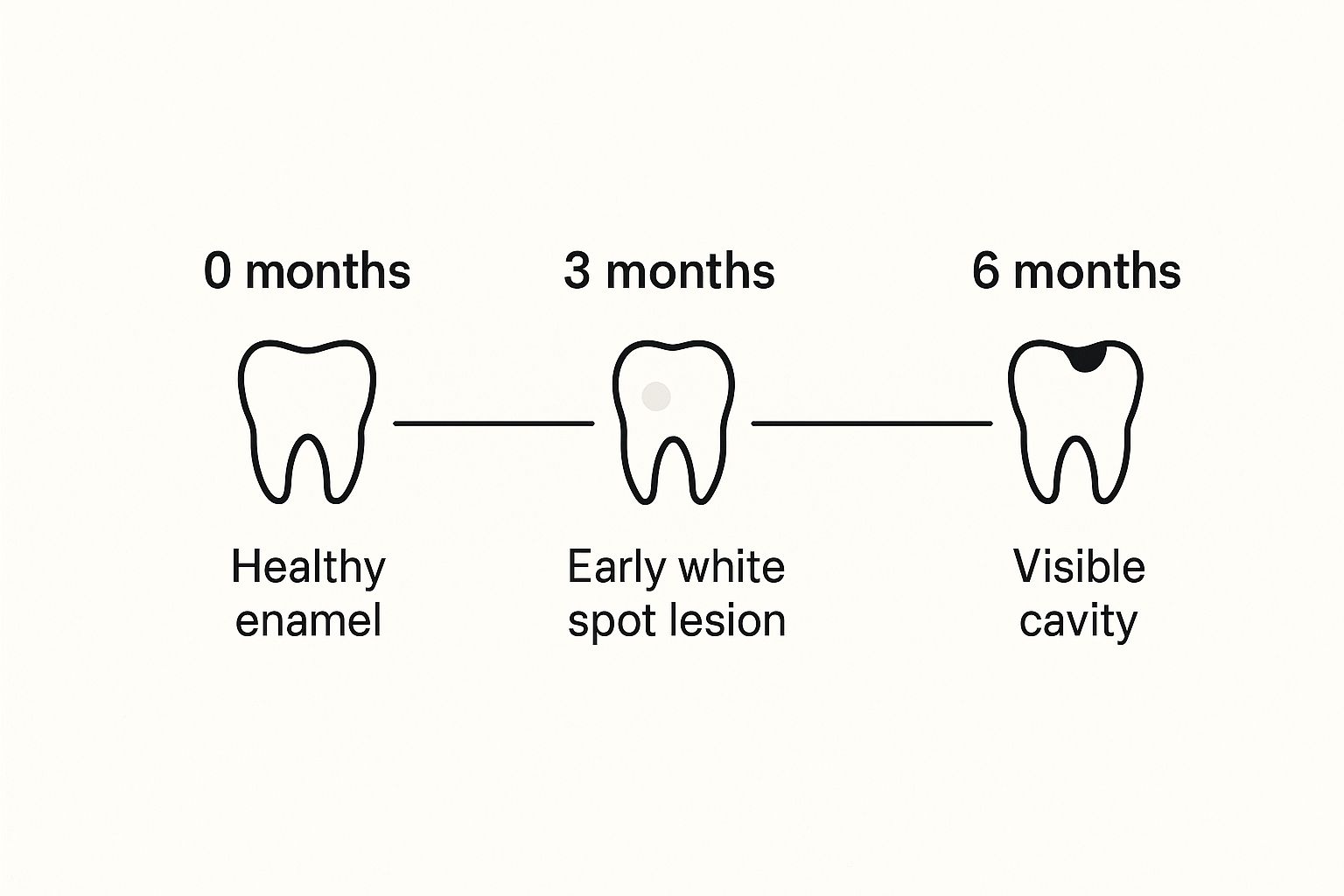
As you can see, what might look like a harmless little mark can become a bigger problem in just a few months if it's not treated.
From White Spots to Dark Stains
A cavity’s journey starts quietly. At first, you’ll just see that small, whitish spot where the tooth's protective layer, the enamel, has started to get weak. This happens when bacteria in your mouth feed on sugars and make acids that eat away at your tooth.
As the decay keeps going, that spot will turn into a brown or black mark. You might even feel a small pit or hole with your tongue. To really understand how it happens, it’s helpful to get familiar with identifying early signs of tooth decay so you can act fast.
Let's break down what you might see as a cavity gets worse.
Visual Stages of a Front Tooth Cavity
| Stage of Decay | What It Looks Like | What It Means for Your Tooth |
|---|---|---|
| Stage 1: White Spot | A small, chalky white mark on the tooth. | The enamel is losing minerals. This is the earliest stage and can often be reversed with treatment. |
| Stage 2: Light Brown Stain | The white spot has darkened to a light tan or brownish color. | The decay has started to go through the enamel. The damage can't be reversed at home anymore. |
| Stage 3: Dark Stain or Pit | The spot is now dark brown or black. A small hole might be visible. | The decay has broken through the enamel and is getting into the next layer. A filling is needed. |
| Stage 4: Visible Hole | A clear hole is in the tooth, often with dark color around the edges. | The decay is moving deeper, maybe toward the tooth's nerve. The chance of pain is higher now. |
This table makes it clear why you should pay attention to even the smallest changes in your smile.
Why Early Detection Matters
Catching a cavity at the "white spot" stage is the best thing that can happen. Why? Because at this point, the damage can often be reversed with fluoride treatments from your dentist and good brushing at home.
Once the decay breaks through the enamel and makes a colored spot or a hole, you'll need a filling to stop it. Our guide on what cavities look like has more pictures to help you know what to look for.
Feeling the Signs of a Front Tooth Cavity
Sometimes, a cavity on a front tooth causes feelings you notice before you can see anything wrong. These feelings are your mouth’s way of warning you that your tooth’s enamel has been damaged. Paying attention to these clues is your best chance to catch decay before it gets serious.
One of the most common early warnings is tooth sensitivity. Have you ever felt a sharp, sudden pain when you drink hot coffee or eat ice cream? That’s often a sign that decay has worn through the enamel, making a tiny path to the sensitive nerves inside your tooth.
Common Symptoms to Watch For
Besides that sharp pain from sensitivity, other feelings can tell you a cavity is forming. Knowing these signs helps you get care from a dentist in Surprise, AZ, before the problem gets bigger and needs more work.
Keep an eye out for these key symptoms:
- A dull ache: This might feel like a constant, low-level pain in the tooth that doesn’t go away.
- Sharp pain when you bite: If you feel a jolt of pain when you chew, it could mean the cavity is deep.
- A rough spot: You might notice your tongue keeps catching on a rough patch, or your dental floss shreds when you clean between your front teeth.
- Food getting stuck: A new hole can trap food, which feeds the bacteria causing the decay.
A cavity doesn’t always cause pain, especially at first. According to the CDC, over a quarter of adults in the U.S. have untreated tooth decay. Regular check-ups are key to finding these silent problems.
If any of these sound familiar, it's a clear sign to make an appointment. The sooner we can look at your tooth here at West Bell Dental Care, the easier the fix will be.
Why Do Cavities Show Up On Front Teeth?
You might think getting a cavity on your front teeth would be impossible. They’re easy to see and seem simple to brush. But your front teeth face special challenges every day.
It all starts with what you eat and drink. That soda, sports drink, or morning juice bathes your front teeth in sugar. Bacteria in your mouth love sugar and produce acid, which is the main cause of tooth decay. This acid attacks and weakens the hard, protective enamel on your teeth.
Plaque and Other Hidden Dangers
This process is helped by plaque—that sticky, invisible film of bacteria that is always trying to form on your teeth. If you don't brush and floss it away, plaque can harden and keep making acid that slowly eats away at your tooth.
Some things can make your front teeth even more likely to get cavities:
- Crowded Teeth: When your front teeth are crooked or close together, it creates hiding spots for plaque that a toothbrush can't reach.
- Dry Mouth: Saliva is your mouth’s natural defense. It washes away food and neutralizes acids. If you have a dry mouth, your teeth are left unprotected.
- Receding Gums: Sometimes gums pull back from the teeth, showing the root. This part of the tooth is much softer than enamel and gets cavities faster.
The World Health Organization is clear: there's a strong link between eating sugar and getting cavities. You can read more on the link between sugar and cavities on the WHO's website. What starts as a harmless white spot can turn into a hole that is very easy to see on your front teeth.
The longer plaque sits on your teeth, the higher your risk for decay. Understanding how long a cavity can go untreated shows why it's so important to fix these problems right away.
Connecting your daily habits to your dental health is the first step toward protecting your smile. For our patients here in Surprise, AZ, and nearby Sun City, we’ve seen how small changes can make a huge difference.
How We Treat Cavities on Front Teeth
Finding out you have a cavity on a front tooth can be stressful. The good news is that modern dentistry is gentle and effective. At West Bell Dental Care in Surprise, AZ, we focus on fixing your smile so well that no one will know you had work done.
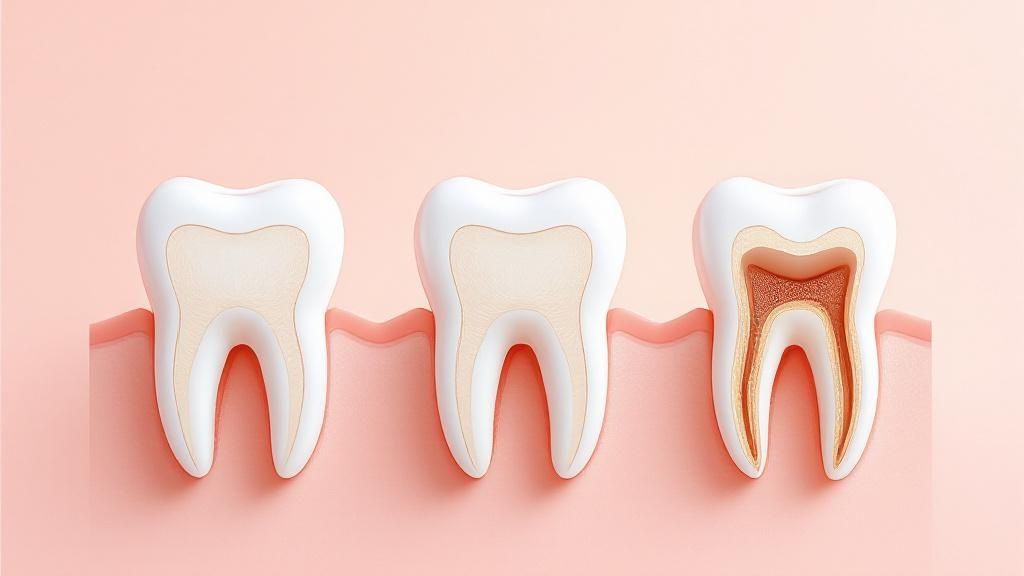
The right treatment depends on how early we catch the decay. We always try to use the simplest method possible to keep your natural tooth healthy.
Reversing Early Decay and Using Fillings
If we catch a cavity when it's just a "white spot," we might not have to drill at all. A professional fluoride treatment can often help the enamel heal itself and stop the decay. This is another reason why regular check-ups are so important!
For small cavities that have gone through the enamel, the best solution is a tooth-colored filling.
- Looks Natural: We use a special material called composite resin that is matched to the exact shade of your other teeth.
- Strong and Lasting: This material bonds to your tooth, which helps make it stronger.
- Saves Your Tooth: We only need to remove the small decayed part of the tooth, keeping as much healthy enamel as we can.
After the filling is done, it blends in so well that you can't even see it. You can go back to smiling and eating with confidence.
Fixing More Advanced Decay
When a front tooth cavity isn't treated, the decay can get more serious. In these cases, a simple filling won't be enough to fix the tooth's strength or look.
Once decay gets into the soft inside of the tooth, it can cause a lot of pain and even an infection. At this point, the treatment is more serious.
For deeper decay, we might suggest options like dental bonding, veneers, or a dental crown. If the decay has reached the nerve, it's important to act fast. Learning about root canal therapy can help you understand how we can save a tooth. Our team will always explain every option to make sure you feel comfortable.
Simple Ways to Prevent Cavities on Your Front Teeth
The best way to handle a front tooth cavity is to stop it from happening in the first place. A few simple, daily habits can make a huge difference in keeping your smile healthy, bright, and free from cavities.
This is very important when you think about how common tooth decay is. Nearly 90% of adults have had some form of tooth decay (CDC), making it a common concern for people of all ages.

Your Daily Defense Against Decay
A strong oral hygiene routine is your best defense. Being consistent is the key to protecting your teeth from the plaque and acids that cause cavities.
Here’s a simple routine to follow:
- Brush Twice a Day: Always use a fluoride toothpaste and brush for two minutes each time. Be gentle but thorough.
- Floss Daily: Flossing is not optional! It’s the only way to remove plaque from the tight spaces between your front teeth.
- Limit Sugary Drinks: Sodas, sports drinks, and fruit juices are known for weakening tooth enamel. Enjoy them in moderation and rinse with water afterward.
The Power of Professional Care
Even with the best home care, professional cleanings are a must. Our friendly team at West Bell Dental Care can remove hardened plaque—called tartar—that you can't get rid of on your own.
These regular visits also let us spot the earliest signs of a cavity. When we work together as a team, we can keep your smile strong and confident for years to come.
Frequently Asked Questions
We hear a lot of questions about cavities on front teeth from our patients here in Surprise, AZ. It's understandable—your front teeth are what people see first! Here are clear answers to the most common questions.
Can a small cavity on a front tooth heal by itself?
In its earliest stage—when it’s just a faint white spot—the damage can sometimes be reversed. With great brushing and professional fluoride treatments, the enamel can harden up again. But once the spot turns brown or a hole forms, a dentist in Surprise needs to step in to clean out the decay and fill the tooth.
Will a filling on my front tooth be noticeable?
Not at West Bell Dental Care! We use a modern tooth-colored material that is matched perfectly to the shade of your teeth. Our goal is to fix your tooth while making sure your smile looks completely natural, so no one will ever know you had a filling.
Is getting a filling on a front tooth painful?
No, the process is the same as getting a filling on a back tooth. Before we start, we make sure the area is completely numb with a local anesthetic. Your comfort is our top priority, and we work hard to make the experience as gentle and stress-free as possible.
How much does it cost to fix a front tooth cavity in Surprise, AZ?
The cost depends on how serious the cavity is. A simple filling for a small cavity is the most affordable option. If the decay is worse and needs a crown or veneer, the cost will be higher. The best way to get a clear cost is to schedule a visit at our Surprise office so we can go over a treatment plan and your payment options.
What happens if I ignore a cavity on my front tooth?
Ignoring a cavity is never a good idea, as the decay will spread deeper. It can reach the nerve and lead to a bad toothache, infection, or abscess. You might end up needing a more complex root canal therapy and crown to save the tooth, or you could even lose it. Ignoring decay can also lead to bad breath, which you can learn about in our guide on what causes bad breath.
At West Bell Dental Care, we're committed to protecting your smile with gentle, effective care for families in Surprise, Sun City West, and Peoria. If you've noticed any signs of a cavity on a front tooth, don't wait. Schedule your appointment today by visiting us online at https://westbelldentalcare.com.
Ready to See a Dentist in Surprise, AZ?
Dr. Jennifer H. Wynn and the West Bell Dental Care team are here to help. Call us at 480-795-2420 or book online below.

Medically reviewed by Dr. Jennifer H. Wynn, DDS — Founder of West Bell Dental Care, Surprise, AZ. Graduate of Loma Linda University School of Dentistry with 30+ years of experience in general, cosmetic, and restorative dentistry. NPI: 1144359720 | AZ License: D009624.