

When people ask, "how long can a cavity go untreated?" they're often looking for a simple number. But the truth is, there isn't one. The real answer can be anywhere from a few months to several years, and it’s less like a sudden explosion and more like a slow-burning fuse.
The timeline really depends on a few key things: your diet, how well you keep up with brushing and flossing, and even where the cavity is located in your mouth. At West Bell Dental Care, we want our patients in Surprise, AZ, to understand the risks of waiting.
The Hidden Timeline of an Untreated Cavity
Thinking a small cavity can wait is a common mistake, but it's a risky one. A cavity's journey starts silently, long before you feel anything, which is why regular check-ups at our Surprise, AZ, office are so important for catching it early.
It all begins with demineralization. This is a fancy term for the first, subtle weakening of your tooth's enamel caused by acids from bacteria. This initial stage can quietly unfold over months without any obvious signs, and you likely won't feel a thing.
However, once that protective enamel is breached and decay chews into the softer dentin layer underneath, things speed up dramatically. Within just a few more months, you might start feeling that tell-tale tooth sensitivity or see the little dark spots we discuss in our guide on what cavities look like.
To help you visualize how this happens, we've put together a table that breaks down the stages of tooth decay.
Cavity Progression Timeline and What to Expect
This table maps out the typical journey of an untreated cavity, from the first invisible signs to more serious problems. It shows the approximate timeline for each stage and what you might experience along the way.
| Stage of Decay | Typical Timeline | Common Symptoms | Recommended Action |
|---|---|---|---|
| Stage 1: Enamel Demineralization | 6 months – 2 years | None. Maybe faint white spots on the tooth. | Preventative care, fluoride treatment, regular cleanings. |
| Stage 2: Enamel Decay | 1 – 3 years | Small, visible brown or black spot. No pain yet. | A small dental filling is usually all that's needed. |
| Stage 3: Dentin Decay | 2 – 4 years | Sensitivity to hot, cold, or sweets. The hole gets larger. | A larger filling or potentially a dental crown. |
| Stage 4: Pulp Involvement | 3 – 5+ years | Sharp, persistent toothache. Pain when biting down. | Root canal therapy is often required to save the tooth. |
| Stage 5: Abscess Formation | 4 – 6+ years | Severe, throbbing pain, swelling of the gums/face, fever. | Root canal or extraction is likely necessary. |
As you can see, what starts as a minor issue can quickly become a much bigger, more painful, and more expensive problem to fix.
This timeline shows just how an untreated cavity can morph from a minor enamel issue into serious dentin decay in just a couple of years.
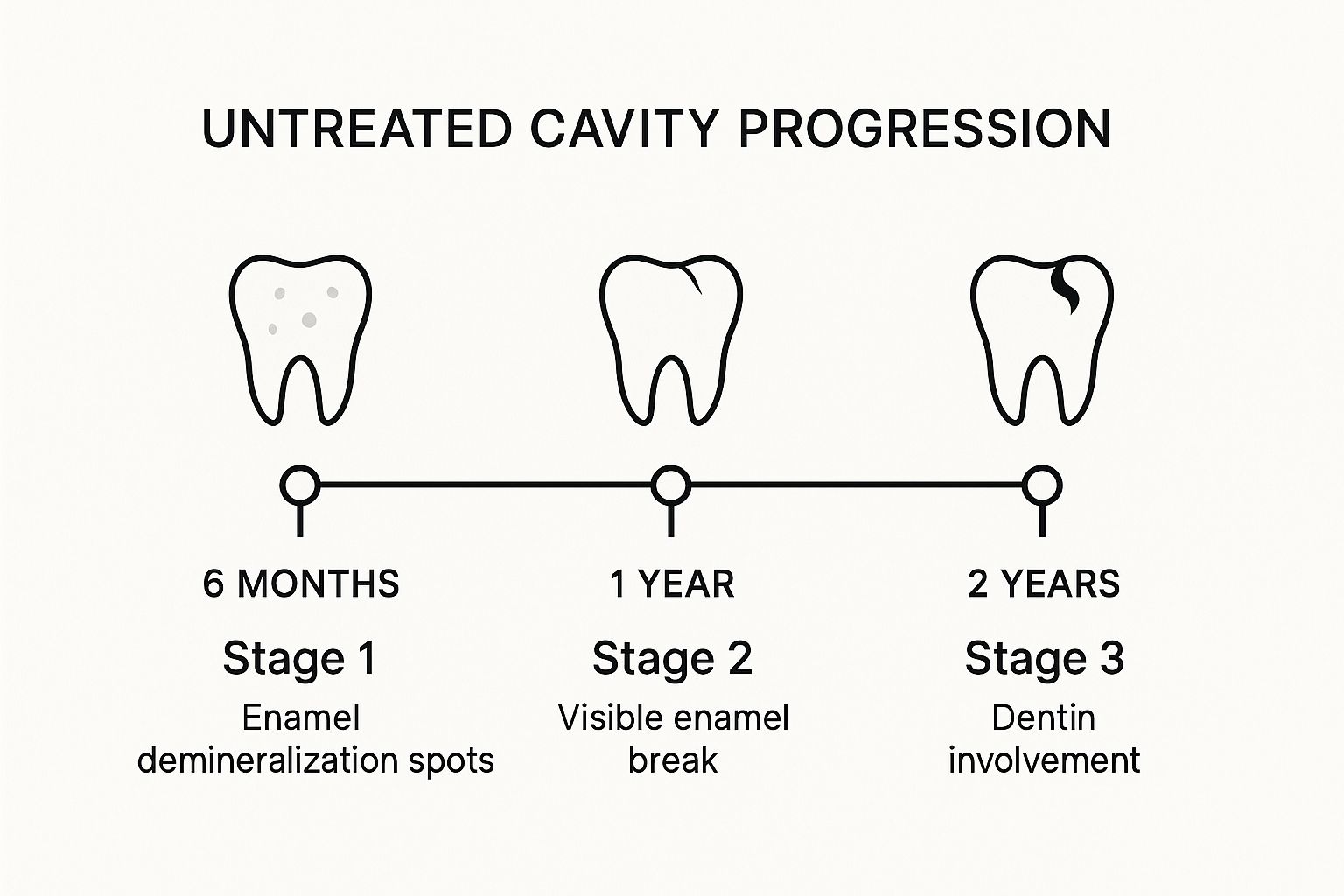
The image makes it crystal clear: the most critical damage kicks in after the one-year mark, once the decay has broken through the enamel. This is the turning point where a simple fix can escalate into a major dental procedure, highlighting exactly why catching it early is your best defense.
The Reversible Stage: From Demineralization to Early Decay
In its very first phase, a cavity isn't a lost cause—it's more like a warning shot. The journey begins quietly with demineralization. This is a process where acids, produced by plaque bacteria, start to pull essential minerals right out of your tooth's tough enamel shell.
You won't feel a thing at this point, which is why it’s so easy to miss. But this is the most critical window to act. Think of it like a patch of dry, brown grass on your lawn; with a little water and care, you can bring it back to life. It’s the same with your enamel, as this initial weakness can often be completely reversed.
Stopping a Cavity Before It Starts
At this stage, your tooth is fighting to repair itself, and with the right support, it can win. The goal is to tip the scales from mineral loss back to mineral gain, a process we call remineralization. This is where your daily habits and our professional care make all the difference.
This early, reversible stage is precisely why regular dental check-ups are so important. We can spot these vulnerable areas long before they become a permanent problem, putting the power to stop decay right back in your hands.
A few simple, effective strategies can halt this process and even turn it around:
- Professional Fluoride Treatments: A concentrated fluoride application in our Surprise, AZ, office is like giving your teeth a protective shield, helping to rebuild and fortify weakened spots in the enamel.
- Improved Daily Hygiene: Getting serious about brushing and flossing is non-negotiable. It removes the plaque responsible for creating those harmful acids in the first place.
- Dietary Adjustments: Cutting back on sugary snacks and acidic drinks essentially starves the bad bacteria that are trying to cause decay.
By catching demineralization early, residents in Surprise and Sun City can prevent a cavity from ever truly forming, often avoiding the need for a filling altogether. You can find more tips in our complete guide to avoiding cavities.
When a Cavity Breaches Your Tooth's Defenses
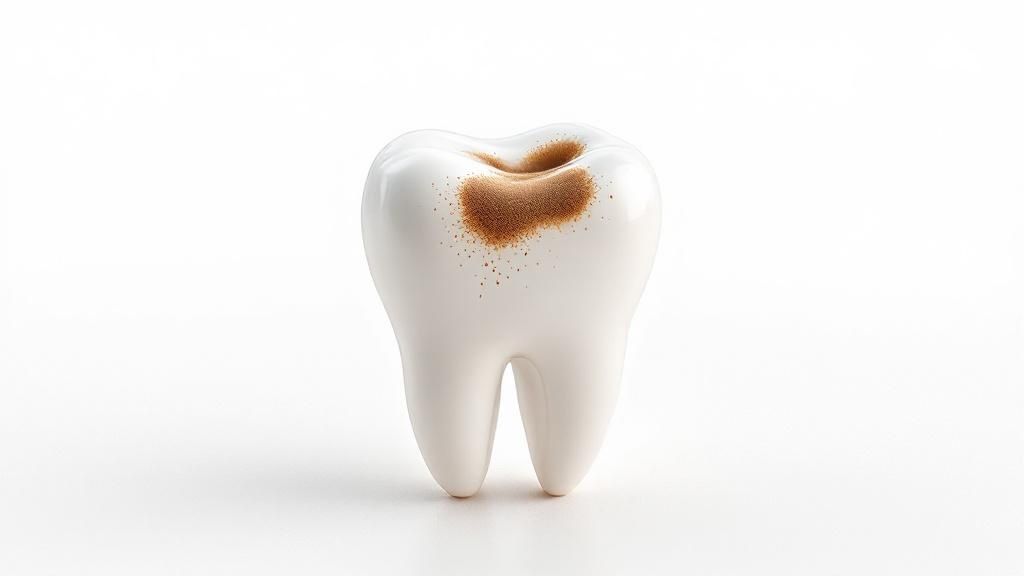
When decay finally punches through that tough outer enamel, it hits the softer, inner layer of your tooth called dentin. This is a major turning point in the life of a cavity. Once the protective dam of enamel is breached, the decay can start moving much, much faster.
Unlike the hard, shell-like enamel, dentin is more porous. It’s actually filled with thousands of microscopic tubes that lead directly to the tooth's nerve center, or pulp. This is exactly why you often start feeling a cavity for the first time at this stage.
The First Real Signs of Trouble
Once that decay reaches the dentin, you'll probably start noticing some classic warning signs. Don't ignore them! Giving the cavity more time now just lets it cause deeper, more serious damage.
Pay close attention if you experience:
- Sensitivity to Sweets: That sharp, sudden "zing" when you bite into a cookie or sip a soda is a tell-tale sign the decay has found its way to the dentin.
- Pain with Hot or Cold: A jolt of pain from a hot coffee or a spoonful of ice cream is a big red flag. Those temperature changes are traveling right through the dentin's little tubes and shocking the nerve.
- Visible Signs: You might spot a small light brown or even a dark spot on your tooth. As the cavity grows, it often becomes visible to the naked eye.
At this stage, the clock starts ticking much faster. The decay will progress more rapidly, quickly turning from a minor issue into a serious problem that could threaten the entire nerve of your tooth.
The good news? We can easily stop a cavity in its tracks right here. A simple dental filling is the standard, most effective solution. We want to reassure you that getting a filling at our Surprise, AZ, office is a comfortable, routine procedure that halts decay and restores your tooth's full strength and function.
The Point of No Return: When Decay Reaches the Pulp
Waiting a year or more after a cavity first appears is a serious gamble with your oral health. At this stage, the decay has likely tunneled deep inside the tooth, moving past the hard dentin layer and breaching the pulp—the living nerve center filled with blood vessels and delicate tissue.
This is the critical turning point where a small, fixable problem blows up into a major dental emergency.
When decay finally reaches the pulp, it triggers an infection called pulpitis. Think of it as the alarm bells finally shrieking inside your tooth. The symptoms are unmistakable and often severe, a clear sign that the damage has become serious.
Escalating Symptoms of a Pulp Infection
You're no longer dealing with a little sensitivity here and there. The signs of an infected pulp are much more intense and can completely disrupt your life:
- A Persistent, Throbbing Toothache: This isn't a quick zing of pain. It's a deep, constant ache that can keep you up at night and make it hard to focus during the day.
- Sharp Pain When Biting: Putting any pressure on the tooth sends a sharp, radiating pain through your jaw.
- Lingering Sensitivity: The pain from hot or cold foods now sticks around for 30 seconds or more after you've finished eating or drinking.
If a cavity remains untreated for two years or more, the consequences become severe, leading to extensive damage to the tooth and surrounding oral structures. At this stage, you may see discoloration and gum swelling alongside the intense pain. You can discover more insights about this advanced decay on bostondentalgroup.com.
An infected pulp can quickly lead to a dental abscess, which is a painful pocket of pus that forms at the tooth's root. This isn't just a cavity anymore; it's an active infection that requires urgent care. At our Surprise, AZ, practice, our goal is to help you avoid this incredibly painful and costly stage. The most common way to save the tooth is no longer a simple filling but a more involved procedure. You can learn what this entails by understanding root canal treatment.
How an Untreated Cavity Affects Your Overall Health
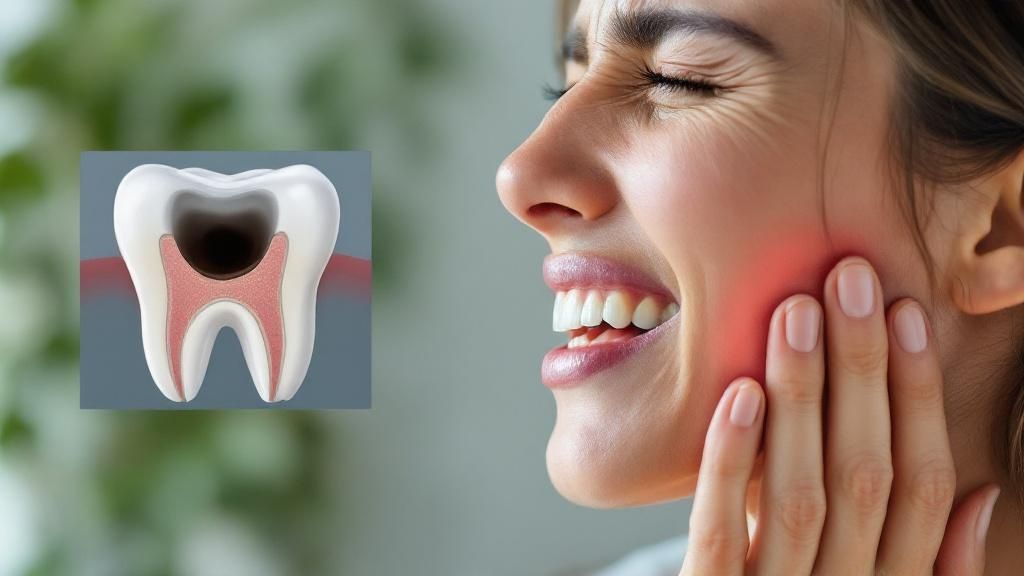
It’s easy to think a problem in your mouth stays in your mouth, but that’s rarely the case. When you’re wondering how long a cavity can go untreated, it's crucial to think bigger than just your teeth and consider your total wellness.
An ignored cavity doesn't just sit there. Over time, it can spiral into a serious infection, like a painful dental abscess. You can think of this abscess as an open door, allowing harmful bacteria that were once trapped in your tooth to escape into your bloodstream.
Once those bacteria are on the move, they can travel throughout your entire body. This can trigger widespread inflammation and potentially contribute to some very serious health conditions. The connection between what happens in your mouth and the rest of your body is real and well-documented.
The Mouth-Body Connection
Chronic oral infections, the kind that can stem from an untreated cavity, have been strongly linked to a number of wider health problems. It’s a powerful reminder that protecting your smile is also about protecting your body.
Research from the American Dental Association makes it clear: untreated oral bacteria can lead to infections elsewhere in the body. This is especially true for people with compromised immune systems. It really drives home the point that a cavity is much more than a dental issue; it's a potential health risk for your entire body.
This is exactly why we see such strong connections between poor oral health and conditions like:
- Heart Disease: Bacteria from a dental infection can enter the bloodstream and may lead to inflammation in the blood vessels. This, in turn, can increase the risk for both heart attack and stroke.
- Diabetes Complications: For anyone managing diabetes, severe gum disease can make it much harder to control blood sugar levels, creating a frustrating and dangerous cycle.
- Respiratory Infections: Breathing in bacteria from infected teeth and gums over a long period can lead to lung infections like pneumonia, a particular concern for older adults.
At West Bell Dental Care, we partner with families across Surprise and Peoria to make sure their dental care is a cornerstone of their complete well-being. Understanding how your preventive dental care impacts health is truly the first step toward a healthier life.
Take Control of Your Oral Health Today
We get it. Dental anxiety is real. Worries about the cost can be overwhelming. And sometimes, a packed schedule makes it feel impossible to squeeze in a dental visit. It’s tempting to put off treatment, but when it comes to a cavity, waiting only makes things more complicated, costly, and invasive down the road.
If you're putting off a visit, you’re not alone. According to the CDC, over 26% of adults in the U.S. have untreated tooth decay. You can see more on this from the National Institute of Dental and Craniofacial Research.
A small, affordable filling today can prevent the need for a painful root canal or even an extraction tomorrow. Here at West Bell Dental Care, we’re committed to providing comfortable, patient-first care for our neighbors in Surprise, Sun City West, and El Mirage. To really get a handle on your oral health, it helps to understand why treating your cavities cannot wait.
Stop wondering and worrying about “what if.” The single best thing you can do is find out exactly what’s going on.
Don’t put off getting answers any longer. We explain why it's so important to not put off your dental check-up in another one of our posts. Schedule a visit today. You deserve the peace of mind that comes with a healthy, confident smile.
Frequently Asked Questions
It’s only natural to have a few questions when it comes to cavities and dental work. We get it. Here are some of the most common questions we hear from our patients right here in Surprise, AZ.
Can a cavity heal on its own?
In the very earliest stage of decay, called demineralization, the damage can sometimes be reversed. With excellent home care and professional fluoride treatments at our Surprise office, your enamel can remineralize itself. However, once an actual hole forms, it cannot heal on its own and needs a dental filling.
What does a dental filling feel like at your Surprise office?
Your comfort is our top priority. We start by completely numbing the area with a local anesthetic, so you won’t feel any pain during the procedure. Our friendly team will explain every step to make sure you feel relaxed and informed from start to finish.
How do I know if I have a cavity if it doesn’t hurt?
This is exactly why regular dental check-ups are so crucial! Many cavities don't cause any pain in their early stages. Our dentists in Surprise can spot the subtle signs of decay, often using digital X-rays, long before you would ever notice them on your own.
Does West Bell Dental Care offer emergency appointments for a bad toothache?
Yes, we do. We understand that a severe toothache is a dental emergency that can't wait. We set aside time in our schedule for patients from Surprise, Sun City, and surrounding areas who need urgent care. Please call our office right away if you are in significant pain.
I live in Sun City West and haven't seen a dentist in years. What should I expect?
First, we’re happy you’re taking this step for your health! Your first visit will be comprehensive but gentle. We'll perform a thorough exam, take some digital X-rays, and then sit down with you to discuss our findings and answer all your questions. Together, we'll create a personalized, no-pressure plan that works for you.
Ready to stop wondering about that tooth and get some clear, confident answers? The friendly team at West Bell Dental Care is here to help our community in Surprise, AZ, and beyond achieve lasting oral health.
Book Your Appointment Now
Ready to See a Dentist in Surprise, AZ?
Dr. Jennifer H. Wynn and the West Bell Dental Care team are here to help. Call us at 480-795-2420 or book online below.

Medically reviewed by Dr. Jennifer H. Wynn, DDS — Founder of West Bell Dental Care, Surprise, AZ. Graduate of Loma Linda University School of Dentistry with 30+ years of experience in general, cosmetic, and restorative dentistry. NPI: 1144359720 | AZ License: D009624.