

Have you ever looked in the mirror and thought your teeth seemed a little longer than before? This is often the first sign people notice of receding gums. It's a slow process where your gum tissue pulls back, revealing the sensitive roots of your teeth.
Understanding Gum Recession and Why It Matters
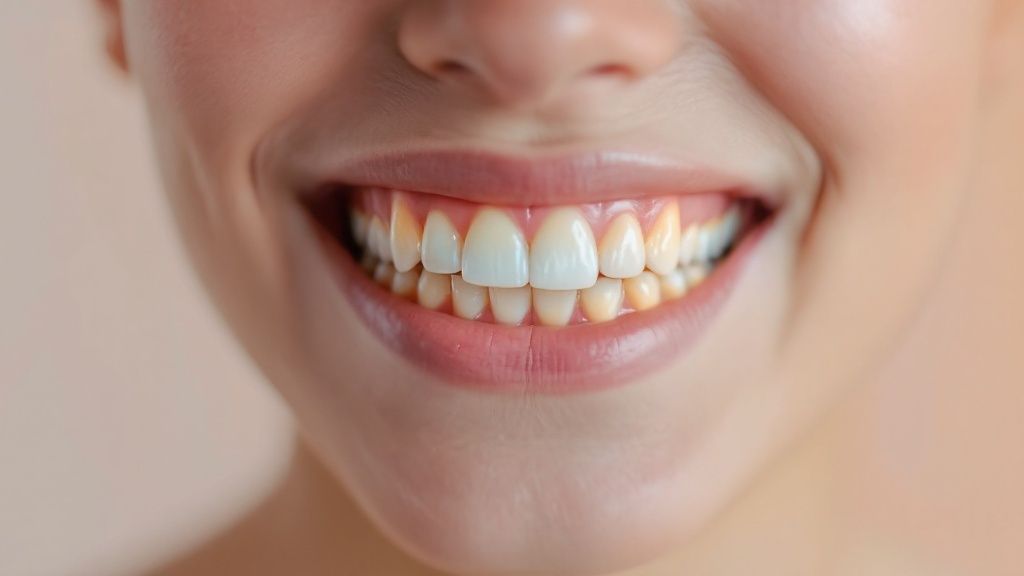
Think of your gums as a cozy turtleneck sweater for your teeth. They create a tight seal around each tooth, protecting the delicate roots from bacteria and hot or cold foods. When that seal begins to pull away, it's more than just a cosmetic issue.
For many of our patients here in Surprise, AZ, the first symptom is a new or sharp tooth sensitivity. This happens because the exposed roots are not covered by the hard, protective enamel that your upper teeth have.
Why are exposed roots a problem? They are much softer than enamel and more prone to cavities. They also have tiny tubes that lead straight to the tooth's nerve, which is why a sip of hot coffee or cold ice cream can cause a jolt of pain.
The Connection to Gum Disease
One of the most common reasons for gum recession is periodontal (gum) disease. This is an infection caused by plaque and tartar buildup along your gumline. You can learn more about how to spot and prevent gum disease in our detailed guide.
The bacteria in plaque cause your gums to become red, swollen, and bleed easily when you brush. If not treated, this inflammation can destroy gum tissue and the bone that holds your teeth in place.
- Pockets Form: As gums pull away, they form small gaps or "pockets" between the teeth and gums.
- Bacteria Thrive: These pockets are the perfect home for more harmful bacteria, making the infection worse.
- Tissue Loss: The ongoing infection causes the gum tissue to shrink back and recede.
This is not a rare problem. According to the CDC, nearly 47% of adults over 30 show signs of gum disease. This fact highlights why regular checkups at West Bell Dental Care are so important for catching problems early.
Let's look at the most common causes.
Quick Guide to Gum Recession Causes
Here is a simple overview of the factors that lead to receding gums.
| Cause Category | Common Examples |
|---|---|
| Oral Hygiene Habits | Brushing too hard, using a hard-bristled brush, not flossing. |
| Dental Health Issues | Gum disease (gingivitis/periodontitis), crooked teeth, teeth grinding (bruxism). |
| Lifestyle Factors | Smoking and tobacco use, lip or tongue piercings. |
| Genetics & Biology | Having naturally thin gum tissue, family history of gum problems. |
As you can see, the reasons can be anything from daily habits to health conditions. Finding the specific cause is the first step toward the right treatment.
Everyday Habits That Can Harm Your Gums
Often, the reason for receding gums is not a big mystery—it's part of our daily routines. We may think we are taking good care of our teeth, but some common habits can accidentally damage the delicate gum tissue.
Understanding these factors is the first step. From there, you can make small but powerful changes to protect your oral health for years to come.
This visual guide shows how things like brushing habits, gum disease, and even your genes are all connected to gum recession.
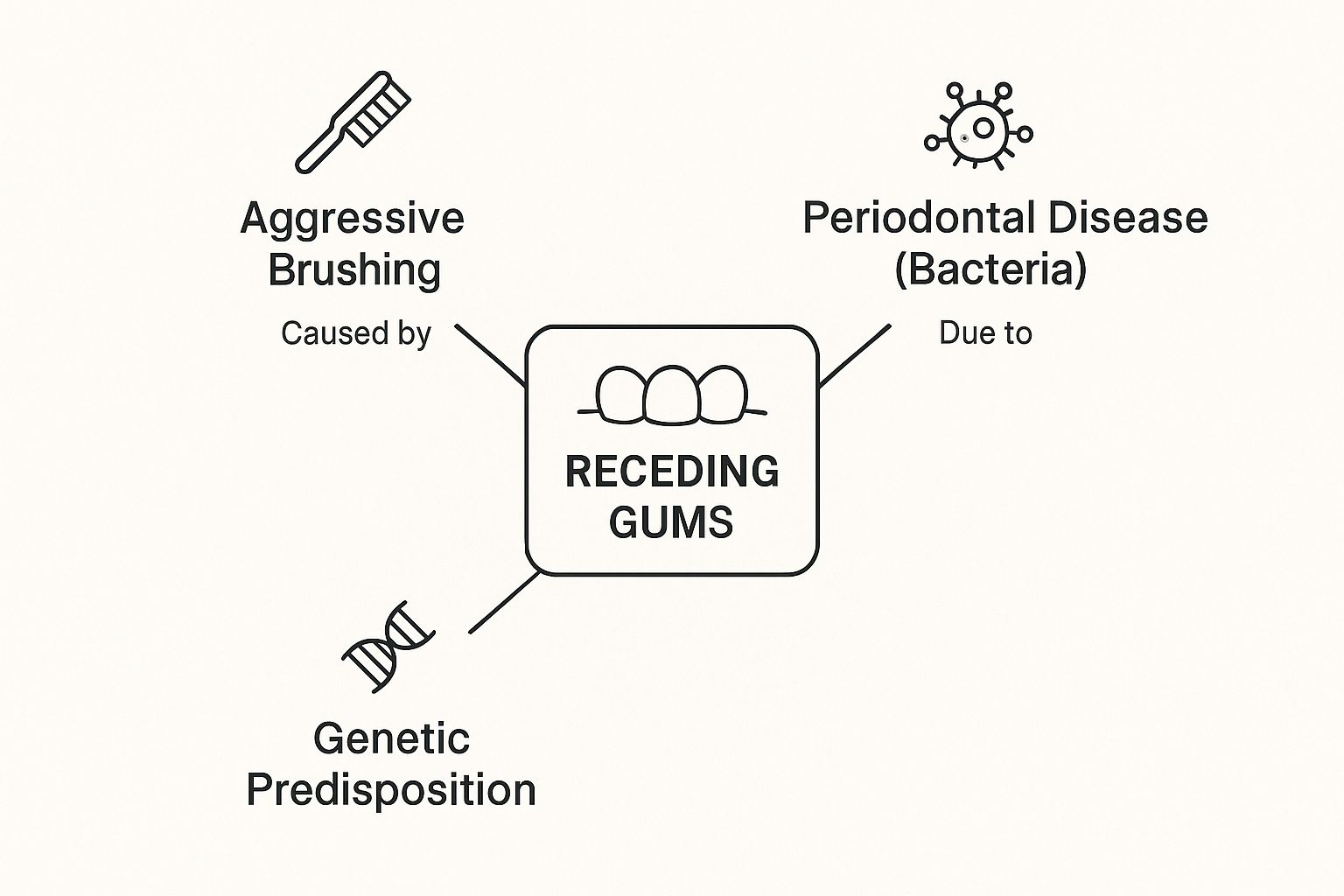
As you can see, both physical wear and tear and your body's health play a big part in your gumline's condition.
Brushing with Too Much Force
One of the most common reasons we see for gum recession in our Surprise, AZ office is simply brushing too hard. Many people think that scrubbing harder makes their teeth cleaner, but this is a harmful myth.
Think of your gums like a delicate piece of fabric. If you scrubbed that fabric with a stiff brush every day, it would start to wear away. The same thing happens to your gums, causing them to pull back from your teeth.
A simple change can make a big difference. We always recommend using a soft-bristled toothbrush and thinking of the motion as a gentle massage, not a tough scrub. An electric toothbrush with a pressure sensor is also a great tool to prevent you from brushing too hard.
The Impact of Plaque and Tartar Buildup
Besides brushing too hard, the most common biological cause is untreated periodontal (gum) disease. It all begins with plaque—that sticky, bacterial film that forms on your teeth. If not removed daily, it hardens into tartar, which can only be removed with a professional cleaning.
This tartar buildup irritates the gums, making them inflamed. This early stage is called gingivitis, and you might notice your gums are red or bleed when you brush. If left untreated, the inflammation can destroy gum tissue and bone, causing the gums to recede.
- Plaque: A soft, sticky film of bacteria always forming on your teeth.
- Tartar: Hardened plaque that irritates gums and allows more bacteria to grow.
- Inflammation: Your body's response to bacteria, which can damage gum tissue over time.
Your best defense is a consistent daily cleaning routine. For a quick reminder on the right way to do things, check out our guide on how to floss correctly. That one small habit is key to clearing out plaque from between your teeth where a brush can't reach.
Other Physical Factors to Consider
While brushing and gum disease are the main issues, other physical problems can also cause receding gums. These problems often create uneven pressure or ongoing irritation that wears down gum tissue.
Some of these less obvious causes include:
- Misaligned or Crooked Teeth: When your teeth don't line up right, chewing pressure isn't spread evenly. This can put too much stress on certain parts of the gums and bone, leading to recession.
- Teeth Grinding or Clenching (Bruxism): Many people in the Sun City West and Peoria area grind their teeth at night without knowing it. This constant heavy pressure is very damaging to both your teeth and your gums.
- Lip or Tongue Piercings: A metal stud may look cool, but jewelry in the mouth can rub against the gum tissue. Over time, it can physically wear the gums away, causing recession in that spot.
How Your Lifestyle Choices Impact Gum Health
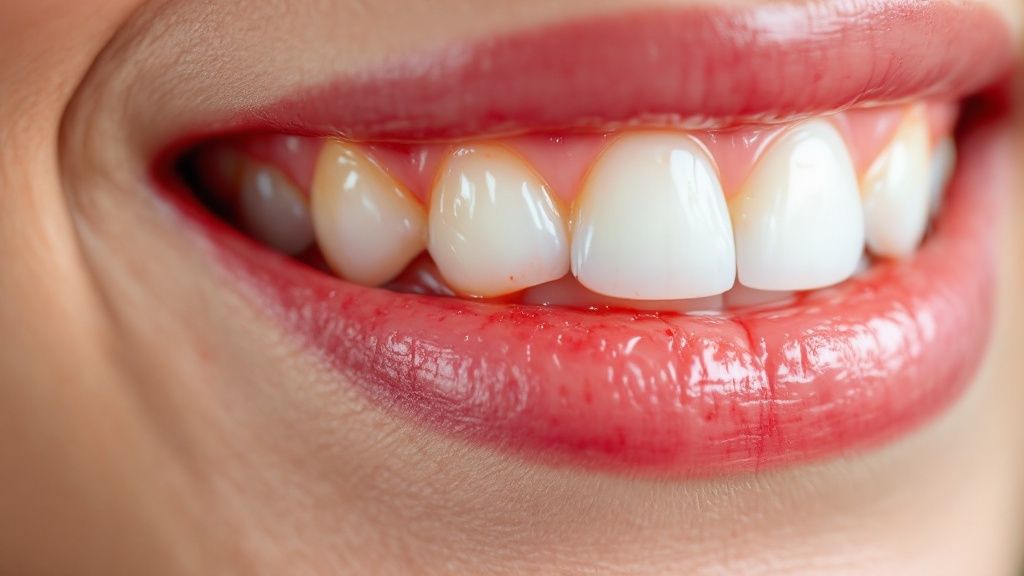
It’s easy to think gum health is all about brushing and flossing, but your daily habits play a huge role. For many people in Surprise and Peoria, lifestyle choices are a major factor in what causes receding gums.
Making positive changes can be your best defense in protecting your smile. It's about understanding how your daily habits affect your oral health from the inside out.
The Role of Tobacco and Vaping
Whether it's cigarettes, chewing tobacco, or vaping, any form of nicotine is very bad for your gums. Tobacco use tightens the blood vessels in your gum tissue, cutting off the flow of blood and nutrients. This makes it harder for them to heal and fight off infections.
Imagine trying to grow a garden without enough water—the plants can't thrive. In the same way, your gums become much more vulnerable to the bacteria that cause periodontal disease, a main cause of recession.
How Your Diet Affects Your Gums
What you eat directly changes the environment in your mouth. A diet high in sugar and acidic foods feeds the harmful bacteria that create plaque. As these bacteria feed, they produce acids that attack both your tooth enamel and your gum tissue, leading to inflammation.
The takeaway is simple: your mouth reflects your overall health. By making smarter choices, you can create a healthier environment that naturally fights gum disease and recession.
For example, eating an anti-inflammatory diet can help lower inflammation in your body, which is a big step toward keeping your gums healthy.
The Hidden Impact of Stress
Life in communities like Sun City and El Mirage can be busy, and long-term stress often has physical effects we don’t always notice. One of the most common is bruxism—the unconscious clenching and grinding of your teeth, especially at night.
This habit puts a lot of force on your teeth, gums, and the bone underneath. Over time, this constant pressure can speed up the breakdown of gum tissue, causing recession or making an existing problem worse.
Luckily, you have a lot of control over these lifestyle factors. From using the right toothbrush to making better food choices, even small changes can make a big difference. For more tips, check out our guide on the best oral hygiene products to support your efforts.
Hidden Health Conditions Linked to Gum Recession
Sometimes, what is happening in your mouth is a sign of what is going on in the rest of your body. Receding gums can be a red flag for an underlying health condition that needs attention. This connection between oral health and overall health is very important.
Your gums are sensitive, and their health can be affected by changes throughout your body. That's why at West Bell Dental Care, we look at more than just your teeth during your visit.
How Hormonal Changes Affect Gums
Life brings natural hormonal changes, especially for women, and these can make your gums more sensitive to problems.
- Pregnancy: A rise in progesterone increases blood flow to the gums. This can make them extra sensitive, swollen, or more likely to bleed. This is often called "pregnancy gingivitis," and if not managed well, it can raise the risk of gum recession.
- Menopause: When estrogen levels drop, it can lead to a drier mouth and cause gum tissue to thin out. Thinner gums are not as strong and are more likely to recede.
It's important to know that these hormonal changes don't cause recession by themselves. Instead, they can make your gums overreact to the plaque and bacteria that are already there.
Systemic Diseases and Your Oral Health
Certain long-term health conditions can make it harder for your body to fight off infection, and your gums are often one of the first places to show it.
Diabetes is a prime example. When blood sugar levels are not well-controlled, it can weaken your white blood cells, which are the body's main defense against bacterial infections. This makes it harder to fight the bacteria that cause gum disease, a top cause of gum recession.
Here’s a good way to think about it: A healthy immune system is like having a great security team for your gums. When a condition like diabetes weakens that team, it's easier for "invaders" (harmful bacteria) to get in, cause inflammation, and destroy gum tissue.
The Impact of Common Medications
Even the medicines you take for other health issues can play a part. One of the most common side effects of hundreds of medications—from allergy pills to blood pressure medicine—is dry mouth.
Saliva is your mouth's quiet hero. It is always working to rinse away food and neutralize the harmful acids that plaque makes. When you have less saliva, bacteria can multiply more easily, raising your risk for both cavities and the gum inflammation that starts recession.
If you've noticed your mouth feeling dry, that's very important information to share with us during your dental check-up in our Surprise office.
Modern Treatments For Receding Gums In Surprise AZ
If you've started to notice your teeth look longer or feel more sensitive, the most important step is to see a professional. Here at West Bell Dental Care, we understand that dental treatment can be stressful. We focus on gentle, effective solutions to bring back your comfort and confidence.
Your path to healthy gums starts with a simple, thorough exam. We’ll check your gum health by measuring the tiny spaces, or "pockets," between your gums and teeth. This is a painless process that gives us a clear picture of the recession so we can create the right plan for you.
You are not alone in this. A comprehensive 2023 review showed that over 84% of people have at least 1 mm of gum recession (read the full research on gum recession prevalence). This is not a personal failure; it's a very common issue.
Non-Surgical Solutions First
For most of our patients in Surprise and Sun City West, we begin with a non-surgical approach. We always prioritize the least invasive options that will get your gum health back on track.
The foundation of this is a deep cleaning procedure called scaling and root planing. You can think of it as hitting the reset button for your gumline.
- Scaling: We carefully remove all the built-up plaque and hardened tartar from above and below your gumline.
- Root Planing: Next, we gently smooth the roots of your teeth. This helps your gums reattach to the tooth and makes it harder for new bacteria to stick.
This two-step cleaning is crucial for stopping recession, especially when gum disease is the cause. To see how we manage gum health, learn more about our periodontal therapy to protect your smile.
Advanced Restorative Options
Sometimes, the recession is more advanced, and a lot of gum tissue has been lost. In these cases, restorative procedures might be the best way to protect your exposed tooth roots and improve the look of your smile.
One of the most effective treatments we use is a gum graft. During this procedure, we take a small piece of tissue—usually from the roof of your mouth or a donor source—and place it over the exposed root.
A gum graft isn’t just about covering an exposed spot. It reinforces the thin gum tissue that’s there, making it stronger and more resistant to future recession. It’s like adding armor to protect the foundation of your smile.
At West Bell Dental Care, we always take the time to explain every option. We want you to feel informed and empowered in your decisions. Our goal is to stop receding gums and restore your oral health with compassionate, modern care.
Frequently Asked Questions
Can receding gums grow back on their own?
Unfortunately, no. Once gum tissue has been lost, it does not grow back by itself. However, professional treatments at our Surprise, AZ office can stop the recession from getting worse and restore your gumline to protect your teeth.
Is treatment for receding gums painful?
We prioritize your comfort at West Bell Dental Care. For procedures like deep cleanings or gum grafts, we use effective local anesthetics to numb the area completely, ensuring a pain-free experience. We always discuss your comfort options with you beforehand.
How can I stop my gums from receding more?
The best way is through a gentle oral hygiene routine. Use a soft-bristled toothbrush, brush gently, floss daily, and maintain regular professional cleanings. If you grind your teeth, a custom nightguard from our Surprise office can protect your gums from pressure.
What does gum treatment cost in Surprise, AZ?
The cost depends on your specific needs, from a non-surgical cleaning to a gum graft. At West Bell Dental Care, we provide a clear, detailed treatment plan with all costs upfront. We will also help you with your insurance and discuss payment options.
When should I see a dentist for receding gums?
You should schedule a visit as soon as you notice any signs, such as longer-looking teeth or new sensitivity to hot and cold. Catching it early is the best way to prevent more damage. Our team is here to help patients from Surprise, Sun City, and nearby communities. You can learn more about what what causes tooth sensitivity in our related guide.
If you're worried about your gums, don't wait. The friendly team at West Bell Dental Care is here to help you understand what's happening and restore your healthy smile. Contact us today to schedule your consultation and take the first step toward healthier gums.
.lwrp.link-whisper-related-posts{ margin-top: 40px; margin-bottom: 30px; } .lwrp .lwrp-title{ }.lwrp .lwrp-description{ } .lwrp .lwrp-list-container{ } .lwrp .lwrp-list-multi-container{ display: flex; } .lwrp .lwrp-list-double{ width: 48%; } .lwrp .lwrp-list-triple{ width: 32%; } .lwrp .lwrp-list-row-container{ display: flex; justify-content: space-between; } .lwrp .lwrp-list-row-container .lwrp-list-item{ width: calc(25% – 20px); } .lwrp .lwrp-list-item:not(.lwrp-no-posts-message-item){ } .lwrp .lwrp-list-item img{ max-width: 100%; height: auto; object-fit: cover; aspect-ratio: 1 / 1; } .lwrp .lwrp-list-item.lwrp-empty-list-item{ background: initial !important; } .lwrp .lwrp-list-item .lwrp-list-link .lwrp-list-link-title-text, .lwrp .lwrp-list-item .lwrp-list-no-posts-message{ }@media screen and (max-width: 480px) { .lwrp.link-whisper-related-posts{ } .lwrp .lwrp-title{ }.lwrp .lwrp-description{ } .lwrp .lwrp-list-multi-container{ flex-direction: column; } .lwrp .lwrp-list-multi-container ul.lwrp-list{ margin-top: 0px; margin-bottom: 0px; padding-top: 0px; padding-bottom: 0px; } .lwrp .lwrp-list-double, .lwrp .lwrp-list-triple{ width: 100%; } .lwrp .lwrp-list-row-container{ justify-content: initial; flex-direction: column; } .lwrp .lwrp-list-row-container .lwrp-list-item{ width: 100%; } .lwrp .lwrp-list-item:not(.lwrp-no-posts-message-item){ } .lwrp .lwrp-list-item .lwrp-list-link .lwrp-list-link-title-text, .lwrp .lwrp-list-item .lwrp-list-no-posts-message{ }; }Ready to See a Dentist in Surprise, AZ?
Dr. Jennifer H. Wynn and the West Bell Dental Care team are here to help. Call us at 480-795-2420 or book online below.

Medically reviewed by Dr. Jennifer H. Wynn, DDS — Founder of West Bell Dental Care, Surprise, AZ. Graduate of Loma Linda University School of Dentistry with 30+ years of experience in general, cosmetic, and restorative dentistry. NPI: 1144359720 | AZ License: D009624.