
Direct Answer: It depends on the treatment, not the date. Cleanings and fillings often still fit in December. Crowns and implants need lab and healing time, so those may split across two benefit years.
Every fall I take some version of the same call. Someone has had a treatment plan sitting in a drawer since spring, and now the calendar has flipped to October. They tell me they have put it off too long and they just want to get it all done at once.
That feeling is common all over Surprise this time of year. And the honest answer is not “come in before it’s too late.” The real answer is that using dental benefits before they reset is a math problem about your specific plan and your specific treatment sequence.
So let me walk you through the two things that actually decide it: how your annual maximum works, and how long your particular treatment takes from first visit to final restoration.
What your annual maximum actually is, in plain English
Most people have never had this explained to them, and I do not blame anyone for being fuzzy on it.
Your annual maximum is the ceiling on what your dental plan will pay out in one benefit year. Industry sources generally put typical maximums somewhere in the $1,000 to $2,000 neighborhood, though yours could sit above or below that. Once the plan hits that ceiling, it stops paying, and the rest is on you.
Here is the part that stings: on most plans, whatever you do not use does not roll into next year. It simply goes away.
A few details people miss almost every time:
- Your deductible and copays usually do not count toward the maximum. Only what the plan itself pays gets counted.
- Not every plan runs on a calendar year. Plenty of plans start in July, or on your hire date anniversary. Confirm your actual start and end dates instead of assuming January 1.
- Preventive visits often sit outside the maximum, or are covered at a much higher percentage. Two cleanings a year that you skipped are usually the easiest benefit to lose.
If you are not sure where you stand, our guide on what to ask your insurance before your dental benefits disappear has the exact questions to read off over the phone.
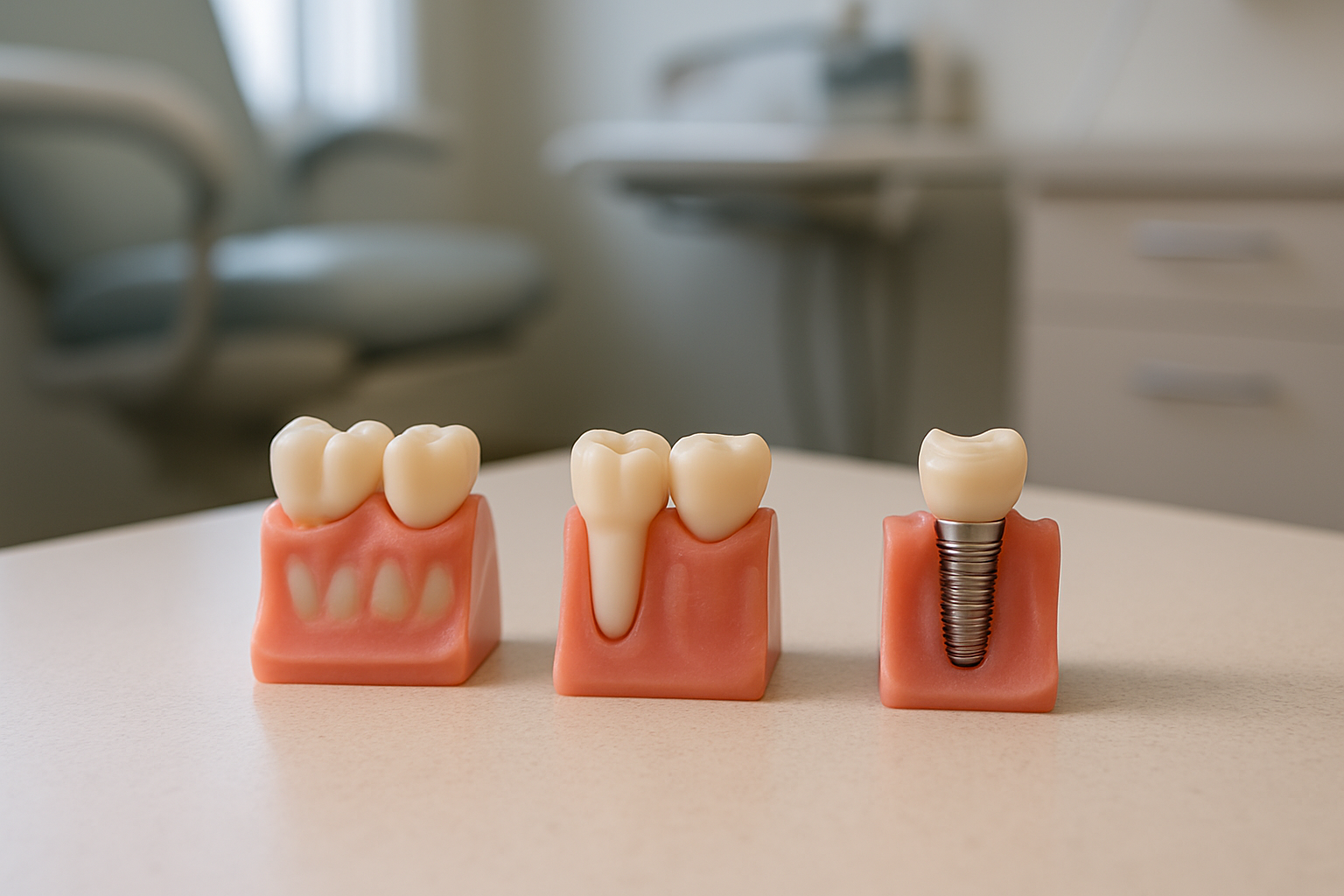
How late is too late depends on the treatment, not the date
This is the part nobody explains at the front desk, and it is the whole ballgame.
A single filling is one appointment. If you call in early December and there is room on the schedule, that treatment is finished and billed inside this benefit year without much drama.
A crown is a different question. Traditionally it runs two visits with lab time in between, though same-visit crown technology has shortened that piece for a lot of patients. We cover how a one-visit crown actually works separately if you want the detail.
An implant is a different question again, and the gap is bigger than most people expect. Healing time sits between the surgical step and the final crown, and that healing is measured in months, not weeks. Starting an implant in November does not mean finishing it in December.
That is not always bad news. A plan that starts in October or November may bill across two benefit years, which can work in your favor if you are already close to maxing out this year. Part of the treatment gets paid from this year’s pot, part from next year’s.
If you have several things stacked up, our walkthrough on how a catch-up plan gets split into stages shows how that sequencing usually gets built.
Rough timelines by treatment type
These are general ranges, not promises. Your mouth, your healing, and your lab schedule all move these numbers, so ask your own office for a timeline in writing.
| Treatment | Typical visits | Start to finish | Can it split across benefit years? |
|---|---|---|---|
| Cleaning and exam | 1 | One appointment | No need, usually finishes same day |
| Tooth-colored filling | 1 | One appointment | Rarely needed |
| Crown | 1 to 2 | Same day up to a few weeks | Sometimes, if visits straddle the year end |
| Root canal plus crown | 2 to 3 | Several weeks | Often yes, and often on purpose |
| Dental implant | 3 or more | Several months | Almost always |
| Invisalign | Ongoing check-ins | Many months | Yes, billing is usually staged |
The fall calendar every West Valley patient is juggling
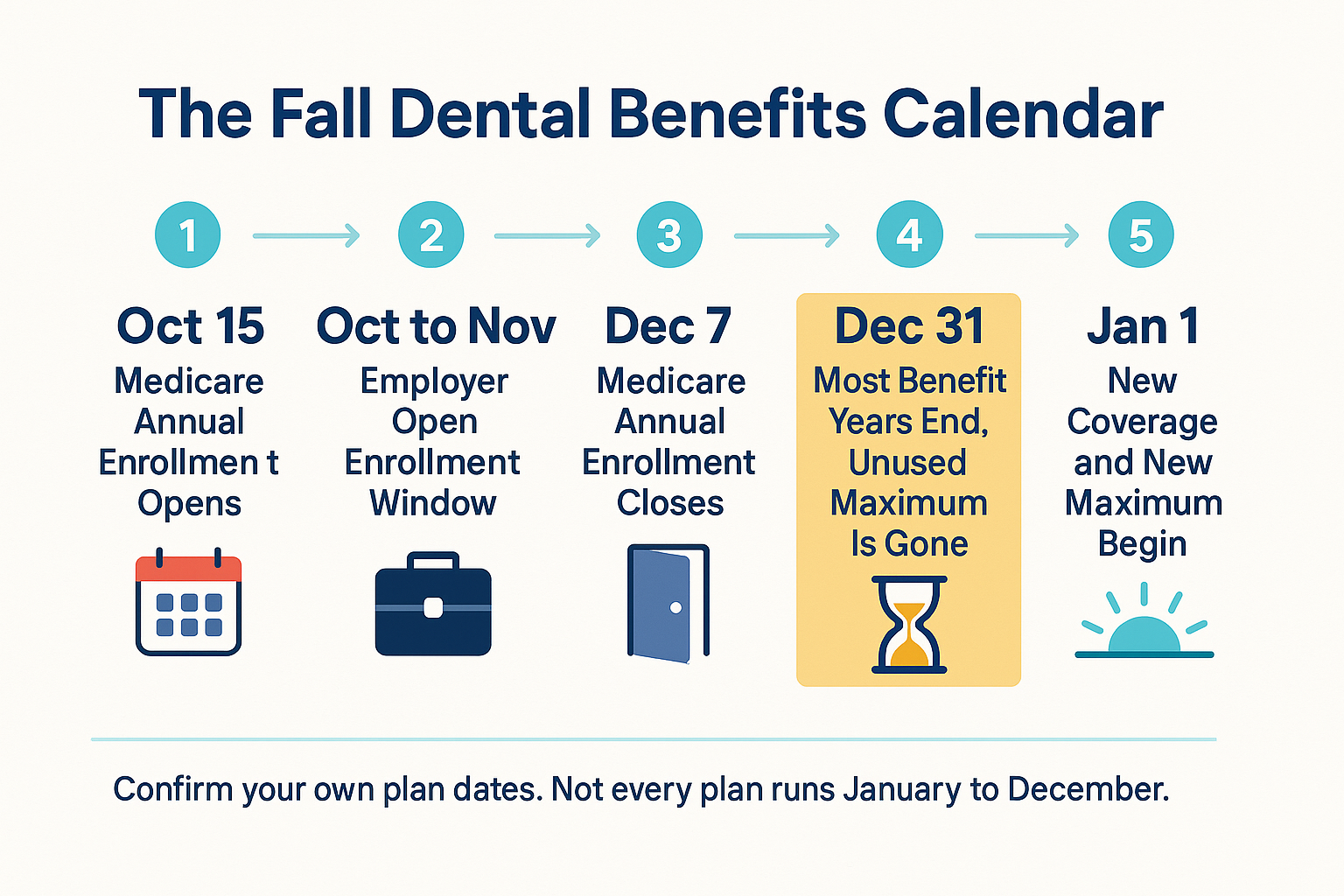
Between mid-October and the end of December, three separate deadlines land almost on top of each other. Seeing them in order makes the decision easier.
If you are on Medicare, two clocks are running at once
A steady stream of our patients come from Sun City Grand, The Grand, and Sun City, and this section is for them.
Medicare Annual Enrollment runs October 15 through December 7 each year, and any changes you make take effect January 1. Original Medicare generally does not cover routine dental care, which surprises a lot of people who assumed it did. You can read the specifics straight from the source on Medicare’s dental coverage page.
Some Medicare Advantage plans add a dental allowance as a supplemental benefit. Those allowances vary widely in what they cover and how much they pay, so the plan you pick in November shapes what you can afford in March.
Here is the practical overlap. You may be finishing this year’s treatment and choosing next year’s coverage inside the same six-week stretch.
That is a good reason to find out what this year’s plan still has left in it before you sign up for anything new. If you know you have a crown and two fillings waiting, that changes which plan makes sense. We break down what tends to be covered and what does not in Medicare and your dental bills.
What if you have no dental insurance at all?
About one in ten of our callers asks straight out what care costs without insurance. Some of them hear a number and hang up before asking what else exists, and that always bothers me, because there is usually another path.
An in-house membership club works differently from insurance. You pay a flat monthly or yearly fee that covers your preventive visits and discounts other treatment.
What that structure means for you:
- No deductible to meet first.
- No waiting periods before certain treatments are eligible.
- No annual maximum, and therefore no December 31 cliff at all.
Third-party financing options like CareCredit also exist, and plenty of offices work with them for larger treatment plans.
Whichever route you take, ask for a written pre-treatment estimate before you commit to anything. A verbal ballpark at the front desk is not the same thing. More on how the numbers actually shake out is in our piece on dental care without insurance and our overview of what a dental membership plan is and who it helps.
Four things worth doing this week
None of this takes long, and doing it now beats guessing in late December.
- Log into your insurance portal or call the number on your card. Ask exactly how much of your annual maximum has already been used this year.
- Confirm your benefit year end date. Do not assume December 31. Ask them to say the date out loud.
- Check whether both of your covered cleanings have been used. This is the single most common unused benefit I see.
- Request a written pre-treatment estimate from your dental office for anything you are considering, with the plan’s expected payment broken out.
One local note on scheduling. Fall is when seasonal residents come back to the West Valley, and December is the most crowded month on any Surprise dental schedule.
The early morning, evening, and Saturday slots get claimed first. If you need two or three visits before your benefit year closes, the appointment book runs out well before the calendar does.
Frequently Asked Questions About Dental Benefits and Timing
Do unused dental benefits ever roll over to the next year?
On most plans, no. Whatever your plan did not pay out during the benefit year is simply gone when the year ends. A small number of plans offer a rollover or carryover feature that banks part of the unused amount, so it is worth asking specifically whether yours does.
Is it too late to start a crown in December?
Often it is not, especially if the office can do the crown in one visit. The bigger constraint is usually the schedule rather than the clinical timeline. Ask whether the treatment can be finished and billed inside your benefit year, and get that answer before you book.
Can I split a big treatment plan across two benefit years on purpose?
Yes, and it is a common strategy. If you are close to your annual maximum now, doing one phase in December and the next phase in January lets you draw from two separate maximums. This only works if the treatment sequence allows a natural pause, which your dentist should be able to tell you at the planning stage.
My plan year does not start in January. Does any of this still apply?
All of it applies, just on your dates instead of December 31. Plenty of plans run on a fiscal year or a hire date anniversary. Call and confirm your actual start and end dates rather than working off the calendar.
What should I ask for so I am not surprised by the bill?
Ask for a written pre-treatment estimate that lists each procedure, the fee, the expected plan payment, and your estimated portion. Then compare that estimate against the remaining amount on your annual maximum. Those two numbers together tell you almost everything you need to know.
Working out your own timeline
Fitting two or three visits in before a benefit year closes is easier when the schedule cooperates. Our doors open at 7 am every weekday, Tuesday through Thursday runs until 7 pm, and Saturday hours are 8 am to 3 pm, so most people can get it done without burning PTO. As one patient put it, “They explained everything in detail and went through all my options instead of pushing something on me because that’s what they wanted.” If you want a clear look at your remaining benefits and what your treatment sequence would actually take, West Bell Dental Care is at 480-795-2420 or westbelldentalcare.com.