
Direct Answer: Some of it can be combined. Anything painful or infected comes first, then failing teeth, then replacements, then cosmetic work. Healing time is what forces gaps, not scheduling games.
The most common sentence I hear from people who have been away from the dentist for a while is some version of this: I have put this off too long, and I just want it all handled at once. Roughly a quarter of our callers in a busy month are in exactly that spot.
I understand the instinct. Nobody in Marley Park or Sun City Grand wants to spend six separate mornings on Bell Road when one long day would do it.
So here is the honest answer, written out ahead of time so you are not hearing it cold in the chair. Some of it can be combined into fewer visits than you expect. Some of it physically cannot. This article covers which is which, and why the order looks the way it does.
Why Your Treatment Plan Is Ordered the Way It Is
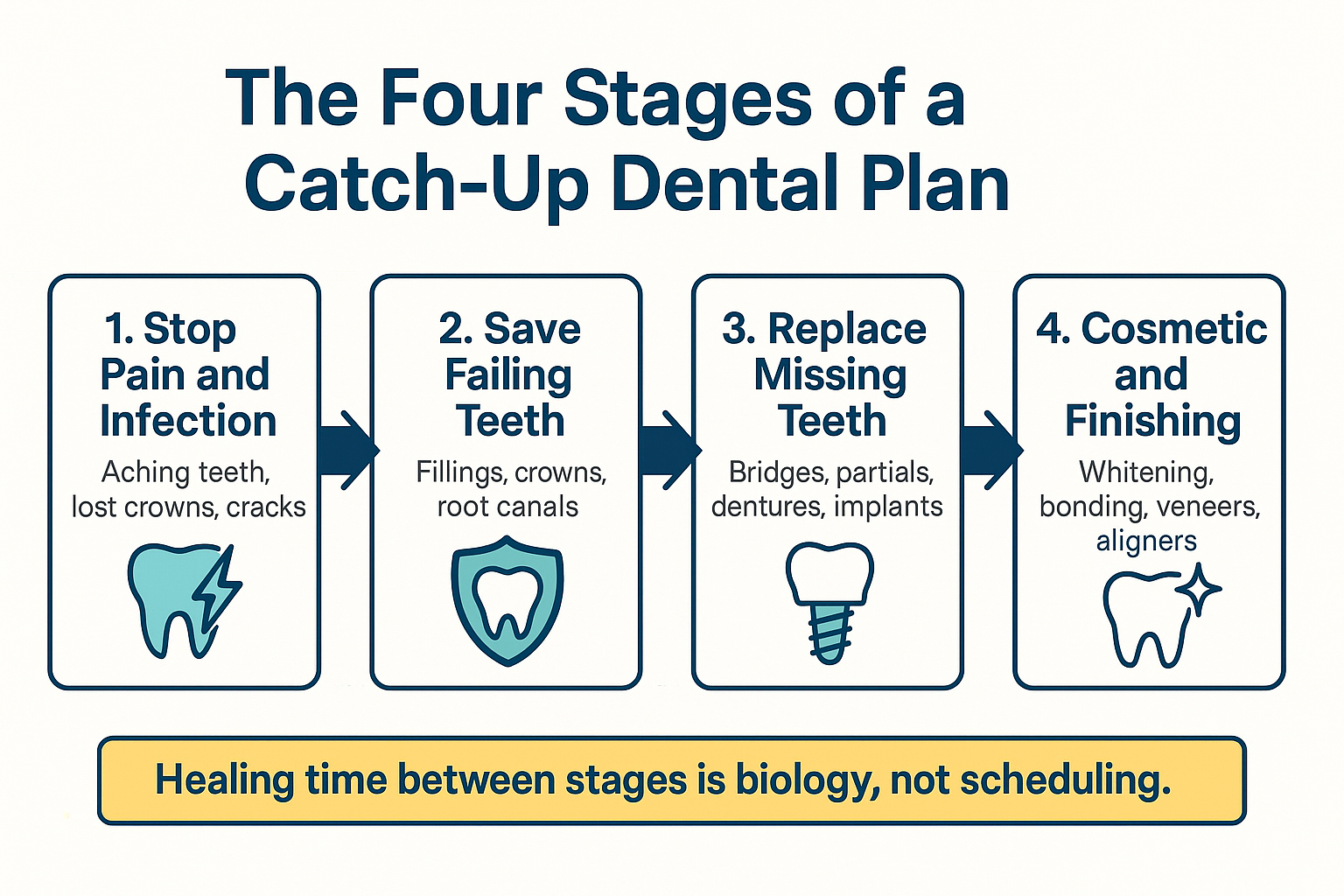
Most people assume the order is random, or worse, that the office is stretching work out to bill more visits. It is neither. A catch-up plan almost always runs in the same four-part sequence.
- Anything painful or infected comes first. A molar that aches when your cheek brushes it, a crown that fell off last spring, a cracked tooth you have been chewing around for months.
- Then teeth that are structurally failing. Big old fillings with cracks running through them, teeth likely to split if you bite the wrong almond.
- Then replacing teeth that are already missing. Bridges, partials, dentures, implants.
- Then cosmetic work. Whitening, bonding, veneers, aligner therapy.
The reason for that order is simple. If we spend three months building a beautiful crown on one side of your mouth while an infected tooth on the other side quietly gets worse, you end up in an emergency chair mid-plan.
The sequence exists to keep small problems from turning into urgent ones while the rest of the work is underway. It is not there to pad the schedule.
What Genuinely Can Be Combined Into One Longer Appointment
This is the section that matters most if you are weighing dental visits against paid time off. More gets bundled than most patients realize.
- Cleaning, exam and digital X-rays happen together at your first visit. That is one appointment, not three.
- Multiple fillings in the same area of the mouth are commonly done in a single sitting, since one area of numbing covers them all.
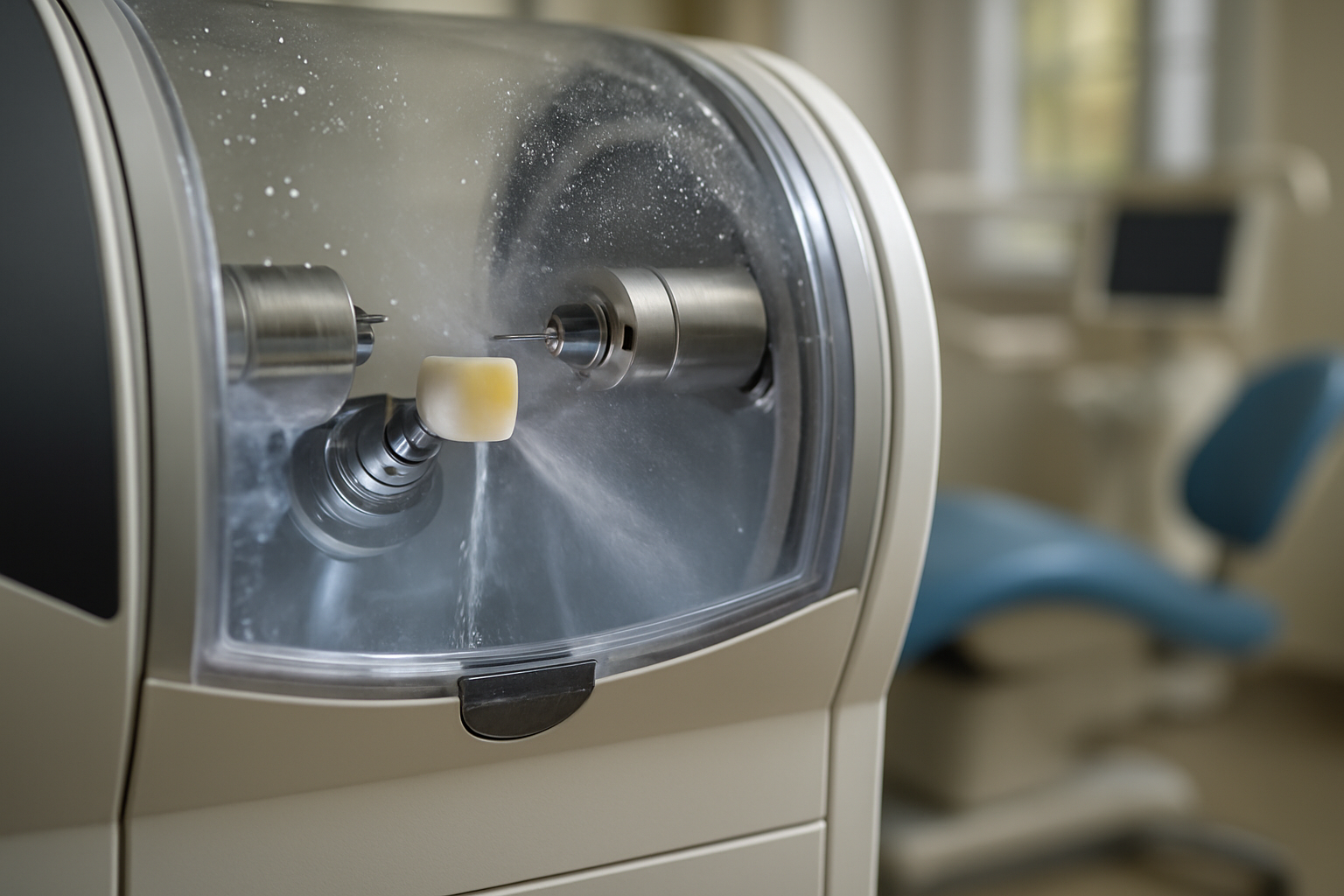
- In-office crown milling means a crown can be prepped and seated the same day, instead of two visits with a temporary crown in between. If you want the mechanics of that, I wrote about getting a crown in one visit separately.
- Simple extractions can often be paired with other work in the same quadrant.
One patient had two crowns finished in a single day after we found several things that needed attention. She was back at work the next morning.
The practical limit is usually your comfort and how long you can hold your mouth open, not the dentistry. That is why sedation, blankets, headphones and sunglasses matter for longer combined visits. They are what make a three-hour appointment tolerable instead of miserable.
What Forces a Gap, No Matter Who You See
This is where patients feel strung along, and I would rather explain it than let you wonder. Certain steps require healing between them, and no office can shortcut biology.
- Extraction sites need time to close before a replacement tooth is built over them. Build too early and the fit changes as the gum settles.
- Bone grafting adds healing months before an implant post can go in. Whether you need one at all depends on the site, which I covered in what decides if you need a bone graft.
- An implant post has to fuse with the jaw before the final crown is attached.
- Gum therapy is usually staged before restorative work. Building a crown onto an unhealthy foundation is how you end up redoing it.
I am deliberately not giving you a number of weeks for any of these. Healing depends on the person, the tooth, the site and your general health, and anyone who quotes you a firm timeline before looking is guessing.
What I can tell you is that the waiting is doing something. It is not scheduling filler.
The Four Stages of a Catch-Up Plan
Here is the order almost every multi-step plan follows, and what each stage is trying to accomplish.
Combine It or Space It Out
A quick reference for the steps patients ask about most when they are trying to cut down on trips.
| Step | Usually shares a visit? | Why |
|---|---|---|
| Cleaning, exam and X-rays | Yes | Standard first-visit workup, done together |
| Several fillings, same side | Often | One area of numbing covers the whole group |
| Crown with in-office milling | Yes, same day | Prepped, milled and seated in one appointment |
| Deep cleaning for gum disease | Sometimes split by side | Comfort and numbing limits, not billing |
| Extraction, then bridge or denture | No | Site needs to close before the replacement is built |
| Bone graft, then implant post | No | Graft has to heal before the post goes in |
| Implant post, then final crown | No | Post needs time to fuse with the jaw |
| Whitening or bonding | Last | Done after the health work is finished |
Why August Is a Smarter Month to Map This Than December
If your plan has several steps, the calendar matters as much as the dentistry.
Most dental plans run on a calendar year with an annual maximum, which is the ceiling on what the plan pays in that year. Industry guidance from Delta Dental on annual maximums notes those maximums commonly land somewhere in the $1,000 to $2,000 range depending on the plan, that preventive visits often do not count against the limit, and that unused benefits typically disappear at the end of the benefit period rather than rolling forward.
That opens a real option for a multi-step plan. Start one phase in the fall, then schedule the next phase after benefits reset in January, so two benefit years carry the work instead of one.
A few things worth doing before you commit:
- Pull your own plan documents or member portal and confirm your exact maximum and reset date. Plans differ more than people expect.
- Ask any office for a written estimate before treatment starts, not after.
- If you are on a Medicare Advantage plan, check the dental rider closely, since coverage varies a lot between plans.
If you do not have coverage at all, in-house membership plans and third-party financing both exist. I walked through how the first one works in what a dental membership plan actually covers.
Two Very Different Schedules in Surprise, and What Each One Needs
The people facing staged treatment around here fall into two camps, and they need almost opposite things.
Working parents in Marley Park, Surprise Farms and Legacy Parc are trying not to burn PTO. For them, a staged plan only survives if it fits around work. That means 7 am starts, weekday evening appointments running until 7 pm Tuesday through Thursday, and Saturday mornings.
Retirees in Sun City Grand and Sun City usually want the opposite: fewer, longer visits with predictable pacing. Many are also coordinating around heart medications, blood thinners or premedication, which sometimes means a call to their physician before we touch anything. That coordination is worth the extra week.
Families often ask for back-to-back appointments so the whole household is handled in one trip. That is a completely reasonable thing to request when you book, and it is easier to arrange with a few days notice than same day.
One more thing that shortens a staged plan: keeping the steps in one building. Most restorative, root canal, extraction, denture, implant and cosmetic work can be handled without sending you across town mid-treatment, which spares you the referral shuffle and the repeated new-patient paperwork.
What Makes a Long Plan Bearable
A woman left us a review that started with a line I think about a lot: “I hate the dentist, haven’t been in 5 years for that reason.” She still came in. That is the hard part, and most people who do it were dreading it for years first.
What makes the difference on a multi-visit plan is not just clinical skill. It is having a multi-doctor team under one roof, sedation and comfort options for people who want longer combined visits, and hours that actually fit real schedules. At West Bell Dental Care, that means weekdays from 7 am, evenings until 7 pm Tuesday through Thursday, and Saturdays 8 am to 3 pm.
If anxiety is what stalled things in the first place, what to expect at a first appointment with dental anxiety covers the accommodations available before you walk in.
Frequently Asked Questions About Staged Dental Treatment
Can I really get everything done in one visit?
Rarely all of it, but usually more than you think. Cleaning, exam and X-rays go together, several fillings in one area go together, and a crown can be prepped and seated the same day with in-office milling. What cannot be rushed is anything that needs healing between steps, like an extraction followed by a replacement tooth.
Why do I need gum treatment before a crown?
Because a crown sits on a foundation. If the gum and bone around that tooth are inflamed, the fit and the gum line will shift after treatment, and you may be redoing the work. Handling the gums first protects the money you are about to spend.
Should I start now or wait until my benefits reset in January?
Often the smartest move is both. Start the urgent phase in the fall while this year’s maximum is still available, then schedule the next phase after the reset so two benefit years carry the plan instead of one. Check your own plan documents for your exact reset date, since not every plan follows the calendar year.
Do I have to agree to the whole plan up front?
No. A treatment plan is a map, not a contract. Plenty of patients handle the painful and failing teeth first, then decide about replacements or cosmetic work months later once they see how it is going.
Can my spouse and I be seen back to back?
Usually, yes, and it is worth asking when you book rather than at check-in. Households in Sun City and Surprise Farms request this constantly so the whole family gets handled in one trip.
Figuring Out Where a Stalled Plan Should Pick Back Up
If you have a treatment plan sitting in a drawer from last year, or you have simply been away long enough that you are not sure what shape things are in, the first step is just an exam and a conversation about sequencing. New and returning patients across Surprise and the West Valley can reach our team at westbelldentalcare.com or 480-795-2420 to talk through it. No pressure to commit to the whole plan on day one.