
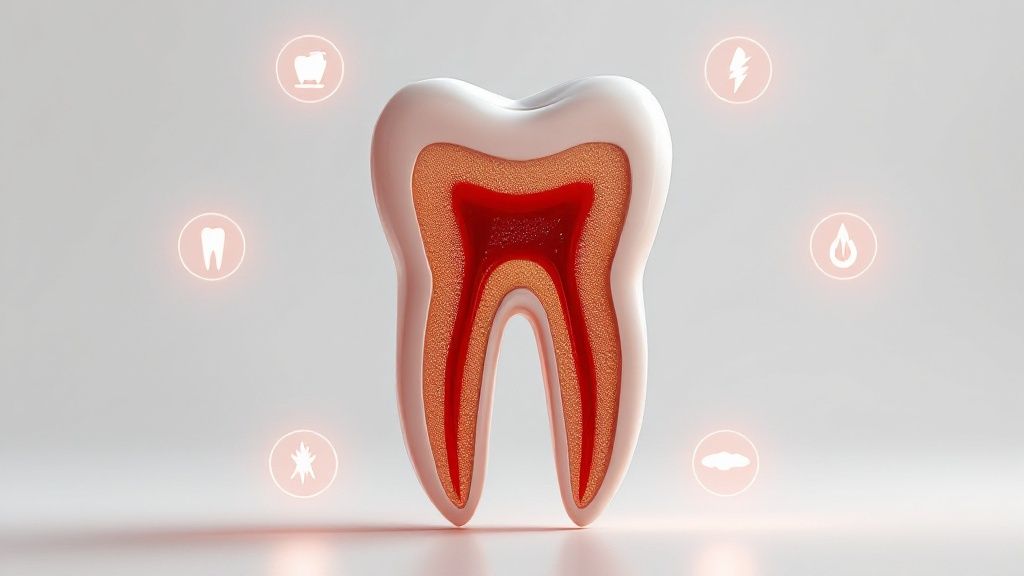
Nobody likes hearing the words “root canal.” But this common dental procedure is often the best way to save a damaged tooth and stop serious pain. Ignoring the warning signs of an infected tooth can lead to bigger problems, like a painful abscess or even bone loss. Learning to recognize these signs is the first step toward getting the relief you need.
This guide will walk you through seven common signs you need a root canal. We’ll cover everything from nagging pain to a change in your tooth’s color. If any of these symptoms sound familiar, the friendly team at West Bell Dental Care in Surprise, AZ, is here to help you feel better.
1. Severe Tooth Pain
One of the most obvious signs you need a root canal is severe, ongoing tooth pain. This isn’t a small ache that goes away. It’s a deep, throbbing, or sharp pain that makes it hard to focus on your day. This kind of pain is a big red flag that the soft tissue inside your tooth, called the pulp, is infected or inflamed.
The pain might feel worse when you bite down or chew. Many patients in Surprise and Sun City West describe it as a constant ache that even over-the-counter pain medicine can’t help. Ignoring this pain allows the infection to get worse.
When Pain is a Clear Warning Sign
Pay close attention if your pain feels like this:
- It wakes you up at night. A throbbing toothache that ruins your sleep is a classic sign of an infected tooth nerve.
- The pain is spontaneous. It can start suddenly without any trigger, like eating or drinking.
- You avoid chewing on one side. If you can't use one side of your mouth because of pain, it's time to see a dentist.
What You Can Do Now
While you wait for your dental appointment, here are a few tips to manage the pain:
- Track your pain. Make a note of when it hurts and what makes it worse. This info is very helpful for your dentist.
- Avoid very hot or cold foods. Extreme temperatures can make the pain much worse.
- Elevate your head. When you sleep, use an extra pillow to reduce pressure in your head, which can help ease a throbbing tooth.
2. Lingering Sensitivity to Hot or Cold
While a quick twinge of sensitivity is common, a key sign you might need a root canal is when that feeling lasts long after you’ve had something hot or cold. It’s not a fast “zing” that disappears. It's a lasting ache or sharp pain that hangs around for 30 seconds or more after you sip hot coffee or eat ice cream. This strongly suggests the nerve inside your tooth is damaged.

This type of sensitivity is very different from a minor, fleeting one. When the tooth's pulp is infected, the nerve can’t handle temperature changes like it used to. For many people in Surprise, AZ, this problem forces them to avoid their favorite foods and drinks. You can learn more about the causes of tooth sensitivity on westbelldentalcare.com.
When Sensitivity is a Clear Warning Sign
Pay attention if your sensitivity has these features:
- It lasts a long time. The pain stays for more than 30 seconds after you eat or drink something hot or cold.
- The pain is a dull throb. It feels like a deep ache inside the tooth, not just on the surface.
- You've started avoiding certain foods. You find yourself staying away from hot tea, cold water, or ice cream just to avoid the pain.
What You Can Do Now
While you wait to see a dentist, these steps can help:
- Keep a sensitivity journal. Note what triggers the pain, how long it lasts, and how bad it is.
- Use a straw. Drinking through a straw can help liquids bypass the sensitive tooth.
- Eat lukewarm foods. Avoid extreme temperatures until your appointment to prevent triggering the pain.
3. A Dark or Discolored Tooth
Another clear sign you might need a root canal is a change in your tooth’s color. If one tooth starts to look gray, black, or much darker than the others, it often means something is wrong on the inside. This happens when the nerve and pulp tissue inside the tooth die, causing it to darken from the inside out.
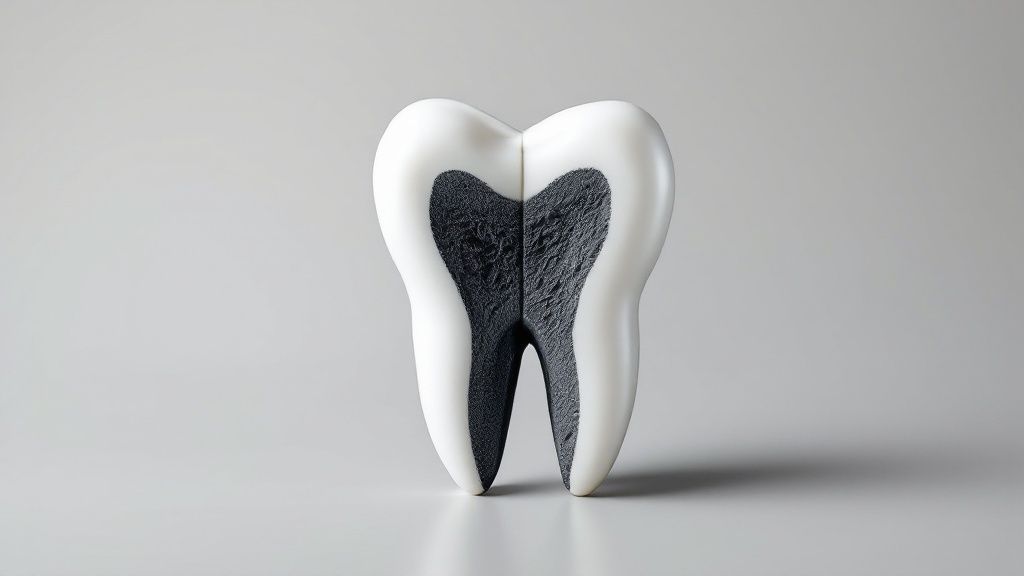
This isn’t like the surface stains you get from coffee or tea. This deep discoloration is a sign of internal damage from an injury or severe decay. Residents in Surprise, AZ, sometimes notice this change weeks or even months after a sports injury. Regular teeth whitening won’t fix this because the problem is on the inside.
When Discoloration is a Clear Warning Sign
Look out for these specific changes:
- The color change is slow but steady. A front tooth that slowly turns gray after an accident is a classic example.
- It only affects one tooth. A single dark tooth among healthy-looking ones points to an internal issue.
- The tooth looks "dead" or dull. It may lose its natural shine and look lifeless.
What You Can Do Now
If you see a discolored tooth, even if it doesn't hurt, it's important to act.
- Take pictures. Document the tooth’s color each week to show your dentist how it is changing.
- Don't use whitening strips. These products won't work on internal stains and might just irritate your gums.
- Schedule a dental exam. A discolored tooth needs a professional to find out the cause. After treatment, options like cosmetic bonding on westbelldentalcare.com can help it look great again.
4. Swollen and Tender Gums
Pain isn't just in the tooth. Another one of the key signs you need a root canal is a change in your gums. If you see swelling, feel tenderness, or notice a small bump near the painful tooth, it's a strong sign the infection is spreading. The infection from inside the tooth can move into the nearby bone and gum tissue.

This swelling is often caused by a dental abscess, which is a pocket of pus. Sometimes, this abscess forms a pimple-like bump on the gum that might drain. This can offer temporary relief, but the infection is still there and will continue to cause damage until it's treated by a dentist.
When Gum Issues are a Clear Warning Sign
Pay close attention if you have these gum problems:
- A "pimple" on your gum that won't go away. This is called a fistula, and it’s a clear sign of a draining infection.
- The area is tender to the touch. Swollen gums near a sore tooth that hurt when you press on them mean the infection is spreading.
- Swelling that comes and goes. The problem might seem to get better on its own, only to flare up again.
What You Can Do Now
While you wait for your appointment in Surprise, AZ, these tips can help:
- Rinse with warm salt water. A gentle rinse can help soothe the area and keep it clean.
- Don't try to pop the bump. Trying to drain an abscess yourself can push the infection deeper into your body.
- Watch for spreading swelling. If swelling moves to your cheek or face, or if you have trouble swallowing, seek emergency dental care right away.
Keeping your gums healthy is key to your overall health. To learn more, you can learn more about preventing gum disease here.
5. Pain When You Chew or Bite
A sharp or aching pain that only happens when you chew or bite down is another distinct sign of a root canal problem. This specific pain occurs because the pressure from biting squeezes the infected pulp and nerves inside your tooth, causing a jolt of pain. It's one of the clearest signs you need a root canal because the pain is linked to a direct action.
The feeling can be anything from a dull ache to a sharp pain that makes you stop eating. Many of our patients in Surprise and El Mirage find themselves chewing only on the other side of their mouth to avoid the pain. This is a clear signal that the tooth's nerve needs professional attention.
When Biting Pain is a Clear Warning Sign
See a dentist if your pain matches these situations:
- You avoid certain foods. If you can no longer eat hard or crunchy foods like apples or nuts, it’s a red flag.
- The pain is sharp and instant. A sudden, intense pain the moment your teeth touch is a classic sign of nerve damage.
- Clenching your jaw hurts. Even without food, just pressing your teeth together causes the tooth to ache.
What You Can Do Now
While you wait for your appointment at West Bell Dental Care, these steps can help:
- Eat soft foods. Choose things like yogurt, soup, and smoothies to avoid putting pressure on the tooth.
- Chew on the other side. Use the healthy side of your mouth to prevent irritating the painful tooth.
- Note your triggers. Pay attention to which foods or actions cause the most pain. This helps your dentist figure out the problem faster.
6. A Deep Cavity or a Large Filling
A deep cavity you can see or a large, old filling that is failing are major signs you might need a root canal. When tooth decay goes deep, it can reach the delicate pulp inside your tooth. Large fillings, especially older metal ones, can also weaken the tooth and create tiny cracks for bacteria to get in.
When bacteria reach the pulp, an infection starts, causing inflammation and pain. Many families in the Surprise area come to us when they notice a dark spot on a tooth or an old filling that looks cracked. Taking care of this quickly is key to saving the tooth from being pulled. According to the American Association of Endodontists, over 15 million root canals are performed every year in the United States, saving millions of teeth.
When Decay is a Clear Warning Sign
Pay attention if you notice these issues in your mouth:
- A visible hole or pit in your tooth. A deep, dark cavity is a direct path for bacteria to reach the tooth's nerve.
- A large filling looks damaged. This can include cracks, gaps around the edges, or feeling loose.
- A dark halo around an old filling. This often means new decay is hiding underneath it.
What You Can Do Now
While you wait for your appointment, here’s what you can do:
- Keep the area clean. Gently brush and rinse around the tooth to remove any food that could cause more irritation.
- Avoid chewing on that side. Putting pressure on a weak tooth could cause it to break.
- Note any changes. To understand the risks of waiting, learn more about how long a cavity can go untreated on westbelldentalcare.com.
7. A Past Dental Injury
A hard hit to your mouth from a sports injury, a fall, or an accident can cause hidden damage that later requires a root canal. Even if the tooth doesn't chip or crack, the impact can damage the delicate pulp tissue inside. This can cause the nerve to die over time, creating a place for infection to grow.
This process can be slow and silent at first. A tooth that was hurt months or even years ago can suddenly start to hurt, get dark, or develop an abscess. The hidden damage from the injury eventually leads to infection, making a root canal necessary to save the tooth. A dying tooth can also cause other issues, like bad breath. Learn more about the link between tooth health and breath on westbelldentalcare.com.
When an Old Injury Becomes a Warning Sign
An injury should always be checked by a dentist, even if there's no pain right away. Watch for these delayed signs:
- The tooth changes color. A hurt tooth may turn gray, dark yellow, or even black over time.
- A pimple appears on the gum. This is a fistula, a sign of a draining abscess from an infected root.
- Pain develops long after the injury. Sensitivity or a dull ache might show up weeks or months later.
What You Can Do Now
If you or a family member in Surprise, AZ, has a dental injury, follow-up care is very important:
- Get a dental exam right away. A dentist needs to check the damage, even if it looks minor.
- Use a cold compress. This helps reduce swelling and pain right after the injury happens.
- Go to all follow-up appointments. Your dentist will keep an eye on the tooth to make sure the nerve stays healthy.
Don't Ignore the Signs—Save Your Smile
Recognizing the signs you need a root canal is the first step toward feeling better and saving your natural tooth. From a throbbing pain that won't quit to lingering sensitivity from hot or cold drinks, your body is sending you important messages. A dark tooth, swollen gums, or pain when you bite down are also major red flags.
Ignoring these warnings won't make them go away. The infection can get worse and lead to more serious health issues or even tooth loss. The good news is that a root canal isn’t the scary procedure many people think it is. It’s a routine, pain-relieving treatment that is designed to save your tooth and make you comfortable again.
Frequently Asked Questions
1. Is a root canal painful?
We hear this question a lot in our Surprise office! Modern root canals are not painful. We use effective local anesthesia to make sure you are completely numb and comfortable during the procedure. Most patients say it feels similar to getting a regular filling.
2. What happens if I don't get a root canal when I need one?
If you ignore the signs, the infection can spread from the tooth root into your jawbone, causing a painful abscess. This can lead to more serious health problems and may result in needing the tooth extracted. It's always better to save the natural tooth if possible.
3. How long does a root canal procedure take at West Bell Dental Care?
Most root canals can be completed in one or two appointments, each lasting about 90 minutes. The exact time depends on how complex your case is. We focus on making the process as efficient and comfortable as possible for our patients in Surprise and Peoria.
4. How much does a root canal cost?
The cost can vary depending on which tooth is affected and how severe the infection is. We offer flexible payment options and will work with your dental insurance to maximize your benefits. Our team will provide a clear cost estimate before any treatment begins.
5. Can I go back to work after a root canal?
Yes, most people can return to work or school the same day. Your mouth will be numb for a few hours after the procedure, so we recommend being careful with eating. You might have some mild tenderness for a day or two, but it can usually be managed with over-the-counter pain relievers.
If any of these signs you need a root canal sound familiar, don't wait for the pain to get worse. The caring team at West Bell Dental Care is here to provide gentle, effective treatment for families in Surprise, Sun City, and beyond. Schedule your appointment today to find relief and save your smile by contacting us at West Bell Dental Care.