
Direct Answer: Neither option is better across the board. Implants replace the tooth root and help preserve jawbone. Dentures rest on the gums, cost less upfront, and need periodic relines as bone changes.
Most weeks, someone in our office asks me some version of the same question. They are missing several teeth, they are in their sixties or seventies, and they want to know whether to go with implants or dentures.
The messages we get through the website say it plainly. One person asked about the cost of full dentures when they already had four implants on top and four on the bottom. Another simply wanted to know if we do relines for the dentures they already own.
So this article is not a sales pitch for one option. It is the set of questions I wish more patients in Surprise and the surrounding West Valley knew to ask before they made the call.
Implants vs dentures for older adults: what each one actually does
These two options solve the same problem, missing teeth, but they work in completely different ways. That difference drives almost everything else.
Dentures are removable. They sit on top of your gums and are held in place by the shape of your gum tissue and the bone underneath. Full dentures replace an entire arch. Partials fill in gaps around teeth you still have.
Implants are titanium posts placed into the jawbone itself. The post acts as an artificial tooth root, and a crown, bridge, or denture attaches on top of it.
Here is the practical difference in daily life:
- Implants stay put. You brush them like natural teeth and you do not take them out.
- Dentures come out for cleaning, and most people need adhesive or periodic adjustments to keep the fit right.
- Implants transmit chewing force into the bone. Dentures spread that force across gum tissue, which is why some foods stay off the menu.
- Implants involve surgery and a healing period. Dentures do not.
Neither one is a shortcut. If you want a side-by-side on all three common paths, we walk through it in implant, bridge, or denture and how to choose.
The bone question almost nobody knows to ask
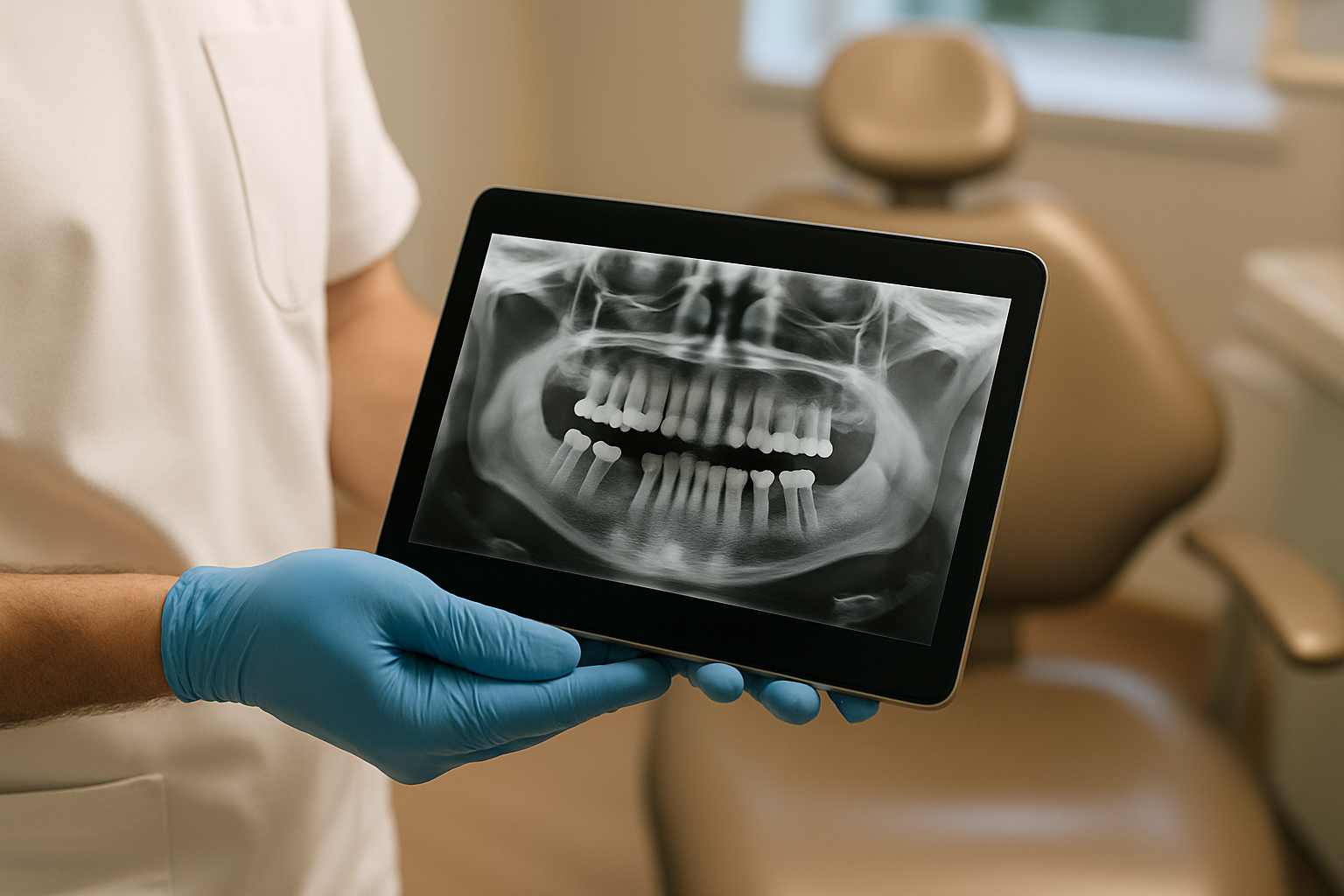
This is the part that changes the conversation. When a tooth comes out, the bone that used to hold that root starts to shrink. It no longer gets the pressure and stimulation the root provided, so it slowly loses density.
The clinical name is bone resorption, and it happens over months and years, not overnight. It is the reason a denture that fit beautifully three years ago now rocks when you chew.
That is also the honest answer to the reline question. Relines exist because the jaw underneath keeps changing shape while the denture does not.
Implants behave differently. The titanium post fuses with the surrounding bone in a process called osseointegration, and that connection keeps loading the bone the way a natural root would. Bone that gets used tends to stay.
For an active adult in Sun City Grand or Sun City who is planning for the next twenty years, that distinction matters. It affects:
- How your face holds its shape over time
- How stable any future denture will be
- Whether implants remain an option later, or whether grafting becomes necessary first
You can read more about how healing works after placement in our guide to the first stage of dental implant healing. The ADA’s patient resource on dentures also covers why fit changes with time.
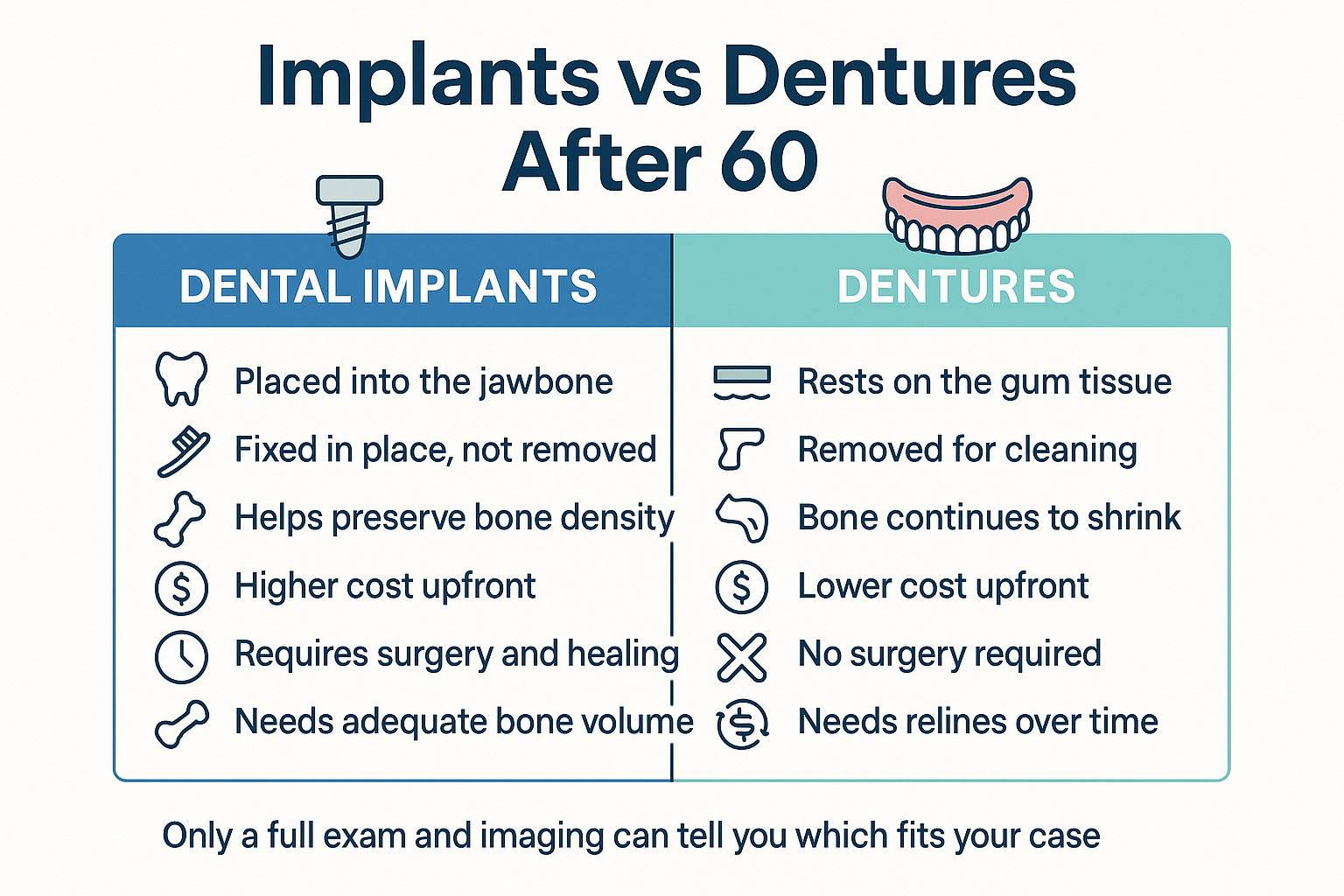
How the two paths compare over time
This breaks down the tradeoffs most patients weigh when they sit down with us for a consultation.
The cost picture is longer than the first number you hear
I will be straight with you. Implants cost more upfront than dentures. That is true almost everywhere, and it is true here in the West Valley.
What that number covers is worth understanding. An implant fee typically reflects the surgical placement, the abutment, a custom crown or restoration, imaging, and a process that unfolds over several visits and several months of healing.
Dentures are a lower number at the start. But the long-run math includes upkeep:
- Relines as the bone shape changes
- Adjustments when sore spots develop
- Eventual replacement, since a denture is not a permanent appliance
So the cheaper option today is not automatically the cheaper option over fifteen years. It might be, depending on your health, your bone, and how many teeth we are replacing. But it is a real conversation, not a formula.
Quotes also vary widely between offices for reasons that have nothing to do with quality. We broke that down in what goes into the cost of a dental implant.
One more thing worth knowing before fall. Medicare handles dental very differently than most people expect, and open enrollment is when that gets sorted out. Our overview of Medicare and your dental bills covers what is and is not included.
Tradeoffs at a glance
A quick reference on how the two options differ in the areas patients ask about most.
| Factor | Dental Implants | Dentures |
|---|---|---|
| How it is held | Fused to the jawbone | Rests on gum tissue |
| Effect on bone | Helps maintain bone density | Bone continues to resorb underneath |
| Upfront cost | Higher | Lower |
| Ongoing upkeep | Routine cleanings and checks | Relines, adjustments, replacement |
| Timeline | Several months, multiple visits | Weeks, fewer visits |
| Health requirements | Bone volume and stable healing capacity | Fewer medical restrictions |
| Eating comfort | Closest to natural teeth | Some foods stay difficult |
Not everyone who wants implants is a candidate, and that is fine
This is where an honest evaluation saves people money and disappointment. Implants need bone to anchor into, and they need your body to heal predictably around them.
A few things can complicate that:
- Poorly controlled diabetes, which slows healing
- Active smoking, which affects blood flow to the surgical site
- Years of missing teeth, which often means the bone has already thinned significantly
- Certain medications and medical histories that your dentist should review with you
If bone volume is short, a bone graft may come first, which adds time and cost to the plan. That is not a rejection, it is a sequence. We explain how that decision gets made in do you need a bone graft before a dental implant.
None of this is something you can figure out at home. We take digital X-rays during a consultation and look at actual bone levels, which means you get a real answer in one visit instead of guessing.
And if implants are not the right fit, dentures done well are a good outcome, not a consolation prize. Plenty of our patients chew comfortably and smile confidently with them for years.
What I would ask before you commit to anything
If you are sitting in a consult anywhere in Surprise, these are the questions that get you the clearest picture:
- What do my current bone levels look like on the X-ray?
- If I choose dentures, how often will I likely need a reline?
- If I choose implants, do I need a graft first, and what does that add to the timeline?
- What does the full treatment plan cost, start to finish, not just the first phase?
- Will my medical history or medications affect healing?
Write them down and bring the list. Nobody on our team minds the questions, and honestly, the patients who ask the most tend to end up happiest with the result.
If you are also weighing what to look for in a dental home more broadly after retirement, this guide covers that side of it.
Frequently Asked Questions About Implants and Dentures After 60
Do you reline existing dentures, or do I have to get new ones?
Relines are a normal part of denture ownership, and yes, we handle them. A reline reshapes the tissue side of your existing denture to match how your gums and bone look now. If the denture itself is worn, cracked, or the teeth are ground down, replacement may make more sense than a reline, and an exam is the only way to tell which applies.
Can I get implants if I have been missing teeth for over ten years?
Sometimes, but the bone in that area has likely thinned. Many long-term missing tooth cases need a bone graft before an implant can be placed. That does not rule you out, it just adds a step and some healing time to the plan.
How long does the whole implant process take?
Plan on several months rather than several weeks. Placement is one appointment, then the bone needs time to fuse with the post before the final crown goes on. If grafting is needed first, add more time to that.
I get very anxious about dental work. Does that change my options?
It should change how the care is delivered, not what care is available to you. We offer sedation for patients who need it, along with simpler comforts like blankets, headphones, and sunglasses for the overhead light. Tell whoever answers the phone that you are nervous before you ever walk in.
Is one option better for chewing?
Implants generally give you more bite force and fewer food restrictions, because the force goes into bone instead of gum tissue. Well-made dentures work fine for most everyday meals, but many patients do find certain foods stay tricky.
Thinking through your options in Surprise?
One patient who had spent most of a lifetime avoiding dental care wrote after his first visit that the office had a welcoming, calming atmosphere and that the staff were “friendly, respectful, Senior Friendly and very welcoming; surprisingly I felt like I landed in a safe place.” That is the experience we want for anyone walking in nervous about a big decision. If you want your bone levels looked at and your options explained in plain language, our team in Surprise keeps early morning, evening, and Saturday hours, and you can reach us at 480-795-2420 or at westbelldentalcare.com.