
Direct Answer: After retirement, look for a dentist who understands Medicare limitations, takes your comfort seriously, and can handle most of your care in one place without sending you all over town.
Retirement changes a lot of things — your schedule, your insurance, and yes, what you actually need from a dentist. The priorities that made sense at 40 don’t always hold up at 65 or 70.
For a lot of retirees in Surprise — especially folks settling into Sun City Grand, The Grand, or Sun City — this is the moment to find a real long-term dental home, not just whoever has an opening. Getting that choice right matters more than most people realize.
This article walks through the two or three things that genuinely determine whether a dental practice is a good fit after retirement. Not everything — just the parts that actually move the needle.
Why Your Dental Needs Actually Change After Retirement
Most people don’t think much about this until they’re sitting across from a dentist who’s recommending a crown they weren’t expecting, or realizing their new insurance doesn’t cover what their old plan did.
Here’s what actually shifts after retirement:
- Enamel thins over time, which makes teeth more vulnerable to cracking, sensitivity, and wear. Work done in your 30s — fillings, older crowns — starts reaching the end of its lifespan right around when you retire.
- Dry mouth becomes more common as a side effect of medications many retirees take daily. That increases cavity risk significantly, even in people who’ve never had many cavities before.
- Insurance changes completely. Original Medicare (Parts A and B) does not cover routine dental care. If you’re not enrolled in a Medicare Advantage plan with dental benefits or a standalone dental plan, you’re paying out of pocket for most of it.
- Gum disease risk climbs with age, and it’s closely tied to systemic conditions like diabetes and heart disease — both more prevalent in older adults.
None of this means you’re headed for a difficult dental future. It just means the dentist you choose needs to understand these patterns and plan around them — not react to them after the fact. Waiting for tooth pain before seeing a dentist becomes a much costlier strategy in your 60s and 70s than it was at any earlier stage of life.

The Insurance Question Most Retirees Don’t Ask Until It’s Too Late
This is where a lot of retirees get caught off guard. You’ve had employer dental coverage for decades, you retire, and suddenly the rules are completely different.
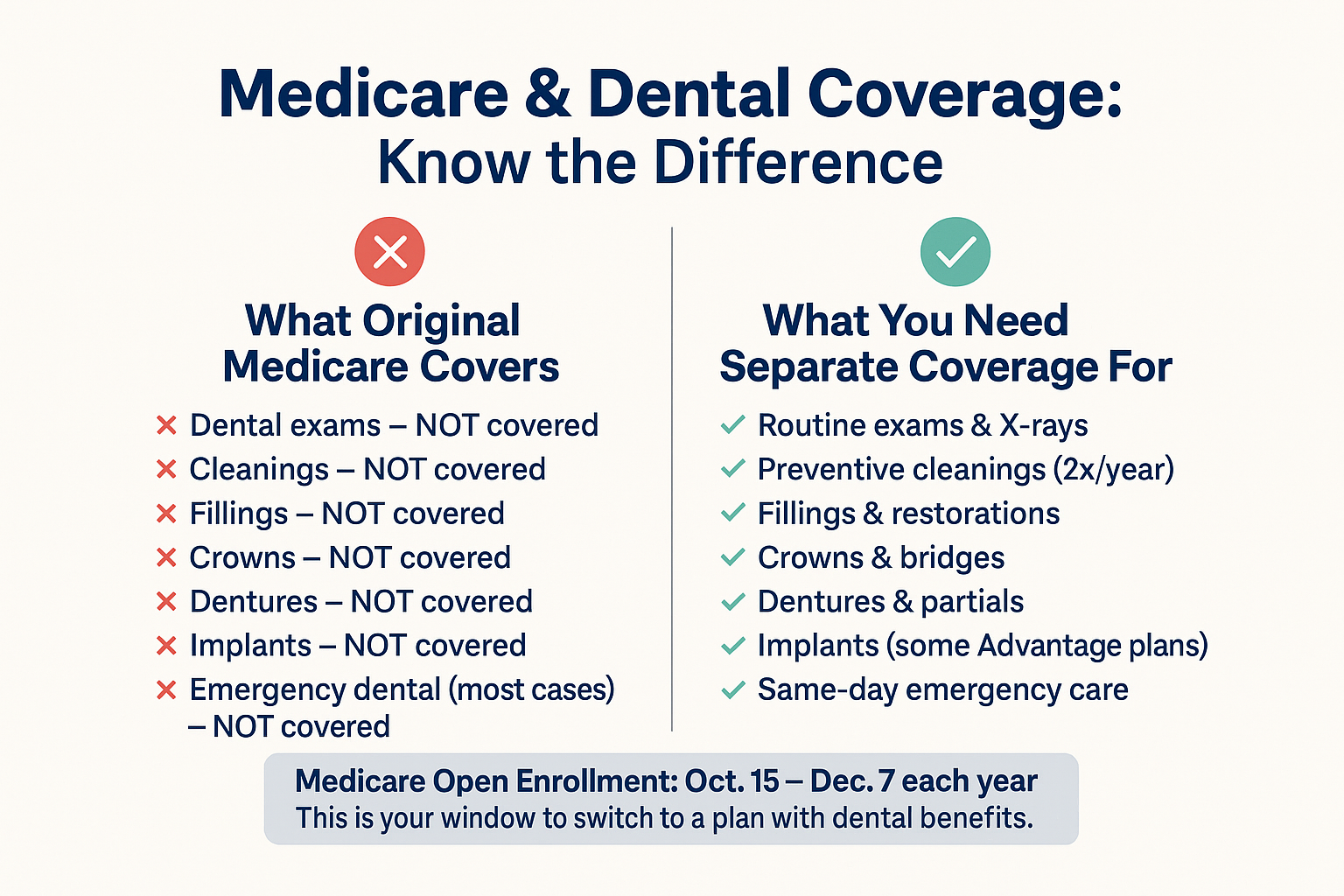
Original Medicare does not cover cleanings, fillings, crowns, or dentures. It covers dental work only in narrow medical situations — like a jaw fracture or dental treatment required before certain heart surgeries. For everything else, you’re on your own unless you have additional coverage.
The three most common coverage paths for retirees in the Surprise area are:
- Medicare Advantage plans with dental benefits — Many plans sold in Maricopa County include some dental coverage, but the details vary widely. Some cover two cleanings a year and basic restorative work. Others cap annual benefits at $1,000 to $2,000, which doesn’t go far if you need a crown ($1,200–$1,800 without insurance) or an implant.
- Standalone dental insurance — Separate dental plans are available through the marketplace or directly from insurers. Premiums typically run $25–$60/month per person, with waiting periods for major work of six to twelve months.
- In-house membership or discount plans — Some practices offer their own annual plans for patients without insurance. These usually cover preventive visits and offer reduced rates on other services. Worth asking about if you’re uninsured.
Before you commit to a practice, ask directly: What insurance plans do you accept, and how does billing work for patients on Medicare Advantage? A good front desk team should be able to walk you through this without making you feel like you’re asking something complicated.
Fall is also Medicare Open Enrollment season — running October 15 through December 7 each year — which is the window to switch plans if your current coverage isn’t working for you.
Medicare and Dental Coverage: What’s Actually Included
This infographic breaks down what original Medicare covers versus what retirees typically need to plan for on their own.
What Comfort-First Care Actually Looks Like — and Why It Matters More Now
A lot of retirees in Sun City Grand and Surprise Farms haven’t been to the dentist in a while. Life got busy, maybe something scared them off years ago, or they just kept telling themselves they’d go next month. By the time retirement arrives, there can be real hesitation about what they’ll find.
That hesitation is completely understandable — and it’s exactly why the feel of a practice matters as much as the clinical skills.
Here’s what to actually pay attention to when evaluating comfort:
- Does the team explain things before they do them? A dentist who tells you what they’re seeing, what they’re recommending, and why — without making you feel rushed — is worth their weight in gold.
- Is sedation available? For patients with anxiety or those facing longer procedures, sedation dentistry can make the difference between getting needed care and avoiding it entirely. Ask upfront whether the practice offers it.
- How does the practice handle patients who haven’t been in a few years? The answer tells you a lot. A judgment-free response — focused on where things are now and what to do next — is a sign you’re in the right place.
- Are Saturday appointments available? For active retirees with travel schedules, grandkids to watch, or just a preference for keeping weekdays free, Saturday hours are a real convenience.
The difference between fixing teeth and improving them is also worth understanding as you get older — because some options that once felt optional start to become more relevant for function, not just appearance.
And one more thing: a practice that handles most services in-house — cleanings, crowns, implants, dentures, even cosmetic work — means fewer referrals, fewer new offices to get comfortable with, and fewer scheduling headaches.
Comparing What to Ask Before Choosing a Dentist After Retirement
Use these questions when evaluating a dental practice for the first time as a retiree. The right answers tell you quickly whether it’s a good fit.
| Question to Ask | What a Good Answer Looks Like | Red Flag |
|---|---|---|
| Do you accept my Medicare Advantage plan? | Yes, or a clear explanation of how billing works for your plan | Vague answer or ‘we’ll figure it out later’ |
| Do you offer sedation for anxious patients? | Yes — oral sedation or nitrous oxide available | No options, or dismissing the concern |
| Can you handle crowns, implants, and dentures here? | Most or all of these are done in-office | Everything gets referred out to specialists |
| Do you have Saturday hours? | Yes, Saturday appointments are available | Weekdays only, no flexibility |
| How do you handle patients who haven’t been in a while? | Judgment-free, focused on next steps | Guilt-based or lecture-heavy response |
| What does preventive care look like for my age group? | Specific answer about dry mouth, gum health, and existing restorations | Generic ‘just come in twice a year’ response |
The Preventive Side That Saves You Money Long-Term
Here’s something that doesn’t get said enough: consistent preventive care in your 60s and 70s is one of the best financial decisions you can make.
A cleaning and exam twice a year — typically $200–$350 per visit without insurance in the Surprise area — sounds like an expense. But a single crown runs $1,200–$1,800. A dental implant runs $3,000–$5,000 or more. And when a missing or broken tooth gets ignored, the cost to fix it later almost always goes up, not down.
Preventive visits also catch things early that you’d never feel until they became serious — like early-stage gum disease, a hairline crack in an older crown, or bone loss that could affect whether you’re a good candidate for implants down the road.
For retirees managing fixed incomes, that kind of early detection isn’t just about health — it’s about staying in control of costs. A dentist worth choosing will talk openly about what’s pressing now versus what can be monitored, so you’re not hit with a treatment plan that feels overwhelming all at once.
Do you really need cleanings if nothing hurts? That question comes up more than you’d think — and the honest answer matters a lot for retirees who are weighing where to spend their healthcare dollars.
Frequently Asked Questions About Choosing a Dentist After Retirement
Does Medicare cover any dental work at all?
Original Medicare (Parts A and B) covers almost no dental care. The only exceptions involve dental treatment that’s medically necessary as part of another covered procedure — like a tooth extraction before heart valve surgery. For routine care, cleanings, fillings, crowns, or dentures, you need a Medicare Advantage plan with dental benefits, a standalone dental insurance policy, or you pay out of pocket.
I haven’t been to the dentist in several years. Will I get lectured?
You shouldn’t — and if you do, that’s a sign to find a different practice. A good dental team focuses on where things stand today and what the best path forward looks like, not on why you waited. It’s genuinely more common than most people think, and a judgment-free approach is something you should expect, not hope for.
What dental problems are most common in retirees?
The most common issues we see in older adults include gum disease, dry mouth-related cavities, worn or cracked older restorations (fillings and crowns from decades ago), and tooth sensitivity from enamel thinning. Many of these are manageable with early attention — which is exactly why regular visits matter more, not less, as you get older.
Is it worth getting dental implants at 70?
Age alone isn’t the deciding factor — overall health, bone density, and whether you have certain medical conditions matter far more. Many patients in their 70s are excellent candidates. A dentist who evaluates implant candidacy thoroughly will give you an honest picture based on your specific situation.
What if I need a lot of work done — can I space it out?
Yes, and a good dentist will help you prioritize. Most treatment plans can be phased over months or even a year or two, addressing urgent issues first and handling elective or less pressing work as your schedule and budget allow. Ask specifically about phased treatment options — it’s a reasonable and common request.
How do I know if a dental practice truly handles everything in-house?
Ask directly: If I need a crown, an implant, or a partial denture, will that be done here or referred out? A practice that handles most restorative and cosmetic work under one roof saves you the hassle of getting comfortable with multiple offices and coordinating care across providers.
Ready to Find a Dental Home That Fits Your Retirement?
West Bell Dental Care serves retirees and active adults across Surprise, Sun City Grand, Sun City, and the surrounding West Valley — with Saturday hours, in-house specialists, and a team that takes the time to explain your options without pressure. If you have questions about coverage, what to expect at a first visit, or where to start after a long gap in care, our front desk is easy to reach at 480-795-2420, or you can learn more at westbelldentalcare.com.