
If your dentist just told you that you have a cavity, your first thought might be, "how long can I leave a cavity untreated?" While there isn't a precise countdown clock, it generally takes several months to years for a cavity to become a major issue.
But here's the crucial part: a cavity will always get worse if left alone. It’s a one-way street, moving from a small, fixable spot to a serious dental problem over time.
The Journey of an Untreated Cavity
A cavity isn't something that just appears overnight. It’s a slow, progressive disease that unfolds in predictable stages.
Think of it like a tiny crack in a windshield. At first, it's just a small chip you can barely see. But with time and stress, that little chip spiderwebs across the entire glass. Your tooth is no different.
Understanding this progression makes it clear why your dentist in Surprise, AZ, wants to treat cavities as soon as they're spotted. Early treatment is simpler, more comfortable, and much more affordable. Waiting just allows the decay to dig deeper, leading to more complicated procedures down the road.
The Stages of Decay
How fast a cavity grows can depend on your diet, how well you brush and floss, and even your saliva. But no matter the speed, the path of destruction is remarkably consistent. It starts silently and, if ignored, can end in a painful dental emergency.
Here’s a breakdown of what that journey looks like:
- Stage 1: Demineralization (The Silent Start): Plaque acids start to remove minerals from your tooth's tough outer shell, the enamel. You won't feel a thing, and at this early stage, the damage can sometimes be reversed with better hygiene and fluoride.
- Stage 2: Enamel Decay (The First Hole): The acid eats away at the enamel, creating a small, physical hole. It’s usually still painless, but now the damage is permanent and needs a dental filling to be fixed. Our guide on what cavities look like can help you spot the early signs.
- Stage 3: Dentin Decay (Sensitivity Kicks In): The cavity breaks through the enamel and gets into the softer layer beneath it called dentin. This is when you'll likely start to feel a twinge of sensitivity to hot, cold, or sweet foods.
- Stage 4: Pulp Infection (The Real Toothache): Now the decay has reached the tooth's living core—the pulp—which contains nerves and blood vessels. This triggers a significant, persistent toothache and often means a root canal is necessary to save the tooth.
- Stage 5: Abscess (A Serious Infection): The infection spreads from the pulp, down the root, and into the surrounding jawbone. This forms a painful, pus-filled pocket called an abscess, which is a serious condition that can impact your overall health.
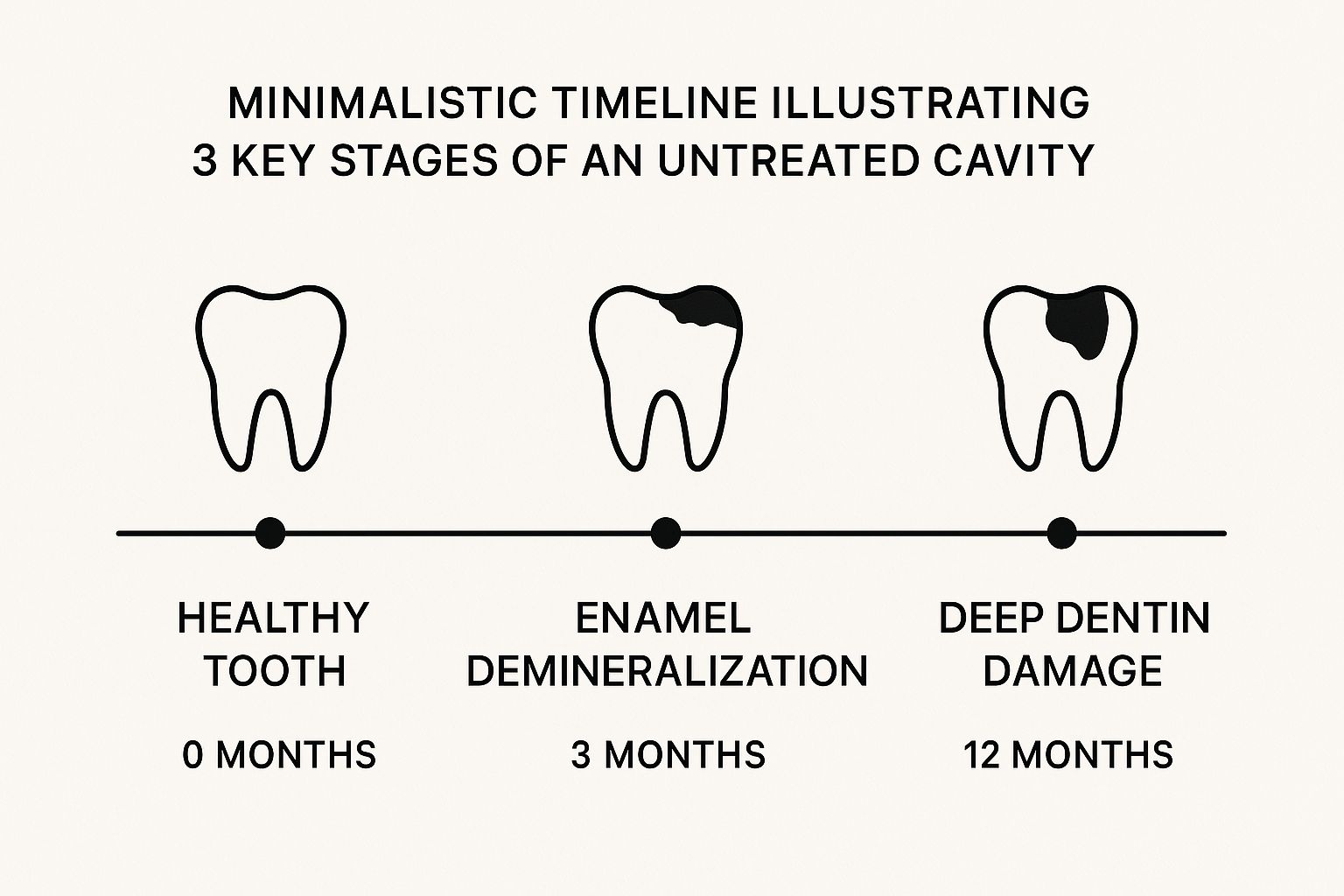
As you can see, the damage really picks up speed once it gets past that initial enamel layer.
Cavity Progression Timeline: What to Expect
To give you a clearer picture, here is a table that maps out the typical progression of an untreated cavity. Keep in mind that these are just estimates—everyone’s situation is unique.
| Stage of Decay | Typical Timeframe | Common Symptoms | Likely Treatment Needed |
|---|---|---|---|
| Demineralization | 6 months – 2 years | None, or white spots on teeth | Fluoride treatments, improved hygiene |
| Enamel Decay | 1 – 3 years | Sometimes mild sensitivity | Dental filling |
| Dentin Decay | 2 – 4 years | Sensitivity to hot, cold, sweets | Larger filling or dental crown |
| Pulp Infection | 3 – 5 years | Persistent, sharp toothache | Root canal therapy |
| Abscess Formation | 4 – 6+ years | Severe pain, swelling, fever | Root canal or tooth extraction |
This table shows exactly how a small problem can grow into something much bigger, more painful, and more expensive to fix. At West Bell Dental Care, our goal is to catch cavities in their earliest stages. A regular checkup is your best defense.
How a Cavity First Begins on Your Tooth
A cavity doesn't just show up one day. It’s a quiet, slow-motion process that starts long before you feel any discomfort. That’s why it’s so common for people to be surprised when we find one during a routine checkup.
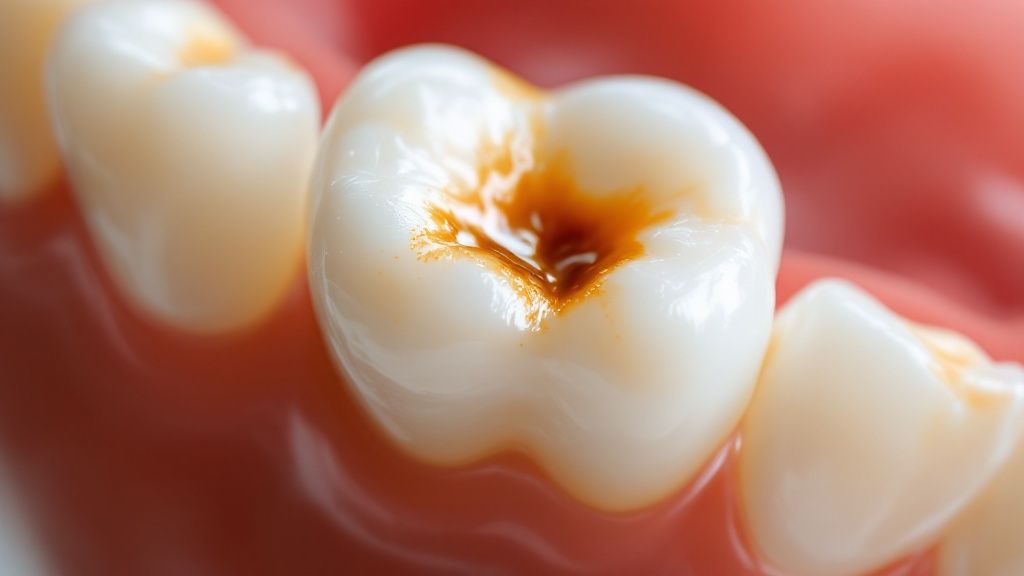
It all starts with plaque—that sticky, invisible film of bacteria that’s always trying to form on your teeth. When you eat foods high in sugar or starches, these bacteria produce strong acids. These acids are the real villains in the story of tooth decay.
The Demineralization Process
Picture your tooth enamel as a sturdy brick wall. The acids from plaque act like a constant, gentle acid rain falling on that wall. Day after day, that acid starts to dissolve the minerals that make your enamel strong.
This mineral loss is called demineralization. It's the very first, invisible stage of a cavity. At this point, there's no hole, no dark spot, and no pain.
The American Dental Association (ADA) identifies tooth decay as the most common chronic disease for children and teens. This shows how vulnerable our enamel is to these acid attacks.
The good news is this early stage is often 100% reversible. With professional fluoride treatments and good at-home care, your body can use minerals from your saliva to rebuild that weakened enamel. But there is a tipping point. Once the acid creates a permanent hole, the decay cannot be reversed.
The Battle Between Plaque and Saliva
Think of your mouth as a constant battleground. On one side, you have acid-producing bacteria. On the other, you have your saliva, which is your body's built-in defense.
Saliva is a true hero:
- It Washes Away Food: Saliva helps rinse away food particles that bacteria love.
- It Neutralizes Acids: Your saliva contains buffers that work to neutralize harmful acids.
- It Supplies Minerals: It's loaded with calcium and phosphate that your teeth need to repair early damage.
A cavity only starts to form when this balance tips in favor of the bacteria. This can happen from frequent snacking on sugary foods, inconsistent brushing, or a dry mouth.
This silent beginning is why regular dental checkups are so important. Here at West Bell Dental Care in Surprise, AZ, we can spot the earliest signs of demineralization. Catching decay at this reversible stage saves you from the time, discomfort, and expense of a full-blown cavity.
What Happens When Decay Reaches the Dentin
If the first stage of decay is a tiny crack on a dam's surface, this next stage is when you start to see water seeping through. It's a real turning point, and it's often the first time you'll know something is wrong.
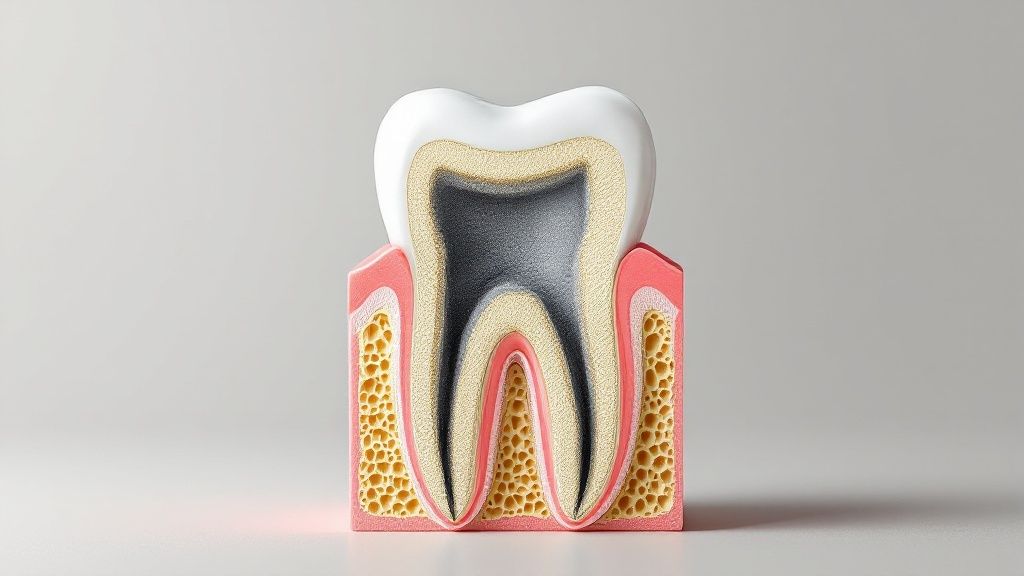
Once decay gets through the hard enamel, it hits the softer layer underneath: the dentin. Unlike enamel, dentin is living tissue, filled with tiny tubes that lead directly to the tooth's nerve.
Because dentin is much softer than enamel, the cavity can now spread like wildfire. The decay process speeds up, burrowing deeper and wider inside the tooth. This is why a cavity that seemed like no big deal can suddenly become a serious problem.
The First Warning Signs Emerge
This is the point where your tooth finally sends up a warning signal. Those little tubes in the dentin let sensations from hot coffee, cold ice cream, or sugary treats travel straight to the nerve.
The result is that classic symptom: tooth sensitivity. You might feel a sharp "zing" of pain when you drink something hot or eat something sweet. That discomfort is a clear sign the enamel shield has been broken. Our guide on what causes tooth sensitivity has more information.
Sensitivity isn't just a minor irritation; it’s your body's alarm system. It's telling you that decay has reached a much more vulnerable part of your tooth.
Treatment at the Dentin Stage
The good news is that when we catch a cavity at this stage, the fix is still very simple. For most of our patients here in Surprise and Sun City, a dental filling is all it takes.
Here’s what the process looks like:
- We gently numb the area so you won't feel a thing.
- The decayed part of the tooth is carefully removed.
- We clean the area to make sure no bacteria are left.
- Finally, the space is filled with a strong, tooth-colored material.
Taking action now is critical. It prevents the decay from reaching the tooth's nerve, which would mean a more involved treatment like a root canal. According to the CDC, nearly 90% of adults have had tooth decay, so you are not alone.
The Risks of a Cavity Infecting the Pulp
When decay tunnels past the enamel and through the dentin, it’s headed for the living core of your tooth. This inner chamber is called the pulp. Think of it as the tooth's command center—it’s packed with nerves and blood vessels that keep the tooth alive.
If the dentin layer is your tooth's early warning system, the pulp is the main power grid. Once bacteria get inside, the situation escalates fast. This isn't just a simple cavity anymore; it's a full-blown infection.
An infection inside the pulp is what causes that notorious, throbbing toothache that can ruin your night. It’s a deep, persistent ache that often won’t go away with over-the-counter pain pills.
When a Root Canal Becomes Necessary
At this advanced stage, a filling just won't cut it. The only way to save the tooth is with a procedure called root canal therapy. We know root canals have a scary reputation, but the truth is they are a pain-relieving treatment.
During a root canal, we carefully:
- Access the infected pulp chamber.
- Remove all the infected nerve tissue.
- Clean and disinfect the inside of the tooth.
- Seal the empty canals to stop any future infection.
A root canal gets rid of the infection and stops the pain, all while letting you keep your natural tooth. For our patients in Surprise and Peoria, AZ, this treatment is often the final defense against losing a tooth.
The Danger of a Dental Abscess
Ignoring an infected pulp is a dangerous gamble. The bacteria will continue to fester, traveling down the root canals and out into your jawbone. This is how a dental abscess forms—a painful, pus-filled pocket at the tip of the tooth's root.
An abscess is a true dental emergency. It’s a sign that the infection is no longer contained within the tooth and can potentially enter your bloodstream.
The symptoms of an abscess are severe and hard to ignore:
- Intense, throbbing pain
- Swelling in your face or cheek
- A small, pimple-like bump on your gum
- Fever and feeling generally unwell
If you have any of these symptoms, it's critical to get care right away. The team at West Bell Dental Care keeps time open for emergency dental appointments to provide the urgent care residents of Surprise and Sun City West need.
Factors That Influence Cavity Progression

Have you ever noticed how one person’s small cavity can stay that way for a long time, while another’s seems to get worse quickly? The answer to "how long can you leave a cavity untreated" is not a one-size-fits-all situation. Several key factors can either slow down tooth decay or speed it up.
Your Diet and Eating Habits
The food you eat is fuel for your body, but it’s also fuel for the bacteria that cause cavities. A diet loaded with sugar and acidic foods can cause problems down the road.
Sugary snacks, sodas, and starchy foods are a feast for harmful bacteria. As they eat, these bacteria produce acids that dissolve your tooth enamel. It's not just what you eat, but how often. The more you snack, the more acid attacks your teeth have to handle.
Even healthy options like citrus fruits and juices are very acidic. It’s a smart move to rinse your mouth with water right after you have them to help neutralize the acid.
Your Oral Hygiene Routine
Your daily brushing and flossing are the essential maintenance that protects your teeth. A consistent routine is your best defense against a cavity that’s trying to progress.
- Brushing: Brushing twice a day with a fluoride toothpaste physically scrubs away plaque and leftover food.
- Flossing: Flossing cleans the tight spaces between your teeth where your toothbrush can’t reach. These spots are prime real estate for cavities to start.
A great oral hygiene routine starves the bad bacteria and washes away the acid they make. This is central to understanding what preventive dentistry is all about.
Biological and Genetic Factors
Sometimes, the speed of tooth decay is influenced by factors unique to you. These biological wild cards can make you more or less likely to get cavities.
One of the biggest players here is saliva production. Your saliva is your mouth's defense system; it rinses away food and neutralizes acids. If you have a dry mouth, cavities can form and grow much faster.
Your genetics can also play a role. Some people are born with softer enamel, making it easier for decay to take hold. Knowing you might be at a higher risk helps our team at West Bell Dental Care create a personalized prevention plan for you and your family here in Surprise, AZ.
Your Partner for Gentle Cavity Treatment in Surprise AZ
Thinking about dental care, especially when you’re worried about a cavity, can be stressful. But ignoring tooth decay only makes things worse. A cavity won't get better on its own, and waiting just leads to more complicated and expensive treatments.
At West Bell Dental Care, we get it. We know visiting the dentist can bring up anxiety. That's why our team is focused on providing gentle, compassionate care for our neighbors here in Surprise, Sun City, and Peoria.
Take the First Easy Step
Instead of worrying about "how long can you leave a cavity untreated," you can take back control with one simple action. Scheduling a checkup is the quickest way to get real answers and put your mind at ease.
Your comfort and health are our top priorities. We believe a positive dental experience is built on trust and gentle care. Let us show you how different a dental visit can be.
We’ll take a look, clearly explain your options, and work with you to create a plan that fits your situation. You'd be surprised how many issues that seem scary are actually simple fixes when caught early. You can learn more about how we repair teeth by reading our overview of what restorative dentistry involves.
Your Local Dentist in Surprise AZ
For all the families, retirees, and professionals in Surprise, El Mirage, and Sun City West, we want to be the dental office you trust. We don’t just treat teeth; we care for the people in our community.
Don't let a small worry grow into a big problem. Schedule your checkup at West Bell Dental Care today, and let our friendly team handle the rest. We look forward to welcoming you.
Frequently Asked Questions
It's completely normal to have questions when you think you might have a cavity. Getting clear answers can help you figure out your next steps. Here are some of the most common questions we hear from our patients here in Surprise, AZ.
Can a cavity go away on its own?
No, once a cavity forms an actual hole in your tooth enamel, it can't heal itself. The only stage where damage can be reversed is in the very beginning, when it’s just a "white spot" of mineral loss. A developed cavity will only get worse until a dentist treats it.
Does getting a cavity filled hurt?
Your comfort is our top priority at West Bell Dental Care. We use a powerful local anesthetic to make sure the area is completely numb before we begin. You should not feel any pain during the filling procedure, and we will walk you through every step.
My toothache stopped—does that mean the cavity healed?
If you had a bad toothache that suddenly vanished, it’s often a serious red flag. This usually means the infection has become so severe that it has killed the nerve inside your tooth. The infection is still there and can spread, so you should see a dentist immediately.
What happens if I wait too long and my tooth needs to be pulled?
When decay is left untreated, it can destroy so much of the tooth that it can't be saved. In these cases, an extraction is the only way to protect your overall health. After an extraction, we can discuss replacement options like dental implants or bridges to restore your smile.
Does West Bell Dental Care offer emergency appointments for a severe toothache?
Yes, we understand that dental emergencies happen. We keep time available in our schedule to provide urgent care for patients in Surprise, Sun City, and the surrounding areas. If you are in severe pain, please call our office right away for help.
Don't let a small cavity turn into a major concern. The friendly and experienced team at West Bell Dental Care is here to provide gentle, effective treatment and give you peace of mind. Schedule your appointment today by visiting us at https://westbelldentalcare.com.
Ready to See a Dentist in Surprise, AZ?
Dr. Jennifer H. Wynn and the West Bell Dental Care team are here to help. Call us at 480-795-2420 or book online below.

Medically reviewed by Dr. Jennifer H. Wynn, DDS — Founder of West Bell Dental Care, Surprise, AZ. Graduate of Loma Linda University School of Dentistry with 30+ years of experience in general, cosmetic, and restorative dentistry. NPI: 1144359720 | AZ License: D009624.