

Feeling a dull ache or sharp pain in your jaw after wisdom teeth extraction isn’t just common—it’s an expected part of the healing journey. This discomfort is your body’s natural response to the procedure, much like how your muscles feel sore after a tough workout. It’s a clear signal that your jaw and the surrounding tissues are starting to mend.
At West Bell Dental Care, we understand that any dental pain can be worrying. We’re here to provide reassuring, expert guidance to our patients in Surprise, AZ, and the surrounding communities, ensuring you feel confident and cared for throughout your recovery.
Why Your Jaw Aches After Wisdom Teeth Removal

If you’re one of the many residents in Surprise, AZ, recovering from wisdom teeth removal, understanding where that jaw pain comes from can bring a lot of peace of mind. The procedure itself, while routine, is a significant event for your mouth.
The Immediate Causes of Jaw Discomfort
The main reason for that post-procedure jaw pain is your body’s inflammatory response. To get to and remove those wisdom teeth, especially if they’re impacted (stuck under the gum line), your dentist has to carefully work around bone and soft tissue. This creates temporary inflammation, which is the crucial first step in healing.
Another big factor is simply having to keep your mouth open for so long. This can lead to muscle fatigue and stiffness in your temporomandibular joint (TMJ), which is the hinge connecting your jaw to your skull. Think of it like holding a difficult yoga pose for too long—your muscles are definitely going to feel it afterward.
Wisdom tooth removal is an incredibly common procedure. The American Association of Oral and Maxillofacial Surgeons reports that about 85% of wisdom teeth will eventually need to be removed. You can learn more about how common wisdom teeth issues are from dental experts.
Key Takeaway: Jaw pain after wisdom tooth extraction is a normal part of the healing process, caused by surgical inflammation and muscle soreness. It’s a temporary phase on your path to recovery.
At West Bell Dental Care, we want our patients from Surprise, Sun City, and Peoria to feel informed and supported. Knowing what to expect helps you tell the difference between normal healing and signs that might need a follow-up call. We’re here to guide you every step of the way.
Navigating Your Healing: What to Expect Day by Day
Knowing what’s coming after your wisdom tooth removal can make a world of difference in your recovery, taking a lot of the stress and guesswork out of the equation. Your body has a predictable way of mending itself, and when you understand the timeline, you feel more in control. For our patients here in Surprise and the surrounding communities, we’ve found that having a clear roadmap is one of the best ways to ensure a smooth, calm healing process.
The First 48 Hours: The Peak of Discomfort
The first two days after your procedure are, frankly, the toughest. This is when you’ll feel the most significant pain, see the most swelling, and notice that your jaw feels quite stiff. Don’t be alarmed—this is just your body’s natural inflammatory response kicking into high gear.
Your main job during this period is to rest and manage the discomfort. Keep cold packs on hand and take any pain medication as prescribed. It’s also absolutely critical to stick to a liquid or very soft food diet to protect the new blood clots forming in the sockets, which are essential for proper healing.
Days 3 to 5: Turning the Corner
Many people are surprised to find their pain and swelling can peak around day three before starting to get better. This is completely normal and expected, so hang in there. Once you hit this point, you should start to notice a slow but steady improvement each day.
The sharp ache will begin to fade into a more manageable soreness. While you’ll probably still have some stiffness in your jaw, this is the perfect time to switch from cold packs to warm compresses. The warmth helps soothe sore muscles and boosts circulation to the area, which aids in healing.
This visual guide shows a typical pain recovery timeline, illustrating how discomfort usually gets a bit worse before it gets much better.
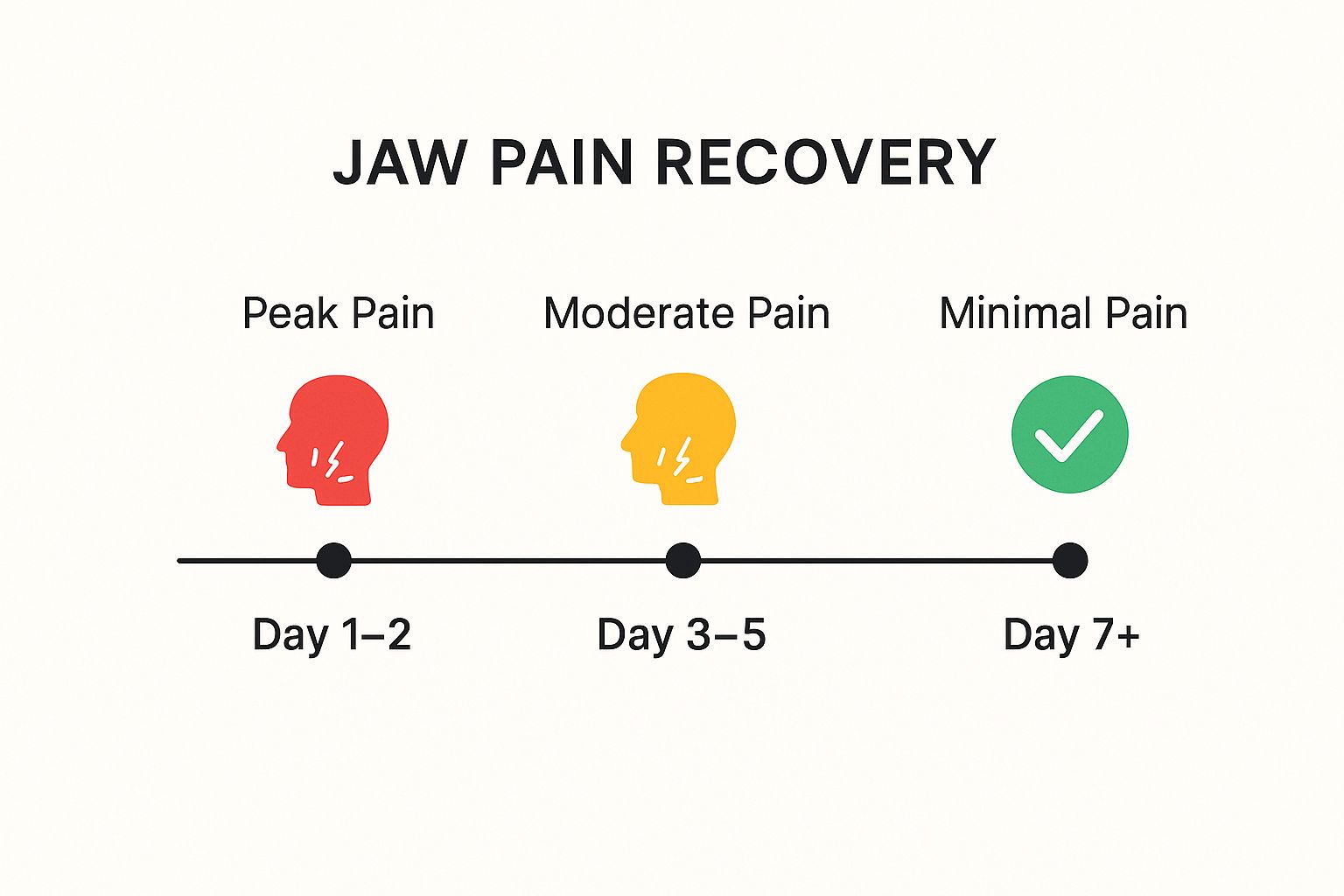
As you can see, the intensity should start dropping off steadily after the first few days. That’s the sign that your body is well on its way to mending itself.
Week One and Beyond: The Road to Recovery
By the end of the first week, your pain should be minimal. You might still have some tenderness or stiffness, especially with a big yawn or while chewing, but you’ll be feeling much more like yourself. Most people can get back to their normal routines and start bringing more foods back into their diet, though you’ll still want to steer clear of anything too crunchy, hard, or chewy.
While most recoveries go smoothly, complications are possible. Research shows that about 12.0% of patients run into some kind of issue, with severe pain being the most common problem for 4.9% of them. The study also found that for every 5-year increase in a patient’s age, the risk of complications goes up by 27%, which really drives home why following your post-op instructions is so important.
Important Note: Everyone heals at their own pace. Your personal timeline might look a little different based on your age, your overall health, and how complex your extractions were.
Here at West Bell Dental Care, your comfort is our top priority through the entire experience. If you’re feeling anxious about the procedure, we have several ways to help you feel calm and at ease. You can learn more by exploring our dental sedation options in Surprise, AZ. If your pain ever feels like it’s getting worse instead of better, please give our Surprise office a call right away.
When Jaw Pain Signals a Deeper Issue

While most post-surgery jaw pain is a normal, expected part of healing, it’s important to be aware of the signs that something more serious might be happening. This knowledge empowers you to take control of your recovery and get timely help if you need it.
For our patients in Peoria and El Mirage, we want you to feel confident, not anxious. Understanding the difference between normal discomfort and a red flag is key. Let’s walk through the most common complications so you know exactly what to look for.
Understanding Dry Socket
The most well-known complication after wisdom teeth extraction is alveolar osteitis, more commonly known as a dry socket. According to the Cleveland Clinic, this occurs in about 2-5% of all wisdom tooth extractions, making it a relatively rare but important issue to understand. A dry socket happens when the protective blood clot in the empty tooth socket gets dislodged or dissolves too early.
Think of the blood clot as a natural bandage over the wound. When it’s gone, the underlying bone and sensitive nerve endings are left exposed to air, food, and fluids, which causes the signature pain of a dry socket.
A dry socket isn’t an infection, but rather a delay in the normal healing process. The pain is often described as a deep, throbbing ache that can radiate from the socket up toward your ear and is not easily managed by standard pain medication.
This pain usually starts around day three or four post-surgery, right when you should be starting to feel better. This is a key indicator that what you’re feeling is not typical recovery pain.
Recognizing the Signs of Infection
While less common than a dry socket, a post-operative infection is a more serious issue that requires immediate attention from our team at West Bell Dental Care. An infection occurs when bacteria enter the extraction site and begin to multiply. Unlike a dry socket, an infection involves a systemic response from your body.
Here are the primary warning signs that you may be developing an infection:
- Worsening Pain and Swelling: If your swelling and pain get worse after the third day instead of better, it’s a major red flag.
- Fever: A low-grade fever is your body’s classic response to fighting off an infection.
- Pus or Discharge: Any yellow or white fluid coming from the extraction site is a clear sign of infection.
- Persistent Bad Taste or Smell: A foul taste or odor in your mouth that doesn’t go away with gentle rinsing can indicate a problem.
Keeping your mouth clean is your best defense against infection. While extremely rare, any persistent sores or unusual patches should be checked by a professional; you can get more information in our guide about oral cancer screening symptoms and risk factors. If you notice any of these signs, don’t wait—call our Surprise office right away.
Practical Home Care for Jaw Pain Relief
Recovering from wisdom teeth removal is all about actively supporting your body’s natural healing process. With a few straightforward and effective home care strategies, you can manage the jaw pain and ensure your recovery is as smooth and comfortable as possible. Think of these steps as your personal toolkit for relief.
The most important rule to remember is “Ice First, Heat Later.” For the first 48 hours, your main goal is to control inflammation and numb the soreness. Applying a cold pack or ice wrapped in a towel to the outside of your jaw for 15-20 minutes at a time works wonders.
The Switch to Soothing Warmth
After those first two days have passed, it’s time to switch tactics. Now, your focus shifts from reducing initial swelling to soothing stiff, sore muscles. A warm, moist compress helps relax those tired muscles and boosts blood flow, bringing essential nutrients to the area to speed up healing.
Keeping the extraction site clean is also absolutely crucial. For the first 24 hours, avoid rinsing your mouth entirely to protect the fragile new blood clot that’s forming. After that initial day, you can start gentle saltwater rinses.
- Mix a half-teaspoon of salt into an eight-ounce glass of warm water.
- Gently swish the solution around your mouth for about 30 seconds after meals.
- Instead of spitting forcefully, just let the water fall out of your mouth into the sink to protect the blood clot.
For more detailed guidance, our team at West Bell Dental Care has put together a comprehensive guide on how to care for your mouth after a tooth extraction.
Pro-Tip: Stay elevated! When you’re resting or sleeping, use an extra pillow to prop your head up. Using gravity to your advantage helps reduce swelling and prevents blood from pooling at the surgical site, which eases pressure on your jaw.
Fueling Your Recovery With the Right Foods
What you eat (and what you don’t) plays a surprisingly huge role in your healing journey. For our patients here in Sun City West and the surrounding communities, we always emphasize sticking to a soft-food diet for at least the first week.
Instead, choose nutrient-rich foods that are easy to eat, such as:
- Yogurt or cottage cheese
- Smoothies (just remember, no straws!)
- Applesauce and pudding
- Mashed potatoes or bananas
- Scrambled eggs
- Lukewarm soups and broths
Beyond these traditional approaches, some people find success with effective alternative medicine options for pain relief that can complement their recovery plan. By following these practical home care steps, you’re taking an active role in your healing, paving the way for a faster return to normal.
Knowing When to Call Your Surprise, AZ Dentist

Figuring out the difference between normal healing and a potential problem is the key to a stress-free recovery. While good home care can handle typical discomfort in your jaw after wisdom teeth removal, sometimes your body sends signals that it needs an expert’s help.
At West Bell Dental Care, we want our patients in Surprise, AZ, to feel completely supported. You should never feel like you’re bothering us. If something just doesn’t feel right, we want to hear from you.
Red Flag Symptoms That Need a Dentist’s Attention
Most recoveries are straightforward, but you need to keep an eye out for specific signs that could point to an infection or dry socket. If you notice any of the following, it’s time to call our Surprise dental office right away.
Here’s a clear checklist of warning signs:
- Severe or Worsening Pain: If the pain in your jaw isn’t getting better with your prescribed medication, or if it suddenly gets worse after day three, this is a major red flag.
- Fever or Chills: A body temperature of 101°F (38.3°C) or higher is a classic sign that your body is fighting off an infection.
- Increased Swelling: Your swelling should peak around day three and then go down. If it keeps getting worse after that, it’s not a normal part of the healing process.
- Pus or Discharge: Any yellow or white fluid from the extraction site is a clear signal of infection.
- Persistent Numbness: Some temporary numbness is expected, but if it doesn’t fade or seems to be spreading, you need to let us know.
Important Insight: This is not the time for a “wait and see” approach. Catching these problems early is crucial for preventing more serious issues and getting your recovery back on schedule.
A delayed-onset infection is a rare complication that happens in about 1.1% of cases, usually appearing one to four weeks after surgery. You can read the full research about these post-surgery findings for more detail. Our team is always here to help; for more on our procedures, see our page on tooth extraction in Surprise, AZ.
Your Partner for a Comfortable Recovery in Surprise, AZ
A little pain and soreness in your jaw after a wisdom tooth extraction is a normal part of healing. But that doesn’t mean you have to tough it out alone. A smooth, quick recovery is about following your aftercare instructions and knowing the difference between typical soreness and something that needs our attention.
Here at West Bell Dental Care, we are your community dental practice in Surprise, AZ, and we’re committed to making your entire experience as comfortable as possible. We know the healing phase can bring up questions and feel uncertain. Whether you’re one of our neighbors in Sun City, Peoria, or right here in Surprise, our team is ready to support you with clear guidance and compassionate care.
If you are experiencing severe pain in your jaw after wisdom teeth extraction or have any other concerns, don’t hesitate to call us. We’re here to help you get back to feeling great, faster.
Frequently Asked Questions
Why does my jaw hurt after wisdom teeth removal?
Jaw pain after wisdom teeth extraction is completely normal. It’s caused by a combination of inflammation from the surgery itself and muscle soreness from keeping your mouth open during the procedure. This discomfort is a sign that your body has begun the natural healing process.
How long does jaw pain last after wisdom teeth removal in Surprise, AZ?
For most of our patients in Surprise, significant jaw pain and soreness last about 3 to 5 days, gradually improving each day. Mild stiffness or tenderness when opening your jaw wide can sometimes linger for a week or two. If your pain gets worse instead of better after day three, please call our office.
What can I do for jaw pain after wisdom teeth extraction?
For the first 48 hours, use a cold pack on your jaw for 15-20 minutes at a time to reduce swelling. After that, switch to a warm, moist compress to soothe sore muscles. Stick to a soft-food diet, take pain medication as directed, and perform gentle saltwater rinses after the first 24 hours.
Does West Bell Dental Care offer emergency appointments for post-surgery complications?
Yes, absolutely. We prioritize patients who are experiencing severe pain or potential complications like a dry socket or infection. If you’re a resident of Surprise, Sun City, or nearby areas and feel your recovery isn’t going as planned, call us immediately for guidance and to schedule an urgent follow-up if needed.
When should I worry about my jaw pain?
You should call our Surprise, AZ, dental office if you experience severe pain that isn’t managed by medication, pain that gets worse after the third day, a fever over 101°F, or any pus from the extraction site. These are signs of a complication that requires professional attention from your dentist.
Your comfort and a smooth recovery are our top priorities. At West Bell Dental Care, we’re committed to providing you with compassionate, expert care every step of the way. If you have any more questions about your recovery or need to schedule a follow-up, please don’t hesitate to contact our Surprise, AZ, office today.
Book Your Appointment with West Bell Dental Care
Ready to See a Dentist in Surprise, AZ?
Dr. Jennifer H. Wynn and the West Bell Dental Care team are here to help. Call us at 480-795-2420 or book online below.

Medically reviewed by Dr. Jennifer H. Wynn, DDS — Founder of West Bell Dental Care, Surprise, AZ. Graduate of Loma Linda University School of Dentistry with 30+ years of experience in general, cosmetic, and restorative dentistry. NPI: 1144359720 | AZ License: D009624.