

It’s normal to worry about tooth extraction swelling. But swelling is a good sign that your body is healing. Think of it like a sprained ankle puffing up—your jaw and cheek do the same thing as your body rushes healing cells to the area.
This natural process helps protect the extraction site and start repairs.
Understanding Your Body's Healing Response
When a tooth is removed, your body treats it like any other injury. It starts an inflammatory response to guard the area and begin fixing it. The puffiness you see is a sign that your body's internal healing crew is on the job.
This response sends extra blood, fluids, and white blood cells to the extraction site. These elements clean the wound, prevent infection, and build new tissue. While it may feel uncomfortable, swelling is a necessary part of your recovery.
Why Some Extractions Cause More Swelling
Not all tooth extractions are the same. The amount of swelling you get often depends on how complex the procedure was.
- Simple Extractions: Pulling a tooth that is easy to see and reach usually causes less trauma to the surrounding tissue. As a result, swelling is often minimal and goes away quickly.
- Surgical Extractions: Removing impacted wisdom teeth requires more work. We may need to make a small cut in the gum or remove a tiny piece of bone. This causes more tissue trauma, leading to more swelling.
Basically, the more work it takes to remove the tooth, the stronger your body's healing response will be. This is why wisdom tooth removal often leads to that "chipmunk cheek" look.
Key Takeaway: Swelling isn't a complication; it's a sign that your body’s healing process is working correctly. It is a temporary and manageable part of your recovery.
Understanding this process can make your recovery feel less scary. Knowing why swelling happens helps our patients here in Surprise, AZ, feel more in control.
For most people, swelling is a common symptom. It usually peaks around 48 to 72 hours after your procedure. It then starts to go down within four to five days as your body heals. You can read the full research on postoperative symptoms here.
Your First 48 Hours: Managing Swelling at Home
The first two days after your tooth extraction are key for getting swelling under control. Having a good plan can make a big difference in your comfort, whether you're resting at home in Surprise or Sun City.
Your best tool during this time is a simple ice pack. Applying cold to the outside of your cheek helps shrink the blood vessels. This process slows the flow of fluid to the extraction site and reduces that puffy feeling.
The Proven Ice Pack Cycle
To get the most out of icing, follow the classic 20-minutes-on, 20-minutes-off cycle. Set a timer and apply an ice pack wrapped in a thin towel to your cheek for 20 minutes. Then, give the area a 20-minute break to avoid skin irritation.
Repeating this cycle as much as you can for the first 24 to 48 hours is the most effective thing you can do to control swelling. If you don't have an ice pack, a bag of frozen peas works perfectly.
Recovery Tip: When you're resting, prop your head up with an extra pillow or two. Keeping your head elevated above your heart helps drain fluid away from your face. This can make a noticeable difference, especially overnight.
This image shows a typical timeline for how swelling progresses and then goes down after a tooth is removed.
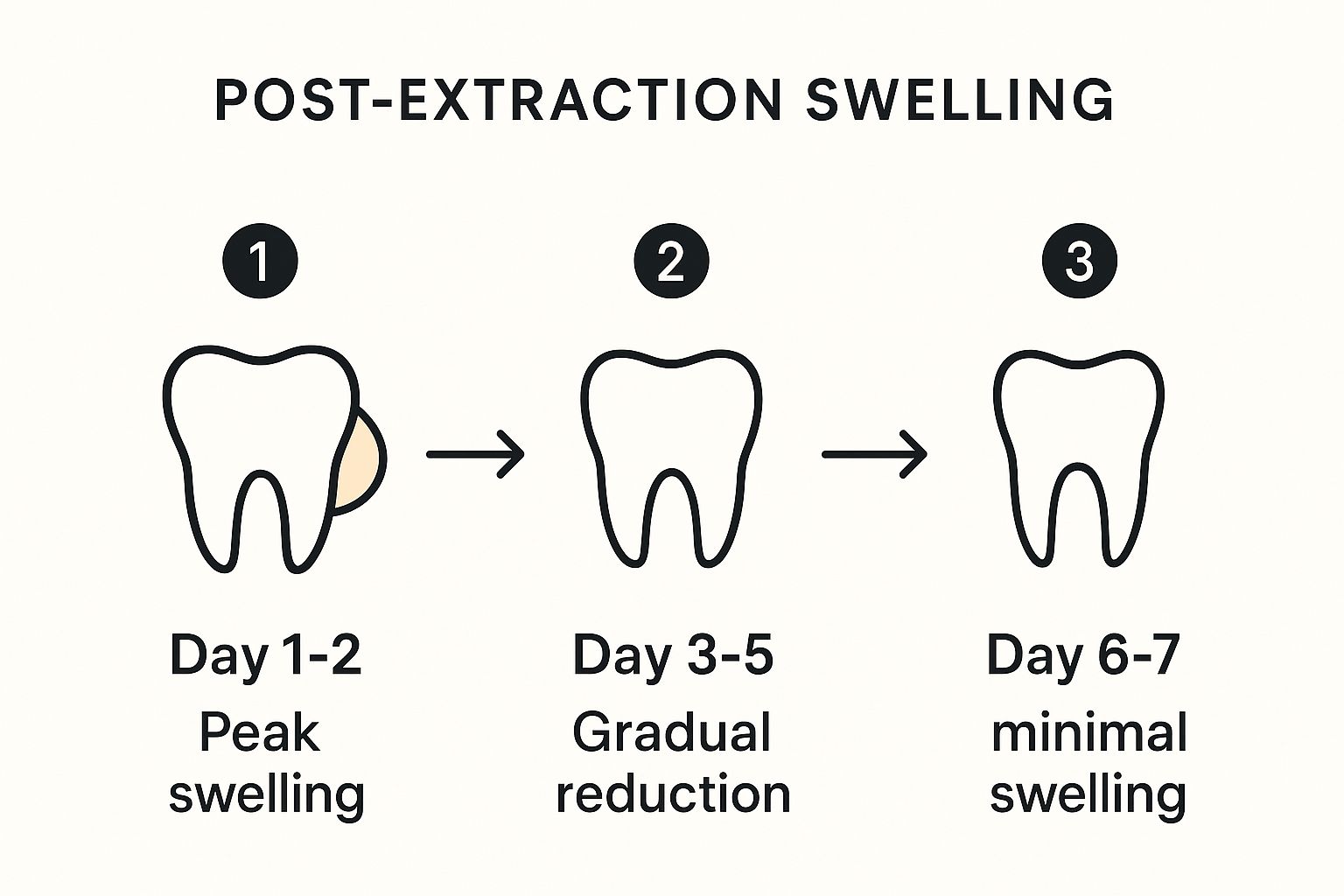
As you can see, swelling usually gets worse before it gets better, peaking in the first few days. This is a completely normal part of healing.
Here’s a simple timeline of what to focus on during this critical period.
Post-Extraction Care Timeline: First 48 Hours
| Timeframe | Key Action | Why It's Important |
|---|---|---|
| First 24 Hours | Apply ice packs (20 min on, 20 min off). Rest with head elevated. | This is the peak time for inflammation. Cold therapy constricts blood vessels to minimize fluid buildup and bruising. |
| Day 2 (24-48 Hours) | Continue ice packs if swelling persists. Start gentle, warm saltwater rinses (after 24 hrs). | Ice continues to manage swelling, while warm rinses (gently!) begin to promote circulation and keep the area clean. |
| Throughout | Avoid straws, smoking, spitting, and vigorous rinsing. Stick to soft foods. | These actions protect the fragile blood clot, which is essential for proper healing and preventing a painful dry socket. |
Following this guide helps you take control of your recovery right from the start.
Protecting the Healing Site
What you don't do is just as important as what you do. The extraction site needs to form a stable blood clot to heal correctly. Think of this clot as a natural bandage protecting the sensitive bone and nerves.
If that clot is dislodged, it can lead to a painful condition called dry socket. To protect it, you must avoid a few key things for the first few days:
- No Vigorous Rinsing: Gentle swishing is okay after 24 hours, but forceful rinsing can wash the clot away.
- No Spitting: The pressure from spitting can dislodge the clot. Let saliva or liquid fall gently from your mouth into the sink.
- No Straws: The suction from a straw is a common way people accidentally pull out their blood clot.
- No Smoking: Smoking creates harmful suction and introduces chemicals that disrupt healing and increase your risk of infection.
Sticking to these guidelines will help you have a smoother recovery. For a more detailed guide, review our post on what not to do after a tooth extraction.
Beyond Day Two: Healing and Reducing Discomfort

You've made it past the 48-hour mark. Now, it's time to change our strategy for managing tooth extraction swelling. For the first two days, cold helped keep inflammation down. Now, gentle warmth can promote healing.
Switching from cold to warm is a key part of your recovery. A warm, moist compress on your cheek helps get blood flowing to the extraction site. This improved circulation brings more oxygen and nutrients to the area, which helps reduce swelling and ease jaw stiffness.
Introducing Gentle Rinses and Soft Foods
Around this time, you can also start to gently rinse the area to keep it clean. Mix about half a teaspoon of salt into a glass of warm water. Don't swish it forcefully! Just tilt your head side to side, letting the saltwater gently wash over the socket. This helps prevent infection.
What you eat also plays a huge role in how you feel. Stick with soft, nutrient-rich foods to give your body the fuel it needs to heal.
Nutrient-Rich Soft Foods for Healing:
- Yogurt or Greek Yogurt: It's cool, soothing, and packed with protein.
- Applesauce and Smoothies: An easy way to get vitamins (just don't use a straw!).
- Scrambled Eggs or Oatmeal: These offer substance without much chewing.
- Mashed Potatoes or Avocado: Both are soft, satisfying, and gentle on your mouth.
Wisdom tooth extractions are common, with about 10 million performed each year (National Institutes of Health). Because these can be more complex procedures, following aftercare steps is critical for a smooth recovery.
Key Takeaway: The most important thing you can do is listen to your body. Don't rush back to your normal routine. These tips support your body's natural healing process.
As you feel better, ease back into your daily life. For a full breakdown, see our guide on how to care for your mouth after a tooth extraction. Following this advice helps our patients in Surprise, AZ, feel confident in their healing.
It is normal to feel a bit on edge after a tooth extraction. It can be tough to know what's a regular part of healing and what’s a sign to call us. Let’s walk through what to expect from normal tooth extraction swelling versus red flags that mean it’s time to call our Surprise office.
Your body has a predictable way of healing. Swelling will almost always get a little worse before it gets better. Knowing this can help you feel less worried.
What to Expect From Normal Swelling
Think of your recovery in stages. For the first two to three days, it's normal for swelling to increase. This is the peak of the inflammatory response.
After the third day, you should see a gradual improvement. The puffiness will begin to calm down, and soreness should fade with it.
A typical healing timeline looks like this:
- Day 1: Mild to moderate swelling begins.
- Days 2-3: Swelling usually peaks. Your cheek will likely look its puffiest.
- Day 4 and Beyond: You should see the swelling go down a little more each day.
If your healing follows this general path, your body is doing exactly what it's supposed to.
Red Flags: When to Call Your Dentist
While most people heal without problems, complications can happen. Your health is our top priority, so please call us immediately if you experience any of the symptoms below.
Your Peace of Mind Matters: If you are ever worried or unsure about a symptom, calling our Surprise, AZ, dental office is always the right move. We would rather you call so we can confirm everything is fine.
Here are the specific signs that something might not be right:
- Swelling that gets worse after day three: If swelling keeps increasing or doesn't start to improve by day four, it could signal an infection.
- Pain that gets more intense: Discomfort should get better, not worse, after a few days. A sudden spike in severe, throbbing pain can be a sign of a dry socket.
- Fever or chills: A body temperature of 101°F (38.3°C) or higher is a clear sign your body is fighting an infection.
- A bad taste or smell: A persistent salty or foul taste from the extraction site could point to an infection.
- Pus or discharge: Any yellow or white fluid from the socket is a reason to contact us right away.
Knowing these signs helps you play an active role in your recovery. We’re ready to help if any of these issues come up. At West Bell Dental Care, we offer same-day dental appointments for urgent situations, ensuring our patients in Surprise, Peoria, and Sun City West get fast care.
Lifestyle Choices for a Smoother Recovery

How you spend the first few days after your procedure makes a big difference in your tooth extraction swelling. Simple, everyday choices give your body the boost it needs to heal properly.
Staying hydrated is one of the easiest things you can do. Drinking plenty of water helps the healing process. Pair that with soft, nutritious foods to give your body fuel to repair the tissue.
Why You Must Avoid Smoking and Alcohol
It is essential to avoid cigarettes and alcohol for a while. Smoking constricts your blood vessels and reduces the oxygen your healing tissues need. The sucking motion can also dislodge the protective blood clot, leading to a painful dry socket.
Alcohol can interfere with medications and thin your blood, which can cause more bleeding. Both slow down your healing and increase the risk of infection. For our patients in Surprise and Sun City West, think of this as a short-term investment in your health.
The Critical Importance of Rest
Your body does its most important healing when you're resting. Avoid any strenuous exercise or heavy lifting for at least a few days after your extraction.
Recovery Insight: The goal is to keep your blood pressure stable. When your heart rate rises, it can increase blood flow to the extraction site, which might trigger more bleeding and swelling.
Taking it easy allows the blood clot to form and lets your body focus its energy on healing. It’s a small price to pay for a faster, easier recovery.
It’s helpful to remember that swelling is usually minor. In fact, clinical studies show the average volume change is typically less than 10 cm³, which is not considered significant. You can explore more about these clinical findings here.
We understand that recovery can bring up questions. If you ever feel anxious about dental work, you're not alone. Take a look at our guide on how to overcome dental anxiety for practical tips.
Frequently Asked Questions
Here are clear answers to common questions we hear from patients in Surprise and Peoria about tooth extraction recovery.
How long does swelling last after a tooth extraction?
Swelling usually hits its peak around 48 to 72 hours after your extraction. Most people see a major improvement within five to seven days. If your tooth extraction swelling gets worse after the third day, please call our Surprise office.
Can I use ibuprofen for tooth extraction swelling?
Yes. Over-the-counter anti-inflammatory medicine like ibuprofen is a great tool for managing both swelling and pain. It works by calming your body's inflammatory response. Always follow the recommended dosage unless we give you different instructions.
Is it normal for one side of my face to be more swollen?
Yes, it's very common for swelling to be focused on the side where the tooth was removed. A more complex surgical removal, like an impacted wisdom tooth, will almost always result in more noticeable, one-sided swelling. This is just a sign your body is hard at work healing that specific area.
Does dry socket cause swelling?
The main sign of a dry socket is severe, throbbing pain that can radiate toward your ear. While pain is the main red flag, a dry socket can also cause swelling that doesn't go away, a foul odor, or a bad taste. If your pain suddenly gets worse a few days after your extraction, contact us right away.
When can I go back to work or school in Surprise, AZ?
Most people can return to their normal routines within a few days. However, you should avoid heavy lifting or intense exercise for at least three to four days. Anything that raises your blood pressure can increase bleeding or swelling. We can give you a more personalized timeline based on your daily activities.
At West Bell Dental Care, our goal is to make your entire experience as comfortable as possible. If you have more questions about an upcoming extraction, please don't hesitate to reach out. We are proud to serve families in Surprise, Sun City, El Mirage, and Peoria.
Contact us today or schedule an appointment online to get the compassionate, expert dental care you deserve.
Ready to See a Dentist in Surprise, AZ?
Dr. Jennifer H. Wynn and the West Bell Dental Care team are here to help. Call us at 480-795-2420 or book online below.

Medically reviewed by Dr. Jennifer H. Wynn, DDS — Founder of West Bell Dental Care, Surprise, AZ. Graduate of Loma Linda University School of Dentistry with 30+ years of experience in general, cosmetic, and restorative dentistry. NPI: 1144359720 | AZ License: D009624.