
Direct Answer: A flipper is a temporary removable tooth you can wear soon after an extraction. A partial denture is a sturdier long-term removable option. An implant is permanent and takes several months.
Losing a front tooth hits differently than losing a back molar. You can hide a missing molar. A gap in your smile shows up in every conversation, every photo, every time you walk into work on Monday.
Someone recently sent us a question through our website that was just four words long: do you guys make flippers? That question tells me exactly where a lot of people are, standing in the space between an extraction that already happened and a permanent fix they are not ready to commit to yet.
So let me walk through the three options people in Surprise ask about most, and how I think about the order they usually go in. Not which one is best, because that depends entirely on your mouth and your budget, but which one starts first.
What a Dental Flipper Actually Is
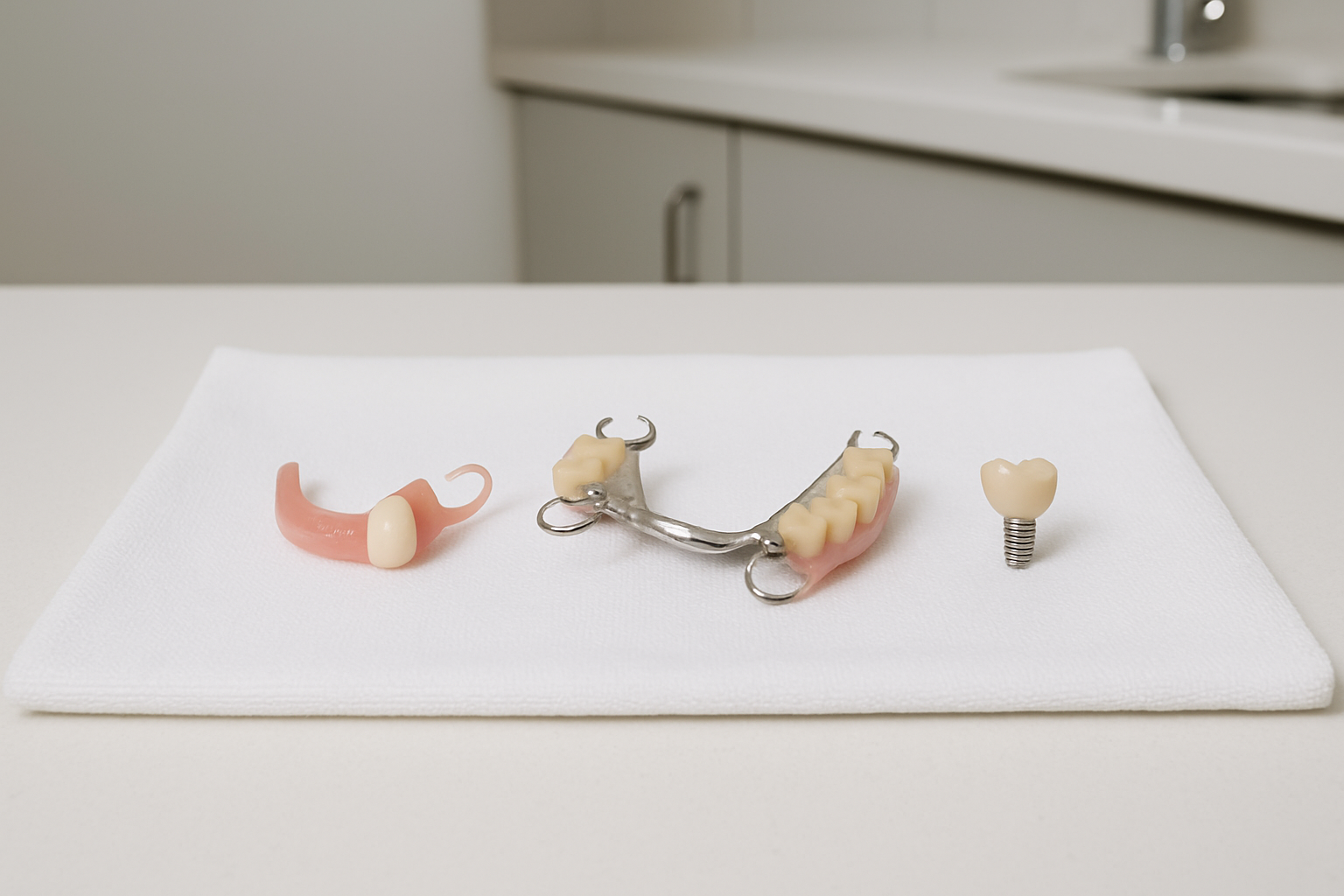
A flipper is a removable acrylic device with one or more replacement teeth attached to a thin pink base that rests against the roof of your mouth or along your lower ridge. It flips in and out with your fingers, which is where the name comes from.
Most people have never heard the word until a dentist says it out loud. Then they go home and search it at midnight, which is usually right after an extraction is scheduled or a front tooth has already come out.
Here is what a flipper is good at:
- Covering a gap quickly, often within a short window after the tooth comes out
- Letting you talk normally while the site heals
- Buying you time to save, plan, or wait for an implant site to mature
- Being adjusted or relined as your gum tissue changes shape during healing
And here is what it is not built for. A flipper is thin and light, so it is not designed for heavy chewing, and it will not last the way a cast partial or a crown will. Think of it as a placeholder with a cosmetic job, not a workhorse.
One more thing worth knowing. Gum tissue shrinks noticeably in the first few months after an extraction, so a flipper that fits perfectly in week one may feel loose by month three. That is normal, and it is part of why we treat it as a temporary step.
Dental Flipper vs Partial Denture: The Real Difference
People use these two words like they mean the same thing. They do not.
A partial denture replaces one or more missing teeth using a stronger base, either a cast metal framework or a flexible resin, with clasps that grip your remaining natural teeth. It takes multiple appointments and lab time to build because it is fitted precisely to your bite.
A flipper is made from acrylic alone, is faster to produce, and is meant for months, not years. A well made partial, cared for properly, can serve you for several years.
The practical differences that matter day to day:
- Chewing: a partial handles real meals; a flipper handles soft foods and appearances
- Fabrication time: a flipper is quick; a partial usually takes several visits over a few weeks
- Fit over time: both need adjustments, but a partial holds its shape far longer
- Bulk: a partial framework is often thinner and less noticeable against the palate
I see this play out constantly with retirees in Sun City Grand and The Grand who are missing two or three teeth on the same side. A flipper would technically fill the space, but a partial is what actually lets them eat a normal dinner. Meanwhile a working professional in Marley Park who lost one front tooth and is planning an implant in six months is almost always better served by the flipper.
Flipper, Partial, or Implant: A Side by Side Look
This is the comparison I sketch out on paper for patients more than any other. Timeframes vary by person, so treat these as general ranges rather than promises.
| Flipper | Partial Denture | Implant Crown | |
|---|---|---|---|
| Typical time to receive it | Days to a couple of weeks | Several visits over a few weeks | Several months start to finish |
| Removable? | Yes | Yes | No, it stays in your mouth |
| Realistic lifespan | Months, as a bridge to something else | Several years with good care | Designed as a long term solution |
| Handles normal chewing? | Limited | Yes | Yes |
| Addresses jawbone loss | No | No | Yes |
| Relative cost tier | Lowest entry point | Middle range | Highest upfront |
| Best suited for | Healing period or waiting to decide | Multiple missing teeth, budget conscious | One tooth, long term investment |
How the Sequence Usually Unfolds
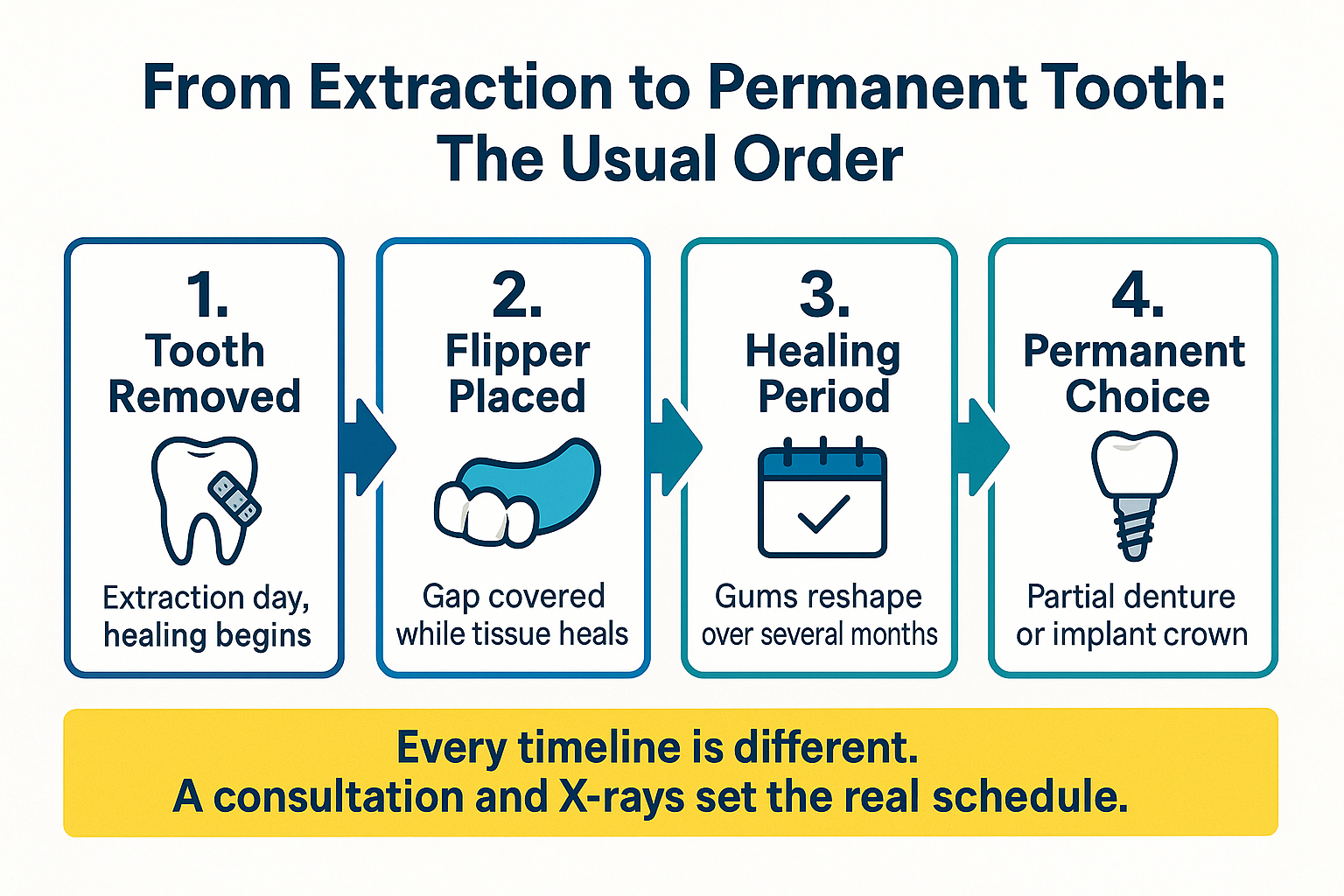
Most patients do not pick one option and stop. They move through a sequence, and knowing the order ahead of time takes a lot of stress out of it.
Why the Implant Conversation Is Really About Bone
Here is the part that surprises people. A flipper and a partial both sit on top of your gums. Neither one does anything for the bone underneath.
When a tooth root is removed, the jawbone that used to hold it starts to shrink because it no longer has a job. The National Institute of Dental and Craniofacial Research covers this in its patient material on tooth loss, and it is the single biggest reason dentists push the implant conversation earlier rather than later.
An implant post replaces the root itself, which keeps that bone stimulated. It is the only one of the three options that does. If you want the longer version of that, we wrote about what happens to your jaw when a tooth goes missing.
The tradeoff is time. An implant typically involves placement, a healing stretch of several months while the bone fuses to the post, and then the crown. Some patients also need a graft first, which adds more time. Our guide on the first stage of implant healing walks through what those months actually feel like.
That long runway is exactly why flippers exist. Nobody wants to spend half a year with a visible gap.
What Actually Drives the Cost Difference
Cost comes up in nearly every one of these conversations, and I would rather explain the math than dodge it.
I am not going to quote a number here, because the honest answer is that it depends on how many teeth you are replacing, what materials the lab uses, whether a graft or extraction is part of the plan, and what your insurance does or does not cover. But the relative order is consistent almost everywhere:
- Flipper: the least expensive entry point, because it is one appliance, simple materials, minimal lab work
- Partial denture: middle range, because of the metal or flexible framework, precision fitting, and multiple appointments
- Implant crown: highest upfront, because you are paying for surgery, a titanium post, an abutment, a custom crown, and months of follow up
What trips people up is comparing a one time flipper cost to a one time implant cost. A flipper you replace twice while you decide adds up. Over ten or fifteen years, the cheapest option on day one is not always the cheapest option overall.
We get a steady stream of calls asking about payment plans alongside extraction questions, especially from folks without dental coverage. Financing options and an in house membership plan both exist for that reason. If that is your situation, how dental costs work without insurance and what a dental membership plan actually covers are worth reading before you call anyone.
And if you want a deeper breakdown of why implant quotes vary so widely between offices, we covered that separately.
Frequently Asked Questions About Flippers, Partials, and Implants
Can I get a flipper the same day my tooth is pulled?
Sometimes, yes. It requires taking impressions before the extraction so the lab can build it in advance. If you already had the tooth removed, we work from your current mouth instead, which usually means a short wait while it is fabricated.
Can I sleep in a flipper or eat with it?
You should take it out at night so your gums get a break and stay healthy. For eating, stick to softer foods. A flipper is not built to take the force of steak or crusty bread, and putting that kind of pressure on it is the fastest way to crack one.
If I get a partial now, can I still get an implant later?
In most cases yes, though the bone in that area will have continued to shrink in the meantime, which sometimes means a graft is needed first. Waiting does not close the door on implants. It just changes what the process looks like when you get there.
I have severe dental anxiety and have avoided this for years. Where do I even start?
With a conversation and X-rays, nothing more. No treatment happens at a consultation. We hear from a lot of patients who say they have been putting this off too long and want to get it all done at once, and that is a completely normal place to start from. Blankets, headphones, and sedation options exist specifically for this, and what to expect at a first appointment covers the details.
How is this different from choosing between a crown, a bridge, and an implant?
That decision is about picking a permanent fix for one tooth. This article is about the step before it, what you wear while you heal or save. If you are already past the temporary stage, our post on choosing between a crown, bridge, or implant is the better read.
Thinking through your options for a missing tooth?
If you are somewhere in this decision, whether you just had a tooth pulled or you have been living with a gap for years, a consultation and a set of X-rays will tell you far more than another hour of searching. Our team on West Bell Road sees patients from Surprise, Sun City, Marley Park, and across the West Valley, with early morning, evening, and Saturday appointments for schedules that do not bend. You can reach West Bell Dental Care at 480-795-2420 or find more at westbelldentalcare.com whenever you are ready.