
Direct Answer: Arizona’s HB2906 requires one dentist seat on the Arizona State Board of Dental Examiners to be held by an actively practicing oral and maxillofacial surgeon. It takes effect September 12, 2026.
Most people never think about who regulates their dentist. Then they have a tooth pulled, or an implant placed, or they go under sedation for the first time, and the question shows up out of nowhere: if something went sideways here, who would actually look at it?
In Arizona, that job belongs to the Arizona State Board of Dental Examiners. It issues dental licenses, takes patient complaints, and decides on discipline. And as of this year, its makeup has changed.
A new law called HB2906 reserves one of the board’s dentist seats for an actively practicing oral and maxillofacial surgeon. I want to walk through what that actually means for patients here in Surprise, when it starts, and what it does not change about your next visit.
What the Arizona State Board of Dental Examiners new law 2026 actually did
HB2906 was signed into law by Governor Katie Hobbs during the 2026 session and carries the session’s general effective date of September 12, 2026. You can see it listed among the bills in the legislative action update from the Office of the Arizona Governor.
The change itself is narrow. One dentist position on the board must now be held by an actively practicing oral and maxillofacial surgeon. The Arizona Dental Association, which tracked the bill through the Capitol, describes it as securing permanent oral surgeon representation on the board.
It helps to know what this board does day to day, because it is not a trade group or a marketing outfit. It is the state agency that:
- Issues and renews licenses for Arizona dentists and hygienists
- Receives and investigates complaints from patients
- Decides on discipline when a complaint is substantiated
- Sets and enforces standards that licensed offices have to follow
For a patient in Marley Park or Sun City Grand, nothing about this requires you to do anything. No form, no renewal, no call. It is a structural change to who sits in the room when complaints get reviewed.
Why a surgeon’s seat matters if you ever file a complaint
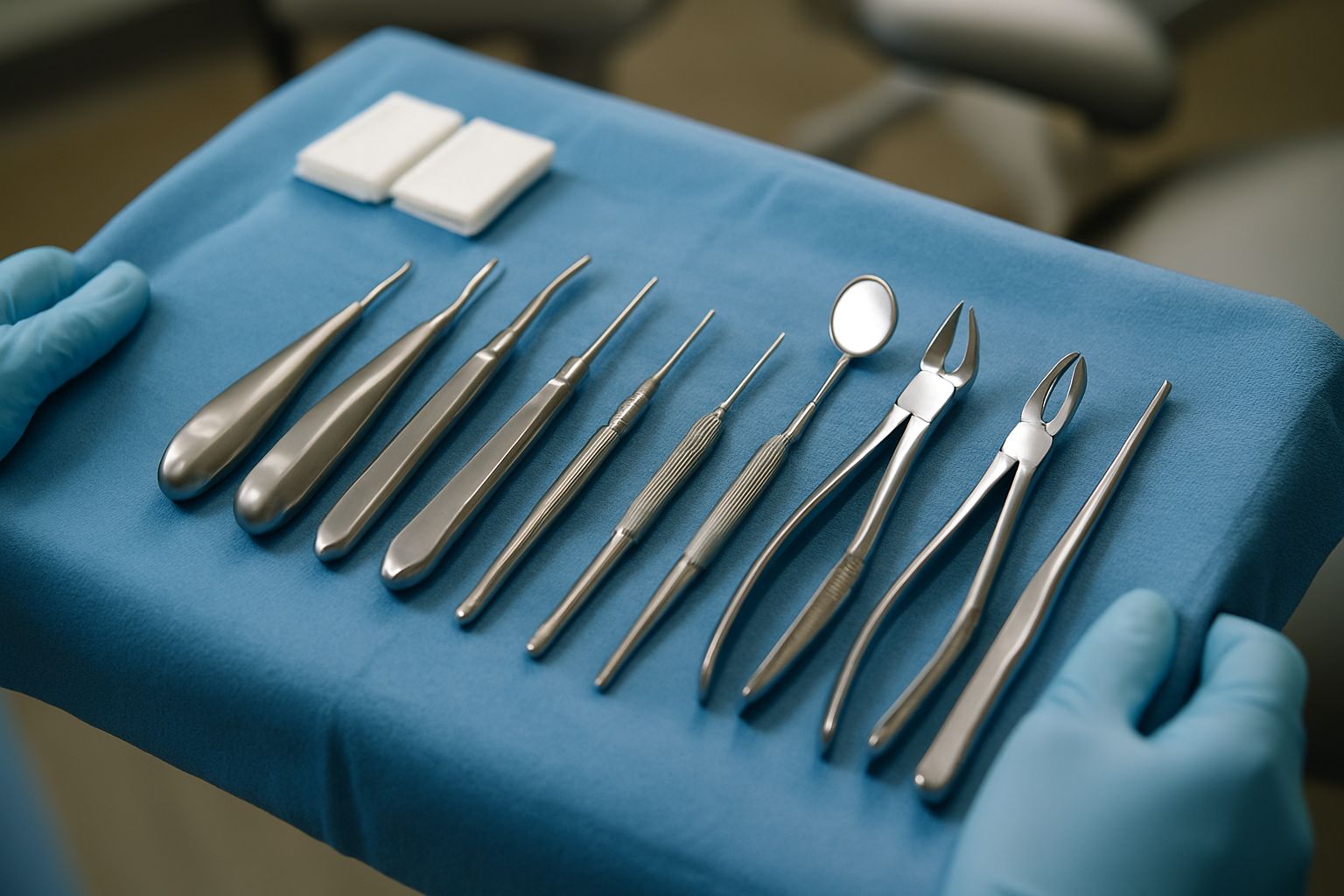
Here is the part that reaches real patients. Surgical dentistry is its own world. An extraction with a bone graft, an implant placement, a sedation case, these involve judgment calls that differ from the judgment calls in a filling or a crown.
Before this law, whether a surgeon sat on the board depended on who happened to be appointed in a given year. Now that seat is permanent. If you file a complaint about surgical care, the panel reviewing it includes a dentist who does that work.
That matters most for the kinds of cases where the facts are genuinely technical:
- Extractions that did not heal the way you expected
- Implant placement, including whether a graft was needed first
- Sedation, both nitrous oxide and oral sedation, and how it was monitored
- Complications that showed up days or weeks after a procedure
I see the practical version of this question all the time, long before anyone is thinking about complaints. Patients want to know who is making the call and why. If you are weighing an implant, the honest answer usually starts with the bone, which is why whether you need a bone graft first comes up in almost every one of those conversations. Same with sedation, where knowing the difference between nitrous oxide and oral sedation changes what people expect from the appointment.
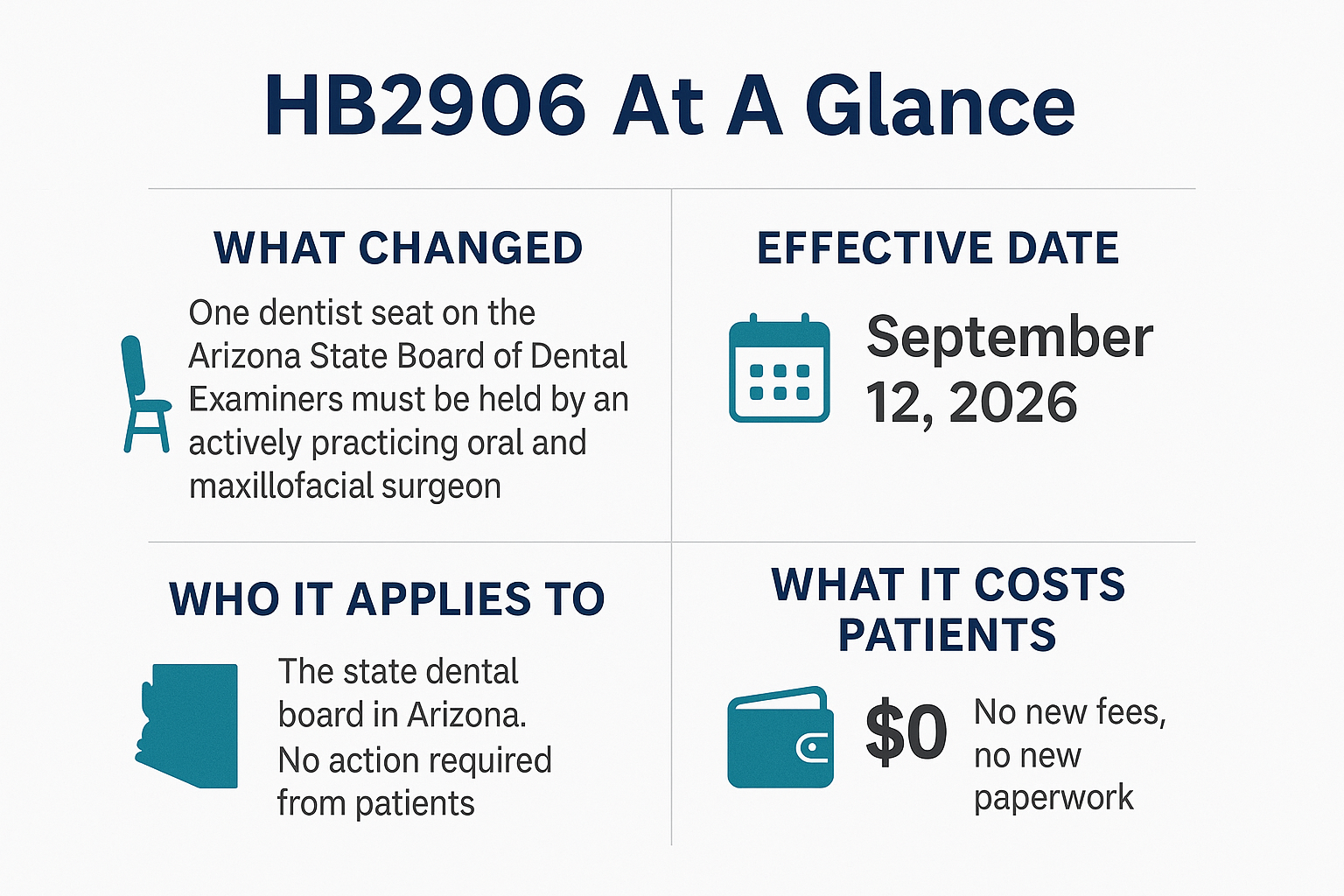
HB2906 at a glance
Here is the whole change in four pieces, for anyone who wants the short version.
What this law does not change
I want to be clear about the limits here, because headlines about new laws tend to make people think their bills or benefits are about to move.
HB2906 does not change:
- What any procedure costs
- What your dental insurance covers or pays
- Which plans a given office accepts
- Your existing appointments or treatment plan
- The services your dentist is allowed to provide
If you are a snowbird heading back to the West Valley in the fall, the timing is almost poetic, the law kicks in right around the time the traffic on Bell Road picks back up. But there is nothing in it that affects how seasonal residents keep dental care on track across two states.
One related note, since people sometimes mix the two up. A separate bill from the same session, HB2308, bars insurance companies and their holding companies from owning dental practices. That one is about clinical independence and patient choice, not board makeup.
On cost, self-pay prices in the West Valley vary widely by office and by what the visit includes. A new patient exam with X-rays generally lands in the low hundreds depending on scope, and surgical work goes up from there. Ask any office for a written estimate before you commit, ours included.
The quick reference version
If you only want the facts and the dates, this covers it.
| Question | Answer | What you should do |
|---|---|---|
| What changed? | One dentist seat on the Arizona State Board of Dental Examiners must be filled by an actively practicing oral and maxillofacial surgeon | Nothing required |
| Who signed it? | Governor Katie Hobbs, 2026 session | Nothing required |
| When does it take effect? | September 12, 2026 | Note the date if you have a pending complaint |
| Who does it apply to? | The state dental board, not individual offices or patients | Nothing required |
| What does it cost patients? | No fee, no paperwork | Nothing required |
| Does it change coverage or pricing? | No | Still ask your office for a written estimate |
The practical habits that matter more than any single law
Board composition is a backstop. It is the thing that exists in case something goes wrong. The better use of your attention is the stuff that keeps you from needing it.
Three habits I recommend to every patient considering surgical treatment:
- Get the plan in writing. Procedure, tooth number, materials, and the estimate. Surprises in dentistry are almost always billing surprises.
- Ask who is performing the procedure and what their experience with it looks like. A reasonable provider will not flinch at that question.
- Keep your own records. X-rays and chart notes belong to you, and they travel.
If you are shopping for a new office, the questions worth asking before you book will tell you more in five minutes than any amount of online scrolling. And if you are coming from a practice in another state or another part of the Valley, here is how transferring your old X-rays and records usually goes.
For what it is worth, every licensed dentist in Arizona is already accountable to this board. The new seat just means the people reviewing surgical cases now permanently include someone who performs them.
Frequently Asked Questions About Arizona’s New Dental Board Law
Does HB2906 mean my dentist has to change anything about my care?
No. The law changes who sits on the state board, not what happens in the operatory. Your treatment plan, your appointments, and your provider’s scope of practice are all unaffected.
When exactly does the change take effect?
September 12, 2026, the general effective date for bills from the 2026 session. The bill was signed earlier in the year and announced in a legislative action update from the governor’s office in June.
How do I check whether a dentist in Surprise is licensed?
The Arizona State Board of Dental Examiners keeps a public license lookup, and it is free to search. It will show you license status and any public disciplinary history. If an office hesitates when you ask about licensure, that itself is useful information.
Will this make dental care more expensive in Arizona?
There is nothing in the law that affects pricing. Costs in the West Valley are driven by what a procedure involves, the materials used, and your coverage, not by board composition. Always ask for a written estimate before treatment.
What if my complaint is about a cleaning or a crown, not surgery?
The board handles those too. The surgeon seat adds one specific perspective to the panel. It does not narrow what kinds of complaints the board accepts or how they get reviewed.
Questions about a surgical treatment plan?
If you live in Surprise or anywhere across the West Valley and you are sitting on a quote for an extraction, an implant, or sedation, it is reasonable to want it explained in plain language before you say yes. Our team keeps extended weekday hours and Saturday appointments, and we are happy to walk through a plan with you. You can reach the office at 480-795-2420 or read more at westbelldentalcare.com.