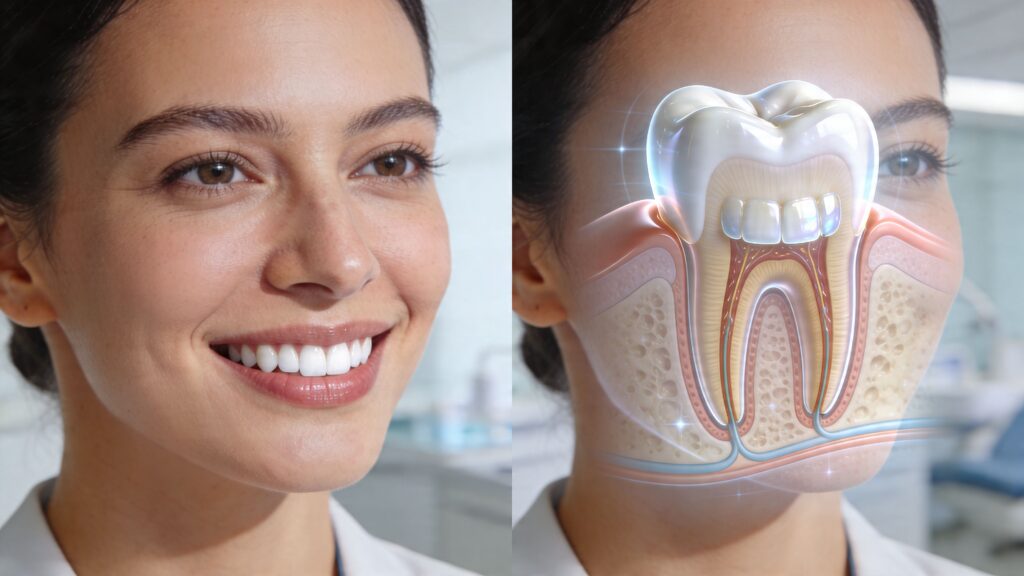
TL;DR: No. Cosmetic dentistry can help your teeth too. Treatments such as veneers, bonding, crowns, and clear aligners can strengthen damaged teeth, improve bite balance, and make teeth easier to clean. In some cases, crowned teeth show 50 to 60% higher fracture resistance than unrestored teeth, and correcting misalignment can reduce TMJ problems by 60 to 80% in some patient groups.
Quick Answer
Cosmetic dentistry isn't only about appearance. It often helps teeth function better by protecting weak areas, sealing small defects, improving bite alignment, and making daily cleaning easier. In the right situation, a cosmetic treatment can also be a preventive treatment that helps you avoid bigger dental problems later.
You may be asking this because you've started noticing your smile more in photos, on video calls, or when you catch yourself covering your mouth when you laugh. That's a common reason people finally bring up cosmetic dentistry.
The question usually isn't vanity. It's whether fixing a chip, stain, small gap, or uneven edge is just about looks, or whether it can also help your teeth stay healthier and work better.
Beyond the Surface What Cosmetic Dentistry Really Is
Cosmetic dentistry includes treatments that improve how teeth look, but that description is too narrow. In daily practice, these treatments often overlap with protection, support, and bite improvement.

A simple example is a chipped front tooth. You might want it repaired because you see it every time you smile. But a rough chipped edge can also collect plaque, irritate your bite, and make a small problem larger over time. Restoring the shape can improve both appearance and function.
Cosmetic doesn't always mean dramatic
Most cosmetic treatment isn't a dramatic makeover. It can be:
- Whitening for stains that don't respond well to cleaning
- Bonding for a chip or a small gap
- Veneers for worn or uneven front teeth
- Crowns for teeth that need more coverage and support
- Clear aligners for mild to moderate alignment concerns
These are often conservative steps. The goal is usually to make teeth look natural, feel comfortable, and work normally.
The best result is balanced, not flashy
Healthy dentistry works like good shoe support. If shoes look good but don't support your feet, you feel it by the end of the day. Teeth are similar. A smile can look brighter or straighter, but if the bite is off or a weak tooth isn't protected, the cosmetic result won't be enough.
Practical rule: A cosmetic treatment is worth considering when it improves how a tooth looks and lowers the chance that the tooth will keep breaking down.
That's why the line between cosmetic and restorative care often blurs. A veneer may improve color and shape, but it can also cover worn enamel. A crown may improve appearance, but its real job may be to hold together a tooth that would otherwise keep cracking.
How Cosmetic Treatments Also Help Your Teeth and Health
Cosmetic treatment can act like a protective cover, a patch, or a bite adjustment depending on the problem. The key is matching the treatment to the tooth, not forcing every concern into the same solution.

A veneer can cover an area of worn or damaged enamel. Bonding can repair a chipped edge before it spreads. A crown can surround a weakened tooth and help it handle normal chewing again. According to the verified data, cosmetic dentistry provides significant restorative benefits by strengthening weakened teeth and preventing further damage, with veneers, bonding, and crowns adding structural support while reducing sensitivity and improving bite balance (iTooth).
Protection matters more than people think
Teeth don't always fail all at once. Often, they wear down little by little. A thin edge chips. A crack deepens. A weak cusp flexes every time you chew.
When a cosmetic procedure covers or reinforces that area early, it may help you avoid a more invasive repair later. That's one reason crowns are often recommended for compromised teeth. They don't just improve shape and color. They also provide support that lowers the risk of more damage.
Bite changes can help the whole system
Teeth are part of a system that includes muscles and joints. If one tooth is worn, short, tilted, or out of line, the bite can start compensating. That may show up as sore jaw muscles, tooth sensitivity, or uneven wear.
Small corrections can make a meaningful difference:
- Smoother tooth contours can reduce food traps
- Better tooth position can make brushing and flossing easier
- More even biting contacts can reduce stress on one tooth or one side of the jaw
Some patients also worry that whitening will aggravate sensitivity. If that concerns you, this guide on managing sensitive teeth during teeth whitening gives a helpful patient-friendly overview of how sensitivity is approached.
A cosmetic plan should answer two questions at once. Will it look right, and will it hold up under real chewing, talking, and cleaning?
If the answer to the second question is no, the treatment plan needs work.
Common Procedures and Their Dual Benefits
A porcelain veneer, a little bonding, a whitening session, aligners, a crown. On paper, these can look like appearance-driven choices. In the chair, the core question is more practical. Does the treatment only change how the tooth looks, or does it also help that tooth function, last longer, and stay easier to keep clean?

The answer depends on the starting point. A treatment that is cosmetic for one patient may serve a protective or restorative role for another. That line is blurrier than many people expect.
Veneers
Veneers are thin porcelain shells bonded to the front of teeth. They are often chosen to improve color, shape, and symmetry, but they can also help cover worn enamel, smooth chipped edges, and close small areas where the surface has become rough or uneven.
That matters because damaged enamel does not repair itself. In the right case, a veneer acts like a fitted outer layer over the visible front of the tooth. It improves appearance, but it can also shield a vulnerable surface from more wear. Patients considering this option can get a clearer sense of the trade-offs and benefits in this guide to the advantages of dental veneers.
Veneers are not a blanket solution. If a tooth has a large cavity, a deep crack, or too little healthy structure left, a veneer may be too conservative.
Dental bonding
Bonding uses tooth-colored resin to repair small chips, soften sharp edges, close narrow gaps, and reshape minor defects. I often describe it to patients as a small patch that is sculpted directly onto the tooth.
Its biggest advantage is conservation. Bonding usually requires little to no removal of healthy tooth structure, so it can be a smart first step for small problems. It also restores contour. That can help a tooth contact its neighbor more naturally and keep a chipped edge from catching more force every time you bite.
The trade-off is durability. Resin is useful, but it is not as strong or stain-resistant as porcelain, especially for patients who clench, grind, or bite into hard foods often.
Teeth whitening
Whitening mostly changes color. It does not reinforce weak enamel, repair decay, or correct a failing filling.
It still has a health-related benefit in the right patient. People who like their smile tend to pay closer attention to it. They are often more consistent with brushing, flossing, and maintenance visits after whitening because the result feels worth preserving.
That said, whitening should wait if there is untreated decay, gum inflammation, or exposed root surfaces causing sensitivity. Healthy teeth first, brighter teeth second.
Clear aligners
Clear aligners can improve the look of a smile, but their practical value often shows up in daily cleaning and tooth wear. Teeth that overlap tightly are harder to floss and easier to miss with a toothbrush. Straightening them can reduce those hiding places for plaque and make home care more effective.
Aligners can also help redistribute how teeth meet. For patients asking about how to fix an overbite without surgery, the principle is usually controlled tooth movement, not just cosmetic straightening. Whether that is appropriate depends on the bite, the jaw relationship, and how much correction is possible with aligners alone.
Dental crowns
Crowns cover the entire visible part of a tooth above the gumline. They are often the better choice when a tooth has a large filling, significant wear, or a crack that leaves the remaining structure too weak for bonding or a veneer.
A well-made crown can improve color and shape, but its main job is support. It wraps the tooth more completely, like a protective helmet around compromised structure, so the tooth is better able to handle normal chewing forces. That is why crowns often sit in both categories at once. They may look cosmetic from the outside, but they are frequently doing heavy restorative work underneath.
A simple comparison
| Procedure | Cosmetic benefit | Functional benefit | Best use case |
|---|---|---|---|
| Veneers | Improve color, shape, symmetry | Cover worn enamel and protect minor surface defects | Front teeth with chips, wear, or shape concerns |
| Bonding | Repair chips and close small gaps | Restore edge shape and reduce further chipping in a small area | Small localized damage |
| Whitening | Brighten stained teeth | Can encourage better maintenance habits | Healthy teeth with color concerns |
| Clear aligners | Straighten the smile line | Improve cleaning access and help correct some bite problems | Mild to moderate crowding or spacing |
| Crowns | Restore shape and appearance | Reinforce heavily weakened teeth | Teeth with major cracks, large fillings, or heavy wear |
Improving Your Bite and Protecting Your Jaw
A patient may come in asking about a crooked front tooth, but the bigger problem is often how the teeth hit when the mouth closes. If one tooth takes the first hit every time you chew or clench, that extra force can show up as wear, sensitivity, muscle fatigue, or jaw soreness.

Your bite works like the suspension on a car. When the pressure is shared evenly, the system runs more comfortably. When one area absorbs too much load, parts start to wear out sooner.
That is why some cosmetic treatment plans do more than improve appearance. Clear aligners can help reposition teeth so forces are distributed more evenly. Reshaping a worn edge, rebuilding a chipped tooth, or refining the length of certain teeth can sometimes reduce the strain that keeps the jaw joints and chewing muscles working harder than they should.
When appearance points to a functional problem
Small visual changes often give us clues about bite trouble:
- Flattened or shortened front teeth can suggest grinding
- One side wearing faster than the other can mean uneven contact
- Tiny chips along the edges can point to repeated stress
- Teeth that look crowded or tipped can create bite interference and cleaning problems
I pay close attention to those patterns during a cosmetic consultation. If I only fix the shape and ignore the force that caused the damage, the new dental work is more likely to fail early.
Protecting the result matters too
A better-looking smile still has to survive real life. That means chewing, nighttime clenching, stress habits, and years of daily use. For patients who grind or clench, treatment may need to include protection after the cosmetic work is complete. A night guard or other bite management plan can help protect both the teeth and the jaw joints over time.
If grinding is part of the picture, this guide on how to stop grinding teeth explains the habits and treatment options that can protect both cosmetic and restorative work.
A cosmetic case is not finished until the teeth look right, feel right, and function comfortably together.
Cosmetic vs Restorative Understanding Your Treatment Goal
Patients often ask whether a procedure is cosmetic or restorative. The honest answer is that it depends on the reason for treatment.
A filling on a decayed tooth is mainly restorative. Whitening is mainly cosmetic. But many procedures sit in the middle. A front crown after a fracture is restoring strength and appearance at the same time.
The goal changes the category
If you're comparing terms, the easiest way to think about it is this:
- Restorative dentistry focuses on repairing damage, replacing missing structure, and getting a tooth healthy and usable again.
- Cosmetic dentistry focuses on improving appearance, symmetry, color, and smile design.
- Overlap happens when one procedure serves both purposes.
If you want a broader overview of the health-focused side, this explanation of what is restorative dentistry helps define where that line usually starts.
Cosmetic vs Restorative Goals for Common Procedures
| Procedure | Primary Restorative Goal (Health-Focused) | Primary Cosmetic Goal (Appearance-Focused) | Example of an Overlap |
|---|---|---|---|
| Crown | Protect a weak or broken tooth | Improve shape and color | A cracked front tooth that also needs to look natural |
| Veneer | Cover worn enamel or minor defects | Refine shape, color, and symmetry | A chipped front tooth with cosmetic wear |
| Bonding | Repair a small fracture | Close a gap or smooth edges | A corner chip that affects both bite and appearance |
| Clear aligners | Improve tooth position for cleaning and bite | Straighten visible crowding | Front teeth that are crooked and hard to floss |
| Implant | Replace a missing tooth for function | Restore a complete smile | A visible missing tooth that affects chewing |
What a consultation should feel like
A good consultation isn't a sales pitch. It should feel like a problem-solving discussion.
The first question is usually simple. What bothers you most? Then the conversation gets more specific. Is the tooth weak, worn, sensitive, hard to clean, or just cosmetically off? Those details shape the plan.
Sometimes the answer is a small cosmetic improvement. Sometimes it's clear that the tooth needs a stronger restorative approach first. When patients understand that difference, treatment decisions feel less confusing and more grounded.
The Long-Term Impact on Your Oral Hygiene Habits
One of the most overlooked benefits of cosmetic dentistry is what happens after treatment. Patients often become more protective of their results.
Verified data notes that cosmetic dentistry significantly boosts oral hygiene habits and motivation for preventive care, with many patients reporting more consistent brushing, flossing, and routine checkups after treatment (Academy Dental NJ).
That makes sense clinically. If teeth are smoother, straighter, or newly restored, patients usually notice plaque, stain, and roughness sooner. They also tend to keep up with maintenance because they don't want to lose the improvement they worked for.
What helps and what doesn't
Some habits protect cosmetic work well:
- Daily brushing and flossing to limit plaque buildup around restorations
- Regular checkups and cleanings to catch wear, leakage, or staining early
- Using the teeth appropriately instead of opening packages or chewing ice
Some habits work against it:
- Ignoring grinding or clenching
- Skipping maintenance visits
- Assuming whitening or veneers replace hygiene
If you want to strengthen your foundation before any cosmetic treatment, this guide on what is oral hygiene covers the basics that keep both natural teeth and dental work in better shape.
Cosmetic dentistry works best when it changes behavior as well as appearance.
What to Expect from a Cosmetic Consultation in Surprise AZ
If you're in Surprise AZ or nearby communities like Marley Park, Sierra Montana, or Sun City, the first step is usually simpler than people expect. It's a conversation about what you're seeing, what bothers you, and what you want to improve.
A cosmetic consultation should start with your goals, not a preset package. Some people want whiter teeth. Some want to repair one chipped edge. Others want to know whether a small alignment issue is worth treating.
The clinical side matters just as much. A proper exam looks at tooth strength, enamel wear, gum health, bite function, and whether the concern is mainly visual or partly structural. That helps separate what will work well from what may look good briefly but fail under daily use.
Questions worth asking at that visit
- What is the actual problem? Stain, wear, fracture, spacing, or bite issue
- Which options are conservative? Sometimes bonding is enough, and sometimes it isn't
- How natural will it look? Shape, shade, and proportion should fit your face
- What maintenance will it need? Every material has limits
If you're comparing options locally, this page on what cosmetic dentistry options are available in Surprise AZ gives a practical overview of common treatments.
A good consultation should leave you clearer, not pressured.
Frequently Asked Questions About Cosmetic Dentistry
Is cosmetic dentistry only about looks, or does it help your teeth too?
It can do both. Some treatments mainly improve appearance, while others also protect weak teeth, improve bite balance, or make teeth easier to clean. The benefit depends on the condition being treated and the type of procedure used.
What cosmetic treatment is best for a chipped tooth?
That depends on the size of the chip and how much force that tooth handles. Small chips often respond well to bonding, while larger fractures or weaker teeth may need a veneer or crown. A dental exam is the safest way to choose correctly.
Will cosmetic dentistry fix jaw pain or grinding?
Sometimes it can help if the problem is related to bite imbalance or tooth position. But cosmetic treatment alone isn't a cure for every TMJ or grinding issue. Those concerns need a proper diagnosis before treatment is planned.
Does teeth whitening make your teeth healthier?
Whitening improves color, not tooth strength. Its practical benefit is often behavioral. People who like how their smile looks may become more consistent with brushing, flossing, and preventive visits.
How do I know if I need cosmetic or restorative treatment?
The easiest clue is whether the tooth is unhealthy or structurally weak. If there's decay, a crack, significant wear, or a broken restoration, restorative needs usually come first. If the tooth is healthy and the concern is color, shape, or mild spacing, cosmetic options may be appropriate.
Will cosmetic dental work look fake?
It shouldn't. Good cosmetic work is designed to fit your face, bite, and natural tooth shape. The goal is usually a healthy, believable result, not a one-size-fits-all smile.
How much does cosmetic dentistry cost?
Cost depends on the procedure, the number of teeth involved, and whether there are underlying health issues that need treatment first. The best next step is to schedule a consultation and discuss options, priorities, and payment details based on your specific case.
Start Your Smile Journey at West Bell Dental Care
If you've been wondering whether cosmetic dentistry is only about looks, or does it help your teeth too, the answer is often both. The right treatment can improve appearance while also protecting teeth, supporting your bite, and helping you maintain better oral health over time.
If you'd like a clear, pressure-free conversation about your options, West Bell Dental Care can help. Visit us at 16581 W. Bell Rd., Suite 108, Surprise, AZ, contact us at https://westbelldentalcare.com/contact/, or schedule online at https://westbelldentalcare.com/schedule-your-next-appointment/.
Sources
iTooth. "Why Cosmetic Dentistry Isn't Just About Looks, Functional Benefits Explained." URL: https://www.itooth.net/blog/why-cosmetic-dentistry-isnt-just-about-looks-functional-benefits-explained-23/
Denville Dental Group. "Benefits of Cosmetic Dentistry Besides Looking Good." URL: https://www.denvilledentalgroup.com/benefits-of-cosmetic-dentistry-besides-looking-good/
Paradise Dental Studio. "Beyond the Smile, How a Cosmetic Dentist Can Transform Your Facial Structure." URL: https://paradisedentalstudio.com/beyond-the-smile-how-a-cosmetic-dentist-can-transform-your-facial-structure/
Academy Dental NJ. "What Are the Benefits of Cosmetic Dentistry Beyond Appearance in East Orange NJ." URL: https://www.academydentalnj.com/blog/what-are-the-benefits-of-cosmetic-dentistry-beyond-appearance-in-east-orange-nj/