
Direct Answer: A night guard for teeth grinding is a shock absorber. It keeps upper and lower teeth from wearing each other down, but it does not stop clenching, repair cracked teeth, or treat sleep apnea.
Nothing hurt. You came in for a cleaning, the hygienist finished up, and then someone pointed at a back molar and said the chewing surface looked flat. Then came the words: you may want an occlusal guard.
If your first reaction was “why, when nothing is wrong?”, you are in good company. I hear that question almost every week from patients across Surprise, from Marley Park families to longtime residents in Sun City Grand.
So let me walk through what I actually see at the exam that leads to that recommendation, what a night guard for teeth grinding genuinely protects, and the things it will not fix. That last part matters more than the sales pitch you were worried about hearing.
Why I Spot Grinding Before You Feel It
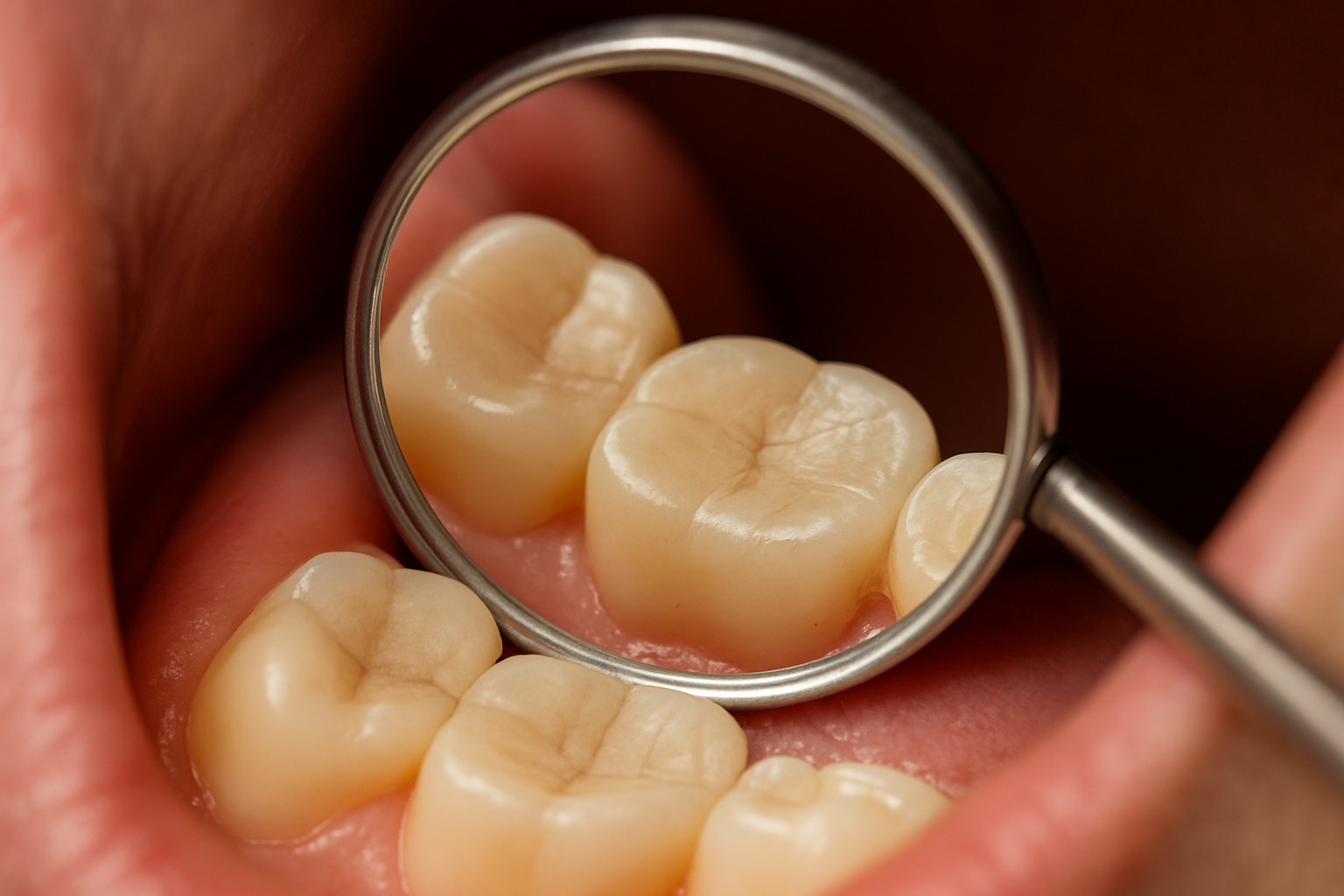
Most people never feel themselves grind. They are asleep. What I read instead is the damage pattern left behind on the teeth, and it is fairly hard to fake.
Here is what I look at during a routine exam:
- Flattened chewing surfaces. Molars and premolars have peaks and valleys. When the peaks are worn down smooth, something has been rubbing them off.
- Craze lines. Hairline vertical cracks in the enamel that catch the light. Common, usually harmless on their own, but they tell me force is going through that tooth.
- Mismatched wear. One tooth shorter or shinier than its neighbor, especially on the biting edge of a front tooth.
- Gum recession in the wrong places. Recession on a tooth you do not brush aggressively, in a pattern that does not match your habits.
- Worn or chipped restorations. A filling edge or crown surface that looks polished flat.
None of that hurts. That is exactly why grinding goes unnoticed for years. The National Institute of Dental and Craniofacial Research notes that bruxism often happens without the person realizing it, and that untreated severe grinding can damage both teeth and existing dental work.
So when I bring up a guard, I am reporting an observation, not opening a sale. Enamel does not grow back, and the wear I see today is the wear you will still have next year, plus a little more.
A Quick Self-Check You Can Run Tonight
You do not need a sleep study to get a decent hint. Run through this list and notice whether the timing lines up.
Signs that point toward nighttime grinding:
- Jaw soreness that is worst in the first hour after waking and eases through the morning
- Dull headaches around the temples that fade by lunch
- Teeth that ache when cold air hits them, the kind of 45 degree January morning we get here in the West Valley
- A partner or roommate who has heard it
- Ridges along the inside of your cheeks or a scalloped edge along the sides of your tongue
Now a different habit: daytime clenching. That one shows up during stressful stretches, sitting in traffic on Bell Road or pushing through a deadline. You catch yourself with your teeth together and your jaw tight.
A lot of people do both and only ever get told about one. Daytime clenching responds to awareness and habit changes, not to a guard you only wear at night. If your soreness builds through the afternoon instead of fading, say so at your next visit. It changes the plan.
And if you are noticing cold sensitivity along with the wear, that is worth mentioning too. Sensitivity has several possible causes and grinding is only one of them.
What a Night Guard Will Not Fix
This is the honest part, and it is the reason I wanted to write this at all.
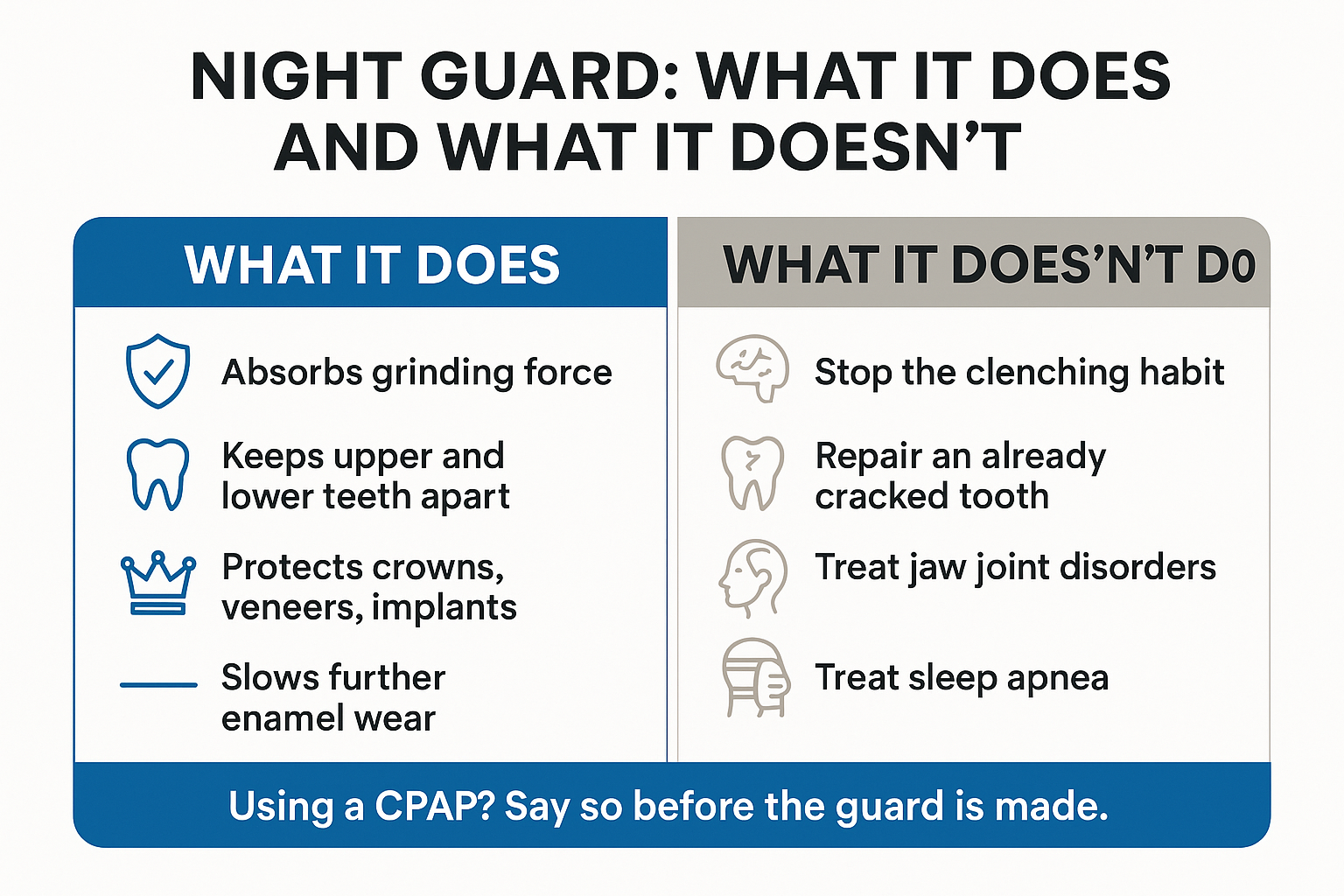
A guard is a shock absorber. It sits between your upper and lower teeth so they stop destroying each other, and it spreads force over a wider surface. That is the whole job.
Here is what it does not do:
- It does not stop your brain from clenching. The muscles still fire. You are just giving them something other than enamel to squeeze.
- It will not repair a tooth that is already cracked. If a tooth has split, the guard protects what is left, it does not heal the fracture.
- It is not a treatment for jaw joint disorders. Some people feel better, some do not. Jaw joint problems get evaluated on their own terms.
- It is not a sleep apnea appliance. These are two different devices with two different purposes.
That last one comes up more often than you would think. One patient wrote to us the day after an exam and asked it plainly: “during our visit yesterday you recommended an occlusal guard. I forgot to ask – will this interfere with the CPAP machine I use at night?”
Great question, and exactly the right time to ask it. If you use a CPAP, bring it up before a guard is made, not after. A mask seal and a bulky guard can fight each other, and the design choices are easier to get right the first time. We do not make sleep apnea appliances, so anything on the breathing side belongs with the physician who manages your CPAP.
Night Guard: The Job Description
A simple side-by-side of what this device is built to do and what it was never designed to handle.
Custom, Mail-Order, or Drugstore: The Real Differences
There are three realistic paths, and the gap between them is about fit, hardness, and whether anyone checks your bite. Cost varies quite a bit by plan and by option, so treat the last column as general market context rather than a quote.
| Option | Fit and bite check | Typical lifespan | Where it tends to go wrong |
|---|---|---|---|
| Made at a dental office from a scan or impression | Fitted and adjusted in person, bite checked so force lands evenly | Often a few years with decent care | Highest upfront cost of the three |
| Mail-order lab kit, you take your own impression | Lab makes it from your impression, nobody checks how it lands in your bite | Varies widely with impression quality | A distorted impression means a guard that rocks or presses unevenly |
| Drugstore boil-and-bite | You shape it yourself in hot water | Often warps, thins, or tears within months | Usually too soft, which invites heavy grinders to chew through it |
Why Fit and Hardness Matter More Than Price
Two problems show up again and again with guards that were never adjusted by anyone.
First, an unbalanced bite. If the guard is thicker on one side, your jaw hunts for a stable spot all night. Some people wake up with more soreness than they had before the guard.
Second, material that is too soft. A squishy guard feels pleasant for the first week. For a heavy grinder it becomes something to chew, and the muscles often work harder, not less.
On cost, I will not throw a number at you, because it moves with your plan and the type of guard. What I can tell you:
- Coverage varies a lot by plan, and some plans treat a guard differently than a filling or a crown
- An in-house membership arrangement can change the math for uninsured patients
- A guard that lasts years instead of months is often the cheaper choice per year, even at a higher sticker price
Ask the office to run your specific plan and give you a written number before anything gets made. If you are still choosing a practice, cost transparency is one of the questions worth asking on that first phone call.
Care is simple. Rinse it and let it dry, store it in a vented case, and never leave it on a dashboard or in a parked car here. A closed car in Surprise in July will warp a guard fast enough to ruin the fit in one afternoon.
The Strongest Argument: Protecting Work You Already Paid For
If you have natural teeth and mild wear, a guard is sensible prevention. If you have restorations, the math changes.
A lot of patients in Sun City Grand, The Grand, and Sun City have crowns, bridges, veneers, or implants already in place. Porcelain is hard, but it is brittle in a way enamel is not. Grinding forces that natural enamel absorbs can chip a veneer edge or fracture porcelain on a crown.
Implants deserve their own mention. A natural tooth root sits in a thin ligament that acts like a cushion and gives you feedback when you bite too hard. An implant is fused to bone with no cushion, so heavy nighttime force transmits straight through to the restoration and the components holding it.
And there is a seasonal pattern I see every year. Cracked teeth and popped-off restorations spike in January and February, after travel, holiday stress, and harder foods stack up on jaws that were already working overtime.
So when I recommend a guard to someone who has invested in restorative work, I am really recommending insurance on that investment. That framing is a lot more useful than treating it as one more procedure on a list.
How This Actually Gets Handled, Start to Finish
The logistics are smaller than most people expect. A guard involves two short visits: one for the scan or impression, one to place it and adjust the bite until it lands evenly.
Both fit into a 7 AM weekday slot or a Saturday morning between 8 AM and 3 PM, so nobody has to burn a workday for it. And if you already own a guard, bring it to your next cleaning. We will check it for thinning, cracks, and wear-through, which tells us a lot about how hard you are actually grinding.
One more thing. A guard should be offered, explained, and left up to you. That is how one patient described her experience with us: “They explained everything in detail and went through all my options instead of pushing something on me because that’s what they wanted.” – Danielle W.
If fear or a long gap since your last visit is part of what is holding you back, that is worth saying out loud too. There is no version of this conversation that involves a lecture, and telling us what you are worried about usually makes the visit shorter and easier.
Frequently Asked Questions About Night Guards for Teeth Grinding
Will a night guard interfere with my CPAP machine?
It can, depending on your mask style and the thickness of the guard, which is why you should mention your CPAP before the guard is made. The two devices serve completely different purposes, and your sleep physician should stay in the loop on anything related to your breathing.
How long does a night guard last?
A professionally made guard commonly holds up for a few years with regular cleaning and a vented case. Retail versions often warp or tear within months. Heavy grinders go through any guard faster, which is why bringing it to your cleanings for a check is worth doing.
My jaw hurts more since I started wearing a guard. Is that normal?
A few nights of adjustment is common. Weeks of increased soreness is not. That usually means the bite is landing unevenly or the material is too soft, and both are fixable with an adjustment or a different design. Do not just push through it.
Can I skip the guard and just get my worn teeth fixed later?
You can, but it is usually the more expensive road. Bonding or crowns on worn teeth without addressing the grinding puts new material in the same grinder that wore the originals down. Most of the time I would rather protect what you still have.
Does insurance cover a night guard?
Sometimes, and it varies a lot by plan. Some plans cover a portion, some exclude guards entirely, and Medicare Advantage dental benefits differ plan to plan. Ask the office to verify your specific plan and give you a written estimate before anything is made.
Still Deciding Whether You Need One?
If a guard came up at your last exam and you left with more questions than answers, bring them to your next cleaning. Our team at West Bell Dental Care sees patients from Surprise, Sun City, and across the West Valley six days a week, including early weekday mornings and Saturdays, and we are happy to walk through the wear on your own teeth so you can decide with the full picture in front of you. You can reach the office at 480-795-2420 or find more at westbelldentalcare.com.