
Direct Answer: Yes, sensitivity after a deep cleaning is completely normal. The procedure works below the gumline, and the tissue needs a few days to a couple of weeks to settle.
A patient wrote to us a while back after having two separate deep cleanings done a few weeks apart. Several teeth were still noticeably sensitive, and his question was straightforward: ‘I want to know if this is normal and how long can I expect this to carry on?’ I want to answer that question fully here, because it comes up often, and because too many people quietly assume the sensitivity means something went wrong.
It doesn’t. Sensitivity after a deep cleaning is expected, and in a real sense, it’s a sign your tissue is responding the way it should. But that’s easy to say and hard to believe when your teeth ache every time you take a sip of cold water. So let me walk through what actually happens during the procedure, what a realistic recovery looks like, and when sensitivity genuinely warrants a call to our office.
If you’re in Surprise, or coming to us from Sun City Grand, Marley Park, or Rancho Gabriela, and you’ve been putting off a deep cleaning because you’re worried about the aftermath, I hope this gives you a clearer picture of what to expect.
Why a Deep Cleaning Feels Different From a Regular Cleaning
A routine cleaning, also called a prophylaxis, cleans the surfaces of your teeth at and just above the gumline. It’s maintenance for a mouth that’s already in reasonable shape.
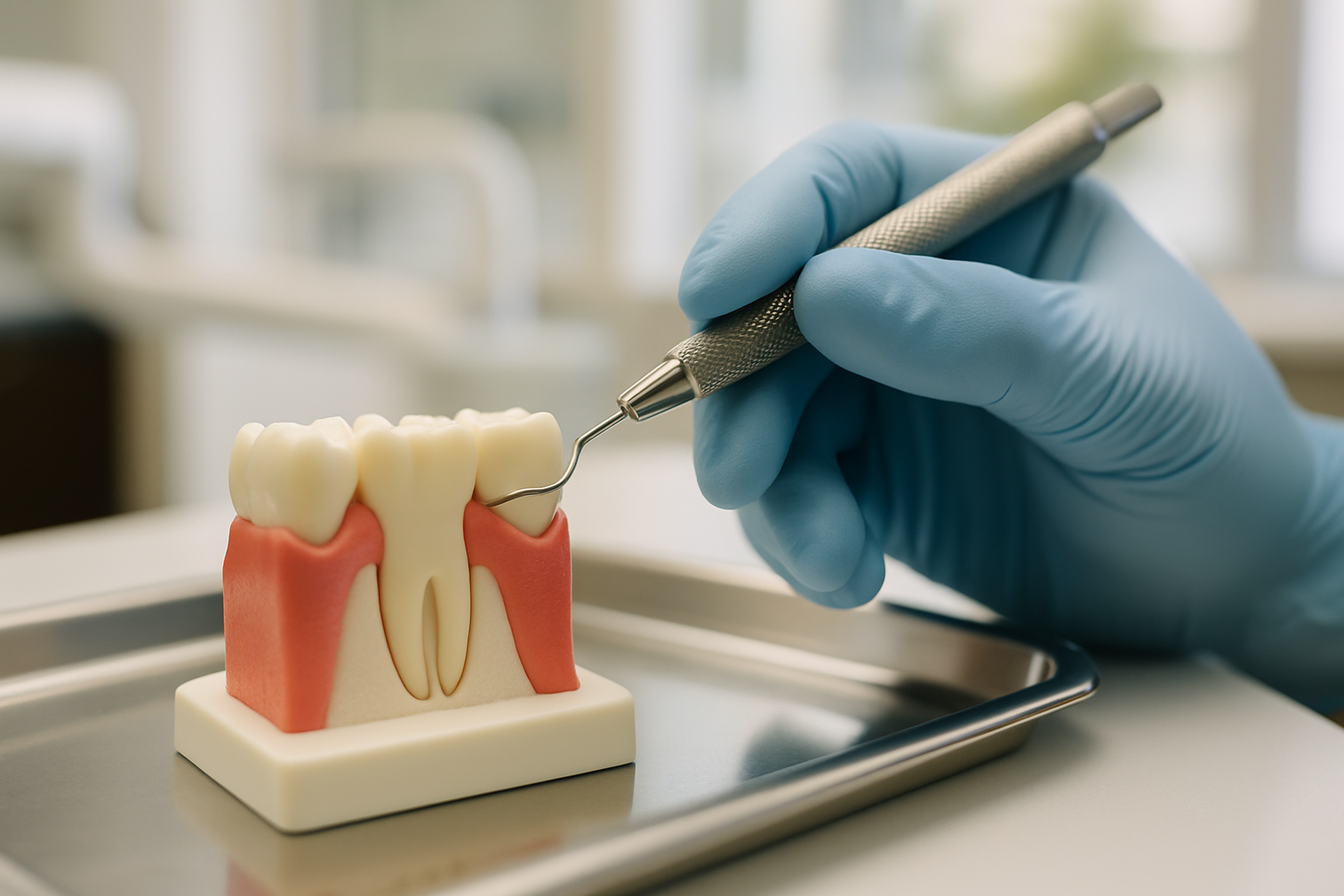
A deep cleaning, or scaling and root planing, is a different procedure entirely. It goes below the gumline to remove hardened calculus (tartar) from the root surfaces of your teeth, often in areas that have been inflamed for months or even years. When gum disease is present, pockets form between the tooth and the surrounding tissue. Those pockets trap bacteria, the bacteria cause inflammation, and over time the whole area becomes irritated and sensitive even before anyone touches it.
When we clean those deeper areas, we’re working in tissue that is already inflamed. The instruments reach places that haven’t been disturbed in a long time. So when the procedure is done, your gums and the surrounding nerves need time to recalibrate. The sensitivity you feel afterward isn’t damage, it’s the beginning of healing. The tissue is no longer harboring the source of irritation, and it’s now able to recover.
According to the American Academy of Periodontology, scaling and root planing is the standard of care for treating early to moderate gum disease, and post-treatment sensitivity is a well-documented and expected part of the process.
How Long Does Sensitivity Last After Scaling and Root Planing?
Most patients find that sensitivity fades within a few days to two weeks. For some, it’s gone by the end of the first week. For others, especially those who had more advanced buildup or deeper pockets, it can take a little longer to fully settle.
Several factors affect how quickly you recover:
- How advanced the gum disease was. Deeper pockets mean more inflamed tissue, which means more time to heal.
- Which teeth were treated. Molars with multiple roots and complex anatomy sometimes take longer than front teeth.
- Whether you already had sensitivity before the procedure. If certain teeth were already reacting to temperature before your deep cleaning, they may take more time to calm down afterward.
- How the cleanings were staged. Many patients, like the one who wrote to us, have their mouth done in two separate appointments, one side at a time. That’s completely standard, and it means some areas may still be healing while others are already feeling better.
I want to be honest: I can’t give you a specific date when everything will feel normal again, because it varies. But two weeks is a reasonable outer edge for typical sensitivity. If you’re still having noticeable sensitivity past that point, that’s worth mentioning to us.
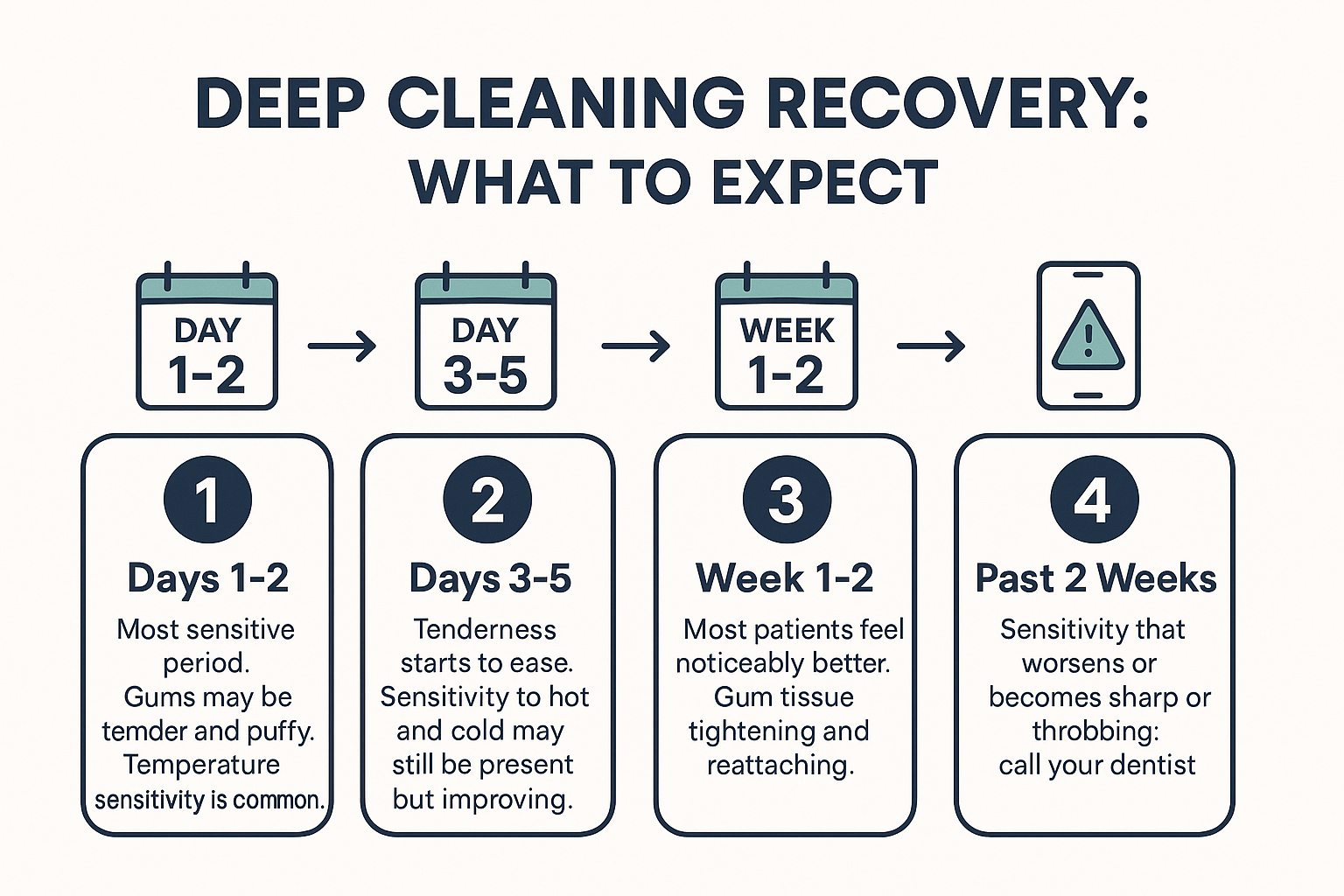
What to Expect Week by Week After a Deep Cleaning
This timeline gives a general picture of how recovery tends to unfold after scaling and root planing.
Practical Ways to Manage Sensitivity at Home
The good news is that most post-cleaning sensitivity is very manageable. You don’t need to tough it out, and you don’t need to do anything complicated.
Here’s what actually helps during recovery:
- Switch to a sensitivity-formulated toothpaste. Products with potassium nitrate or stannous fluoride help block the signals that cause sensitivity. Use it consistently, not just when it hurts.
- Use a soft-bristled toothbrush. You still need to brush, but a soft brush puts less mechanical stress on healing tissue.
- Avoid very hot or very cold foods and drinks for the first several days. Room-temperature water, warm soup, and foods that don’t require hard biting are your friends right now.
- Rinse gently. Aggressive swishing puts pressure on healing gum tissue. A soft saltwater rinse can help with tenderness, but don’t overdo the force.
- Don’t skip brushing and flossing. I know it feels counterintuitive, but keeping the area clean is exactly what supports healing. Bacteria left behind will slow recovery.
One thing I hear often from patients in Surprise is that they stop their follow-up care because of sensitivity, they figure if it still hurts, something must be wrong. That instinct is understandable, but it usually makes things take longer to resolve, not shorter. Consistent, gentle home care between now and your follow-up appointment is genuinely important.
Normal Sensitivity vs. Sensitivity Worth Calling About
Not all post-cleaning discomfort is the same. This table gives you a plain-language way to tell the difference between typical healing and something that needs attention.
| What You’re Feeling | Likely Explanation | What to Do |
|---|---|---|
| Teeth sensitive to hot or cold for a few days | Normal healing response after scaling and root planing | Manage at home; monitor for improvement |
| Gums feel tender or slightly puffy right after the appointment | Expected tissue response to deep instrumentation | Gentle home care; soft foods for a few days |
| Sensitivity that gradually improves over 1-2 weeks | Tissue healing normally | Continue home care; keep your follow-up appointment |
| Sensitivity that gets worse after the first week, not better | May signal an issue worth evaluating | Call your dental office to describe what you’re experiencing |
| Sharp or throbbing pain, not just temperature sensitivity | Different from typical post-cleaning discomfort | Call your dental office, this warrants a look |
| Aching when you bite down on a specific tooth | Could indicate a different issue unrelated to the cleaning itself | Call your dental office and describe which tooth and when it hurts |
When to Actually Call the Office
Most of what you’ll feel after a deep cleaning doesn’t need a phone call. But a few things do.
Call us if:
- Sensitivity is getting worse after the first week instead of gradually improving
- You’re feeling sharp or throbbing pain rather than the dull temperature sensitivity that’s typical after this procedure
- A specific tooth aches when you bite down on it
- You develop swelling, a bad taste, or anything that feels like a possible infection
These aren’t reasons to panic. They’re just signals that something may need a second look, and catching them early is always easier than waiting. Our team at West Bell Dental Care is available during extended hours, including Saturdays, so you’re not stuck waiting a full week if something doesn’t feel right.
A note for patients who’ve been avoiding follow-up appointments because of sensitivity: I completely understand the hesitation. But sensitivity that’s ignored sometimes turns into a reason for more involved treatment down the road. The honest truth is that coming back in is almost always the faster path to feeling better.
Frequently Asked Questions About Sensitivity After a Deep Cleaning
Is it normal for teeth to still be sensitive weeks after a deep cleaning?
It depends on how long after. A few days to two weeks is a normal range for most patients. If you’re still having noticeable sensitivity past two weeks, especially if it’s not improving or is getting worse, that’s worth a call to our office. Teeth with deeper pockets or more advanced buildup can take a bit longer, but sensitivity should be trending in the right direction over time.
I had two separate deep cleaning appointments a few weeks apart. Why are some teeth from the first appointment still sensitive?
This is actually one of the most common questions we hear, and it’s completely valid. Healing varies by tooth. Molars and teeth with more complex root anatomy sometimes take longer to settle than others. The fact that the cleanings were staged a few weeks apart also means different areas are at different points in the healing process. As long as sensitivity is gradually improving rather than worsening, that pattern is normal.
Can I use a sensitivity toothpaste right after my deep cleaning?
Yes, and I’d actually recommend it. A sensitivity-formulated toothpaste used consistently, not just when something hurts, can make a real difference during recovery. Look for products with potassium nitrate or stannous fluoride. Use it as your regular toothpaste, not just an occasional treatment.
Does sensitivity after a deep cleaning mean the procedure damaged my teeth?
No. Sensitivity after scaling and root planing is a normal part of the healing process, not a sign of damage. The procedure removes hardened buildup from below the gumline in areas that have been inflamed for a long time. The tissue needs time to settle after that kind of thorough cleaning. What you’re feeling is healing, not harm.
How is a deep cleaning different from a regular cleaning?
A regular cleaning (prophylaxis) cleans the tooth surfaces at and just above the gumline, it’s maintenance for a healthy mouth. A deep cleaning, or scaling and root planing, goes below the gumline to remove tartar from the root surfaces and treat the pockets that form when gum disease is present. It’s a more involved procedure, which is exactly why it causes more post-procedure sensation than a standard cleaning.
Do I still need to floss and brush if my teeth are sensitive after the procedure?
Yes, and this is important. Keeping the area clean is part of what allows healing to happen. Use a soft-bristled toothbrush, be gentle around sore areas, and continue flossing. Bacteria left in the pockets will slow your recovery. Skipping home care because of soreness tends to make the sensitivity last longer, not shorter.
Suggested Internal Links — add real URLs before publishing:
- Dental cleanings and preventive care — Overview of routine cleanings, exams, and preventive care services offered at the practice
- Gum disease treatment in Surprise AZ — What periodontal treatment looks like at the practice and what patients can expect
- Sedation dentistry for anxious patients — Options for patients with dental anxiety who need deeper or more involved procedures
- Same-day emergency dental care — When and how to contact the practice for urgent dental concerns, including post-procedure issues
- New patient information — What to expect as a new patient, insurance information, and how to get started at the practice
Still Have Questions About Your Recovery?
If you’ve had a deep cleaning and you’re not sure whether what you’re feeling is normal, the easiest thing to do is ask. Our team is here to help you understand your care, not just during the appointment, but through every part of recovery. West Bell Dental Care serves patients throughout Surprise, Sun City Grand, Marley Park, and the broader West Valley, with extended hours and Saturday appointments available. You can reach us at 480-795-2420 or visit westbelldentalcare.com to learn more or request an appointment.