
Quick Answer
When you have a cavity, the dentist first checks how deep it is with an exam and often X-rays. Then we treat it based on its size. That may mean fluoride for very early decay, a tooth-colored filling for a small to medium cavity, or a crown if the tooth has lost too much structure.
If you just heard that you have a cavity, it's normal to feel tense. Many patients don't worry about the word itself as much as what happens next, whether it will hurt, how long it takes, and what they'll feel in the chair.
If you've been asking what does the dentist do for cavities, the short answer is that we find the damaged part, stop the decay, and restore the tooth so you can chew comfortably again. The process is usually straightforward when you know what to expect.
How We First Find and Diagnose a Cavity
A cavity visit usually starts with detective work, not treatment. Before we fix anything, we need to know whether the tooth has early surface damage, a small hole, or a larger area of decay hiding where you can't see it.
That's why dentists use more than one method. A tooth can look fairly normal from the outside and still have decay between the teeth or under an older filling.

We look for what your eyes can't judge on their own
First, we do a visual exam. We check for dark areas, chalky spots, tiny openings, rough edges, and places where food and plaque tend to collect. Sometimes the earliest sign isn't a hole. It's a change in the tooth surface.
We may also use an intraoral camera so you can see the same area we're seeing. If dental X-rays have ever felt confusing, this guide on how to read dental X-rays in simple terms can make them easier to understand.
We gently test the surface of the tooth
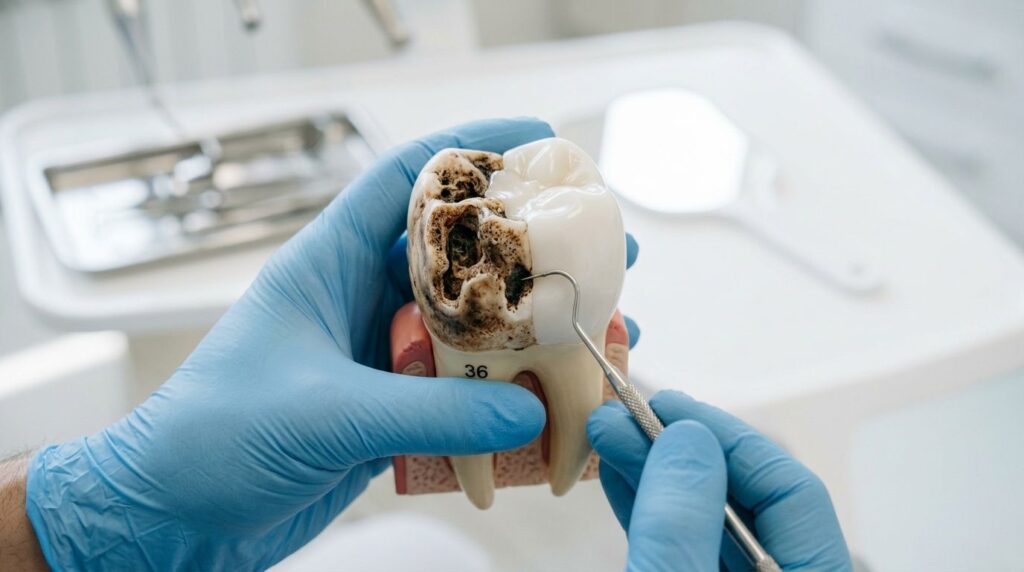
During an exam, dentists use explorers, which are sharp probes, to assess enamel. Healthy enamel is hard, while a carious lesion is softer. This is combined with digital X-rays, which are sensitive enough to reveal even early decay between teeth that shows as a subtle change in density, as described in this overview of cavity detection methods and digital X-rays.
That tool isn't used to jab at the tooth. It's used gently to feel whether the enamel is smooth and solid or whether an area has started to soften.
Practical rule: If a spot feels suspicious but doesn't clearly need drilling, the next step is careful evaluation, not guesswork.
X-rays help us find hidden decay
A lot of cavities form where a toothbrush can't easily reach and where you can't see them in the mirror. Between the teeth is the classic example.
X-rays help us spot those hidden areas before they become much larger. They also help us judge depth, which matters because the treatment for a shallow cavity is very different from the treatment for a deeper one.
Your Treatment Options Based on the Cavity's Size
After we measure how far the decay has gone, the treatment choice usually becomes clearer. I often explain it like home repair. A small soft spot in paint needs protection. A deeper damaged area needs the weak part removed and rebuilt. In dentistry, we follow the same idea. We keep as much healthy tooth as we can and choose the smallest treatment that will hold up well.

When the cavity is caught very early
An early cavity can sometimes be treated without a filling. If the enamel has started to weaken but has not formed a true hole, professional fluoride may help strengthen that area again.
Patients are often surprised by this. They hear "cavity" and assume drilling is automatic. Sometimes it is not. If the surface is still intact, we may focus on stopping the damage and giving the tooth a chance to reharden.
Small to medium cavities usually need a filling
Once decay creates a spot that is soft or broken down, a filling is usually the best fix. We remove the decayed portion, clean the area, and place a tooth-colored material to rebuild the tooth's shape.
This is the treatment many people receive when they ask what the dentist does for cavities. If you are unsure how dentists decide between a simple repair and a bigger one, this guide on whether you need a filling, crown, or something more explains the difference in plain language.
Larger cavities may need more coverage
A larger cavity can leave the tooth too weak for a filling alone, especially if a big section of chewing surface is missing. In that case, a crown covers more of the tooth and helps protect it from cracking under everyday biting pressure.
Here is a simple way to look at it:
| Cavity size | Common treatment | Main goal |
|---|---|---|
| Very early | Fluoride treatment | Strengthen enamel |
| Small to medium | Tooth-colored filling | Restore shape and stop decay |
| Large or structurally weak | Crown | Protect the tooth from breaking |
Many nervous patients worry that every cavity leads to a crown. That is not how we approach it. We match the repair to the amount of damage, the way that specific tooth bites, and what will give you a comfortable, lasting result.
What to Expect When You Get a Filling
For many patients, this is the part that matters most. They don't just want to know the name of the procedure. They want to know what will happen once they sit down.
A filling appointment is usually calm and predictable. We'll explain what we're doing as we go, and we'll check in with you if you're nervous or need a short break.

Numbing the area
First, we make the tooth comfortable to work on. Most patients feel pressure during treatment, but they shouldn't feel sharp pain once the area is numb.
You may notice a pinch and some pressure during the anesthetic. After that, your lip, cheek, or tongue near the area can feel heavy or strange for a while. That sensation is normal.
Removing the decay
Once the tooth is numb, we remove the decayed portion. You may hear dental instruments working, feel vibration, or notice water being used to keep the area clean and cool.
This step is less mysterious because it resembles removing soft wood before repairing a damaged part of a deck. The weak portion has to come out first so the repair has a solid base.
Placing the filling
After the decay is removed, we clean and prepare the space. Then we place the filling material in the tooth and shape it so it matches your bite.
With tooth-colored fillings, the goal isn't just to plug a hole. It's to rebuild the tooth so it feels natural when you bite and chew. If you want a more detailed walkthrough, this page on the cavity filling process from start to finish breaks it down further.
Checking the bite and polishing the tooth
Before you leave, we make sure the filling doesn't feel too high. You may be asked to bite down on marking paper so we can see where the tooth is contacting first.
If the filling is even slightly too tall, it can make the tooth feel awkward or sore when you chew. A small adjustment usually fixes that quickly. Then we smooth and polish the filling.
A new filling should feel normal pretty quickly. If your bite still feels off after the numbness wears off, call the office and have it checked.
Managing Comfort During and After Your Appointment
Most patients are relieved to learn that cavity treatment is usually more comfortable than they expected. The bigger issue is often anxiety before the visit, not the procedure itself.
If you feel nervous in the chair, say so early. That helps us slow down, explain more clearly, and support you better.

During the visit
Local anesthetic is what keeps the area comfortable while we work. If dental fear has caused you to delay treatment before, anxiety-friendly care can make the experience much easier. For patients who need extra support, sedation dentistry for dental fears is one option to discuss with a licensed dental professional.
At West Bell Dental Care, patients in Surprise and the West Valley can also ask about comfort-focused approaches during exams and restorative visits.
After the visit
When the numbness wears off, it's common to notice mild tenderness or sensitivity for a short time. That doesn't automatically mean something is wrong. Your tooth has just been treated.
A few simple habits help:
- Wait until you're less numb to chew carefully: It's easy to bite your cheek or tongue while the area is still asleep.
- Choose softer foods at first if the tooth feels tender: Nothing extreme is required, just avoid testing the tooth with hard or sticky foods right away.
- Brush and floss normally unless we tell you otherwise: A new filling still needs good daily care.
- Call if your bite feels uneven: A filling that feels high often just needs a minor adjustment.
How to Prevent Future Cavities
A lot of patients tell me the same thing after a filling. They do not just want the tooth fixed. They want to know how to avoid sitting in that chair for the same problem again.
That is a smart goal. Cavities usually build slowly, like a weak spot forming in a wall after repeated moisture, not from one dessert or one missed brushing session. Plaque stays on the teeth, acids irritate the enamel, and the trouble often starts in places that are easy to miss, such as deep grooves, near the gumline, and between teeth.

Daily habits are your first line of defense
The basics work because they interrupt the cavity process early. Brush well with fluoride toothpaste, clean between the teeth every day, and keep up with regular checkups so small areas can be found before they turn into bigger repairs.
Patients sometimes feel discouraged when they hear this because it sounds too simple. But simple does not mean small. Brushing and flossing are like routine maintenance on a car. They help prevent the expensive problem, not just the minor mess you can already see.
If you want practical home-care ideas, this guide on how to stop tooth decay naturally gives a helpful overview of habits that support a healthier mouth.
Sealants can help protect the spots your toothbrush misses
Back teeth have tiny pits and grooves that can hold food and plaque like crumbs caught in the tread of a shoe. Even patients who brush carefully can miss those narrow areas.
That is where sealants can help. A sealant is a thin protective coating placed over the chewing surface of certain teeth to make those grooves easier to keep clean. If you want to know whether they make sense for you or your child, read more about how dental sealants protect teeth.
Preventive care does not need to feel complicated. Small daily habits, plus the right in-office protection when needed, often keep future treatment smaller, simpler, and less stressful.
Frequently Asked Questions About Cavity Treatment
Will getting a cavity filled hurt?
Patients feel pressure and vibration more than pain because the area is numbed first. If you're anxious or unusually sensitive, tell your dentist before treatment starts so comfort options can be discussed.
How long does a cavity filling appointment take?
That depends on the tooth, the size of the cavity, and whether there's more than one area to treat. A small filling is usually simpler than a large one, but your dentist can give you a more specific time estimate after the exam.
Can a cavity go away on its own?
A true hole in the tooth won't repair itself. Very early enamel damage may sometimes be managed with fluoride treatment, but a dentist has to determine whether that area is still reversible.
When can I eat after a filling?
That depends partly on how numb you still are and what type of restoration was placed. In general, it's smart to wait until you can chew without biting your cheek or tongue by accident.
Why does my filling feel strange at first?
A new filling can feel unfamiliar for a short time because your tongue notices tiny changes quickly. If it feels obviously high when you bite down after the numbness is gone, call the office so it can be checked.
What happens if I wait too long to treat a cavity?
Decay usually gets deeper, not smaller. What could have been handled with a simpler filling can turn into a larger restoration if too much tooth structure is lost.
How much does cavity treatment cost?
The cost depends on the tooth, the size of the cavity, the treatment needed, and your insurance coverage. The safest way to get accurate pricing is to contact the office for an exam, a treatment plan, and an estimate specific to your case.
Schedule Your Visit with West Bell Dental Care
If your tooth has been nagging at you when you drink something cold or chew on one side, an exam gives you a clear answer. Once we see the tooth, we can tell whether the area only needs to be watched, whether early enamel changes may respond to fluoride, or whether the tooth needs a filling or more support such as a crown.
For many patients, the hardest part is not the treatment. It is the uncertainty before the visit. A cavity check is a lot like having a small crack looked at in a windshield. We want to see how deep it goes, whether it is staying small, and what will protect the tooth before the problem spreads.
If you live in Surprise, AZ, or nearby West Valley communities like Marley Park, Sun City Grand, Surprise Farms, or Sierra Montana, West Bell Dental Care welcomes you for a clear, low-pressure evaluation at 16581 W. Bell Rd., Suite 108, Surprise, AZ. If you think you may have a cavity, or you are due for a checkup, we are here to help you understand the problem clearly and treat it with a calm, straightforward approach.