

Do you have a constant, sticky feeling in your mouth? That annoying dry sensation is a real condition called xerostomia, but most people just call it dry mouth. It happens when your body doesn't make enough saliva to keep your mouth wet.
Most of the time, dry mouth is a side effect of medications or certain health problems. It can even be caused by some of our daily habits. Let's explore what might be causing your dry mouth so you can find relief.
Your First Step to Understanding Dry Mouth
Think of saliva as your mouth's cleaning crew. It rinses away food, fights acids from bacteria, and helps stop infections. When you don't have enough saliva, your oral health is at risk.
Living in a dry place like Surprise or Sun City West can make this feeling even worse. This guide will walk you through the common reasons for dry mouth. Finding the cause is the first step to protecting your smile.
To give you a quick overview, here is a table summarizing the main causes we will explore. This can help you quickly spot potential reasons for your symptoms.
Common Causes of Dry Mouth at a Glance
| Cause Category | Common Examples | Is It Reversible? |
|---|---|---|
| Medications | Antihistamines, decongestants, blood pressure drugs, antidepressants | Often, yes—by adjusting dosage or switching medication with a doctor's guidance. |
| Medical Conditions | Sjögren's syndrome, diabetes, autoimmune diseases, nerve damage | Depends on the condition; managing the underlying disease is key. |
| Lifestyle Factors | Smoking, alcohol use, dehydration, mouth breathing | Yes, typically reversible with habit changes. |
| Medical Treatments | Chemotherapy, radiation therapy to the head and neck | Can be temporary or permanent, depending on the treatment and damage to salivary glands. |
This table is just a starting point. As you'll see, the reasons for dry mouth are often layered. A closer look is needed to get to the bottom of it.
The Main Triggers of Xerostomia
It’s important to remember that dry mouth isn't a disease itself. Instead, it’s a symptom—a red flag that something else is going on in your body.
The infographic below breaks down the primary categories.
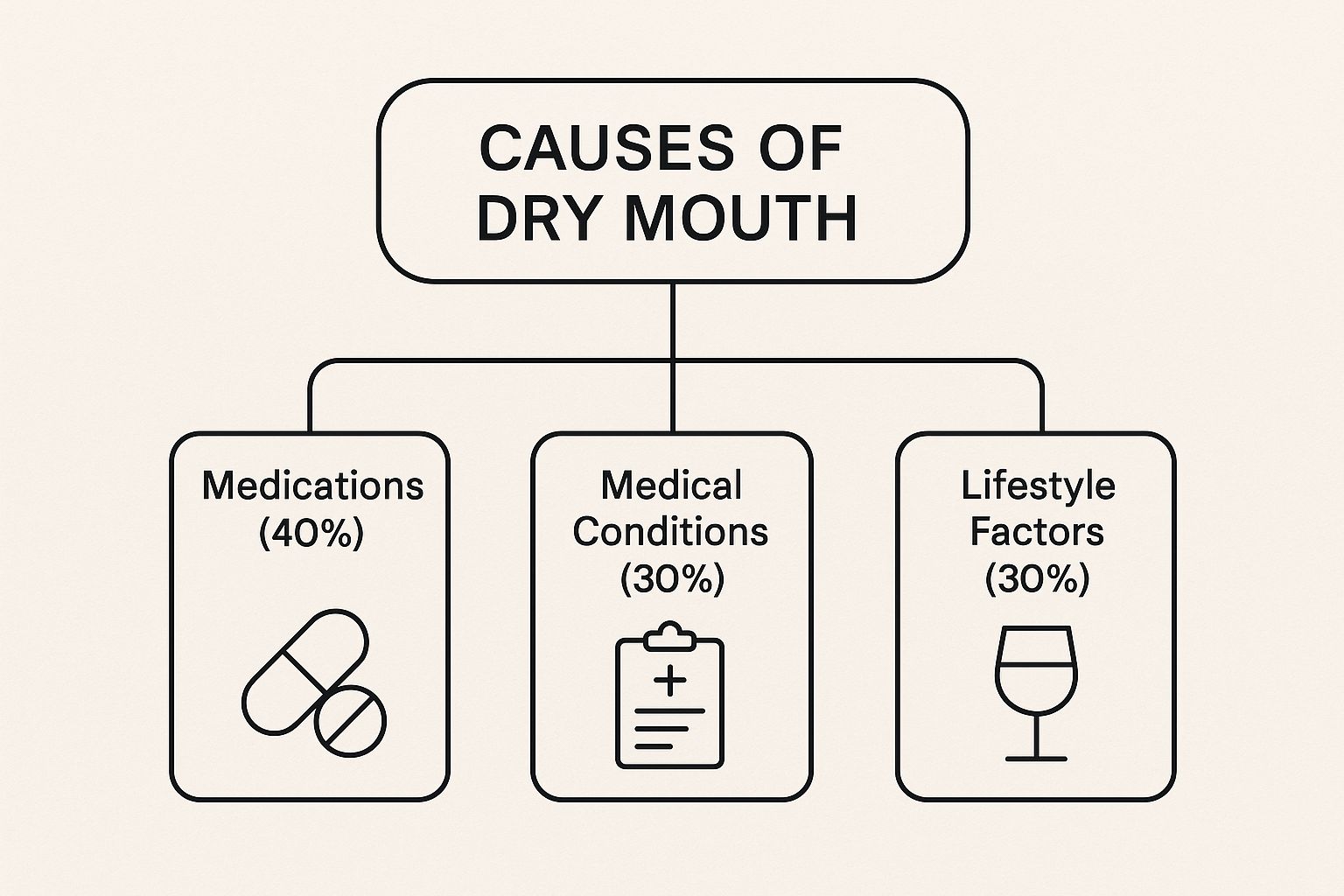
As you can see, medications are the most common trigger. However, underlying health issues and your lifestyle also play a big part. It's often a mix of factors that leads to that uncomfortable, dry feeling.
And this isn't a rare problem. The American Dental Association notes that dry mouth affects about 22% of people worldwide, becoming more common with age. This makes sense, as older adults are more likely to take medications or develop certain health conditions. If you're curious, you can read the full research about these findings to learn more.
Why It's So Important to Find the Cause
Finding the exact reason for your dry mouth is crucial because the solution depends on the source. If you ignore the symptoms, you could face more serious dental problems later.
A dry mouth can lead to:
- More cavities: Without enough saliva to wash away sugars and acids, your teeth are more likely to decay.
- Gum disease: A dry mouth is a perfect home for harmful bacteria that cause gingivitis.
- Trouble chewing and swallowing: Saliva helps moisten food, making it easier to eat and enjoy your meals.
- Mouth infections: Saliva has natural antibacterial properties that help prevent infections like thrush.
At West Bell Dental Care, our friendly team in Surprise is here to help you find the cause of your discomfort. We will work with you to create a plan to restore moisture, relieve your symptoms, and protect your oral health.
How Common Medications Can Lead to Dry Mouth
If you have a constantly dry mouth, the cause might be in your medicine cabinet. It surprises many people, but hundreds of medications list dry mouth as a common side effect. This happens because some drugs block the signals your brain sends to your saliva glands.

This drop in saliva isn't just a small bother; it makes your mouth vulnerable to dental problems. Without enough saliva, your risk for cavities and gum disease goes up.
The Most Common Culprits
While many medications can cause dry mouth, some are more likely to do so than others. Knowing which ones are common culprits can help you connect the dots if you're feeling dry.
Here are a few types of medicines that many of our patients in Surprise, AZ, use:
- Antihistamines and Decongestants: These are great for allergies, but they are made to dry up mucus. Unfortunately, they also dry up the moisture in your mouth.
- Antidepressants and Anti-Anxiety Medications: Many medicines used for depression and anxiety are known to reduce saliva flow.
- Blood Pressure Medications: Diuretics, often called "water pills," help your body get rid of extra salt and water. A common side effect is dehydration, which leads to a dry mouth.
- Pain Relievers: Certain strong prescription painkillers can also cause oral dryness.
Important Note: You should never stop taking a prescribed medication without talking to your doctor. Your overall health is the priority. We can help you manage dry mouth without changing your necessary medical treatments.
Essential Medical Treatments
It's not just daily pills that can cause issues. Certain critical medical treatments are known for causing serious dry mouth. Chemotherapy and radiation, especially to the head and neck, can damage the salivary glands.
For some, this damage is temporary. For others, it can be permanent, creating a long-term struggle. Managing these side effects is a big part of feeling your best during and after treatment. A dry mouth can make it hard to eat and can lead to other problems.
For instance, some people notice their teeth become much more sensitive. If that sounds familiar, you can learn more about what causes tooth sensitivity in one of our other guides. Our goal is to give you the information you need to talk with your medical team and with us at West Bell Dental Care.
The Link Between Your Health and Dry Mouth Symptoms
Sometimes, a dry mouth is your body's way of telling you something else is wrong. It can be a direct symptom of a bigger medical condition. Understanding this connection is key to finding relief that lasts.
For many of our patients here in Surprise and Sun City, certain health issues are quite common. These conditions are also known causes of dry mouth. Recognizing these links helps you take charge of both your oral and overall health.

How Systemic Conditions Affect Saliva Flow
Your body is a connected system. When one part is out of balance, it can cause problems in other places—like your mouth.
Several medical conditions are directly linked to low saliva production:
- Diabetes: High blood sugar often leads to dehydration. This reduces moisture all over your body, including in your mouth. According to the ADA, people with diabetes are about twice as likely to experience dry mouth.
- Autoimmune Diseases: Conditions like Sjögren's syndrome and rheumatoid arthritis can cause the immune system to attack moisture-producing glands. This includes both saliva glands and tear ducts, which is why dry mouth often goes with dry eye.
- Nerve Damage: An injury to your head or neck can sometimes damage the nerves that tell your glands to make saliva. This stops the whole process.
When your mouth is consistently dry, it welcomes harmful bacteria. This greatly increases your risk for tooth decay, making good oral hygiene more important than ever.
The first step is always managing your overall health. When you work with your doctor to control a condition like diabetes, you also help relieve your dry mouth. This teamwork between your doctor and our dental team here at West Bell Dental Care is essential.
While you and your doctor focus on your health, we can protect your teeth. A dry environment makes avoiding cavities much harder, but our care can help. We offer fluoride treatments and can recommend special products to keep your smile safe.
Lifestyle Habits That Can Worsen Dry Mouth
Sometimes, the cause of dry mouth isn't a complex medical issue. It can be caused by our own daily habits. While medications and health conditions are major factors, our routines can either help or hurt our saliva flow.
The good news? You have the most control over these factors. Making a few simple changes can bring big relief.

Common Habits That Contribute To Dryness
Many choices we make throughout the day can dehydrate our bodies. Your mouth is often the first place to feel it. A few of the most common habits include:
- Tobacco and Alcohol Use: Both smoking and drinking alcohol are known to decrease saliva production. They interfere with your salivary glands, leading to that sticky, dry feeling.
- Too Much Caffeine: Your morning coffee might feel necessary, but caffeine is a diuretic. It makes your body get rid of fluid faster, which can lead to dehydration and a dry mouth.
- Salty or Sugary Foods: A diet with lots of salty or sugary foods can also make things worse. These foods can pull water out of your tissues, increasing the feeling of dryness.
Even a small change, like swapping one soda for a glass of water, can make a real difference. Improving your daily routine is one of the most effective 5 dental care habits in Surprise you can build.
Environmental Factors Here in Arizona
Living in Peoria and El Mirage, we all know about the dry Arizona climate. This environment plays a bigger role in oral dryness than most people think, especially while you sleep.
If you tend to breathe through your mouth at night, the dry air constantly dries out your mouth. This is why many of us wake up with a scratchy throat and a mouth that feels like cotton.
Tackling these environmental factors can be a game-changer. You might want to explore these tips for controlling indoor humidity. A simple humidifier in your bedroom at night can add moisture back into the air. This helps keep your mouth and throat from drying out while you rest.
Why Dry Mouth Is More Than Just Discomfort
It's easy to think of dry mouth as just a minor annoyance. But this mistake can lead to serious and costly dental problems. When your mouth doesn't make enough saliva, it loses its most important natural defense.
Without saliva to wash away food and neutralize acids, your risk for tooth decay goes way up. The bacteria that cause cavities love a dry environment. Regular dental cleanings and exams are crucial to spot trouble early.
The Connection to Gum Disease and Infections
The problems don't stop with cavities. A dry mouth allows harmful bacteria to build up along your gumline. This can lead to gingivitis, the first stage of gum disease, which causes red or swollen gums.
Also, your saliva has natural properties that fight infections. Without it, you are more likely to get fungal infections like oral thrush. This can cause uncomfortable white patches in your mouth.
Leaving dry mouth untreated is like trying to protect a castle without a moat. It removes the primary barrier that keeps damaging bacteria from harming your teeth and gums.
Impact on Your Quality of Life
Chronic dryness can also affect your daily life here in Surprise, AZ. Simple things like chewing and swallowing can become difficult without saliva to moisten your food. It can also make it harder to speak clearly and can lead to bad breath.
Ignoring these symptoms means you're overlooking a warning sign from your body. It's important to take your discomfort seriously. Seeking professional care at West Bell Dental Care can prevent these small issues from becoming major health concerns.
How Your Dentist Can Provide Lasting Relief
You don’t have to live with the discomfort of dry mouth. When sipping water isn't enough, our team at West Bell Dental Care is here to help you find real relief. The first step is a thorough exam to find out what's causing your dry mouth.
We’ll sit down with you to review your health history and any medications you’re taking. This conversation helps us pinpoint the triggers behind your symptoms. A professional diagnosis is key to creating a treatment plan that actually works for you.
Creating Your Personalized Treatment Plan
Once we know the cause, we can build a personalized strategy to bring back moisture and protect your smile. Your plan might include a mix of professional treatments and at-home tips.
Our focus is always on practical solutions that give you immediate comfort and long-term protection. We listen to your concerns and find the best path forward together.
The goal isn’t just to manage symptoms. It's about addressing the underlying issue to safeguard your oral health from the serious risks of dry mouth.
Professional Solutions We Offer
At our Surprise, AZ dental office, we have several ways to help you fight chronic dryness:
- Saliva Stimulants or Substitutes: We can recommend or prescribe products to either help your glands make more saliva or act as an artificial saliva to keep your mouth moist.
- Professional Fluoride Treatments: To fight the increased risk of decay, an in-office fluoride treatment gives your tooth enamel a powerful shield against acid attacks.
- Specialized Oral Hygiene Products: We can guide you to the most effective over-the-counter rinses, gels, and toothpastes made specifically for people with dry mouth.
Don't wait for the problem to get worse. Schedule an appointment at West Bell Dental Care today, and let us help you find the relief you deserve.
Frequently Asked Questions
Can I just drink more water to fix dry mouth?
Drinking more water is a great habit and provides temporary relief. However, it usually doesn't fix the root cause. If a health condition or medication is the problem, water alone can't switch your salivary glands back on.
Are there any over-the-counter products you recommend?
Yes, there are many good alcohol-free rinses, sprays, and gels that can help. Look for products with xylitol, which helps encourage saliva production. It's best to check with us first so we can recommend the right product for your specific needs.
Is dry mouth just a normal part of getting older?
This is a common myth, but no—dry mouth is not a normal part of aging. While it is more common in older adults, it's almost always a side effect of health conditions or medications. You should never accept persistent symptoms as "normal."
How can West Bell Dental Care help if my medication is the cause?
We will work with your doctor as part of your healthcare team. We would never tell you to stop taking a prescribed medication. Instead, we help you manage the side effects with things like fluoride treatments or saliva substitutes to protect your oral health.
Does living in a dry climate like Surprise, AZ make dry mouth worse?
Yes, it can. The dry Arizona air causes moisture to evaporate from your mouth much faster. Using a humidifier in your home, especially at night, can make a big difference in keeping your mouth comfortable.
If you're tired of dealing with the discomfort and risks of a dry mouth, the team at West Bell Dental Care is here to help you find a lasting solution. Contact us today to schedule your consultation and take the first step toward a healthier, more comfortable smile.