

Walking into a dental appointment can sometimes feel like a one-way talk. You sit back while the hygienist cleans and the dentist checks your teeth, but are you getting the most out of your visit? Taking an active role in your oral health starts with asking the right questions.
By preparing a few key questions for your dentist, you turn a routine check-up into a powerful tool for understanding your health. This simple step helps you improve your smile for years to come. It makes sure you leave the office feeling confident about your treatment plan and daily care.
At West Bell Dental Care, we believe an informed patient is a healthy patient. Our team encourages open talks because your concerns help us provide personalized care. This guide gives a list of questions every patient in Surprise, AZ, should think about asking. Whether you're curious about preventive care or cosmetic options, these points will empower you.
1. How often should I visit the dentist?
One of the most common questions for a dentist is about how often you should visit. The standard advice is to schedule a check-up and cleaning every six months. However, this rule doesn't fit everyone.
The best schedule for you depends on your unique oral health needs and risk factors. Regular visits are key to preventive care. They allow our dental team to catch problems like cavities or gum disease early, when they are easier and cheaper to treat.

Why Your Visit Frequency Might Differ
Your dentist will suggest a personal schedule after checking your health. Several things can change this recommendation, making your visits more frequent than twice a year.
Key factors include:
- Gum Disease: Patients with gum disease often need cleanings every three to four months to manage the condition.
- High Risk for Cavities: If you get a lot of cavities, your dentist may want to see you more often for monitoring and fluoride treatments.
- Overall Health Conditions: Conditions like diabetes can affect your oral health. More frequent visits help manage these risks. According to the American Dental Association (ADA), people with diabetes are more likely to develop gum disease.
- Lifestyle Habits: Using tobacco increases the risk for gum disease and oral cancer. This requires closer monitoring from your dental team.
Don't assume the six-month rule applies to everyone. Talking about your health history with your dentist is the only way to find the best schedule for you. This proactive approach can save you from more complex procedures later.
2. Why do my gums bleed when I brush or floss?
Seeing blood in the sink after brushing can be scary. It’s a common issue you should definitely discuss with your dentist in Surprise.
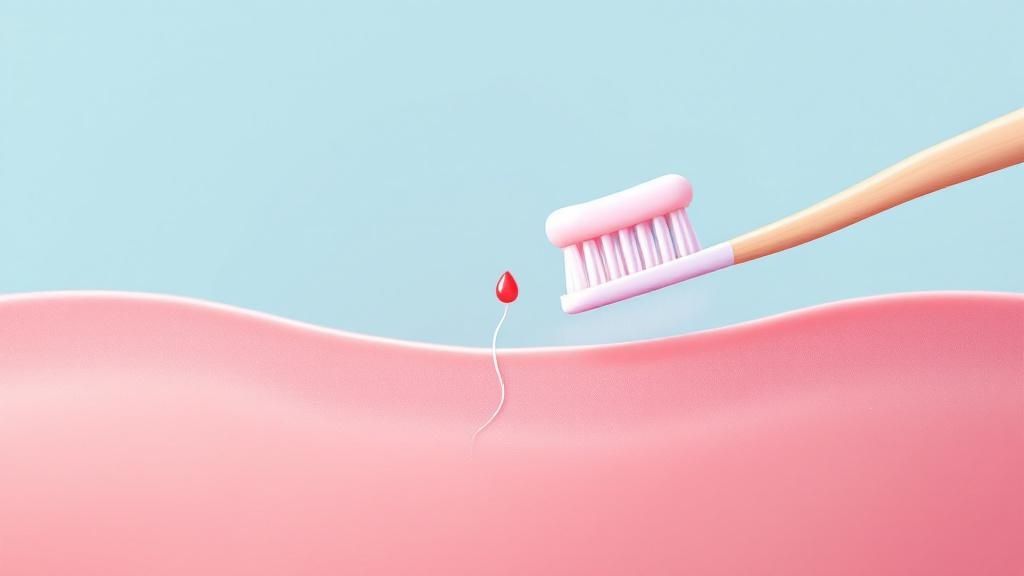
Bleeding gums are often an early sign of gingivitis, the first stage of gum disease. This condition is usually caused by plaque buildup along the gum line. The plaque irritates the gum tissue and causes swelling. Asking about this symptom is a critical step in protecting your long-term oral health.
Why Your Gums Might Be Bleeding
While poor oral hygiene is the most common reason, other factors can cause bleeding gums. Your dentist can help find the specific cause for you.
Key factors include:
- Gingivitis: Plaque bacteria produce toxins that inflame the gums, making them tender and likely to bleed.
- Brushing Too Hard: Using a hard-bristled toothbrush or brushing too aggressively can damage your gums.
- Hormonal Changes: Changes during pregnancy or menopause can make gums more sensitive and likely to swell.
- Medical Conditions: Certain conditions, like diabetes, can make gum problems worse.
Bleeding gums are not normal and should not be ignored. Think of it as your body’s alarm system. Addressing it early can reverse gingivitis and stop it from getting worse. A talk with your dentist will help you learn the right way to care for your gums.
3. What's the best way to whiten my teeth?
A brighter smile is a common goal for many people in Surprise and Sun City West. This makes teeth whitening a very popular cosmetic dental service.
Asking your dentist about the best way to whiten your teeth is a key first step. The safest and most effective method depends on your specific needs and the type of staining you have. A professional consultation ensures you get beautiful results without harming your teeth.
Why Your Whitening Options Might Differ
Your dentist will check your oral health to recommend the best whitening plan. Not all teeth respond to whitening the same way.
Key factors include:
- Source of Stains: Stains from coffee, tea, or tobacco are easier to remove. Stains from medication or injury may need different solutions.
- Existing Dental Work: Fillings, crowns, and veneers do not lighten with whitening products. Your dentist can help you plan for a smile that has a uniform color.
- Tooth Sensitivity: If you have sensitive teeth, your dentist can suggest gentler products or provide treatments to reduce sensitivity.
- Gum Health: Any cavities or gum disease must be treated before you start whitening to avoid discomfort.
The "best" whitening method is the one that is safest for your unique smile. A professional check-up is the first step to avoid sensitivity and uneven results. By discussing your goals with your dentist, you can create a personalized plan that safely gives you the brilliant smile you want.
4. Do I really need to floss daily?
It's one of the most common questions for a dentist: is daily flossing really necessary? The short answer is yes.
Brushing alone can't reach the tight spaces between your teeth and under the gumline. This is where food and plaque build up. Daily flossing is a vital step to remove this buildup, prevent cavities, and stop gum disease. It's a small task with a big impact.
Why Your Flossing Tools and Technique Matter
The best flossing tool for you depends on your needs, like how close your teeth are. Using the right tool and technique ensures you clean well without hurting your gums.
Key factors include:
- Dental Work: People with braces may find water flossers helpful. Those with bridges benefit from special floss with a stiff end.
- Tooth Spacing: Traditional string floss works well for tight spaces. For larger gaps, small dental brushes can provide a better clean.
- Ease of Use: Floss picks are great for on-the-go use. Water flossers can be a good choice for those who have trouble with string floss.
The most important thing is to floss once a day, every day. Find a tool you are comfortable with and will use all the time. You can learn more about how to floss correctly on westbelldentalcare.com. Making daily flossing a habit protects you from decay and gum problems.
5. When do I need a root canal?
Hearing the words "root canal" can make people nervous. But understanding why this procedure is needed is one of the most important questions for your dentist.
A root canal doesn't cause pain; it solves it. This treatment is needed when the soft tissue inside your tooth, called the pulp, gets infected. The pulp contains nerves, and when it's infected, it can cause severe pain. A root canal saves a natural tooth that might otherwise have to be pulled.
Why a Root Canal Might Be Necessary
Your dentist will do a full exam, often with X-rays, to see if the tooth's pulp is damaged. If so, a root canal will remove the infection, relieve pain, and save your tooth.
Key factors include:
- Deep Tooth Decay: An untreated cavity can let bacteria reach the pulp and cause an infection.
- Cracked Tooth: A crack can be a pathway for bacteria to enter the pulp.
- Dental Injury: An injury to a tooth can damage the nerves inside, even if you don't see a crack.
- Repeated Dental Work: Multiple fillings on the same tooth can stress the pulp over time.
A root canal is a tooth-saving procedure. Ignoring symptoms like severe pain can lead to a worse infection and losing the tooth. Asking your dentist about the process can help you make a smart choice for your health. To learn more, you can learn more about root canal therapy on westbelldentalcare.com.
6. Are dental X-rays safe and necessary?
A common question at dental appointments is about the safety of X-rays. Patients often worry about radiation, but these images are a key tool for your dentist.
Modern digital X-rays let your dentist see things the naked eye cannot. They help find hidden problems like cavities between teeth, bone loss, or infections. Without them, these issues could go unnoticed and become serious. Today’s digital X-rays use up to 90% less radiation than old film X-rays, making them very safe.
Why X-rays Are Crucial for Diagnosis
Your dentist uses different X-rays to get a full picture of your oral health. Each type has a specific purpose.
Key uses include:
- Finding Hidden Cavities: X-rays are perfect for spotting decay between teeth.
- Checking Bone Health: These images show the bone levels around your teeth, which is key for diagnosing gum disease.
- Spotting Infections: An X-ray can show an abscess at the root of a tooth that may be causing pain.
- Planning Treatments: X-rays are essential for planning dental implants, wisdom teeth removal, and orthodontics.
Always tell your dental team if you are pregnant or think you might be. While dental X-rays are safe during pregnancy with proper shielding, your dentist can take extra care. Asking why an X-ray is needed is a great way to be an informed patient.
7. What are my options for replacing missing teeth?
Losing a tooth can affect your confidence and ability to chew. Asking about replacement options is a vital step toward restoring your smile.
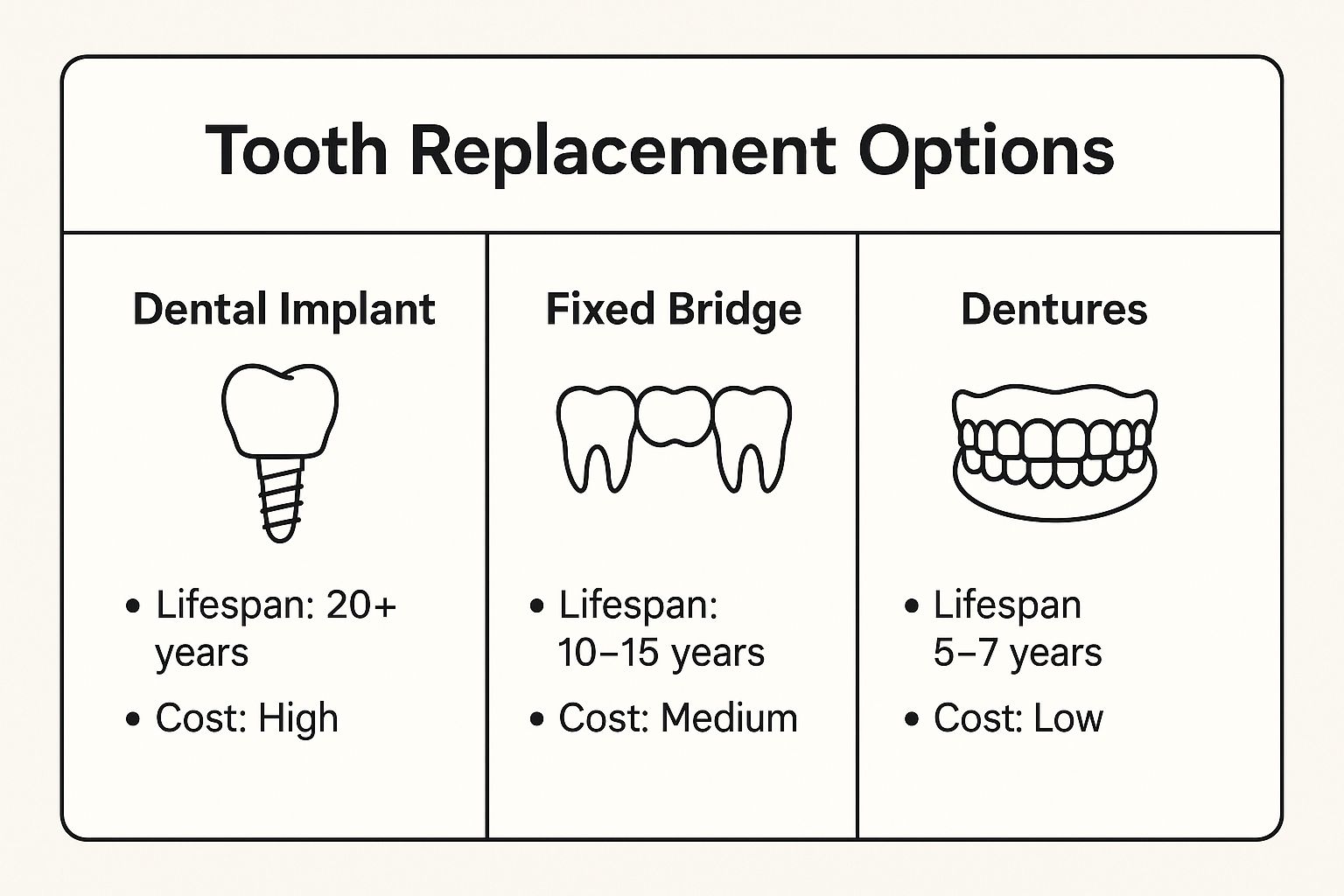
Your dentist will suggest the best solution for your situation. Each choice has different benefits, costs, and care needs. It's important to replace a missing tooth quickly to prevent other teeth from shifting and to avoid bone loss in your jaw.
Why Your Replacement Options Might Differ
Your dentist will suggest a solution based on your health, budget, and preferences. The right choice is not the same for everyone.
Key factors include:
- Bone Health: Dental implants need enough jawbone for support. If you have bone loss, a bone graft might be needed first.
- Number of Missing Teeth: An implant is great for a single missing tooth. A bridge works well for one to three missing teeth in a row. Dentures can replace many or all missing teeth.
- Health of Other Teeth: A bridge needs healthy teeth on either side of the gap to act as anchors.
- Lifestyle: Removable dentures need daily cleaning. Implants and bridges are cared for just like natural teeth.
Don't wait to talk about tooth replacement. The longer you wait, the more likely you are to have bone loss. This can limit your options in the future. A good talk with your dentist is the best way to understand the long-term benefits of each choice.
8. How can I prevent cavities and gum disease?
This is one of the most important questions for your dentist. The answer is the key to lifelong oral health. Preventing these problems is a team effort between your daily habits and professional care.
Understanding how to care for your teeth at home helps you take control of your health. A proactive approach is always better and less costly than fixing problems after they start.
Why Your Daily Routine is Your Best Defense
Your dentist can give you personal advice, but the main goal is to control plaque. Plaque is a sticky film of bacteria that forms on your teeth. If it's not removed, it leads to cavities and gum disease.
Key preventive tips include:
- Brush Well: Brush for two minutes, twice a day, with fluoride toothpaste. Make sure to clean all surfaces of every tooth.
- Floss Daily: Flossing once a day removes plaque from between your teeth where your toothbrush can't reach.
- Eat a Healthy Diet: Limit sugary and acidic foods and drinks. Drinking water helps rinse away food particles.
- Get Professional Care: Regular cleanings remove hardened plaque (tartar). Your dentist can also suggest fluoride treatments or sealants for extra protection.
Consistency is key. A simple but consistent daily routine of brushing and flossing is the most effective way to prevent cavities and gum disease. By talking with your dentist, you can create a prevention plan that keeps your mouth healthy.
Your Partner in Dental Health
Your oral health is a journey you take with your dentist. This list of questions for your dentist is meant to empower you. By bringing these questions to your visits, you turn a checkup into a personalized health talk.
Understanding why a treatment is recommended builds trust. When you know why your gums are bleeding or what your options are for a missing tooth, you can make informed choices. This is important whether you live in Surprise, Peoria, or Sun City.
Having a local dental team that knows you and your family is a huge benefit. At West Bell Dental Care, answering your questions is at the heart of what we do. We believe an educated patient is a healthy patient, and we are here to give you the clear, honest answers you deserve.
Ready to start the conversation? The friendly team at West Bell Dental Care is here to listen and partner with you. Schedule your visit with us today by calling (623) 546-2355 or booking online. We look forward to welcoming you!
Frequently Asked Questions
1. How often should I get a dental cleaning in Surprise, AZ?
For most patients in Surprise, we recommend a professional cleaning and check-up every six months. However, if you have a history of gum disease or other risk factors, we might suggest more frequent visits, such as every three to four months, to keep your gums healthy.
2. Does West Bell Dental Care offer emergency dental appointments?
Yes, we do. We understand that dental emergencies can happen at any time. We set aside time in our schedule for patients from Surprise, Sun City, and nearby areas who need urgent care. Please call our office right away if you have a dental emergency.
3. What payment options do you accept?
We accept most major dental insurance plans and offer several payment options to make care affordable. These include cash, credit cards, and financing through CareCredit. Our team is happy to help you understand your insurance benefits and payment options.
4. Is professional teeth whitening safe for my teeth?
Yes, when done under the supervision of a dentist, professional teeth whitening is very safe and effective. We use high-quality, approved whitening agents and monitor the process to ensure your teeth and gums stay healthy while you achieve a brighter smile.
5. At what age should my child first see a dentist?
The American Academy of Pediatric Dentistry recommends that a child should see a dentist by their first birthday, or within six months after their first tooth comes in. Early visits help your child get comfortable with the dentist and allow us to spot any potential issues early on.