Imagine this: you just invested in a brighter smile—maybe a crown, filling, veneer, or whitening treatment. You leave the dentist’s office feeling confident, only to wonder later, “Wait… can what I eat or drink actually ruin my dental work?”
It’s a smart question—and one that more patients should be asking. While dental restorations are designed to be durable, they’re not indestructible. Everyday foods and drinks, combined with habits and hygiene practices, can absolutely impact the longevity of your dental work.
In this expert guide from West Bell Dental Care, we’ll explain which foods and beverages pose a risk, how to protect your investment, and the importance of regular dental cleanings and checkups to maintain your smile.
Common Misconceptions About Foods, Drinks & Dental Work
“Once it’s fixed, it’s indestructible.”
This is a common myth. While modern materials used for crowns, fillings, and veneers are tough, they can still chip, stain, or wear down over time—especially without proper care.
“If I brush, I can eat or drink whatever I want.”
Brushing helps, but it doesn’t erase the effects of acidic drinks, sugary snacks, or constant wear and tear from crunchy foods. Some damage is cumulative and can go unnoticed until it’s too late.
“Only sweets cause dental problems.”
Not true. Acidic drinks like sparkling water, wine, and even citrus fruits can weaken enamel and the bonding materials in restorations.
How Eating and Drinking Can Ruin My Dental Work
Which Foods and Drinks Should I Watch Out For?
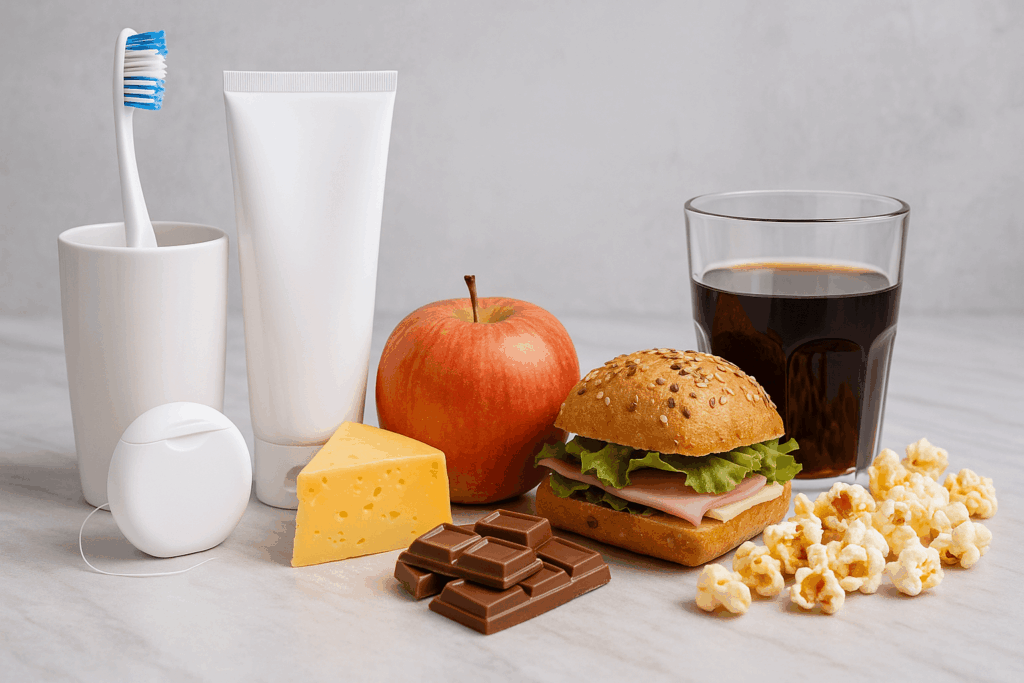
Certain foods and beverages can shorten the lifespan of your dental work. Here’s a breakdown:
Foods to Limit:
- Sticky candies and gummies – can pull out fillings or crowns
- Hard foods (ice, popcorn kernels, nuts) – may chip veneers or crowns
- Crunchy snacks – repeated pressure can weaken restorations
Drinks to Be Cautious With:
- Soda and energy drinks – high in acid and sugar
- Coffee and tea – cause staining over time
- Red wine – highly pigmented and acidic
- Citrus juices – erode enamel and bonding agents
Pro Tip: Drink staining or acidic beverages through a straw and rinse with water afterward. It minimizes exposure and helps protect your smile.
Solutions: How to Protect Your Dental Work Daily
What Should I Do to Prevent Damage?
Dental work is an investment, and daily habits play a big role in preserving it. Follow these steps to protect your teeth and restorations:
- Brush twice daily with a soft-bristled brush
- Floss at least once per day to prevent decay around crowns and fillings
- Rinse with fluoride mouthwash for extra cavity protection
- Avoid chewing on ice or hard objects like pens or fingernails
- Wear a night guard if you grind your teeth (bruxism)
See Your Dentist Regularly
Even with perfect at-home care, you need to see your dentist every 6 months. Regular dental cleanings and exams help identify wear, staining, or shifting that could affect your restorations.
Cosmetic Enhancements Need Care Too
Will Teeth Whitening Affect My Crowns or Fillings?
Yes—sort of. Whitening treatments don’t affect the color of crowns, veneers, or fillings. If you whiten your natural teeth, restorations may no longer match, making them more noticeable.
How Do I Maintain Whitening Results Without Ruining My Dental Work?
- Avoid dark-colored foods and drinks for the first 48 hours post-whitening
- Brush after consuming anything that stains (or rinse if you can’t brush)
- Schedule touch-up treatments as recommended by your dentist
Long-Term Benefits of Proper Oral Care
Keeping your dental work intact isn’t just about avoiding certain foods—it’s about creating a full-circle approach to oral health. Here’s what you gain:
- Longer-lasting restorations (crowns, fillings, veneers)
- Less risk of secondary issues like gum recession or decay
- Confidence in your smile without ongoing repairs
- Lower dental costs over time
Dental restorations can last 10–15 years or more with proper care. Your commitment to good habits and routine visits is the secret to success.
Related Questions & Expert Answers
Can chewing gum ruin dental work?
Sugar-free gum is generally safe and can even help reduce plaque—but sticky gum with sugar can pull at fillings or crowns.
How often should I get my teeth cleaned if I have veneers or crowns?
Every 6 months at minimum. Your dentist may recommend more frequent cleanings based on your oral health history.
Are there foods that actually help protect my dental work?
Yes! Crunchy fruits and vegetables like apples and celery stimulate saliva and naturally clean teeth. Dairy products with calcium strengthen enamel.
Can hot or cold foods damage dental restorations?
Extreme temperatures can cause materials to expand or contract, especially if there’s a crack or faulty bond. Use caution with very hot or iced foods.
Do I need special toothpaste for crowns or veneers?
Non-abrasive toothpaste is best. Whitening pastes can be too harsh and may scratch or dull the surface of restorations.
Protect Your Dental Investment Today
Your diet matters more than you think when it comes to protecting your dental work. By being mindful of what you eat and drink, maintaining excellent hygiene, and staying consistent with dental visits, you’ll extend the life of your restorations and enjoy a healthier smile.
If you’re looking for expert dental care in Surprise, AZ, West Bell Dental Care is here to help. From preventive cleanings to cosmetic enhancements, we tailor our care to your smile’s unique needs. Book your appointment today and give your dental work the protection it deserves.
Have questions about protecting your dental restorations? Call (408) 795-2420 or contact us online to get personalized advice.