
Feeling a loose tooth as an adult can be alarming. Your permanent teeth are meant to stay firm. So, what’s going on? It’s usually a sign that the support system holding your tooth in your jaw has weakened.
What It Means When an Adult Tooth Feels Loose
The solid feeling of your teeth comes from the periodontal ligament. This is a group of tough fibers that connect the tooth's root to your jawbone. When a tooth feels loose, it's a major red flag that this support system is in trouble.
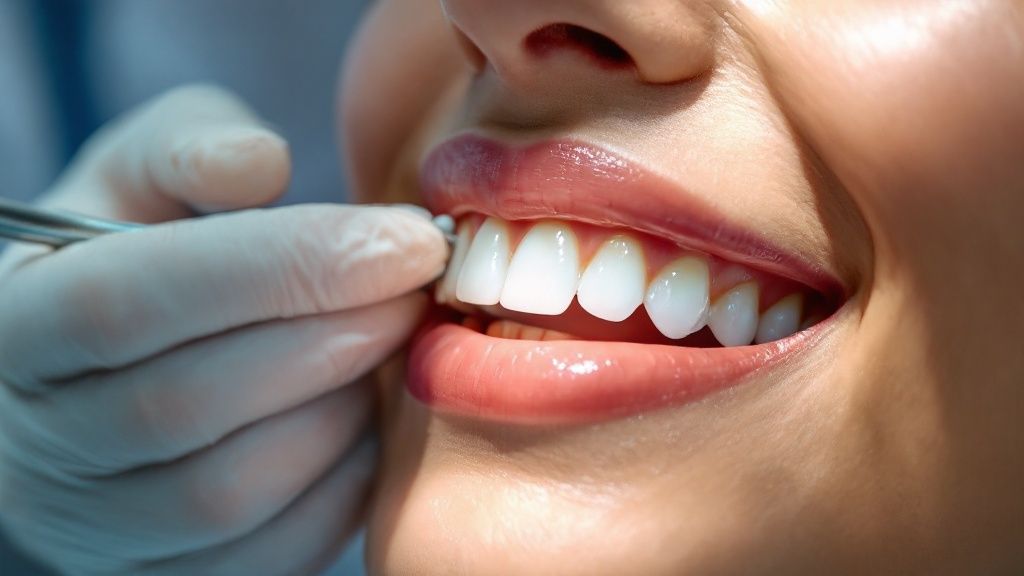
This kind of problem almost never happens overnight. It's usually the result of an issue that has been developing for a while. Think of it like the foundation of a house. If the soil around the foundation weakens, the whole house becomes unstable. The same thing can happen with your teeth.
Common Culprits Behind a Loose Tooth
Several things can weaken the structures that keep your tooth in place. Finding the exact reason is key to the right treatment. For our patients here in Surprise, AZ, we often see a few common causes.
The most common cause is periodontal (gum) disease. It's incredibly common—the CDC reports that nearly half of all adults over 30 in the U.S. have some form of it. This bacterial infection slowly eats away at the gum tissue and bone supporting your teeth, which makes them feel loose.
Other factors can also play a role:
- Bruxism (Teeth Grinding): If you constantly clench or grind your teeth, especially at night, you're putting a lot of force on them. This strain can eventually wear down the periodontal ligaments.
- Dental Trauma: A direct hit to the mouth from a fall, accident, or sports injury can damage the ligaments and bone, causing a tooth to become loose right away.
- Hormonal Changes: Hormone shifts during pregnancy can sometimes affect the ligaments, causing a slight wiggle. This usually resolves after the baby is born.
- Uneven Bite: When your teeth don't line up correctly, some teeth take on more force than they should. Over time, this leads to wear and instability.
A loose tooth isn't something that will fix itself. It's a clear signal that the supportive structures in your mouth need professional help. Ignoring it can lead to bigger problems, including losing the tooth for good.
What to Do Immediately for a Loose Tooth
The moment you notice a tooth is loose, your first step is to call a dentist. Here at West Bell Dental Care, we always treat this as a priority. While you wait for your appointment, there are a few things you can do to prevent the situation from getting worse.
First, leave the tooth alone. Resist the urge to poke it with your tongue or fingers. You should also avoid hard, crunchy, or sticky foods that could put extra stress on it. For now, stick to a soft diet and try to chew on the other side of your mouth.
It's also important to maintain gentle but thorough oral hygiene. Carefully brush around the area to keep it clean without applying too much pressure.
Exploring the Root Causes of Tooth Looseness
When a tooth feels loose, it’s a clear sign that its support system is in trouble. We often tell our patients in Surprise, AZ, to think of a tooth like a post set in concrete. If the concrete around the base starts to crumble, the post will begin to wobble. The same idea applies to your smile, and understanding why it's happening is the first step toward finding a solution.

In our Surprise dental office, the most common cause of loose teeth is periodontal disease, also known as gum disease. This is a slow infection that gradually eats away at the foundation of your smile—the gums and bone that hold your teeth in place.
The Slow Progression From Gingivitis to Periodontitis
Gum disease usually starts quietly. It begins as gingivitis, which is caused by plaque—a sticky film of bacteria—building up along your gumline. The early signs are subtle; you might notice your gums look a bit red or bleed when you brush. The good news is that at this stage, the damage is reversible with professional cleanings and good care at home.
If ignored, however, gingivitis can turn into periodontitis. This is where the real damage starts. Bacteria get beneath the gumline, triggering inflammation. This creates deep pockets between your teeth and gums, which fill with more harmful bacteria.
Over time, this infection destroys the ligaments and bone that anchor your teeth. This bone loss is what ultimately causes a tooth to feel loose. Understanding how periodontitis can ruin your oral health is crucial for preventing permanent damage.
This isn't a rare problem. In fact, research shows that nearly 47.2% of U.S. adults aged 30 and older have some form of periodontitis (CDC), which can lead to tooth loss if not treated.
Other Factors That Weaken Tooth Stability
While gum disease is the leading cause, it's not the only one. Other factors can put too much stress on your teeth or weaken their support structures, leading to that dreaded wiggle.
Here’s a quick-glance table of common causes and the warning signs to look for.
| Common Causes of Loose Teeth and Their Warning Signs |
| :— | :— | :— |
| Primary Cause | What It Is | Key Warning Signs |
| Periodontal Disease | A bacterial infection that destroys the gums and underlying bone. | Red, swollen, or bleeding gums; persistent bad breath; gums pulling away from teeth. |
| Occlusal Trauma | Uneven or excessive bite pressure on specific teeth. | Tooth sensitivity, flattened chewing surfaces, jaw pain, or a tooth that feels "high." |
| Bruxism (Grinding) | Unconscious grinding or clenching of teeth, often during sleep. | Waking up with a sore jaw or headache; worn-down teeth; audible grinding sounds at night. |
| Physical Trauma | A direct impact to the mouth from an accident, fall, or sports injury. | Immediate pain, visible chipping or cracking, bleeding, or a sudden change in bite. |
This table can be a useful starting point, but let’s look closer at these other factors.
Occlusal Trauma (Uneven Bite Pressure)
Imagine a four-legged chair where one leg is a bit longer than the others. Every time you sit down, that one leg takes on extra stress. The same thing can happen with your teeth.
An uneven bite can force one or two teeth to absorb too much pressure when you chew. This constant, excessive force can wear down the periodontal ligament and bone, causing the tooth to loosen over time.
Habits and Lifestyle Choices
Certain personal habits can also affect the stability of your teeth. We see this often with patients from the Sun City and Peoria areas.
- Bruxism (Teeth Grinding): Many people grind their teeth without realizing it, often while they sleep. This habit places huge strain on your teeth, ligaments, and jawbone, gradually weakening them.
- Smoking: Tobacco use makes it harder for your body to fight infection and heal. This makes smokers much more likely to develop aggressive gum disease and the bone loss that comes with it.
- Poor Nutrition: A diet low in nutrients like calcium and Vitamin C can weaken your jawbone and gums, making your teeth more vulnerable to gum disease.
Physical Injuries and Trauma
Finally, a direct physical impact can cause a tooth to become loose instantly. This is common in sports accidents, falls, or any other kind of facial trauma.
The force of a blow can stretch or tear the periodontal ligaments holding the tooth in its socket. While a tooth can sometimes tighten back up on its own, it always requires a professional evaluation at West Bell Dental Care. We need to check for damage to the root and bone to prevent long-term problems.
Supportive At-Home Care for Loose Teeth
While seeing your dentist is the top priority for a loose tooth, what you do at home every day plays a huge supportive role. Simple changes to your routine can create a healthier environment for your teeth and gums, giving them the best chance to heal.
Think of it this way: your dentist provides the treatment, but your at-home care is what makes it work. These strategies are not a replacement for professional help, but they are a crucial part of the team effort to save your tooth.
Gentle But Effective Oral Hygiene
When a tooth is loose and your gums are tender, it's tempting to avoid that area. But keeping plaque away is more important than ever. The key is to be very gentle yet thorough.
Start by switching to a toothbrush with extra-soft bristles. This lets you clean along the gumline without causing more irritation. Use small, circular motions with almost no pressure—let the bristles do the work.
Flossing is also a must, as bacteria love to hide between teeth. If the area is sore, go slow. For a refresher, our guide on how to floss correctly can be a huge help. Removing bacteria reduces inflammation and gives your gums a chance to heal.
Make Your Diet Work for Your Smile
What you eat directly affects your oral health, especially when you're trying to stabilize a loose tooth. Your diet can either help your body repair itself or add extra stress.
Focus on nutrient-rich foods that support strong bones and healthy gums.
- Calcium-Rich Foods: Your jawbone needs calcium to stay strong. Think dairy products like milk, cheese, and yogurt, or leafy greens like spinach and kale.
- Vitamin C Powerhouses: Vitamin C is vital for healthy gums and helps produce collagen, which keeps them firm. Citrus fruits, strawberries, and broccoli are great sources.
- Crunchy Fruits and Veggies: Foods like apples and carrots can help clean your teeth naturally as you chew. But if a tooth is very loose, cut them into small pieces to avoid putting too much force on it.
Just as important is what you avoid. Hard, crunchy, or sticky foods—like nuts, hard candies, and taffy—can put dangerous pressure on a loose tooth and make things worse. It's best to avoid these until your dentist gives you the okay.
The image below shows a simple biting exercise you can try at home. Using a small silicone chew ring, you can gently stimulate the ligaments holding the tooth.
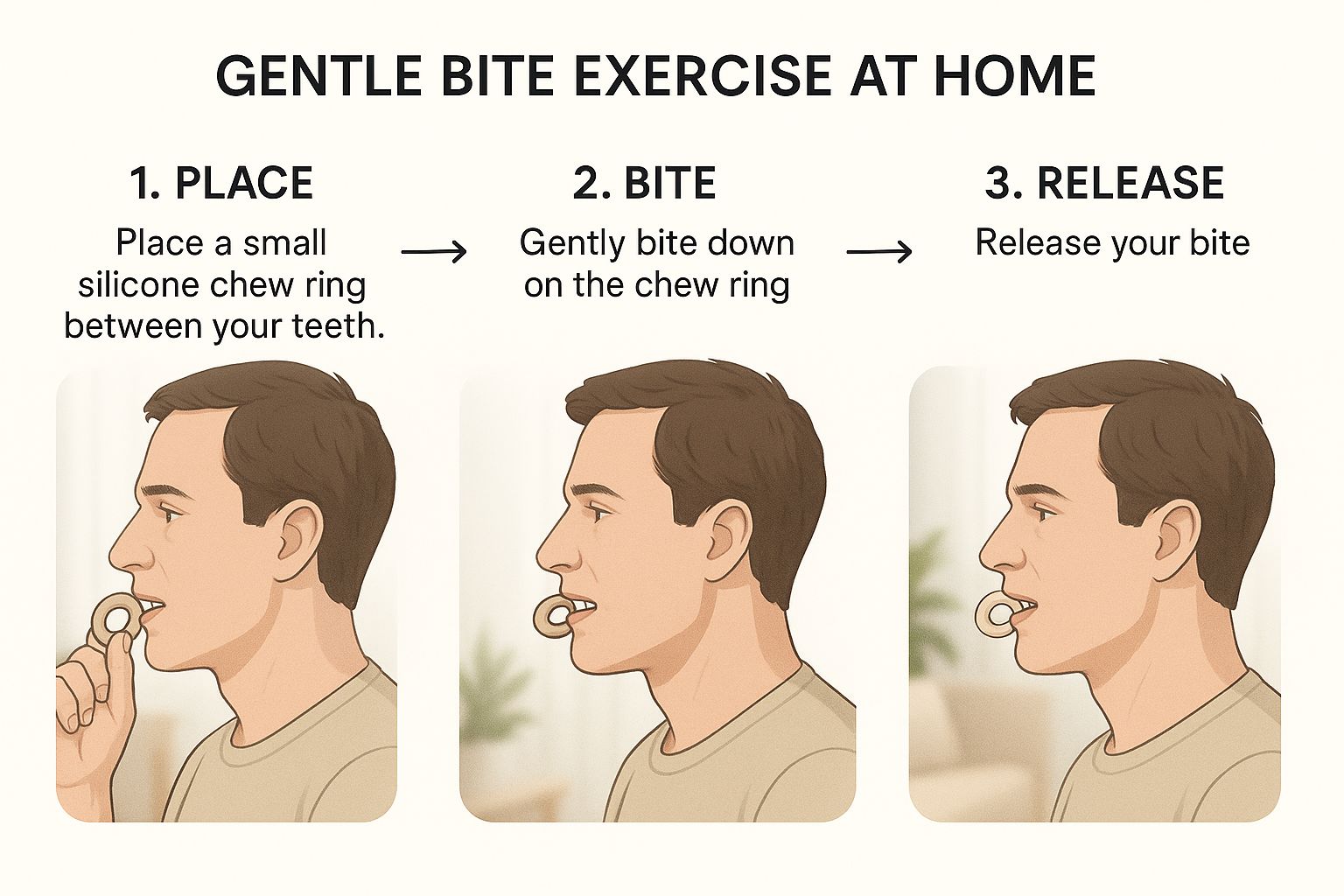
This gentle, controlled pressure helps encourage blood flow to the area, which can promote healing in the ligaments that anchor your tooth.
The Power of a Saltwater Rinse
One of the oldest tricks is also one of the most effective: a warm saltwater rinse. This isn't just an old wives' tale. Salt is a natural antiseptic that helps reduce inflammation and soothe irritated gums.
Rinsing with warm salt water helps draw out fluid from swollen gums and creates a less friendly environment for the bacteria that cause gum disease. It’s a simple, powerful tool.
Making it is easy. Just dissolve half a teaspoon of salt in a glass of warm water. Swish it gently in your mouth for about 30 seconds, focusing on the loose tooth, then spit it out. Doing this two or three times a day, especially after eating, can make a real difference.
Beyond these tips, your overall daily routine matters. Adopting habits that contribute to stronger teeth provides a solid foundation for your whole smile. When you combine diligent at-home care with professional treatment from your dentist in Surprise, AZ, you give your tooth the best chance of becoming stable again.
How Your Dentist Can Save and Strengthen a Loose Tooth
While your efforts at home are vital, the best solutions for strengthening loose teeth come from your dentist. When you visit us, our first goal is to find the exact cause of the problem. From there, we can create a clear plan to stabilize the tooth and restore your smile's health.
Modern dentistry offers great ways to save a loose tooth. We've come a long way from older approaches where pulling the tooth was often the only option. Today, our focus is always on saving your natural teeth whenever possible.
Starting With a Deep Clean
The main treatment for a loose tooth caused by gum disease is scaling and root planing. You can think of this as a deep cleaning that goes where your toothbrush can't reach. The goal is to get to the root of the infection.
During this treatment, we carefully remove all the plaque and hardened tartar from above and below the gumline. We then smooth out the tooth roots, which helps your gums reattach firmly. This process removes harmful bacteria, creating a clean slate where your gums can heal and tighten up.
Dental Splinting for Immediate Support
If a tooth is very loose, it might need some help from its neighbors. Dental splinting is a simple and effective technique where we bond the loose tooth to one or more stable teeth next to it. It acts like a brace, providing instant stability.
We use a thin, tooth-colored resin or a small fiber splint to link the teeth together.
- It distributes bite forces: The splint spreads chewing pressure across multiple teeth, taking the strain off the weak one.
- It allows for healing: By holding the tooth steady, the splint gives the surrounding ligaments and bone a chance to heal.
- It's discreet: The materials we use blend in with your natural teeth, so the splint is barely noticeable.
Splinting is a fantastic tool in restorative dentistry that can often save a tooth that might otherwise be lost.
Adjusting Your Bite for Better Balance
Sometimes, the problem isn’t infection but uneven pressure. If your bite is misaligned, one or two teeth might be taking all the force every time you chew. This constant stress is known as occlusal trauma, and it can loosen a tooth over time.
A bite adjustment is a subtle but effective procedure to fix this. We carefully find the "high spots" on the tooth that are causing the problem. Then, we gently reshape and polish these areas to rebalance your bite. This small change ensures that chewing forces are spread evenly across all your teeth.
Correcting your bite is like properly aligning the tires on a car. It prevents uneven wear and tear, protecting your teeth from unnecessary stress.
Bone Grafting for Advanced Cases
In cases where gum disease has caused significant bone loss, we may need to rebuild the foundation that supports your tooth. This is where a bone graft comes in. It might sound complex, but it’s a common and predictable procedure.
We place special bone grafting material into the area where the bone has been lost. This material acts as a scaffold, encouraging your body to grow its own new, healthy bone over the next few months.
This procedure can:
- Rebuild the jawbone: It restores the bone structure needed to anchor the tooth.
- Provide a solid foundation: It creates the support needed to stabilize a loose tooth or prepare the area for a future dental implant, if needed.
For our patients in Surprise and Sun City West, these treatments show our commitment to saving natural teeth. By addressing the underlying cause—whether it’s infection, bite pressure, or bone loss—we can strengthen a loose tooth and help you keep a healthy smile for years.
Partner with West Bell Dental Care for a Stable Smile
Noticing a loose tooth is a clear sign that it's time to see a professional, but you don't have to face it alone. The good news is that modern, effective treatments are available to bring back your smile’s health and stability. Making that call is the most important step you can take.
Here at West Bell Dental Care, our team helps our neighbors across Surprise, Sun City, and nearby communities feel great about their smiles. We understand a loose tooth can cause anxiety. That's why we treat every case with empathy and dedication to finding the right solution for you.
Your Personalized Path to a Healthier Smile
Great dental care is never a one-size-fits-all solution. When you come into our office, we start by listening to your concerns. Then, we'll do a thorough exam to find the root of the problem and create a treatment plan just for you. Our goal is to empower you with a clear understanding of your options.
Your comfort and trust are everything to us. At West Bell Dental, we're always looking for new strategies to improve patient satisfaction because we want you to feel cared for from the moment you walk in.
We’ll walk you through every possibility, whether it’s a deep cleaning, splinting, or a bone graft. If a tooth can't be saved, we offer stable, long-lasting solutions. We are proud to offer advanced treatments like dental implants in Surprise to completely restore your tooth's function and appearance.
Your oral health is a vital part of your overall well-being. By partnering with a dental team that truly cares, you're investing in your long-term health and confidence.
Take the First Step Today
You deserve a smile that is healthy, stable, and worry-free. Our friendly, professional team at West Bell Dental Care is here to provide the compassionate, high-quality care you need. We're proud to serve families, professionals, and retirees from Surprise, Sun City West, Peoria, and beyond.
Don't let a loose tooth hold you back any longer. Schedule a consultation with us today to explore your treatment options and take that first step toward a stronger, more confident smile. Your journey back to great oral health starts with a simple conversation.
Frequently Asked Questions
It's normal to have questions when you notice a tooth is loose. It can be a worrying experience, and you deserve clear, simple answers. We've gathered some of the most common questions our patients in Surprise, AZ, ask us about strengthening loose teeth.
Can a loose permanent tooth tighten on its own?
Sometimes, but it depends on the cause. If a tooth is slightly loose from a minor injury, it might tighten back up as the ligaments heal. However, if the looseness is from gum disease, it will not tighten on its own and requires professional treatment to stop the bone loss.
Does it hurt to get a loose tooth treated?
Your comfort is our top priority at West Bell Dental Care. Procedures like deep cleanings or splinting are done using a local anesthetic to numb the area completely, so you won’t feel any pain. We will talk you through every step to make sure you feel comfortable and in control.
What happens if I ignore my loose tooth?
Ignoring a loose tooth allows the underlying problem, like gum disease, to get much worse. The infection can spread, causing more bone loss around other teeth. Eventually, the tooth will likely fall out or need to be pulled. It's best to address the issue right away.
How much does it cost to fix a loose tooth in Surprise, AZ?
The cost depends entirely on the cause and the treatment needed. A deep cleaning will have a different cost than a bone graft. When you visit our Surprise office, we will provide a clear, transparent treatment plan with all costs and discuss your insurance and financing options.
Is it too late to save my very loose tooth?
You might be surprised by what modern dentistry can achieve. Even teeth with significant wiggle can often be saved with treatments like splinting or bone grafting. The key is to get a professional evaluation right away to see how much support is left and create a plan. Don't assume it's a lost cause!
At West Bell Dental Care, we are committed to providing clear answers and effective solutions for our patients. If you have more questions or are ready to address a loose tooth, contact our Surprise, AZ, office today to schedule your consultation. Visit us at https://westbelldentalcare.com to take the first step toward a stable, healthy smile.
Ready to See a Dentist in Surprise, AZ?
Dr. Jennifer H. Wynn and the West Bell Dental Care team are here to help. Call us at 480-795-2420 or book online below.

Medically reviewed by Dr. Jennifer H. Wynn, DDS — Founder of West Bell Dental Care, Surprise, AZ. Graduate of Loma Linda University School of Dentistry with 30+ years of experience in general, cosmetic, and restorative dentistry. NPI: 1144359720 | AZ License: D009624.