

That sudden, throbbing pain in the back of your jaw is more than just annoying. It’s often the first warning sign of a gum abscess from a wisdom tooth.
An abscess is a small, infected pocket of pus. It forms when bacteria get trapped in the gum tissue around a wisdom tooth that’s hard to reach. This is a common issue we treat for our patients in Surprise, AZ, and it needs immediate attention.
Understanding That Throbbing Pain in Your Jaw
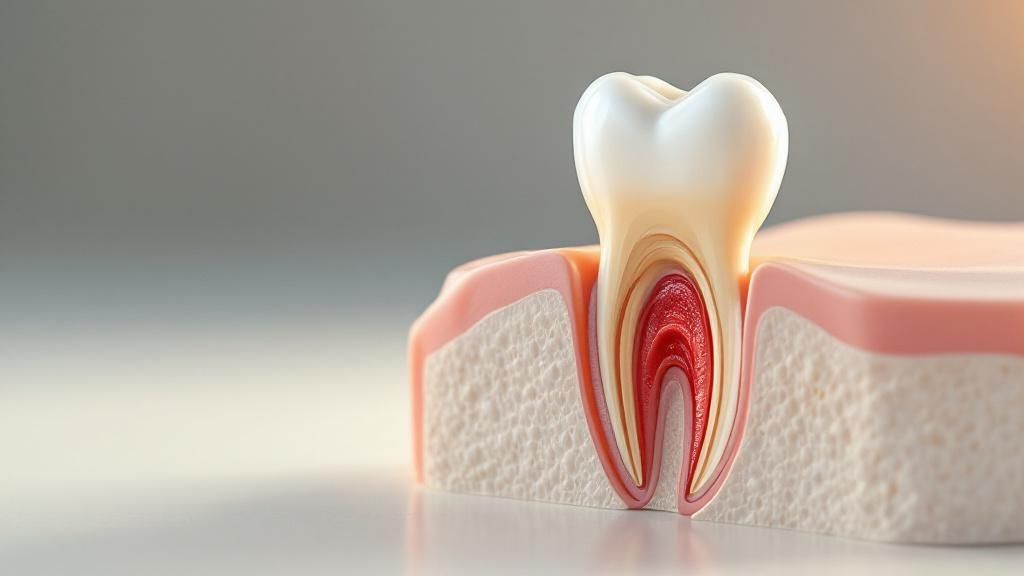
When you feel that deep, pulsing ache near the back of your mouth, your body is telling you something is wrong. A gum abscess tied to a wisdom tooth is an infection, and the pressure it creates causes the pain. You might even feel it spreading toward your ear and neck.
This isn’t just minor gum irritation; it’s an active bacterial infection. Think of it like getting a splinter under your skin. At first, it's just sore, but soon the area gets inflamed as your body tries to fight off the problem.
Why Wisdom Teeth Are a Common Culprit
Wisdom teeth, also called third molars, are famous for causing trouble. They are the last teeth to come in, usually in our late teens or early twenties. By that time, our jaws often don’t have enough room for them.
This lack of space is why they are so likely to cause problems like abscesses.
Several factors make this area an easy target for infection:
- Difficult to Clean: Being so far back in the mouth makes them very hard to brush and floss well.
- Partial Eruption: Many wisdom teeth only partially break through the gums. This creates a small flap of gum tissue where food and bacteria can easily get trapped.
- Awkward Angles: They often come in sideways or at a strange angle, putting pressure on other teeth and creating hidden pockets for infection.
A dental abscess is a pocket of pus caused by bacteria. If not treated, the infection can spread to the jawbone or even into the bloodstream, putting your overall health at risk.
At West Bell Dental Care, we know how stressful this pain can be. We often see patients from Sun City and Peoria who hoped the discomfort would just go away. But a gum abscess from a wisdom tooth needs professional care to clear the infection. Ignoring it can lead to bigger problems.
Why Wisdom Teeth Are a Hotspot for Infection

It almost seems like wisdom teeth are designed to cause problems. These third molars are the last teeth to arrive, often when our jaws have no more space. This is the top reason they become the perfect spot for a painful gum abscess from a wisdom tooth.
Think of it like trying to park a large car in a small space. It might get stuck halfway or come in at a weird angle. This is exactly what happens with wisdom teeth—a situation dentists call impaction.
The Problem with Impacted Teeth
An impacted wisdom tooth is stuck and can't break through the gums properly. This creates an ideal breeding ground for bacteria. Impacted wisdom teeth are very common, which is why we see so many related infections here at our Surprise, AZ, office.
In fact, up to 72% of adults have at least one impacted wisdom tooth (also called a third molar). This condition can easily lead to serious issues like a dental abscess.
An impacted tooth creates a small pocket between the tooth and the gum. This acts as a trap for food, plaque, and bacteria. This tiny space is almost impossible to clean with your regular toothbrush.
All that trapped gunk can lead to a painful condition called pericoronitis. This is when the gum flap over a partially emerged tooth gets inflamed. If left untreated, pericoronitis is a fast track to a full-blown abscess.
Common Issues That Lead to Infection
It's usually a mix of things that turn your wisdom teeth into an infection hotspot. Their location and position both play a part.
Here are the key factors that cause the problem:
- Lack of Jaw Space: Modern jaws are often smaller than our ancestors' were, meaning there's not enough room for these last four teeth.
- Awkward Eruption Angles: Wisdom teeth can grow in sideways or tilted. This puts pressure on nearby teeth and creates deep crevices that are hard to clean.
- Difficulty Cleaning: Being tucked at the very back of your mouth makes these teeth hard to reach. It’s easy to miss these spots, allowing plaque to build up.
- The Gum Flap (Operculum): This little flap of gum tissue over a partially emerged wisdom tooth is the main problem. It acts like a welcome mat for bacteria.
For families in Surprise and Sun City West, monitoring wisdom teeth is key. By catching issues early with check-ups, we can help you avoid the pain of a gum abscess. If you've already had them removed, you can learn about managing pain in the jaw after wisdom teeth extraction in our other guide.
Recognizing the Warning Signs of an Abscess
Catching a wisdom tooth problem early can save you from a lot of pain. A gum abscess from a wisdom tooth rarely shows up without warning. Knowing what to look for helps you get help before things get worse.
The most common sign is a deep, throbbing pain at the back of your jaw. This isn't a normal toothache. It’s a severe pain that can wake you up at night and make it hard to focus.
That intense discomfort comes from pressure building inside the abscess. As the pocket of pus grows, it presses on sensitive nerves in your gums and jaw.
Beyond the Pain: What to Look For
While pain gets your attention, it’s rarely the only symptom. An infection can cause other clear signs that something is wrong.
Many of our patients in Surprise also experience swelling in the area. The gum tissue around the tooth might look puffy, red, and be very sore to touch. The swelling can even spread to your cheek or jaw.
Here are a few other signs you should never ignore:
- A Foul Taste or Bad Breath: An abscess is a collection of bacteria and pus. If it starts to drain, you might get a horrible, salty taste in your mouth and bad breath that won't go away.
- Difficulty Opening Your Mouth: Swelling can make your jaw muscles tight and sore. This can make it painful or difficult to open your mouth wide.
- Pain When Chewing or Swallowing: Biting down can cause a sharp pain. The infection can also make it uncomfortable to swallow.
- Swollen Glands and Fever: When an infection spreads, your immune system fights back. You might feel swollen lymph nodes under your jaw. A low-grade fever and feeling generally unwell are also common.
Emergency Dental Warning: If you have swelling in your face or jaw with a fever or trouble breathing, this is a serious medical emergency. Contact West Bell Dental Care or go to an emergency room right away.
Taking care of your gums is the first line of defense. Learning 5 tips to prevent gum disease can help protect your oral health. We know these symptoms are scary, and our team in Surprise, AZ, is ready to help.
How We Diagnose and Treat a Wisdom Tooth Abscess
Walking into a dental office with that kind of pain can be scary. We get it. Here at West Bell Dental Care, our first job is to make you comfortable. We’ll walk you through every step so you know what’s happening.
When you come to our Surprise, AZ, office with a suspected gum abscess from a wisdom tooth, we start with a gentle exam. Then, we use digital X-rays to see what’s going on under your gums. These images show us the tooth's root and how far the infection has spread.
Our Three-Step Treatment Approach
Once we have a clear diagnosis, we'll explain the plan in simple terms. Our approach gives you immediate relief and solves the problem for good. The goal is to get you out of pain fast.
The infographic below shows our clear process from diagnosis to recovery.
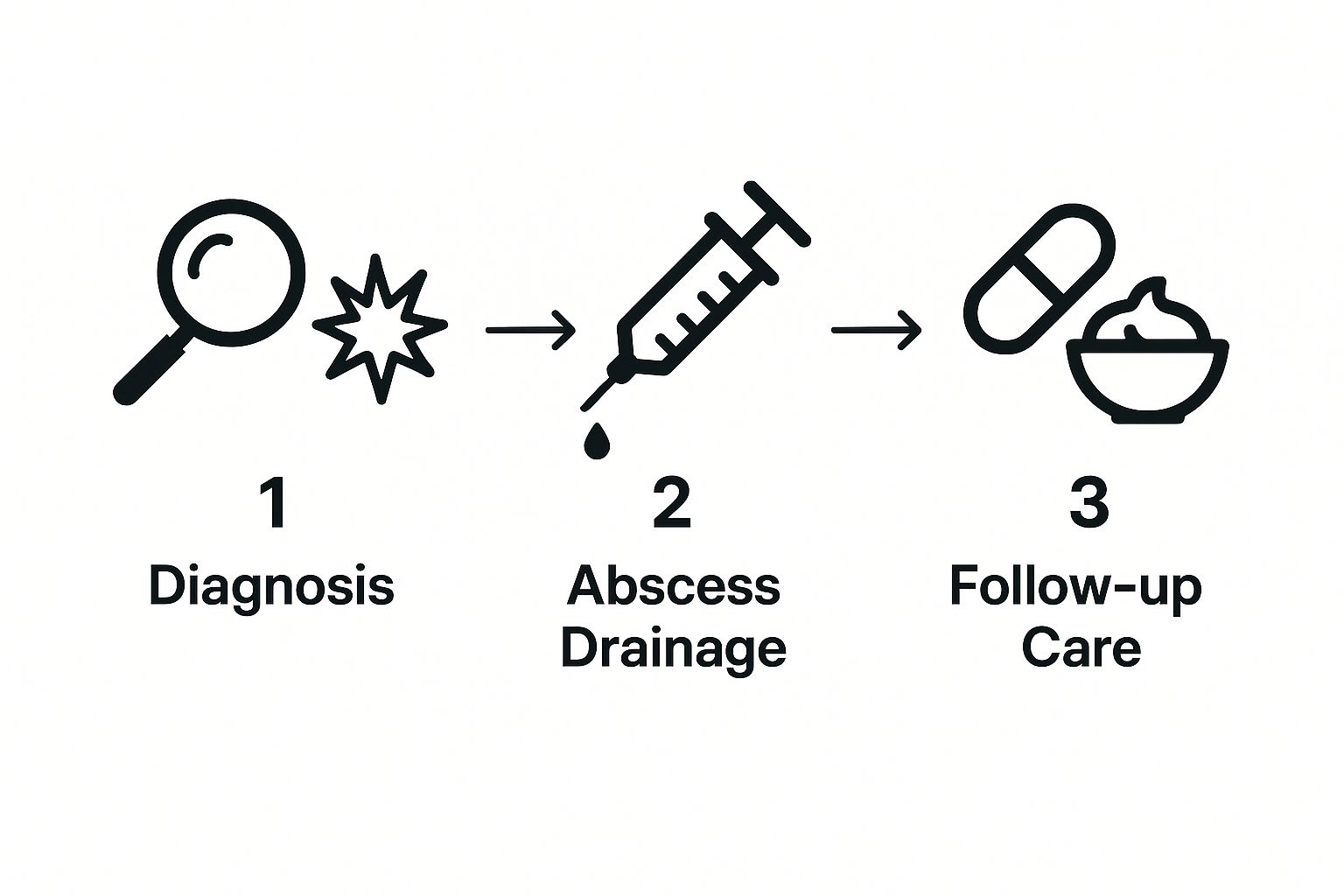
As you can see, our care is a step-by-step journey focused on relief and a lasting solution.
Our treatment has three main goals:
- Drain the Abscess: First, we have to relieve the pressure causing your pain. We will carefully drain the pus, which brings immediate relief.
- Control the Infection: Draining the abscess is only the first step. We will likely prescribe antibiotics to kill the bacteria and stop the infection from spreading.
- Address the Root Cause: Finally, we have to deal with the source of the problem—the wisdom tooth. For most of our patients in Surprise and Peoria, this means the tooth needs to be removed.
Why Extraction Is Often the Best Solution
Think of it this way: leaving a problem wisdom tooth in your mouth is like leaving a splinter in your finger after cleaning the wound. The infection is almost certain to come back. Because impacted wisdom teeth are so hard to keep clean, they are a permanent trap for bacteria.
By removing the wisdom tooth, we eliminate the source of the problem for good. This is the most reliable way to protect your long-term oral health.
We know hearing the word "extraction" can sound scary. We focus on making sure you have a comfortable, pain-free experience. We use effective local anesthetics and can offer sedation if you feel anxious. You can also read our guide on how to care for your mouth after a tooth extraction.
The Hidden Dangers of an Untreated Dental Abscess
It's tempting to try and tough out the pain of a gum abscess from a wisdom tooth. But a dental abscess is a serious infection that needs professional care to avoid major health risks. Ignoring it is like ignoring a fire alarm—the problem only gets bigger.
The bacteria causing the abscess won't just stay in one place. If you don't get it treated, those bacteria can travel into your jawbone. This can cause damage that weakens the bone’s structure.
How a Local Infection Can Become a Systemic Problem
The infection's journey doesn't stop at the jaw. From there, it can move into the soft tissues of your face and neck. This is when you might see swelling in your cheek, a clear sign the infection is getting worse.
The most dangerous route for the bacteria is into your bloodstream. Once bacteria are in your circulation, they can travel throughout your body. This can lead to a life-threatening condition called sepsis, which is a medical emergency.
This shows how urgent treatment is. In fact, according to the American Dental Association, dental emergencies account for millions of ER visits each year in the U.S. Discover more insights about these dental health statistics.
Protecting Your Overall Health
An untreated abscess is a direct threat to your overall well-being. The infection can also spread to nearby areas like your sinuses or, in rare cases, even your brain.
An untreated dental abscess is a serious medical issue. Prompt professional treatment is the only way to safely eliminate the infection and protect yourself from severe complications.
Seeking timely care here at West Bell Dental Care in Surprise, AZ, is the best way to stop the infection. Sometimes, an infection can reach the inner pulp of a tooth. In that case, we might need to perform root canal therapy services to save a neighboring tooth. Our priority is to solve the problem quickly and safely.
Preventing Future Wisdom Tooth Problems
The old saying "an ounce of prevention is worth a pound of cure" is especially true for dental health. The best way to handle a painful gum abscess is to stop one from ever starting. A proactive approach is your strongest defense.
It all starts with regular check-ups at West Bell Dental Care. During these visits, we use exams and X-rays to track your wisdom teeth. This lets us spot potential trouble long before it becomes an emergency.
Smart Habits for At-Risk Teeth
If your wisdom teeth have started to come in, keeping them clean is a must. Because they're so far back, they are easy to miss during your normal brushing routine.
Here are a few practical tips to help you clean this tricky area:
- Use a small-headed toothbrush: A smaller brush head is better at getting into the tight spaces behind your last molars.
- Angle your bristles: Tilt your brush to a 45-degree angle to help the bristles get under the gumline.
- Try a water flosser: These are great for flushing out food and bacteria from under gum tissue where floss can't reach.
- Rinse with an antimicrobial mouthwash: A good mouthwash can help reduce the amount of harmful bacteria in your mouth.
These habits are a key part of preventive dentistry, helping patients in Surprise and Sun City West stay ahead of dental problems. It's also smart to know how modern habits affect your teeth, like whether vaping causes tooth damage.
Following Post-Extraction Care Is Crucial
If we decide removing a wisdom tooth is the best path, following our aftercare instructions is critical. Proper care after an extraction is key to preventing complications like another infection.
Your recovery period is a critical time for healing. Following post-op guidelines carefully helps the extraction site heal cleanly and lowers your risk of infection.
Research shows that infections can sometimes appear weeks after an extraction. Careful post-op care is the most important factor in reducing this risk. Our goal at West Bell Dental Care is to be your long-term health partner, helping you prevent a gum abscess from a wisdom tooth.
Frequently Asked Questions
When you're dealing with the pain of a gum abscess from a wisdom tooth, it’s normal to have questions. Here are answers to common concerns we hear from our patients in Surprise, AZ.
Can a gum abscess from my wisdom tooth go away on its own?
No, a gum abscess will not go away on its own. While the pain might temporarily fade if the abscess bursts, the underlying bacterial infection is still there. Without treatment from a dentist, the infection can spread and cause more serious health problems.
What can I do for the pain at home before my appointment in Surprise, AZ?
To get some temporary relief, you can rinse your mouth with warm salt water (half a teaspoon of salt in a glass of warm water). This can help soothe the inflamed gums. Over-the-counter pain relievers like ibuprofen can also reduce the throbbing pain until you can see us at West Bell Dental Care.
Will I definitely need my wisdom tooth pulled if it has an abscess?
In most cases, yes. If a wisdom tooth is impacted or positioned in a way that makes it impossible to clean, extraction is the best long-term solution. Removing the tooth gets rid of the hiding spot for bacteria, which prevents the abscess from coming back.
Is it safe to remove an infected wisdom tooth?
Your safety is our top priority. Depending on how severe the infection is, we may prescribe antibiotics for a few days before the extraction. This helps reduce the infection and swelling, making the procedure safer and ensuring the local anesthetic works effectively for a comfortable experience.
Does West Bell Dental Care offer emergency appointments for abscesses?
Yes, absolutely. We understand that a dental abscess is a true emergency because the pain can be severe. We prioritize these situations and will do everything we can to see patients from Surprise, Sun City, and nearby communities as quickly as possible. If you think you have an abscess, call us right away.
Don't wait for the pain to get worse. At West Bell Dental Care, we're here to provide fast, compassionate relief for dental emergencies in Surprise, AZ. Contact us today to schedule your urgent appointment and protect your oral health.
https://westbelldentalcare.com
Ready to See a Dentist in Surprise, AZ?
Dr. Jennifer H. Wynn and the West Bell Dental Care team are here to help. Call us at 480-795-2420 or book online below.

Medically reviewed by Dr. Jennifer H. Wynn, DDS — Founder of West Bell Dental Care, Surprise, AZ. Graduate of Loma Linda University School of Dentistry with 30+ years of experience in general, cosmetic, and restorative dentistry. NPI: 1144359720 | AZ License: D009624.