

When you're looking at a dental treatment plan, seeing terms like "crown" and "root canal" can be a bit overwhelming. Let's clear up the confusion. The most important difference between a crown and a root canal is what they do: a root canal is a treatment to save an infected tooth by cleaning out its insides, while a crown is a protective cap placed over a tooth to bring back its strength.
They often work together as a team, but they are definitely not the same thing.
Understanding Crowns vs. Root Canals at a Glance
It's easy to see "root canal" and "dental crown" on your plan and think they're interchangeable. In reality, they solve completely different dental problems.
Think of it like this: a root canal is like fixing a home's plumbing to stop a leak from the inside, while a crown is like reinforcing the walls and putting on a new roof to protect the structure from the outside.
One procedure deals with the health of the tooth's interior pulp, and the other handles the structural integrity and appearance of its exterior.
This guide from our team at West Bell Dental Care will walk you through what each procedure involves. We want to help our patients in Surprise, AZ, and our neighbors in Sun City and Peoria, make decisions about their oral health with confidence. Knowing what each treatment is for is the first step toward a healthy, long-lasting smile.
A common misconception is that you have to choose between a root canal or a crown. Very often, they are partners in saving your natural tooth. A root canal is performed first to get rid of the infection, and then a crown is placed afterward to protect the tooth, which is now more brittle.
To make the comparison crystal clear, let's break down their main jobs in a simple table.
Key Differences Between a Crown and a Root Canal
This table offers a quick side-by-side look at the fundamental purpose of each procedure.
| Aspect | Dental Crown | Root Canal Therapy |
|---|---|---|
| Primary Function | To cover and protect a damaged tooth | To remove infection from inside the tooth |
| Problem It Solves | Cracks, large fillings, weakness, breakage | Infected or inflamed tooth pulp (nerves) |
| Core Goal | Restore the tooth's shape, strength, and appearance | Eliminate pain and save the natural tooth from extraction |
As you can see, one is a restorative cover designed for strength and aesthetics, while the other is a therapeutic treatment to save the tooth from the inside out.
What Is a Dental Crown and When Is It Needed
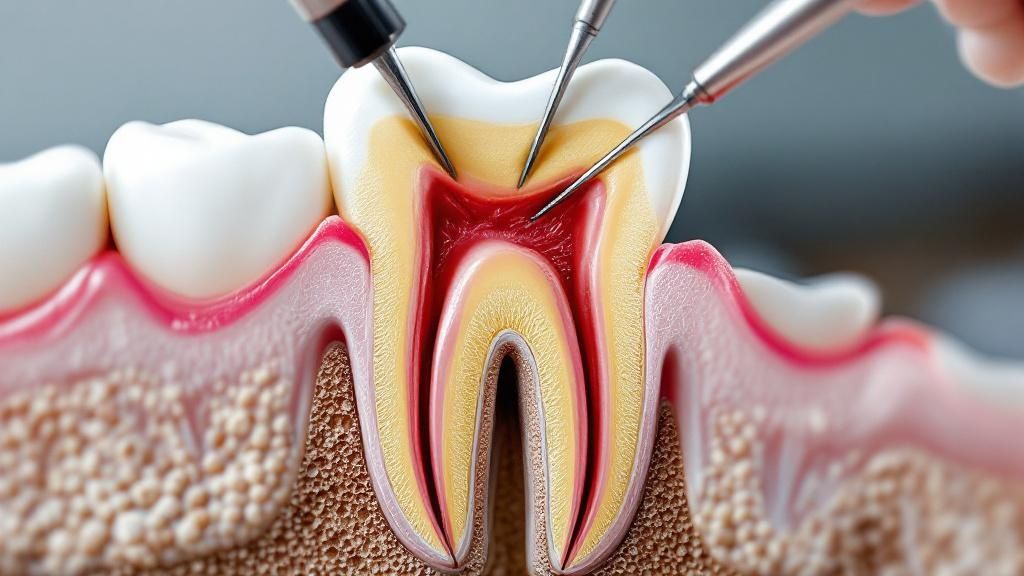
You can think of a dental crown as a custom-fitted helmet for your tooth. It's a permanent, tooth-shaped cap designed to cover the entire visible part of a tooth, bringing it back to its original size, shape, and most importantly, its strength and function.
At West Bell Dental Care, we find ourselves recommending crowns to solve a number of common problems for our patients here in Surprise, AZ. Unlike a root canal, which treats the inside of a tooth, a crown is all about protecting and restoring the outside.
Common Reasons for a Dental Crown
Your dentist might suggest a crown in several situations where the tooth's structure has been compromised. The goal is to give the tooth a strong, durable outer shell that can handle the daily forces of biting and chewing.
Here are the most common scenarios where a crown is the best solution:
- To protect a weak tooth: When a tooth is fragile from extensive decay, a crown acts like a brace, holding it together and stopping it from breaking.
- To restore a broken tooth: For teeth that are badly worn down or have fractured, a crown can rebuild them to their natural shape and size.
- To support a large filling: Sometimes, a cavity is so big there isn't enough healthy tooth structure left to support a filling. A crown is needed to cover and reinforce the entire tooth.
- To complete a dental implant: The crown is the final, visible part of a dental implant, creating a brand new, fully functional tooth.
- To hold a dental bridge in place: Crowns are cemented onto the teeth on either side of a missing tooth to anchor a dental bridge securely.
Crowns are one of the most reliable long-term restorative treatments in modern dentistry. Research shows an impressive survival rate for crowned teeth, with many lasting 15-20 years or more with proper care (American Dental Association).
Ultimately, the goal is to save your natural tooth and get it back to full working order. For a closer look at the process, you can check out our guide on dental crowns and why they are needed. At our Surprise office, we’ll also help you choose the right material, like porcelain or ceramic, to make sure your new crown blends in perfectly with your smile.
A Closer Look at The Root Canal Procedure
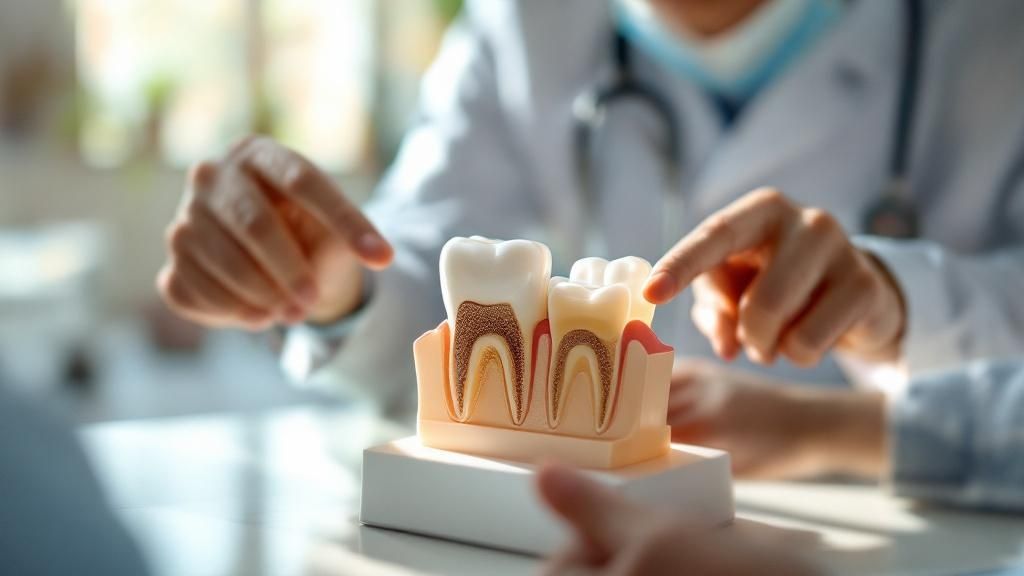
First things first, let's clear up a huge misconception. Root canals aren't the source of dental pain—they're the solution to it. Many people in Surprise, AZ, get a little anxious about this treatment, but understanding what it actually does can put those fears to rest. The main difference to grasp is that a root canal is a therapeutic procedure to save an infected tooth, not just cover it up like a crown does.
A root canal becomes necessary when the soft tissue inside your tooth, known as the pulp, gets infected or inflamed. This pulp is a bundle of nerves and blood vessels, and when it's compromised by deep decay, a bad crack, or an injury, it can lead to a world of hurt. If you leave it alone, that infection can cause a throbbing toothache and eventually a painful dental abscess.
What to Expect During Root Canal Therapy
The entire goal of the procedure is to get you out of pain and keep your natural tooth. Here at West Bell Dental Care, we use modern techniques and highly effective anesthesia, making the experience feel a lot like getting a simple filling.
The process is quite straightforward:
- Numbing the Tooth: Before anything starts, we make sure the tooth and the entire area around it are completely numb. Your comfort is our top priority.
- Accessing the Pulp: Your dentist creates a tiny opening in the tooth to get to the infected inner chamber.
- Cleaning and Disinfecting: The damaged pulp is gently removed. Then, the inside of the tooth is meticulously cleaned and disinfected to get rid of all the bacteria.
- Sealing the Tooth: We fill the now-empty chamber with a sterile, rubbery material called gutta-percha. The tooth is then sealed up to keep any new infection out.
A root canal doesn’t "kill" the tooth. It simply removes the infected nerve tissue that was causing all the pain. The tooth itself can function perfectly well without this nerve, as it gets all the nourishment it needs from the surrounding tissues.
Once the procedure is done, the pain is gone, but the tooth might be a bit more brittle than before. This is exactly why a dental crown is almost always recommended as the final step. It acts like a helmet, giving the tooth the long-term protection it needs to last for years to come.
You can learn more about the specifics on our root canal therapy page.
How Crowns and Root Canals Work Together
This is where patients in Surprise, AZ, often have the most questions. While crowns and root canals address very different problems, they frequently come together as a two-part solution for a single, damaged tooth. It's best to think of them not as competitors, but as partners in saving your smile.
It’s helpful to understand the practical situations where you might need one, the other, or both. For instance, you might only need a crown for a cracked molar that has no nerve damage. In other, less common cases, a front tooth might get a root canal and not need a crown if it’s still structurally sound.
The Most Common Partnership: A Perfect Team
The most frequent scenario we see is a root canal followed by a dental crown. A root canal is essential for clearing out infection and stopping pain, but the process can leave the tooth hollow and brittle. This is a major concern for back teeth, which absorb immense force when you chew.
The root canal saves the tooth from infection, but the crown saves it from fracturing. The crown acts like a protective helmet, absorbing daily bite pressure and ensuring the tooth can function for years to come.
To give you a clearer picture of what each procedure involves, this chart breaks down the average costs, recovery, and longevity.
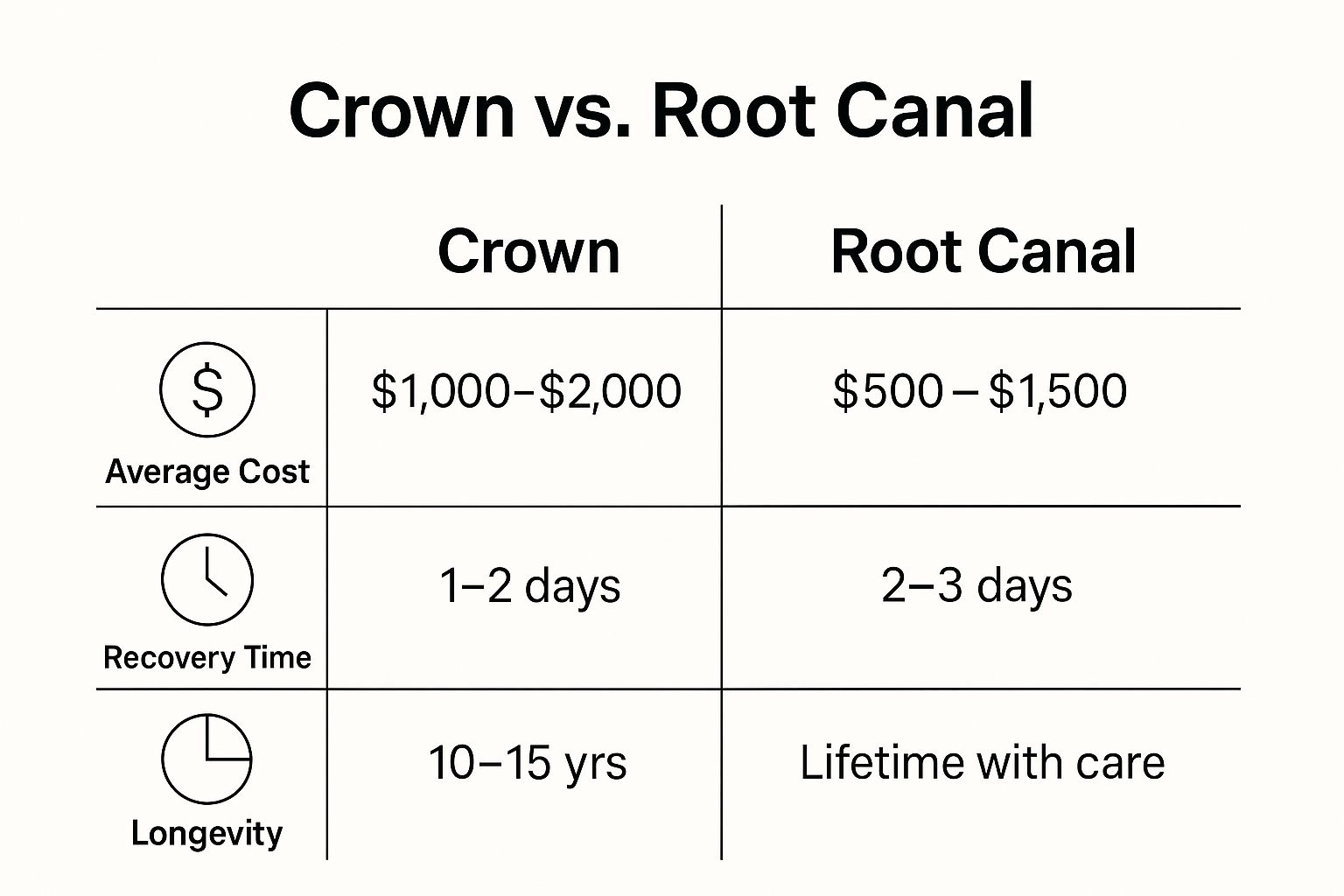
As you can see, while the root canal treatment itself can last a lifetime, the overall survival of the tooth often hinges on the quality of the crown protecting it. This really gets to the heart of the difference: one procedure treats the infection inside, while the other provides strength on the outside. Combining both is a powerful strategy for keeping your natural teeth.
Studies from the American Association of Endodontists back this up, showing that the combination leads to excellent long-term results, with success rates between 85% and 97% over an 8- to 10-year period. Our team at West Bell Dental Care will always walk you through why we’re recommending a specific plan, including whether your tooth needs the extra support of dental crowns and bridges.
A Look at Cost, Recovery, and Your Time in the Chair
When you're looking at a root canal versus a dental crown, it's smart to think about the whole picture—not just the procedure itself, but the time commitment, financial side, and what recovery looks like. Knowing what's ahead can make your visit to our Surprise, AZ, office a lot less stressful.
The process for each one is pretty different. Getting a dental crown usually means two separate appointments. The first visit is all about preparing your tooth and fitting you with a temporary crown. A couple of weeks later, you'll come back so we can cement your permanent, custom-made crown.
A root canal, on the other hand, is laser-focused on treating the infection deep inside your tooth. We can often get this done in just one or two visits.
What to Expect During Recovery
Recovery is another area where your experience will differ. The real difference between a crown and root canal recovery lies in what's causing any discomfort you might feel.
- Crown Recovery: After a crown is placed, you're pretty much good to go. Your tooth might be a little sensitive for a day or so, but you can get back to your normal routine almost immediately.
- Root Canal Recovery: It's totally normal to feel some tenderness in the area for a few days after a root canal. This is just your body healing from the infection. It’s nothing a little over-the-counter pain reliever can't handle.
Here's where the two treatments really work together. Root canal therapy has a fantastic success rate globally, sitting between 86% and 98% (American Association of Endodontists). But the key to that success is what happens next. A tooth that's had a root canal and is protected by a crown can last for about 20 years. Without one? The lifespan drops to just 6.5 years on average. The crown is what truly protects your investment.
When we talk about cost, it helps to see these not as separate expenses but as two crucial parts of a single treatment plan. The root canal fee saves your natural tooth, and the crown fee protects that saved tooth for years to come.
At West Bell Dental Care, we're all about being upfront with pricing. Our team will walk you through all your options for our restorative dental services in Surprise so you can make the best decision for your health and budget. We're here to make sure you get the best care possible.
Frequently Asked Questions
We get a lot of questions from our patients in Surprise, Sun City, and El Mirage about crowns and root canals. It's completely normal to want to understand what's happening with your dental care, and our goal is to give you clear, straightforward answers.
Does getting a root canal in Surprise, AZ hurt?
This is the number one concern we hear, and the answer is reassuring: modern root canal therapy is what gets you out of pain. The procedure is done with effective local anesthesia, so you won't feel discomfort during treatment. Any post-procedure tenderness is minimal and manageable with over-the-counter pain relievers.
Do I always need a crown after a root canal?
For back teeth (molars) that handle heavy chewing forces, a crown is almost always recommended to prevent fracture. For front teeth, a crown may not be necessary if the tooth remains strong. Our dentists at West Bell Dental Care will assess your specific tooth and advise the best long-term solution.
How long do crowns and root canal treatments last?
A successful root canal can last a lifetime with good oral hygiene. The dental crown placed on top typically lasts 10-15 years, and often much longer. Regular check-ups at our Surprise office help ensure your dental work provides years of service.
What is the cost difference between a crown and a root canal?
The cost varies depending on the tooth's location and the complexity of the treatment. A root canal and a crown are two separate procedures with their own fees. Our team provides transparent pricing and will review your treatment plan and insurance benefits with you so there are no surprises.
Is it better to just pull the tooth instead?
Our philosophy at West Bell Dental Care is to save your natural teeth whenever possible. Extracting a tooth can lead to other issues like shifting teeth and bone loss. Saving the tooth with a root canal and crown is often a more conservative and cost-effective solution in the long run compared to replacing it with an implant or bridge.
Ready to discuss your dental health with a team that puts you first? The experts at West Bell Dental Care are here to answer all your questions and provide compassionate, effective care. Book your appointment online or call us today!
Ready to See a Dentist in Surprise, AZ?
Dr. Jennifer H. Wynn and the West Bell Dental Care team are here to help. Call us at 480-795-2420 or book online below.

Medically reviewed by Dr. Jennifer H. Wynn, DDS — Founder of West Bell Dental Care, Surprise, AZ. Graduate of Loma Linda University School of Dentistry with 30+ years of experience in general, cosmetic, and restorative dentistry. NPI: 1144359720 | AZ License: D009624.