
You catch it in the bathroom mirror first. The edges of your front teeth don't look white anymore. They look gray, glassy, or almost see-through when the light hits them a certain way.
That can be unsettling. It is often assumed it's just a cosmetic issue, but translucent teeth often raise a more important question. Why is the enamel starting to look thin in the first place?
Dental bonding for translucent teeth can be a very useful treatment. It uses a tooth-colored composite resin to cover areas where enamel looks worn or transparent, and it usually preserves most or all of your natural tooth structure. It's also a treatment many dentists can complete in a single visit. But bonding isn't always the right answer, especially if translucency is a sign of ongoing enamel loss instead of a stable, minor cosmetic concern.
A Guide to Dental Bonding for Translucent Teeth
You notice it while brushing before work. The edge of a front tooth catches the light and looks clear instead of white. For many people, that is the moment they start wondering whether the tooth is wearing away.
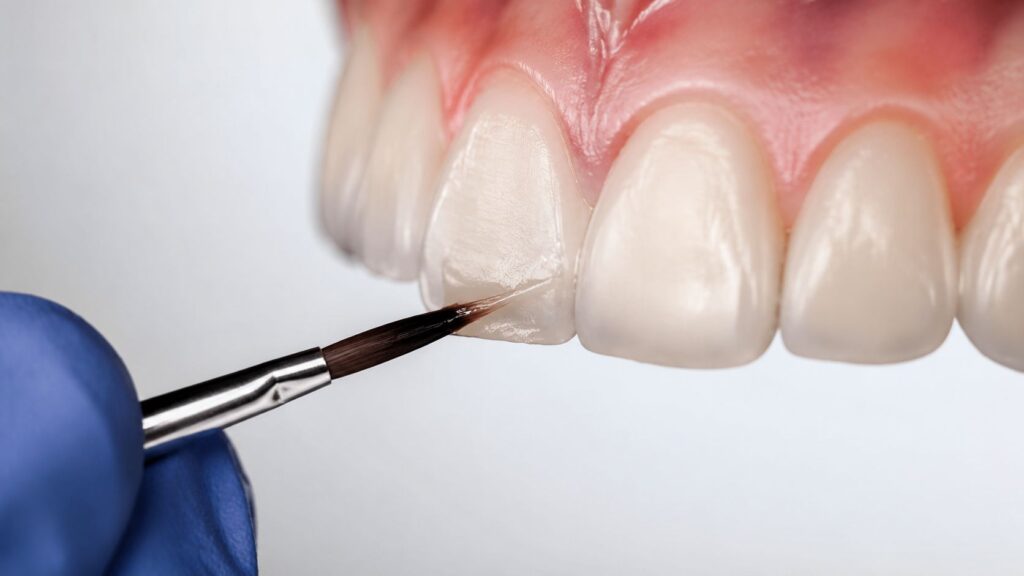
Dental bonding is often one of the simplest cosmetic ways to cover that see-through look. Your dentist places a tooth-colored resin over the translucent area and shapes it so the edge looks fuller and less glassy. The material works like a patch on a worn spot in fabric. It does not rebuild enamel, but it can hide the thin area and improve how the tooth looks.
Bonding is also usually a conservative treatment. The Cleveland Clinic's overview of dental bonding notes that many bonding appointments can be completed in one office visit, often in about 30 to 60 minutes per tooth. That matters if you want a change that is quicker and less involved than veneers or crowns.
Still, the right question is not only, “Can bonding cover this?” It is also, “Why did my enamel start looking translucent?” If acid wear, grinding, bite stress, or another problem is still active, bonding can chip, stain, or fail sooner because the tooth is still under strain. In other words, covering the symptom without treating the cause can leave you back in the same chair later.
If you want to compare bonding with other ways of fixing translucent teeth, that guide can help you sort out what fits a mild cosmetic issue versus a more active enamel problem. If you also want a practical way to judge dentists before scheduling, these proven dental patient review tactics can help you spot feedback that is actually useful.
Bottom line: Bonding can be a good option for translucent teeth when the enamel loss is minor or stable. If the tooth is still actively wearing down, the better first step is finding and treating the cause.
Understanding Why Teeth Become Translucent
Teeth aren't naturally solid blocks of flat white. They have layers. The outer layer is enamel, and underneath it is dentin, which has a warmer, more yellow tone.
When enamel gets thinner, more light passes through the edge of the tooth. That's why the tip can start to look clear, gray, or bluish instead of bright white.

What enamel thinning looks like
A simple way to think about it is a frosted window. When the frosting is thick, the glass looks cloudy and opaque. If that frosted layer gets worn down, more light comes through and the glass looks clearer.
Enamel works in a similar way. As it thins, the tooth edge loses that denser white appearance.
This change can also show up alongside temperature sensitivity. If your teeth feel sharp or zingy with cold drinks, that can be another clue that the protective outer layer isn't as strong as it used to be. If that sounds familiar, this explanation of what causes tooth sensitivity can help connect the dots.
Common reasons teeth turn translucent
Several different issues can lead to the same look.
- Acid exposure: Frequent contact with acid can wear enamel down over time. That may come from drinks, foods, or medical issues such as reflux.
- Grinding and clenching: Repeated mechanical wear can thin edges, flatten teeth, and make translucency more noticeable.
- Brushing too hard: Aggressive brushing doesn't clean better. It can add wear to already vulnerable enamel.
- Natural variation: Some people start with thinner enamel and notice edge translucency earlier than others.
- Aging: Years of chewing, brushing, and exposure add up.
Why patients get confused
The confusing part is that translucent teeth don't always mean the same thing. Mild edge translucency may be mostly cosmetic. Generalized translucency across several teeth can point to broader enamel thinning.
Translucency is a visual clue, not a diagnosis.
That distinction matters. If the enamel loss is stable and limited, bonding may work well. If the tooth is actively wearing down, a dentist has to figure out what's driving it before choosing the right repair.
The Dental Bonding Procedure Step by Step
Most patients are relieved when they learn how straightforward bonding usually is. For small cosmetic corrections, it's commonly done in one visit and often feels much more conservative than people expect.
A typical dental bonding procedure involves phosphoric-acid etching, a conditioning primer, placement of composite resin, and then hardening the material with a curing light. For one tooth, that process can often be completed in about 30 to 60 minutes as described by WebMD's dental bonding guide.

Step one starts before the tooth is dry
One detail matters more than most patients realize. Shade selection should happen before the tooth dries out too much.
Translucent enamel changes appearance when it dehydrates. Teeth can look whiter and chalkier after isolation or prolonged air-drying, which can lead to the wrong shade choice. GC America also notes that having at least four composite shades available helps with esthetics because it gives the dentist more control over value and translucency, as explained in this discussion of bonding techniques and shade selection.
That's why a careful dentist doesn't just grab one “close enough” shade and hope for the best. For translucent teeth, natural-looking results usually come from planning and layering.
What happens in the chair
The appointment usually follows a simple sequence:
Cleaning the surface
The tooth is gently cleaned so the bonding material has a clean surface to attach to.Etching the enamel
A phosphoric-acid gel is placed on the enamel briefly to create a microscopic roughness. You can think of this as giving the smooth tooth surface a better grip.Applying primer or conditioning liquid
This helps the resin wet the surface properly and improves adhesion.Placing and shaping the composite
The dentist adds the tooth-colored material in the area that needs correction. For translucent edges, that may mean subtle layering instead of one thick blob of resin.Curing with a blue light
The light hardens the material.Trimming and polishing
The bonded area is shaped so it feels natural when you bite and looks smooth in normal light.
What it feels like
For edge translucency, bonding is often comfortable. Many cases don't require anesthesia because the work is on the outer tooth surface and involves very little drilling, if any.
Patients usually notice three practical benefits right away:
- It's conservative: little to no sound tooth removal in many cases.
- It's quick: often handled in one appointment.
- It can blend well: when shade choice and shaping are done carefully.
A good bonding result shouldn't look bulky or flat. It should simply make the tooth look like itself again.
Weighing the Pros and Cons of Dental Bonding
You may look at a translucent front tooth and think, "If we can cover it, problem solved." Sometimes that is true. Sometimes it is like painting over water damage on a wall. It may look better for now, but the reason it happened still needs attention.
Bonding sits in a useful middle ground. It can improve the look of a tooth that has a small translucent area without removing much healthy structure. At the same time, it has limits, and those limits matter more with translucent teeth than many people realize.

Where bonding helps
Bonding tends to work best when the translucent area is small and the tooth is otherwise healthy.
In that setting, it offers a few real advantages:
- It preserves more of your natural tooth: little to no enamel removal is often needed.
- It is usually quick: many cases can be completed in one visit.
- It works well for modest cosmetic changes: small chips, edge wear, and mild translucency are often good examples.
- It can delay more aggressive treatment: some patients are not ready for porcelain treatment, and bonding can be a conservative first step.
For a small translucent edge, the goal is often simple. The resin adds body where enamel has thinned, so the edge reflects light in a less see-through way.
Where bonding can disappoint
Bonding is not porcelain, and it does not behave like untouched enamel.
Composite can pick up stain over time. It can also chip, dull, or wear down, especially on front teeth that take a lot of force from clenching, nail biting, chewing ice, or an uneven bite. If the translucency is part of broader enamel loss, the bonded area may turn into a patch that needs repair again and again.
That is the part many articles gloss over. Translucency is not always just a color issue. It can be a warning sign that enamel has been thinned by acid, grinding, erosion, or long-term wear. If that process is still active, bonding covers the symptom but does not stop the cause.
A simple way to look at it is this: bonding is strongest as a repair for a stable tooth, not as a bandage for a tooth that is still breaking down.
What "how long it lasts" really means
Bonding can serve patients well for years, but there is no one lifespan that fits everyone. A person with a gentle bite and healthy enamel may keep a bonded edge looking good much longer than someone who grinds at night or has ongoing acid erosion.
So the better question is not just, "How many years will it last?" It is, "What kind of environment will this bonding live in?"
If the tooth is stable, bonding may be a reasonable long-term cosmetic repair. If the enamel is continuing to thin, or if the tooth needs more strength and coverage, a different option may make more sense. In those cases, your dentist may discuss before-and-after veneer treatment options or another restoration that gives more durable coverage.
The honest takeaway is simple. Bonding can be an excellent choice for the right translucent tooth. It is a weaker choice when the true problem is active enamel loss, heavy bite stress, or damage that needs more than a surface-level fix.
Is Bonding the Right Treatment for Your Translucent Teeth
This is the question that matters most. Not “Can bonding cover it?” but “Should bonding be used here at all?”
For some patients, the answer is yes. For others, bonding is only a temporary mask over a problem that still needs treatment.

Good candidates for bonding
Bonding tends to make the most sense when all of these are true:
- The translucency is mild: usually limited to the edge or a small visible area.
- The tooth is otherwise healthy: no major crack, decay, or large missing portion.
- The bite is reasonably stable: no severe grinding pattern that would predict repeated chipping.
- You want a conservative fix: especially if preserving natural tooth structure is a priority.
In that setting, dental bonding for translucent teeth can improve appearance without committing the tooth to a more aggressive restoration.
When bonding is the wrong choice
Many online articles become too simplistic on this topic. They stop at “bonding can fix translucent teeth” and leave out the bigger issue.
A major gap in many discussions is that translucency may be a symptom of active enamel loss, not just an appearance problem. If acid erosion, grinding, or ongoing wear is still happening, bonding may need to be paired with prevention, fluoride, or bite management rather than used as a stand-alone fix, as noted in this guide to dental bonding for translucent teeth and its limits.
That means bonding may be a poor choice if:
- You have active acid erosion
- You grind or clench heavily
- The tooth has broader structural weakness
- The enamel is thinning across many surfaces, not just one edge
In those cases, the material may look fine at first but fail early because the environment around it hasn't changed.
What this means for you
Patients sometimes feel disappointed when they hear bonding isn't ideal for their specific case. I'd frame it differently. A dentist who says “this isn't the right tool here” is protecting your tooth, not upselling you.
Sometimes the right sequence is to control the wear first, then decide whether bonding, veneers, or another restoration makes sense. If you're comparing cosmetic options, this gallery of veneers before and after results can help you understand how treatment goals differ when more coverage is needed.
To see real customer stories and learn more about West Bell Dental Care, visit their success stories page.
Alternatives to Dental Bonding for Translucent Teeth
A patient might come in saying, “I just want the clear edges covered.” That is understandable. But the best treatment is not always the one that hides translucency fastest. The better question is why the tooth looks translucent in the first place, and how much support that tooth needs now.
Bonding is one option, but it is not the only one. If the enamel is only mildly affected, a small bonded repair may be enough. If the tooth has lost more surface strength, a treatment that covers more of the tooth may hold up better and protect what is left.
Comparing treatments side by side
Veneers and crowns are the main alternatives when bonding would be too limited. Whitening can brighten teeth, but it cannot replace thinned enamel or make a transparent edge look solid again. Polishing may smooth a rough surface, but it does not fix true translucency caused by enamel loss.
You can picture the choices like different levels of coverage on a worn wall. A small patch works for a small spot. A new facing covers more when the surface is broadly affected. A full cap is used when the structure underneath needs stronger support.
| Treatment | Best For | Durability | Cost | Invasiveness |
|---|---|---|---|---|
| Bonding | Mild edge translucency, small chips, limited cosmetic repairs | Moderate | Generally lower than veneers or crowns | Minimal to no enamel removal in many cases |
| Veneers | More noticeable translucency, shape and color changes on front teeth | Often longer-lasting than bonding | Higher than bonding | Requires more tooth alteration than bonding |
| Crowns | Teeth with broader structural damage or heavy reconstruction needs | Full-coverage option for more compromised teeth | Typically higher than bonding | Most invasive of the three |
How to think about the trade-offs
Bonding usually makes sense when the area is small and the tooth is still strong. Veneers are often a better fit when you need wider coverage across the front of the tooth and want more control over color, shape, and how much of the translucency shows through. Crowns are generally saved for teeth that are too weakened for a lighter repair.
Translucent teeth are not always just a cosmetic concern. If enamel loss is active, choosing a larger restoration too early can be the wrong move, and choosing bonding just because it is conservative can also be the wrong move. The right answer depends on what is causing the thinning, how advanced it is, and whether the tooth still has enough healthy structure to support the treatment.
If you are also trying to sort out whether the issue is tooth color or enamel transparency, this guide to teeth whitening vs veneers explains which treatments brighten teeth and which ones cover the surface.
Whitening changes shade. Veneers, bonding, and crowns change what you see on the outside of the tooth.
Caring for Bonded Teeth and When to See a Dentist
Bonding doesn't require complicated maintenance, but it does require some care. It is helpful to treat the material as a well-done repair that needs to be protected. The material is durable, but it still benefits from good habits.
A few simple steps help bonded teeth hold up better:
- Brush gently: Use a soft-bristled toothbrush and non-abrasive habits.
- Don't use teeth as tools: Avoid chewing ice, pens, or other hard objects.
- Watch staining habits: Coffee, tea, tobacco, and highly pigmented foods can discolor composite over time.
- Keep up with routine visits: Regular exams help your dentist monitor the bond margins and the enamel around them.
If translucent teeth are becoming more noticeable, if your teeth feel sensitive, or if you're seeing chipping at the edges, don't assume it's only cosmetic. A dental exam can help determine whether this is mild wear or part of a larger enamel problem. Staying on schedule with checkups matters, and this overview of how often to see a dentist is a good reminder of why monitoring changes early is so useful.
If you live in Surprise, AZ or the surrounding West Valley and want a personalized evaluation, West Bell Dental Care offers preventive, cosmetic, and restorative care, including tooth-colored fillings, crowns, veneers, smile makeovers, and anxiety-friendly dentistry. For patients dealing with translucent teeth, an in-person exam can help determine whether bonding is appropriate or whether the primary priority is stopping ongoing enamel wear before choosing the final cosmetic fix.