
Direct Answer: One dark front tooth usually comes from internal staining, an aging filling or crown, or thinning enamel. Whitening gel only lightens natural tooth structure, so the right fix depends on the cause.
You bought the strips. You wore them for two weeks, maybe three. Your smile got brighter, and that one front tooth sat there looking just as gray as it always did, except now it stands out even more.
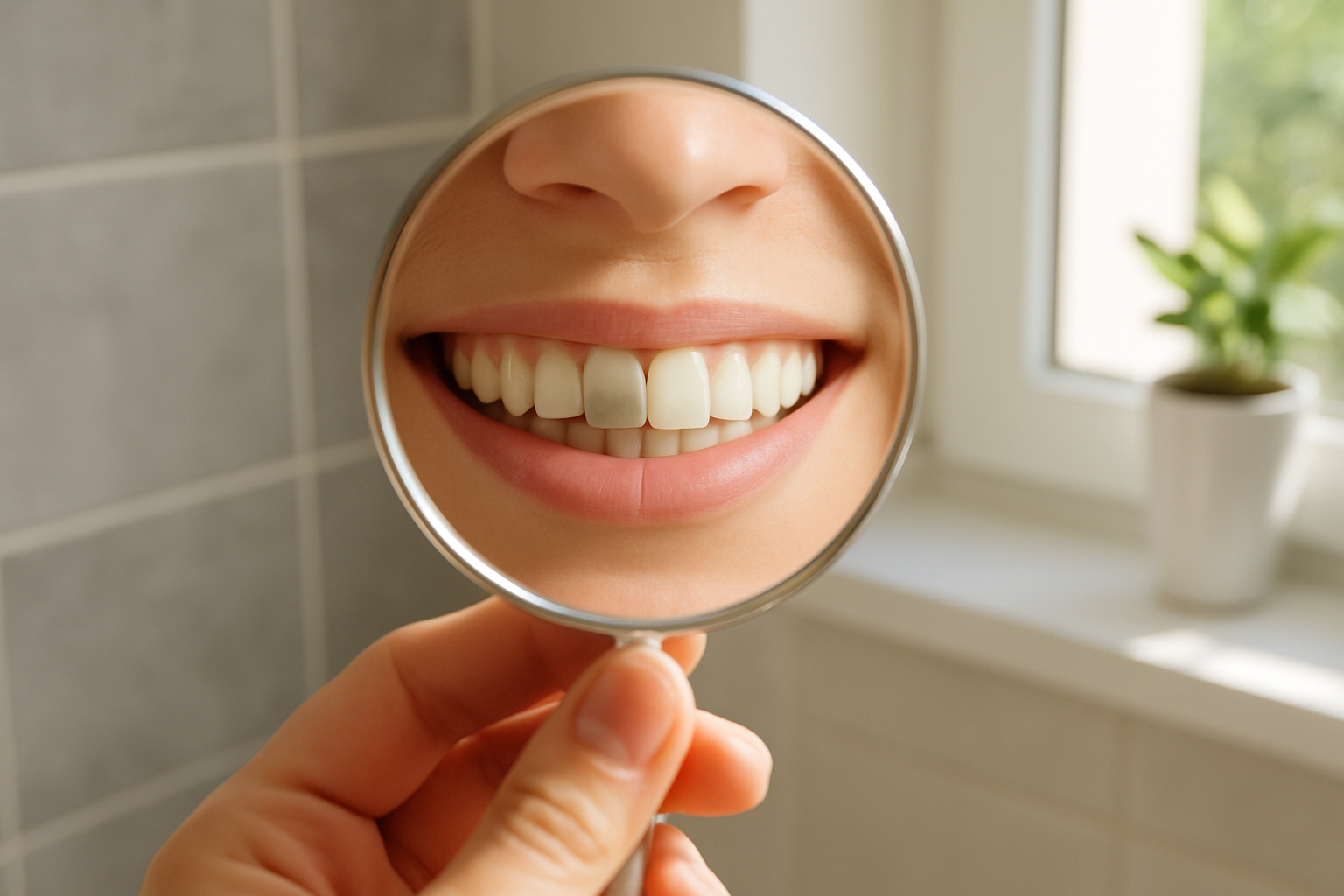
I hear this a lot in our Surprise office, and it is one of the few dental complaints people can describe perfectly before they ever sit down. It is almost never a whole-smile problem. It is one tooth, usually an upper central or lateral incisor, and it reads darker, grayer, or duller than everything beside it.
The good news is that there is a mechanical reason this happens, and once you know the cause, the fix gets a lot clearer. This article walks through the four usual culprits, the options ladder from least invasive to permanent, and the one sequencing mistake that costs people the most money.
Why Whitening Made the Mismatch Look Worse
Whitening gel works on natural tooth structure. The peroxide soaks through enamel into the dentin underneath and breaks apart the stain molecules sitting in there.
That is the whole mechanism. And it is why whitening does nothing at all to:
- A porcelain crown
- A veneer
- A bonded patch or chip repair
- An old composite filling on a front tooth
Those are manufactured materials. They hold whatever shade they were made in, permanently. So when you brighten the eight natural teeth around a crown by two or three shades, the crown does not move with them. It stays put and the gap between them widens.
Same story if the dark tooth is stained from the inside after an injury or a root canal. Surface whitening is working on the outside of a problem that lives in the middle of the tooth, so you get a little lift and not much else.
If sensitivity is also part of your picture, that is a separate conversation, and we covered it in whitening when your teeth are sensitive. This piece is about the single tooth that will not keep up with the rest.
Four Common Reasons One Front Tooth Goes Dark
You can usually narrow this down yourself before an exam. The color, the location, and your own history tell most of the story.
1. Internal staining after trauma or a root canal. If you took a hit to the mouth years ago, or that tooth had a root canal, the darkening often shows up slowly, sometimes years later. It tends to look gray or brownish-yellow rather than just dull, and it darkens the whole tooth evenly. MedlinePlus describes this kind of change as discoloration coming from inside the tooth rather than the surface.
2. An aging composite filling. Tooth-colored fillings on front teeth pick up coffee, tea, and red wine stain right around their edges. The tooth around it stays fine while the patch goes dingy, usually darkest along the margins. The difference between filling materials matters here, because composite stains in a way other materials do not.
3. A crown placed years ago. Porcelain does not change. Your natural teeth do, and they typically darken slightly with age. A crown that matched beautifully in 2011 can look noticeably brighter or flatter today while everything around it shifted.
4. Thinning enamel at the biting edge. As enamel wears, the edge of the tooth can look translucent or grayish at the tip because there is less tooth structure reflecting light. This one often shows up on just one tooth that takes more pressure than its neighbors.
One more thing worth ruling out: a dark spot that is not a shade problem at all. Early decay on a front tooth can start as a chalky or shadowy patch long before it hurts.
Matching the Likely Cause to the Likely Fix
This is a starting point, not a diagnosis. An exam and an X-ray are what separate a cosmetic mismatch from a restoration that is actually failing.
| What you are seeing | Likely cause | Where treatment usually starts |
|---|---|---|
| Whole tooth gray or brownish, history of a bump or root canal | Staining from inside the tooth | Internal whitening approach before anything permanent |
| Dingy patch with darker edges, rest of tooth fine | Aging composite filling | Polish or replace the composite |
| One tooth flat or too bright next to the others | Older crown that no longer matches | Remake the crown after the natural shade is set |
| Grayish, see-through look only at the biting edge | Thinning enamel and wear | Conservative bonding, plus finding the cause of the wear |
| Chalky white or shadowy spot that is growing | Possible early decay | Exam and X-ray first, cosmetics second |
The Options Ladder, Least Invasive to Most Permanent
I like laying these out as rungs, because most people want to know what the smallest reasonable step is before anyone mentions porcelain.
- Polish or replace a stained composite. If the old filling is the problem, a fresh one shade-matched to today’s tooth can solve the whole thing. Nothing permanent happens to healthy tooth structure.
- Internal whitening for a tooth that darkened from the inside. For a tooth that has already had root canal treatment, whitening material can be placed inside the tooth where the stain actually lives. It takes more than one visit and results vary, but it leaves the outside of the tooth alone.
- Bonding. Tooth-colored material added to the front surface, usually with little or no enamel removal. It is the middle rung: reversible-ish, less costly than porcelain, and it will pick up stain over time like any composite.
- Veneer or crown. These permanently change the tooth underneath. A veneer removes a thin layer of enamel; a crown removes more. Both become a lifetime commitment to replacement every so often, because no restoration lasts forever.
A crown is also the right answer sometimes, not the last resort. A tooth with a large old filling, a crack, or a failing restoration is a structural problem wearing a cosmetic disguise. If that is your situation, how a single-visit crown works is worth reading.
The smallest fix is not automatically the right one. But it should be on the table and explained to you before anyone talks about veneers.
The Order That Saves You the Most Money
If you plan to brighten your smile at all, the sequence matters more than the treatment choice. Here is the order we walk patients through.
Whitening Comes First. Restorations Match Second.
This is the part people learn too late, and it is the most expensive mistake in this whole topic.
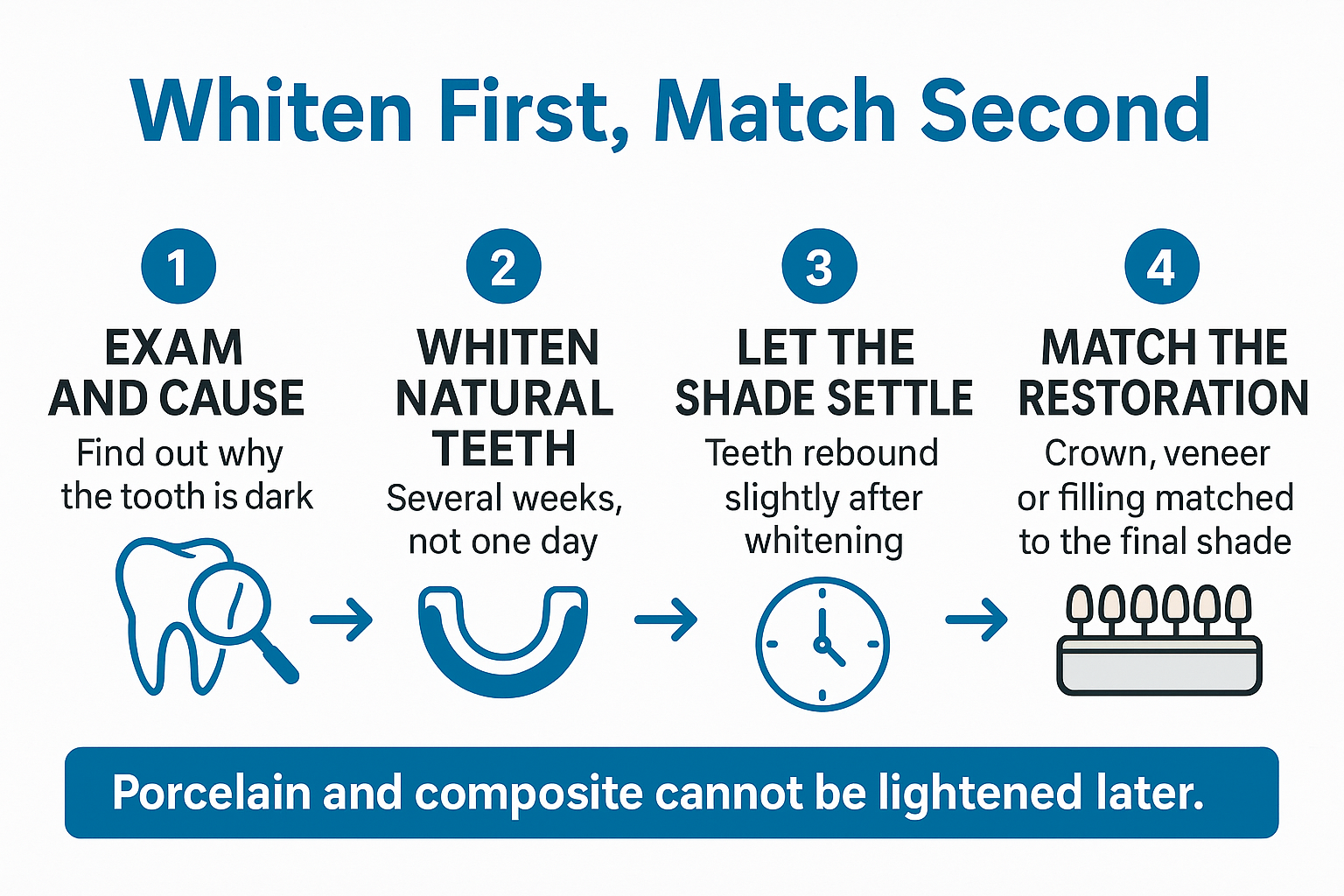
Crowns, veneers, bonding, and fillings cannot be lightened later. Any porcelain or composite placed today gets locked to whatever shade your natural teeth are today.
So if you have any plan to brighten your smile, even a vague one, do the whitening first. Then let the shade settle for a stretch before matching anything to it, because teeth rebound slightly after whitening and the color you see on day one is not the color you keep.
Get this backward and you end up redoing work that was fine in every way except the color. I have seen patients pay twice for a crown that was perfectly good.
What Actually Drives the Cost
I am not going to post a number here, because the honest answer is that the same dark tooth can land in very different places depending on a handful of variables.
What moves the range:
- Whether the tooth still has a live nerve or has already had root canal treatment
- Whether an existing crown has to come off and be remade, which is more work than starting fresh
- Whether the restoration is made chairside or sent out to a dental lab
- How many teeth end up involved once shade matching is considered, since matching one tooth sometimes means touching its neighbor
Coverage is its own variable. Dental plans generally treat purely cosmetic work differently from a restoration that is failing, cracked, or decayed. The same tooth can be partly covered or not covered at all depending on why it is being treated.
Ask for an itemized written estimate with procedure codes before anything starts, and ask the office to run a benefits check in writing. Callers ask us about out-of-pocket cost constantly, and the ones who get specifics up front are the ones who do not get surprised later.
Timing It Around Photos and Snowbird Season
Front tooth questions spike twice a year around here. Once ahead of holiday photo season, and again in the fall when winter residents in Sun City Grand and Sun City arrive and want work planned inside a stay that runs roughly October through March.
A realistic runway looks like this: whitening happens over a series of weeks, the shade needs time to settle afterward, and a lab-made veneer or crown adds more time on top of that.
Someone who wants one tooth to match in a photo three weeks from now has fewer honest options than someone who starts in early fall. That is not a scheduling trick, it is just how the materials and the biology work.
For seasonal residents, the practical move is a consult in the first two weeks after you arrive, so the whitening phase and the lab phase both fit inside your window.
Why an Options Conversation Matters More Than the Procedure
This topic lives or dies on trust. Nobody wants to walk in about one gray tooth and walk out with a treatment plan for eight veneers.
One of our patients put it better than I could: “They explained everything in detail and went through all my options instead of pushing something on me because that’s what they wanted.” Danielle W.
There is also a practical reason this is easier when cosmetic and restorative care sit under one roof. A dark tooth involving an aging crown can be examined, X-rayed, and planned in one place without bouncing you to another office for the restorative half.
And for people who cannot take a weekday off, our weekday hours run early and late, with Saturday mornings available.
Frequently Asked Questions About One Dark Front Tooth
Will whitening strips ever lighten a crown or veneer?
No. Porcelain and composite do not respond to peroxide at all. Whitening only changes natural enamel and dentin, so brightening everything else tends to make the restoration stand out more.
My tooth turned gray years after I got hit in the mouth. Is it dead?
Maybe, and maybe not. Gray or brownish discoloration after trauma often means the nerve inside was damaged and bleeding products stained the dentin from within. It needs an exam and an X-ray, because a tooth can look stable and still have an infection brewing at the root. The fix depends on what that X-ray shows.
Can bonding fix one dark tooth without touching the others?
Often yes. Bonding adds tooth-colored material to the front of the tooth with little or no enamel removal, which makes it the most conservative of the cover-up options. The tradeoff is that composite picks up stain over the years and will need maintenance or replacement eventually.
How long after whitening should I wait before getting the crown made?
Dentists typically let the shade settle for a period after whitening finishes, because teeth rebound slightly from the brightest point. Matching too early means the restoration ends up lighter than the teeth around it once they relax.
Does dental insurance pay for fixing one discolored tooth?
It depends entirely on why it is being treated. A crown replacing a cracked or failing restoration is usually handled differently than a veneer placed purely for appearance. Ask for the procedure codes and a written benefits estimate before you commit to anything.
Is internal whitening the same as regular whitening?
No. Internal whitening places material inside a tooth that has already had root canal treatment, so it works on the stain where it actually sits. It takes more than one visit and results vary from tooth to tooth.
Want to Know Which of the Four Causes You Have?
If one front tooth has been bothering you for years and the strips did not touch it, an exam and an X-ray will tell you which cause you are dealing with and what the smallest reasonable fix looks like. Our team in Surprise sees patients from Marley Park to Sun City Grand, with early weekday hours and Saturday mornings for people who cannot step away from work. You can reach us at 480-795-2420 or at westbelldentalcare.com whenever you are ready to ask questions.