
Direct Answer: Tooth-colored composite fillings are now the standard for most cavities and are safe for children. Silver amalgam fillings are still used in some cases, but certain groups should avoid them based on FDA guidance.
A lot of our patients come in asking about their old silver fillings, whether they need to come out, whether they’re safe, and what we’d use today if they needed a new one. It’s a fair set of questions, and lately the conversation has gotten louder thanks to FDA guidance that came out recommending certain people avoid dental amalgam entirely.
If you grew up in Surprise or the West Valley in the 1980s or 1990s, you almost certainly got silver fillings. That was the standard. But tooth-colored composite resin fillings have come a long way, and for most cavities we see today, they’re our first choice. That doesn’t mean amalgam was wrong for its time, it means you now have better options and deserve to understand them.
This article covers three things: what amalgam actually is and who the FDA says should avoid it, how modern composite holds up compared to silver, and what to do, or not do, about old fillings you already have.
What Amalgam Is and What the FDA Actually Says
Dental amalgam is a mixture of metals, roughly 50% elemental mercury combined with silver, tin, and copper. It’s been used in dentistry for more than 150 years because it’s durable, relatively inexpensive, and holds up well under heavy biting force.
But mercury is a neurotoxin, and the FDA has taken a closer look at who bears the most risk. In 2020, the FDA issued guidance identifying specific groups who should avoid amalgam fillings whenever clinically possible. That list includes:
- Children under age 6
- Pregnant women and women planning to become pregnant
- Nursing mothers
- People with kidney disease
- People with neurological conditions such as Alzheimer’s or Parkinson’s disease
- People with known mercury allergies
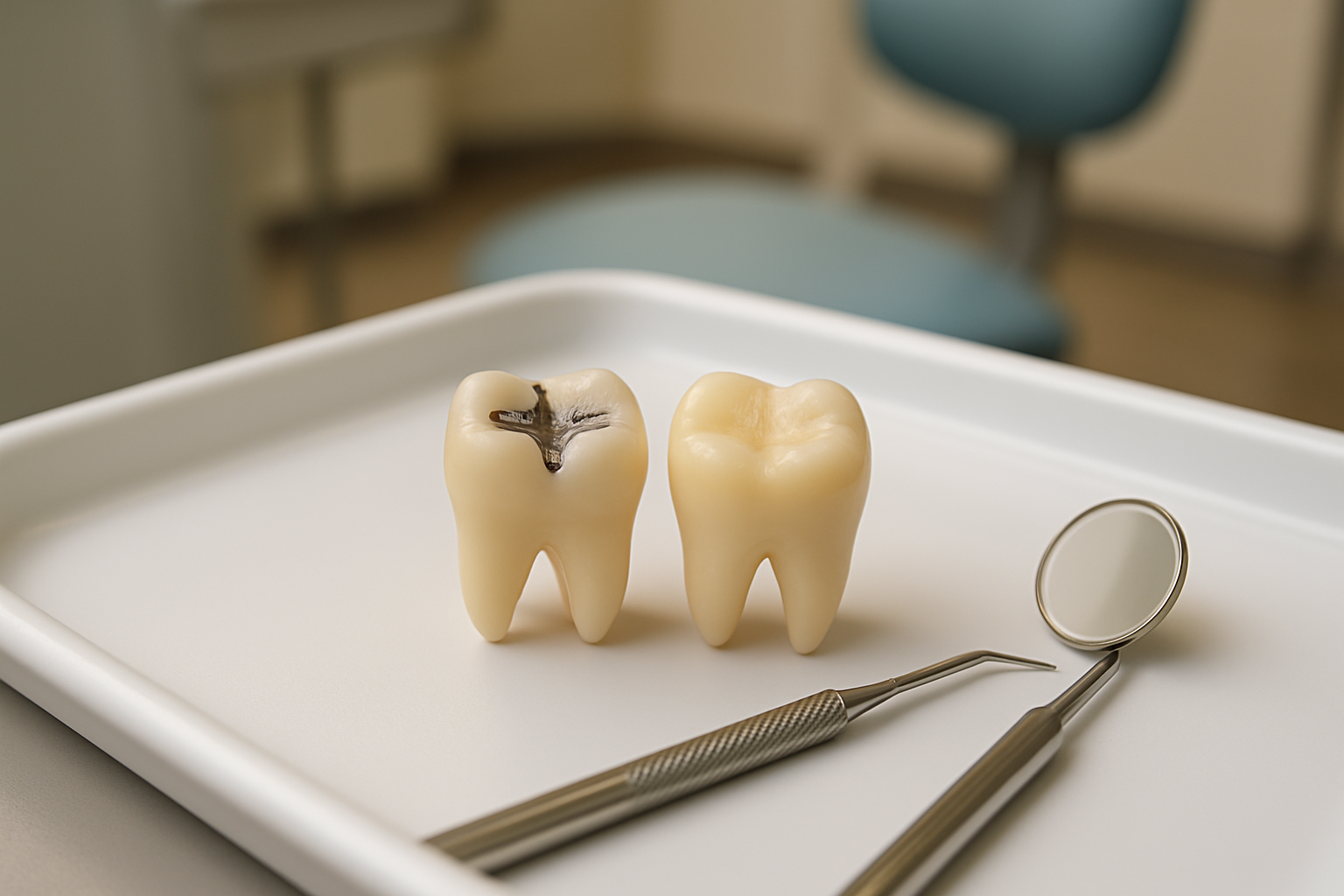
For families in Marley Park or Surprise Farms bringing a young child in for their first filling, this matters directly. Composite resin is the standard choice for children, and it has been for years. If your child needs a filling, you’re not choosing between options, you’re almost certainly getting composite.
The FDA guidance is calm and measured, not alarmist. It does not say amalgam is dangerous for healthy adults with existing fillings. It identifies elevated risk for specific groups and recommends dentists consider alternatives for those patients. That’s a reasonable, science-based position, and it matches how we approach these conversations here. You can read the full FDA patient page on dental amalgam if you want to go deeper on the specifics.
How Modern Composite Actually Performs
When composite resin first came out, it was genuinely not as strong as amalgam, especially for back teeth absorbing heavy bite pressure. That reputation stuck. A lot of patients still believe silver is the tougher option, particularly for molars.
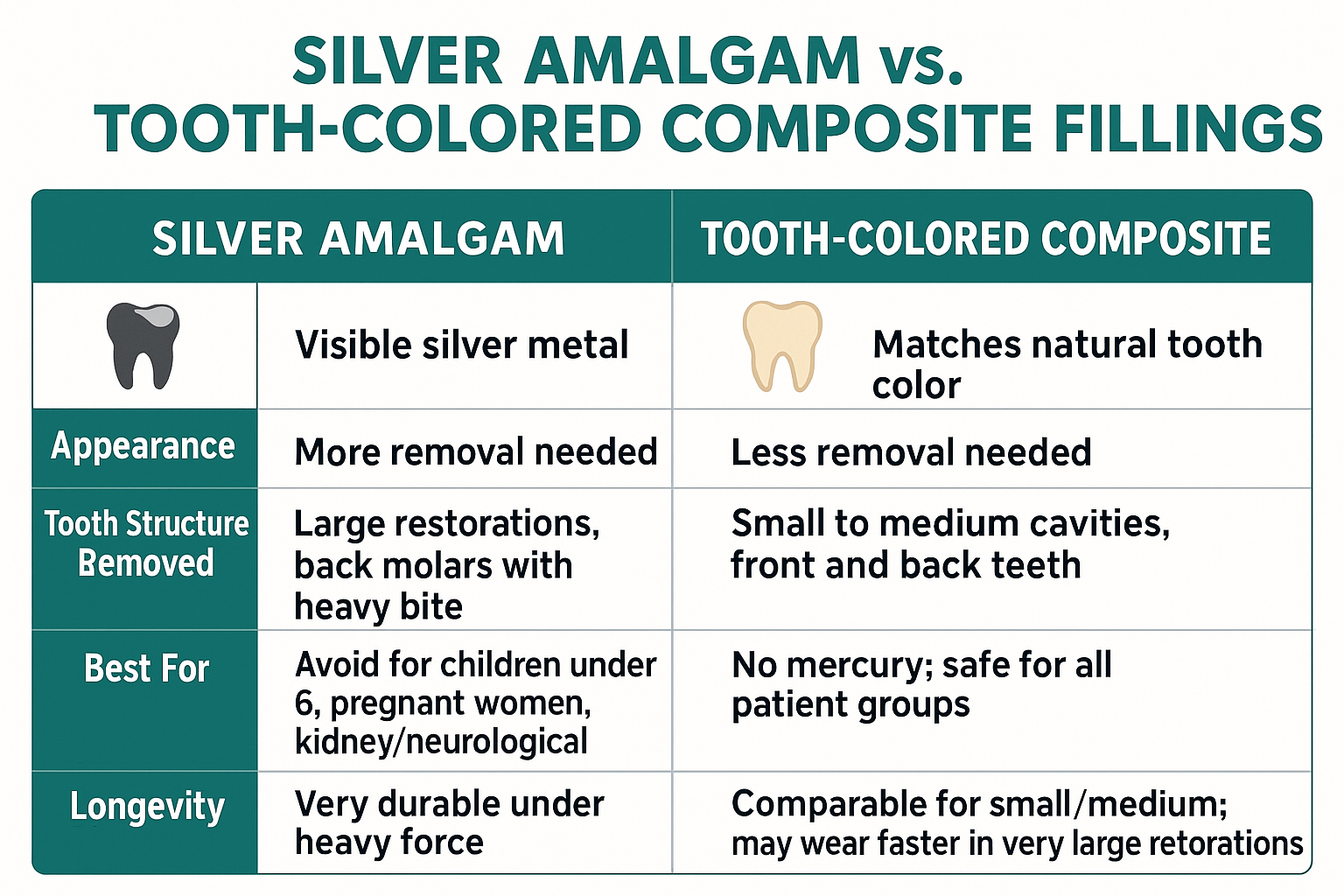
That’s outdated. Modern composite materials have improved substantially, and for small to medium cavities, they perform comparably to amalgam in terms of durability and longevity. There are a few real advantages worth knowing:
- Composite bonds directly to the tooth, which means we remove less healthy tooth structure during placement
- The material matches your natural tooth color, so nothing shows when you chew or laugh
- If a composite filling chips or wears, repair is usually straightforward
- Composite does not expand and contract with temperature the same way metal does, which reduces the risk of small cracks forming in the surrounding tooth over time
That said, composite is not the right answer for every situation. For very large restorations in back molars where bite force is consistently high, we may still discuss other options, including crowns, because a large composite filling in a heavily loaded molar can wear faster than ideal.
The decision comes down to three things: cavity size, location in the mouth, and your overall oral health. That’s a clinical call, not a cosmetic one. When we sit down and walk through your treatment plan, we explain exactly why we’re recommending what we’re recommending. Patients tell us that transparency is one of the things they appreciate most, and that tracks with what we hear from patients across the West Valley who’ve had bad experiences at offices that just handed them a plan without explaining it.
Amalgam vs. Composite at a Glance
Here’s a side-by-side look at how the two materials compare across the factors that matter most to patients.
Quick Reference: Which Patients Should Avoid Amalgam
The FDA identifies several groups for whom amalgam should be avoided when a clinically appropriate alternative is available. This table summarizes the guidance.
| Patient Group | FDA Recommendation | Typical Alternative |
|---|---|---|
| Children under age 6 | Avoid amalgam when possible | Composite resin |
| Pregnant women | Avoid amalgam when possible | Composite resin or delay non-urgent treatment |
| Nursing mothers | Avoid amalgam when possible | Composite resin |
| People with kidney disease | Avoid amalgam when possible | Composite resin |
| People with Alzheimer’s or Parkinson’s disease | Avoid amalgam when possible | Composite resin |
| People with mercury allergies | Avoid amalgam | Composite resin |
| Healthy adults with existing intact amalgam fillings | No removal recommended unless medically necessary | Keep existing fillings; monitor at routine visits |
The One Thing Social Media Gets Wrong About Old Fillings
If you’ve spent any time on health forums or social media lately, you’ve probably seen posts about removing old amalgam fillings, sometimes framed as urgent, sometimes tied to chronic health concerns. I understand the impulse. When you learn that a filling contains mercury, the instinct is to want it out.
But the FDA guidance is clear on this point: removing intact amalgam fillings in good condition is not recommended. The reason is practical and a little counterintuitive. The removal process itself creates a temporary spike in mercury vapor exposure as the filling is drilled out. It also causes unnecessary loss of healthy tooth structure. So if your old silver fillings are intact, sealed, and functioning well, the safer choice is to leave them alone and monitor them at your regular checkups.
That changes if a filling is cracked, leaking, or failing. A compromised filling needs attention regardless of the material. At that point, replacing it with composite is a completely reasonable choice, and one we’re happy to discuss.
One patient who came to us had been anxious about her silver fillings for months after reading something online. She was relieved when we told her the fillings looked solid and showed no signs of failure. We didn’t recommend removing them. We did note them in her chart and committed to watching them at every visit. That’s what informed care actually looks like, not reacting to fear, but making decisions based on what’s actually happening in your mouth.
For retirees in Sun City Grand or active adults in Ashton Ranch who’ve had the same amalgam fillings for 30 or 40 years, that’s worth knowing. A long-lasting filling that isn’t broken doesn’t need fixing.
Frequently Asked Questions About Filling Materials
My child needs their first filling. Will it be silver or tooth-colored?
Almost certainly tooth-colored. Composite resin is the standard material for children, and the FDA specifically recommends avoiding amalgam in kids under six. If you want to confirm before the appointment, just ask when you call, that’s exactly the right question to bring up, and our team is happy to walk through it with you.
I have old silver fillings. Should I have them removed?
Only if they’re failing. The FDA explicitly does not recommend removing intact amalgam fillings in good condition because the removal process temporarily increases mercury vapor exposure and destroys healthy tooth structure in the process. If your fillings are cracked, leaking, or causing sensitivity, that’s a different conversation. Bring it up at your next exam and we’ll take a close look.
Are tooth-colored fillings as strong as silver ones?
For small to medium cavities, yes, modern composite performs comparably to amalgam and has the added benefit of bonding directly to the tooth so less healthy structure is removed. For very large restorations in heavily loaded back molars, we talk through options case by case, because a crown may actually hold up better long-term than a very large composite filling.
Does my insurance cover tooth-colored fillings?
Many plans cover composite fillings for front teeth but may only cover the amalgam rate for back teeth, meaning you’d pay the difference. Coverage varies widely by plan, so the best move is to ask us to check your specific benefits before treatment. We do that as part of our pre-treatment planning.
I don’t have insurance. What does a filling cost out of pocket in Surprise?
Out-of-pocket filling costs depend on the size of the cavity, which tooth is involved, and the number of surfaces affected. General market context suggests a single-surface composite filling can run anywhere from roughly $150 to $300 in the Phoenix West Valley area, but that range can shift based on the specifics of your situation. Our membership plan offers discounts on restorative procedures for patients without insurance, it’s worth asking about when you call.
How do I know which material is right for me?
That’s genuinely a conversation to have with your dentist, not something to decide based on an article. The right choice depends on cavity size, location, your overall oral health, and whether you fall into one of the FDA’s higher-risk groups. What I’d encourage you to do is come in, let us take a look, and ask questions before treatment starts. No one should feel awkward asking about material options, that’s part of informed consent.
Suggested Internal Links — add real URLs before publishing:
- Restorative dentistry in Surprise, AZ — Overview of restorative services including fillings, crowns, and bridges offered at West Bell Dental Care
- Dental crowns and bridges — When a crown is a better choice than a large filling for a damaged or extensively decayed tooth
- Preventive dentistry and routine exams — How regular cleanings and exams catch small cavities before they become large ones requiring more complex restorations
- Sedation dentistry for anxious patients — Options for patients who are nervous about any dental procedure, including fillings
- Dental Membership Club — In-house membership plan for uninsured or underinsured patients that covers preventive care and discounts on restorative treatment
Questions About Your Fillings? Let’s Talk.
If you’re not sure what’s in your mouth, whether an old filling needs attention, or what material makes sense for a new cavity, the best next step is a straightforward exam. Our team at West Bell Dental Care sees patients from across Surprise and the surrounding West Valley, including families, retirees, and plenty of people who just want honest answers without pressure. You can reach us at 480-795-2420 or visit westbelldentalcare.com to learn more. We have appointments available Monday through Saturday, including early morning slots, so scheduling around work or school is usually pretty manageable.