
Direct Answer: A new patient dental exam usually includes a health history talk, digital X-rays, a full exam of teeth and gums, a cleaning or a scheduled hygiene visit, and a treatment plan discussion.
You just closed on a house in Ashton Ranch or Legacy Parc, the boxes are mostly unpacked, and somewhere on your list is the line that says find a dentist. You have no idea who is good, who is going to sell you a bunch of work you do not need, and what a first appointment even involves.
I hear this every single week. “We just moved to the area and we need a new dentist for the whole family” is one of the most common things people say when they call our office in Surprise.
So let me walk you through what a new patient dental exam actually looks like, start to finish. No sales pitch, just what happens in the chair and why.
What Happens at a New Patient Dental Exam in Surprise, AZ
A first visit is mostly about information. We do not know your mouth yet, and no dentist should be making recommendations without a baseline.
Here is the general flow, though it shifts depending on what you need:
- Health history and paperwork. Medications, heart conditions, diabetes, joint replacements, past surgeries. This is not busywork. Blood thinners and blood pressure medications change how we plan treatment.
- A conversation about what brought you in. Any pain, sensitivity, a chipped tooth you have been ignoring, or something you want to fix cosmetically.
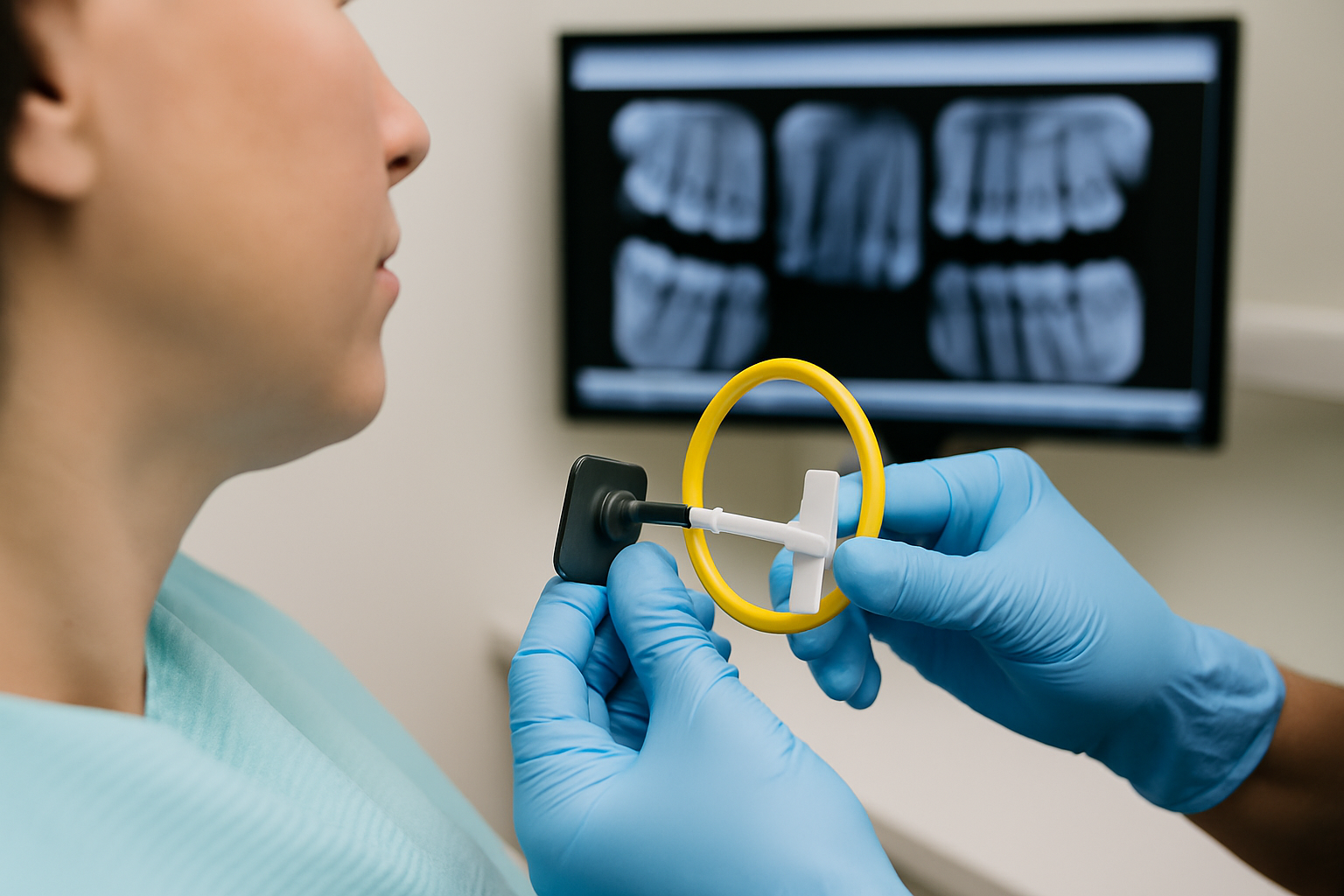
- Digital X-rays. These give us the view we cannot get by looking.
- The exam itself. Teeth, existing fillings and crowns, gum measurements, bite, jaw joints, plus an oral cancer screening of the lips, tongue, cheeks and throat.
- A cleaning, or a hygiene appointment scheduled separately. Which one depends on what the exam shows.
- The treatment plan talk. What we found, what it means, and what your options are.
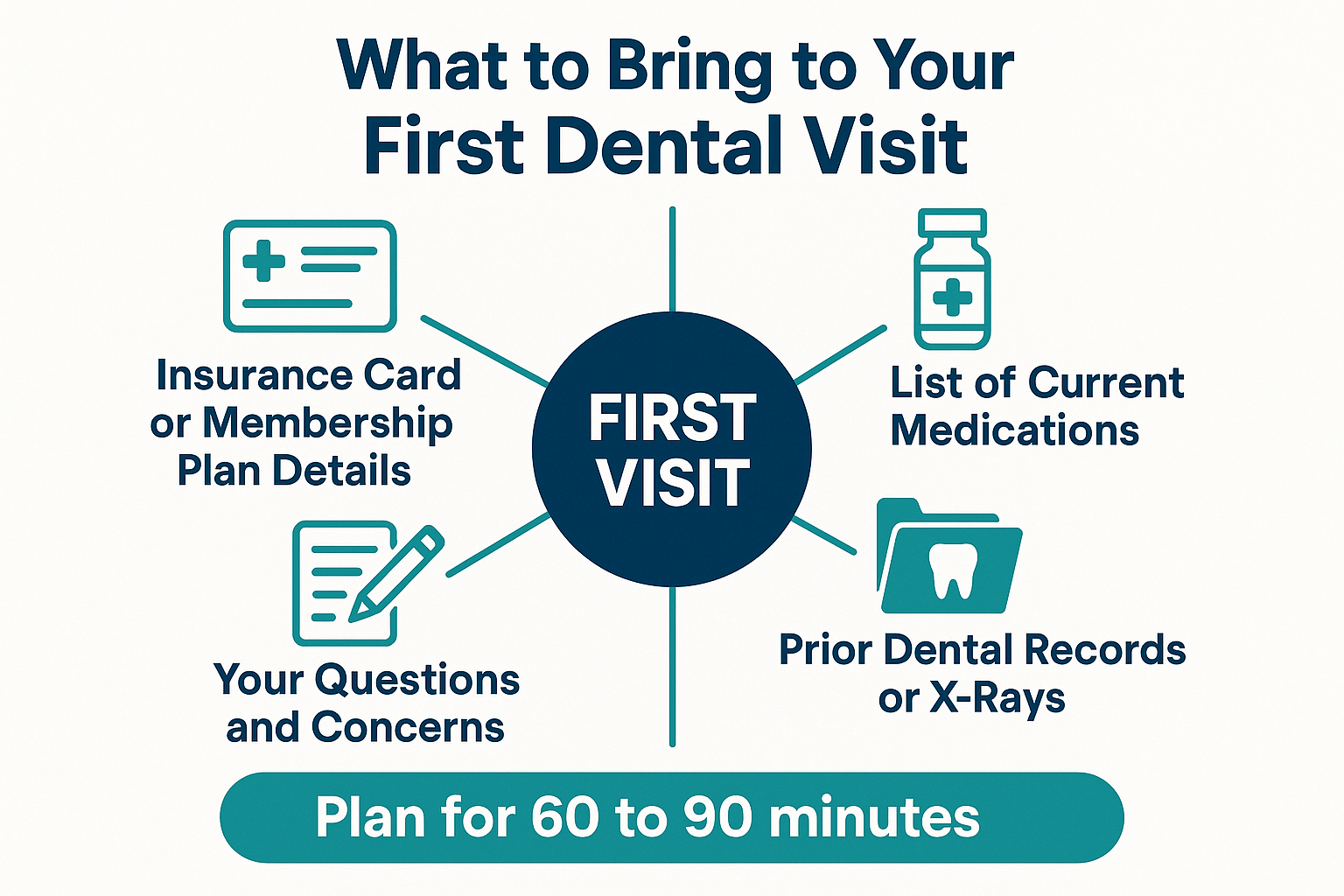
Most first visits run 60 to 90 minutes. If you are coming in with active pain, the visit narrows and we deal with the problem first.
Why Digital X-Rays Come First (And Whether You Really Need Them)
People ask about X-rays more than almost anything else at a first visit. Usually the question is some version of “do I actually need those?”
At a first appointment, yes, in almost every case. Not because of policy, but because a visual exam only shows the surfaces I can see. Roughly a third of a tooth sits below the gumline, and the spots between teeth are hidden from view entirely.
X-rays let us see things like:
- Cavities forming between teeth, before they reach the nerve
- Bone levels around each tooth, which is how gum disease is measured
- Infection at the root tip, which often causes zero pain until it does not
- Impacted or shifting wisdom teeth
- The condition of old fillings and crowns underneath the surface
Digital X-rays use a sensor instead of film, so the image shows up on the screen in seconds and the radiation dose is significantly lower than the film systems many of us grew up with. The American Dental Association notes that dental X-ray exposure is a small fraction of the radiation people encounter in daily life.
One more thing worth knowing. That first set becomes your baseline. Two years from now, comparing new images to old ones is often how we catch a problem while it is still small and cheap to fix.
If you had X-rays taken recently at a previous office, you can request that they be sent over. People relocating from out of state do this all the time, and it can save you a set.
How a First Visit Usually Breaks Down
Timing varies by patient, but this gives you a realistic sense of what you are committing to.
| Part of the visit | What happens | Rough time |
|---|---|---|
| Check-in and health history | Forms, insurance or membership details, medication list | 10-15 minutes |
| Digital X-rays | Full series to establish a baseline | About 10 minutes |
| Exam with the dentist | Teeth, gums, bite, oral cancer screening | 15-20 minutes |
| Cleaning (if done same day) | Plaque and tartar removal, polish, education | 30-45 minutes |
| Treatment plan discussion | Findings, options, priorities, cost estimate | 10-15 minutes |
What to Bring to Your First Appointment
Bringing these four things keeps check-in short and helps us plan accurately from day one.
The Treatment Plan Talk, and Why It Catches People Off Guard
This is the part of the visit that makes people nervous, especially if it has been a while. And it has been a while for a lot of folks. One of the most common things I hear on the phone is some version of “I have been putting this off too long and I just want to get it all done at once.”
A long gap does not mean you are walking into a disaster. It usually means the plan will include more than a cleaning, and that is normal, not a judgment.
What helps is sorting the findings into three buckets:
- Needs attention soon. Active infection, a cracked tooth, deep decay, gum disease that is actively losing bone. Waiting here makes the fix bigger and more expensive.
- Can be watched. An old filling with wear, a small spot we want to re-check in six months, a tooth that is stable for now. Not everything needs to be treated this month.
- Preventive or elective. Cleanings, sealants, whitening, straightening. Things that protect you long term or that you simply want.
A good treatment plan tells you which bucket each item is in and roughly what it costs before you agree to anything. One patient put it well in a review: “They tell me exactly what to do to keep my million dollar smile.”
On cost, be direct and ask for a written estimate. Prices swing based on your plan, the materials involved, and how many surfaces or teeth are involved, so a number quoted over the phone is rarely the number you will actually pay. If you are uninsured, ask about a dental membership plan and about financing before you leave, because both change what is realistic for your budget. Our guide on dental care costs without insurance breaks down how the math usually works around here.
Scheduling Around a Real Life in the West Valley
The logistics matter as much as the clinical stuff. A visit you cannot get to is a visit that does not happen.
A few practical notes for people new to Surprise:
- Saturday mornings exist here. We see patients 8 a.m. to 3 p.m. on Saturdays, which is a real advantage if you cannot take a weekday off. Weekday hours start at 7 a.m., and we run until 7 p.m. on Tuesday, Wednesday and Thursday.
- Family blocks save trips. If you are coordinating kids or a spouse, ask for back-to-back appointments when you book. Families in Marley Park and Surprise Farms do this constantly.
- Snowbirds, plan around your arrival. If you land in Sun City Grand in October, booking your first exam within the first few weeks gives you room to finish any needed work before you head back north.
- Nervous? Say so when you book. Anxiety accommodations like blankets, headphones, sunglasses and sedation options work best when the team knows ahead of time. Here is what to expect if dental anxiety is part of your picture, and yes, sedation can be used for a routine cleaning if that is what gets you through the door.
Frequently Asked Questions About a First Dental Visit
Will I get my teeth cleaned at the first appointment?
Often, yes. But it depends on what the exam and X-rays show. If there is significant tartar below the gumline or signs of gum disease, a standard cleaning is not the right treatment, and we would schedule a deep cleaning instead. That is a longer appointment and sometimes split into two visits.
I have not been to a dentist in years. Am I going to get a lecture?
No. Life happens. People lose insurance, move states, have a bad experience, or just get busy. Our job is to tell you where things stand right now and help you build a plan forward, not to make you feel bad about the past.
Can I send my records from my old dentist?
Yes, and it helps. Call your previous office and request that X-rays and chart notes be sent over, ideally a week before your appointment. People relocating from out of state do this regularly.
How much will the first visit cost?
It depends on your coverage and on what the visit includes. Many dental plans cover exams, X-rays and routine cleanings at a high percentage, sometimes fully. If you are uninsured, ask for the out-of-pocket estimate before you come in so there are no surprises, and ask whether a membership plan would lower it.
How often should I come back after the first visit?
For most adults, every six months. Some people with gum disease history or higher cavity risk do better on a three or four month schedule. We cover the reasoning in our article on how often you actually need a cleaning.
New to Surprise and Looking for a Dental Home?
If you have recently moved to the West Valley and want a first visit that starts with questions instead of a sales pitch, that is how we do things at West Bell Dental Care. Weekday appointments start at 7 a.m. and Saturday hours run 8 a.m. to 3 p.m. for people who cannot get away midweek. You can reach the office at 480-795-2420 or read more at westbelldentalcare.com whenever you are ready.