
Direct Answer: Persistent bad breath usually comes from gum disease, dry mouth, or bacteria on the tongue, not your teeth. Brushing alone won’t fix these sources.
If you’re brushing twice a day and still noticing an odor, the problem almost certainly isn’t your toothbrushing routine. Persistent bad breath, the kind that comes back within an hour of brushing, is almost always coming from somewhere toothpaste can’t reach: below the gumline, at the back of the tongue, or from inside a tooth itself.
We see this regularly at our practice. Patients come in a little embarrassed, assuming they’ve been doing something wrong. Most of the time, they haven’t. They just haven’t had the right conversation with a dentist about what’s actually driving the odor.
In this article, I want to walk through the three main culprits behind chronic bad breath, dry mouth, gum disease, and hidden structural problems in the teeth, and explain why each one requires a different fix than a stronger mouthwash.
Dry Mouth Is a Bigger Bad Breath Cause Than Most People Realize
Saliva does a lot of quiet work. It rinses bacteria off your teeth and gums constantly throughout the day. When saliva production drops, those bacteria multiply fast, and the byproducts they release are exactly what creates odor.
In Surprise, Arizona, this problem compounds quickly. The desert climate pulls moisture out of everything, including your mouth, especially if you’re a mouth breather or spend time outdoors in the heat. Staying hydrated helps, but it doesn’t solve the underlying reduction in saliva flow.
For many of our patients in communities like Sun City Grand and Sun City, dry mouth is a medication side effect they didn’t fully connect to their breath. A large number of older adults are managing blood pressure, allergies, antidepressants, or other conditions, and many of those medications list dry mouth as a common side effect. If you’re on several medications and your breath has changed, that’s worth mentioning at your next exam.
Signs that dry mouth may be your primary issue include:
- Waking up with noticeably worse breath than usual
- A sticky or pasty feeling in your mouth during the day
- Increased thirst, especially in the afternoon
- Chapped lips or a dry, rough tongue
We can discuss saliva-stimulating options, specific rinses designed for dry mouth, and whether any adjustments to your home routine might help.
When Gum Disease Is Behind the Odor
Gum disease is one of the most overlooked bad breath causes, and one of the most common things we identify when a patient says mouthwash isn’t doing anything.
The bacteria responsible for gum infections produce sulfur compounds, and those compounds have a very specific, persistent smell that no rinse covers for long. If your breath returns within minutes of using mouthwash, this is worth paying attention to.
What makes this tricky is that many people with early gum disease don’t feel much pain. But they do notice:
- Gums that bleed when brushing or flossing
- Puffiness or tenderness around the gumline
- Gums that look like they’re pulling back from the teeth
- A bad taste that doesn’t go away after meals
Several patients who’ve reached out to us mentioned gum sensitivity or bleeding without realizing it was connected to a bigger problem. They were treating the symptom, buying stronger rinses, without knowing there was an infection underneath.
The American Dental Association identifies gum disease as one of the primary medical causes of chronic bad breath, alongside dry mouth and oral bacteria. A professional cleaning and periodontal evaluation is what actually breaks the cycle, not a different brand of mouthwash.
When gum disease is caught early, non-invasive deep cleaning treatments like scaling and root planing can remove the bacteria below the gumline and give the gums a chance to heal. The breath typically improves noticeably once the infection is addressed.
The Three Main Sources of Persistent Bad Breath
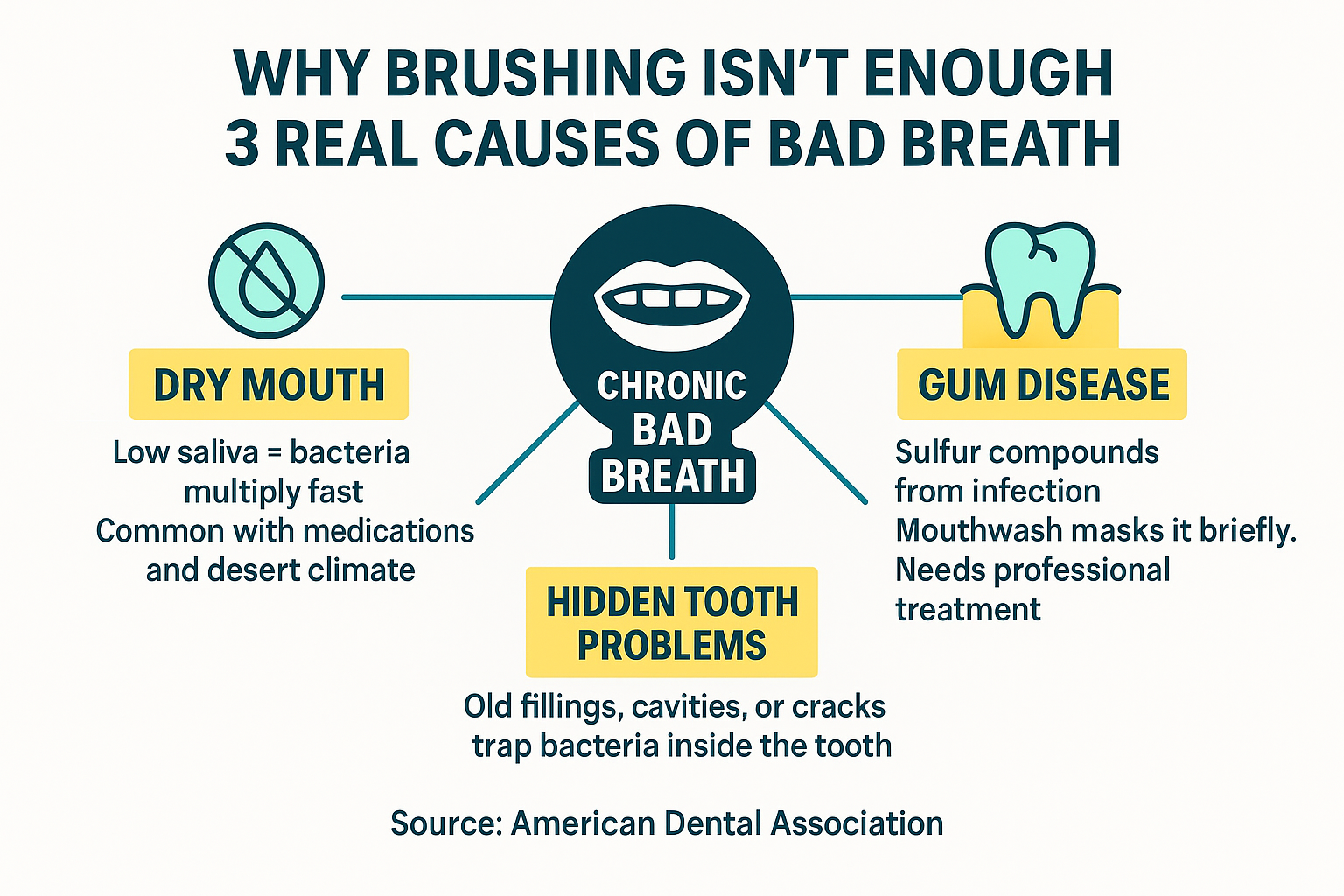
This infographic breaks down the three primary bad breath causes that brushing alone won’t fix, and what each one actually requires.
Hidden Problems Inside the Tooth Itself
This is the one most patients never consider. A cavity, a cracked tooth, or an old filling that has started to leak can trap bacteria in a space you can never reach with a toothbrush. The odor comes from inside the tooth, and it won’t go away until the structural problem is fixed.
Patients are often surprised when we identify this during a routine exam. They didn’t feel pain, so they assumed everything was fine. But structural problems don’t always hurt right away, especially with older fillings where the seal has gradually broken down.
This is one of the most practical reasons to stay current with regular dental exams and cleanings. A visual exam combined with digital X-rays can catch a leaking filling or a hairline crack that wouldn’t show up any other way. Treating it early, with a replacement filling or a crown, is almost always less involved and less expensive than waiting until it causes pain.
For patients in communities like Ashton Ranch or Marley Park who’ve been putting off checkups for a year or two, this is often the conversation that finally explains why their breath hasn’t responded to anything they’ve tried at home.
Bad Breath Cause at a Glance: What Helps and What Doesn’t
Use this as a quick reference for matching the cause to the right response. Mouthwash and brushing appear in almost every row, because they help with surface hygiene, but they’re not a treatment for any of these underlying issues.
| Cause | Does Brushing Help? | What Actually Addresses It |
|---|---|---|
| Dry mouth | Briefly | Hydration, dry-mouth rinses, reviewing medications with your dentist |
| Gum disease | Partially | Professional deep cleaning, periodontal therapy, consistent hygiene visits |
| Tongue bacteria | Yes, with a tongue scraper | Daily tongue cleaning plus addressing any underlying dry mouth |
| Cavity or leaking filling | No | Dental exam, filling replacement or crown as needed |
| Cracked tooth | No | Dental exam and appropriate restoration |
Frequently Asked Questions About Bad Breath Causes
Is bad breath a sign of something serious?
It can be, but most of the time it’s pointing to a fixable problem, gum disease, dry mouth, or a structural issue in a tooth. Occasionally persistent bad breath can relate to conditions beyond the mouth, like acid reflux or sinus infections. If a dentist examines your mouth and everything looks healthy, mentioning it to your primary care doctor is a reasonable next step.
Can mouthwash cure bad breath?
Mouthwash can reduce odor temporarily, but it doesn’t treat the source. If the cause is gum disease or a cavity, mouthwash will cover the smell for 20-30 minutes and then the odor returns. Think of it like air freshener in a room with a plumbing problem, it helps briefly but doesn’t fix anything.
How do I know if my bad breath is from gum disease?
A few signals: your gums bleed when you floss, they look puffy or have pulled back from the teeth, and mouthwash provides almost no lasting relief. The only way to confirm it and get real treatment is a professional exam. We check for gum disease at every routine cleaning visit.
I’m on several medications. Could they be causing my breath issues?
Very possibly. Dozens of common medications list dry mouth as a side effect, including antihistamines, blood pressure medications, antidepressants, and diuretics. This is especially common for our patients in Sun City Grand and similar communities. Let us know what you’re taking at your next visit, there are dry-mouth rinses and in-office strategies that can help.
How often should I come in if I have persistent bad breath?
At minimum, twice a year for a cleaning and exam. If you have active gum disease, we may recommend coming in every three to four months until things stabilize. Regular visits are really the only way to stay ahead of the causes that brushing can’t address on its own.
Suggested Internal Links — add real URLs before publishing:
- periodontal therapy for gum disease — West Bell Dental Care’s periodontal therapy service page explaining scaling, root planing, and gum disease treatment
- preventive dental care and routine cleanings — Preventive dentistry service page covering what happens at a routine cleaning and exam visit
- dental crowns and restorations — Crowns and bridges service page explaining when a damaged tooth needs a crown versus a filling
- dental membership club for uninsured patients — Membership plan page for patients without dental insurance looking for affordable preventive care access
Ready to Find Out What’s Actually Causing Your Bad Breath?
If you’ve been brushing, rinsing, and still noticing the odor, a routine exam is the most direct way to get an answer. Our team in Surprise sees this regularly, and in most cases the cause is something we can identify and address in a visit or two. You can reach us at 480-795-2420 or visit westbelldentalcare.com to learn more, we’re open Monday through Saturday, with evening hours available Tuesday through Thursday.