

Adjusting to dentures is a big change, but it's also a great chance to get your smile back and enjoy life. For many of our neighbors in Surprise, Sun City, and Peoria, dentures are the key to speaking clearly, eating with ease, and smiling with new confidence. At West Bell Dental Care, we know that living well with dentures is about more than just the first fitting. It's about building simple daily habits that keep your dentures comfortable and secure for years to come.
This guide is here to give you practical advice for the daily realities of denture care. Think of it as a roadmap to making your dentures feel natural. The key to long-term success is consistency, and understanding how to stick to a routine can make a huge difference.
Whether you're new to dentures or have had them for years, these seven habits will help you manage your oral health. You'll learn how to prevent common issues like sore spots and loose fits, so you can feel great about your smile. We're here to support you with compassionate care and expert guidance. Let’s explore these simple habits for a confident, comfortable fit.
1. Master the Daily Cleanse for a Fresh, Healthy Smile
A daily cleaning routine is the most important habit for living well with dentures. It's the foundation for your comfort, confidence, and overall oral health. Dentures can build up plaque and bacteria, just like natural teeth. A good daily cleaning prevents bad breath, staining, and gum irritation, keeping your smile bright and your mouth fresh.
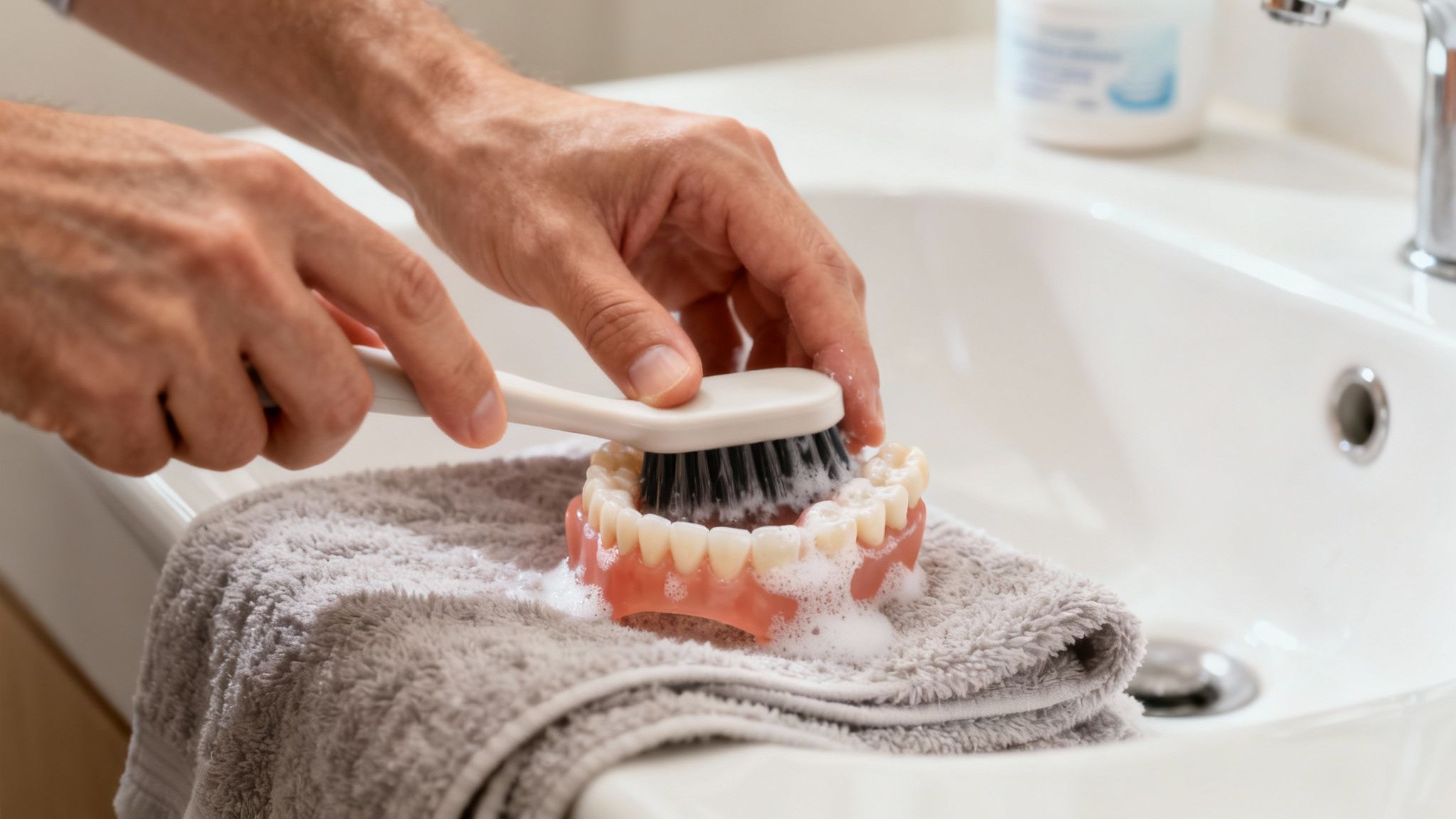
This means more than just a quick rinse. You need to remove the invisible film of bacteria and food from every surface. If you don't, you could get fungal infections or painful gum inflammation, which affects how your dentures fit.
Creating Your Daily Cleaning Ritual
Making cleaning a part of your daily schedule helps it become second nature.
- Morning Cleanse: After breakfast, take out your dentures. Gently brush them with a soft-bristled denture brush and a non-abrasive denture cleanser. This removes plaque that built up overnight.
- Post-Meal Rinse: After meals, take out your dentures and rinse them under lukewarm water. This quick step washes away food particles and prevents irritation.
- Evening Deep Clean: Before bed, do your most thorough cleaning. Brush all surfaces carefully, especially the part that touches your gums. Then, soak your dentures overnight.
Pro-Tips for Safe and Effective Cleaning
Follow these tips to protect your dentures and keep them clean.
Key Insight: Always clean your dentures over a folded towel or a sink filled with water. This simple step provides a soft landing if they slip from your hands, preventing a costly break.
- Use the Right Tools: Regular toothpaste is too harsh and can scratch your dentures, letting bacteria hide. Always use products made just for dentures.
- Temperature Matters: Never use hot water on your dentures. High heat can warp the material, ruining the fit. Lukewarm water is always the safest choice.
- Don't Forget Your Gums: While your dentures are out, gently brush your gums, tongue, and the roof of your mouth with a very soft toothbrush. This removes plaque and helps keep your mouth healthy.
2. Give Your Gums a Rest: Overnight Soaking
Giving your mouth and your dentures a rest overnight is a must for long-term comfort. Soaking your dentures overnight keeps them moist, clean, and in the right shape. If they dry out, the material can become brittle and warp, leading to a poor fit. This nightly ritual is key to living well with dentures.
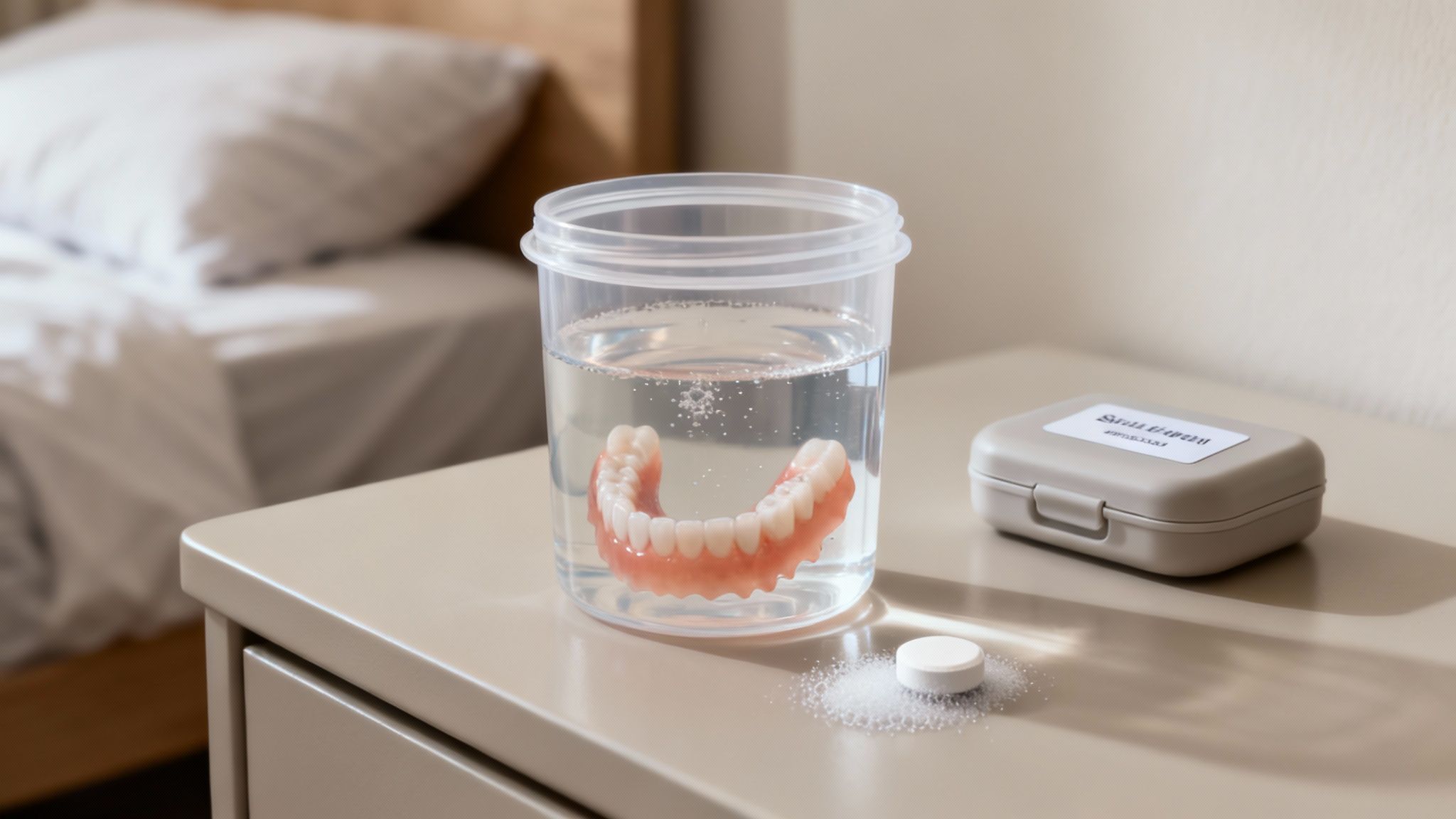
Soaking does more than just protect the shape of your dentures. It also deep cleans them in a way that brushing alone can't. A special solution can kill stubborn bacteria and remove stains. Plus, taking your dentures out gives your gums a much-needed break from pressure, reducing irritation and keeping them healthy.
Creating Your Nightly Soaking Routine
Making this a part of your bedtime routine is easy and effective.
- Prepare Your Solution: Before bed, fill a denture bath with lukewarm water. Add a denture-cleansing tablet and let it dissolve completely.
- Submerge Completely: Place your clean dentures in the solution, making sure they are fully covered.
- Allow for Rest: Let your dentures soak for at least 6-8 hours. This also lets your gums rest and recover, which is very important for our patients in communities like Sun City and Surprise, AZ.
Pro-Tips for Safe and Hygienic Storage
Proper storage protects your dentures and your health.
Key Insight: Never reuse a soaking solution. The bacteria and plaque from your dentures stay in the liquid. A fresh solution every night is the only way to get a truly clean result.
- Choose the Right Cleanser: Your dentist at West Bell Dental Care can recommend the best option for your type of denture. There are different kinds of cleansers for different needs.
- Keep It Safe: Always store your soaking dentures in a covered denture bath. Keep it in a safe place, away from children and pets.
- Rinse Before Wearing: In the morning, rinse your dentures well under cool, running water before putting them back in. This removes any leftover cleanser.
3. Handle with Care: Proper Denture Handling
How you handle your dentures every day is a big part of making them last. Think of them as a custom-fit device; dropping them just once can cause a tiny crack or break a clasp. Learning the right way to handle, put in, and take out your dentures is a key habit for living well with them.

Storing them correctly is just as important. Leaving dentures out in the open can expose them to bacteria or lead to them being misplaced or broken. A good storage routine keeps them safe, clean, and moist, which helps them keep their shape.
Creating Your Handling and Storage Ritual
Careful handling prevents accidents and keeps your dentures fitting well.
- Establish a "Denture Station": Pick one safe spot in your bathroom for all your denture care. This helps you avoid leaving them somewhere unsafe.
- Safe Handling Zone: Always handle your dentures over a sink filled with water or over a soft, folded towel. This creates a cushion in case you drop them.
- Daily Storage Protocol: Every night, after cleaning, put your dentures in a sturdy, covered case filled with a soaking solution or plain water. This keeps them from drying out and warping.
Pro-Tips for Safe Handling and Storage
Follow these tips to protect your investment.
Key Insight: Use both hands when putting in or taking out your dentures. Apply gentle, even pressure to avoid putting too much stress on one area, which could damage them.
- Mind the Angle: Don't force your dentures into place. Gently press them into position, using a slight rocking motion. Biting down gently helps seat them.
- Keep Them Cool: Store your denture case away from direct sunlight or heat. High temperatures can ruin the fit. Never leave them in a hot car.
- Travel Smart: When you travel, always use a durable, sealed denture case to prevent loss or damage.
4. Don't Forget Your Gums: Regular Oral Hygiene
Taking care of your dentures is only half the job. The health of your gums is just as important for a comfortable fit. Think of your gums as the foundation that supports your dentures. Healthy, firm gums provide a stable surface, which helps prevent sore spots.
Focusing on your whole mouth, not just your dentures, prevents problems like gum irritation and infections. If you neglect your gums, the tissue can shrink, causing your dentures to become loose. A consistent oral hygiene routine is essential for a pain-free denture experience.
Creating Your Daily Oral Health Ritual
Taking care of your gums and mouth helps the tissues supporting your dentures stay healthy.
- Morning Routine: When you take out your dentures to clean them, take a moment to care for your mouth. Gently brush your tongue and the roof of your mouth with a soft toothbrush.
- Gum Massage: Twice a day, gently massage your gums in a circular motion with a clean, damp washcloth or a very soft toothbrush. This stimulates blood flow and keeps the tissue firm.
- Evening Rinse: Before bed, after cleaning your dentures for their nightly soak, rinse your mouth. A simple saltwater rinse (1/2 teaspoon of salt in 8 ounces of lukewarm water) can soothe your gums.
Pro-Tips for Healthy Gums and a Better Fit
Follow these practical tips to protect the foundation of your smile.
Key Insight: Giving your gums a rest is essential. Plan to take your dentures out for at least six to eight hours every day, usually while you sleep. This lets your gum tissues recover from the pressure.
- Use the Right Tools: Use a very soft brush or a clean, moist cloth to gently clean your gums.
- Stay Hydrated: Drinking plenty of water helps keep your mouth moist. A healthy amount of saliva naturally cleanses your mouth and keeps your gums comfortable.
- Avoid Irritants: Tobacco and too much alcohol can harm your gum tissues. Reducing or quitting will greatly improve your denture fit and comfort.
5. See Your Dentist: Regular Professional Adjustments
Your gums and jawbone change over time, just like the rest of your body. Regular visits to your dentist are a crucial habit to make sure your dentures continue to fit well. Your dentist is your partner in keeping your smile healthy and stable. As your mouth naturally changes, your once-perfect dentures can become loose and cause irritation.
Being proactive is about preventing discomfort before it starts. Professional adjustments and check-ups can catch small issues before they become big problems. This habit is essential for living well with dentures, as it helps your dentures adapt to the natural changes in your mouth.
Scheduling Your Professional Care Cycle
Regular professional visits help prevent common denture problems.
- Annual Inspection: Plan to visit your dentist at least once a year. They will check the fit of your dentures and look for any wear or cracks. They will also examine your mouth for any signs of irritation.
- Professional Relines: Your gums will shrink over time, causing your dentures to loosen. A reline, usually needed every one to two years, resurfaces the inside of the denture to restore a snug fit.
- Prompt Repairs: If you notice a crack or a chip, don't try to fix it yourself. Contact your dentist right away for a professional repair.
Pro-Tips for Productive Dental Visits
Get the most out of your appointments with these simple guidelines.
Key Insight: Your mouth is always changing, but your dentures are not. Regular professional adjustments bridge this gap, ensuring your dentures adapt to you. This prevents chronic irritation and bone loss.
- Communicate Clearly: Before your visit, make a list of any problems you're having. Note any sore spots or if your dentures feel loose when you eat. The more information you give, the better your dentist can help.
- Come Prepared: Always bring your clean dentures to your appointment. This allows the dentist to make precise adjustments.
- Ask About Your Timeline: Every patient is different. Ask your dentist what a realistic timeline for relines and replacements looks like for you. Understanding your options, like the best dentures for seniors, helps you plan for your long-term oral health.
6. Eat Smart: Nutrition and Eating Habits with Dentures
Changing your eating habits is a key part of living well with dentures. Your new teeth are strong, but they work differently than natural teeth. You need to be more mindful about how you eat to protect your dentures and get good nutrition.
The first few weeks are all about building comfort and confidence. By starting with soft foods and slowly adding firmer ones, you let your gums adjust to the pressure. Rushing this can lead to sore spots and frustration. Learning a new way of eating is a key habit that makes dentures a tool for enjoyment, not a problem.
Creating Your Phased Eating Plan
A gradual change is the best approach. Think of it as retraining your mouth to chew safely with your new dentures.
- Week 1-2: The Soft Food Phase: Stick to soft foods that need little chewing, like soups, smoothies, yogurt, and mashed potatoes.
- Week 3-4: Introducing Firmer Textures: As you get more comfortable, you can add foods like soft-cooked vegetables, fish, and pasta. Cut everything into small pieces.
- Week 5 and Beyond: Expanding Your Diet: You can now try a wider variety of foods. Still be careful with very hard or chewy items. The goal is to find a balanced diet that works for you.
Pro-Tips for Safe and Enjoyable Eating
Make mealtimes a positive experience with these tips. Eating with dentures can be a challenge, so exploring nutrient-rich food options for seniors with dental considerations can help you stay healthy.
Key Insight: Always try to chew your food using both sides of your mouth at the same time. This helps keep your dentures stable and prevents them from tipping.
- Cut Food into Bite-Sized Pieces: Cut your food into small, easy-to-chew portions before you start eating. This puts less strain on your dentures.
- Be Wary of Temperature: Dentures can insulate your mouth, making it hard to feel how hot food is. Take small sips or bites at first to avoid burns.
- Avoid Problem Foods: Stay away from very hard foods (like nuts), sticky foods (like caramel), and foods with small, hard bits (like seeds or popcorn) that can get stuck under your dentures.
7. Listen to Your Mouth: Managing Comfort Issues
Knowing how to handle common denture problems is a crucial habit for long-term comfort. Issues like a loose fit, sore spots, or clicking sounds are often normal at first but can become bigger problems if ignored. Learning to know when you need a professional adjustment helps you resolve discomfort quickly.
The first few weeks with new dentures are a time of adjustment for your mouth. It's normal to feel some soreness or awkwardness at first. This habit is about being patient and understanding the signs that tell you when to see your dentist. Managing these issues is a key part of living well with dentures.
Creating Your Comfort Management Plan
A structured approach helps you track issues and talk about them with your dentist.
- Allow for an Adjustment Period: Give yourself at least four to eight weeks to adapt. Practice speaking and eating soft foods to help your mouth get used to the new feeling.
- Keep a Comfort Journal: Write down any problems you have, like a sore spot that shows up after eating. Note the time and activity to find patterns.
- Use Temporary Aids Wisely: If your dentures feel a little loose while you wait for an adjustment, a small amount of denture adhesive can help for a short time.
Pro-Tips for a Comfortable and Secure Fit
Patience and talking with your dentist are your best tools for getting through the adjustment phase.
Key Insight: Persistent pain is not normal. While some mild discomfort at first is expected, a sore spot that lasts more than a few days needs a professional adjustment. Do not try to change your dentures yourself.
- Recognize Normal vs. Problematic Signs: Mild clicking sounds often get better with time. But if your dentures slip a lot during meals or you have sharp pain, you need to see your dentist.
- Address Sore Spots Promptly: If a spot on your gums becomes red or painful, call your dentist. They can make small adjustments to relieve the pressure.
- Understand When a Reline is Needed: Over time, your jaw and gums change shape, and your dentures may become loose. This is normal and is fixed with a reline. For a more permanent solution, you can learn about options like implant-supported dentures that offer better stability.
Your Partner for a Confident Smile in Surprise, AZ
Living well with dentures is about creating a consistent routine of at-home care and professional guidance. By following these simple habits, you are taking powerful steps toward a future of comfort, confidence, and good health.
These practices help you avoid common problems like painful sore spots and embarrassing slips. They turn your dentures into a seamless part of your daily life, not a chore. Think of your dentures as an investment in your ability to speak, eat, and smile without worry.
Key Takeaways for Lasting Comfort
The most important thing to remember is that you are in control. These habits help you manage your dentures, but they also teach you when to ask for help.
- Consistency is Crucial: A daily cleaning and soaking routine is your best defense against bacteria and irritation.
- Your Gums Need Care, Too: Healthy gums are the foundation for a stable fit. Always clean your gums, palate, and tongue.
- Don't "Tough It Out": Pain is a sign that something is wrong. See a professional early to prevent bigger problems.
- Change is Normal: Your mouth will change over time. Regular check-ups at West Bell Dental Care are a necessary part of keeping a perfect fit.
Your Next Step on the Path to a Confident Smile
Living well with dentures isn't something you have to do alone. Your dentures should improve your quality of life. If they are causing you stress or discomfort, it’s time to get support.
At West Bell Dental Care, we understand the needs of our patients in Surprise, Sun City, and Sun City West, especially those in our senior communities. We are your partners in oral health, and we are here to make sure your dentures feel as good as they look. We specialize in comfort-focused adjustments and compassionate guidance to help you get the most out of your smile.
Ready to get the secure, comfortable fit you deserve? Schedule a denture evaluation at West Bell Dental Care today. Let our team provide the personalized care you need to smile with total confidence. Visit us online at West Bell Dental Care to book your appointment.
Frequently Asked Questions
1. How often should I get my dentures checked in Surprise, AZ?
We recommend a denture check-up at West Bell Dental Care at least once a year. This allows us to check the fit, look for any signs of wear, and examine your gums to ensure they are healthy. Regular visits help us catch small problems before they become bigger ones.
2. What should I do if my new dentures are causing sore spots?
Some mild soreness is normal at first, but if a sore spot lasts more than a few days, call our office. Do not try to adjust the dentures yourself. We can make small, precise adjustments to relieve the pressure and make you more comfortable.
3. Can I use regular toothpaste to clean my dentures?
No, you should never use regular toothpaste on your dentures. It is too abrasive and can create tiny scratches where bacteria can hide. Always use a soft-bristled denture brush and a non-abrasive cleanser made specifically for dentures.
4. My dentures feel loose. Do I need a new pair?
Not necessarily. It's normal for your gums and jawbone to change over time, which can make your dentures feel loose. Often, a simple procedure called a reline can restore a snug, secure fit. We can evaluate your dentures at our Surprise office to see if a reline is the right solution for you.
5. Does West Bell Dental Care offer options for patients with dental anxiety?
Yes, we absolutely do. We understand that dental visits can be stressful for some patients, which is why we offer sedation dentistry options. Our goal is to provide gentle, compassionate care to ensure all our patients, including seniors, feel comfortable and relaxed during their appointments.