

It’s a little startling to see pink in the sink after you brush, but think of it as your body sending you a clear signal. Often, the cause of bleeding gums is gingivitis, the earliest stage of gum disease. It’s caused by plaque bacteria building up along your gumline. Figuring out why it’s happening is the first step to stopping it.
Why Are My Gums Bleeding When I Brush?
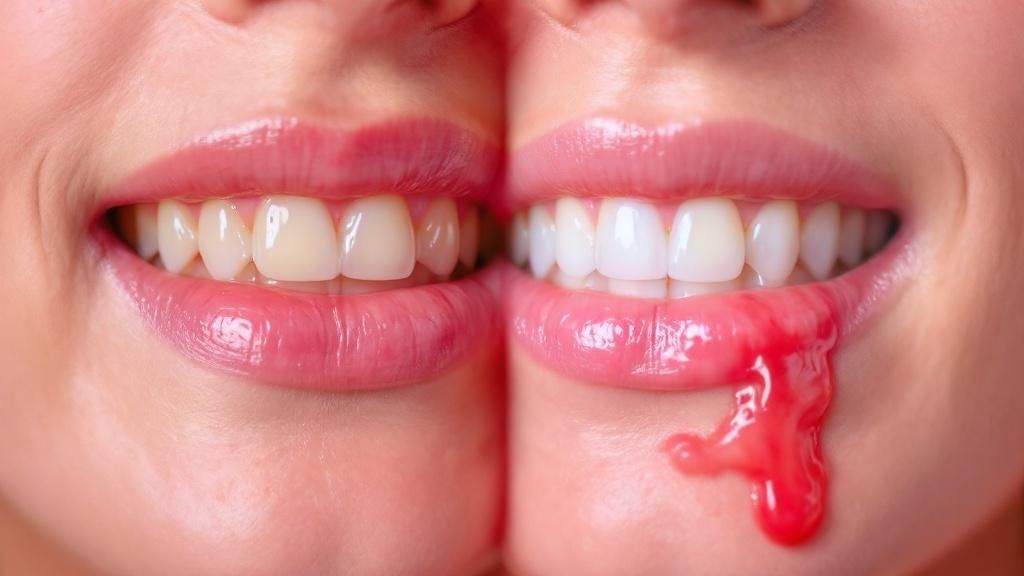
It’s easy to think bleeding gums are normal, especially if it only happens once in a while. But healthy gums shouldn't bleed. When they do, it's a classic sign of inflammation. This is your body's natural response to an irritant—in this case, plaque.
Think of it like getting a tiny splinter. The spot gets red, swollen, and tender. Your gums react the same way when plaque bacteria are left behind. This initial inflammation is what dentists call gingivitis, and it's a very common issue for adults.
The Main Culprit: Plaque and Gingivitis
Plaque is a sticky, clear film of bacteria that is always forming on your teeth. If you don't remove it every day with good brushing and flossing, it starts to irritate your gums. They become puffy, red, and much more likely to bleed.
The good news? Gingivitis is completely reversible. With better oral hygiene and professional care, you can get your gums back to normal.
This isn't a rare problem. In fact, nearly 47% of adults over 30 show signs of gum disease (CDC). This makes gum bleeding one of the first red flags for a much bigger issue. You can discover more insights about dental care statistics on Premier Image Dentistry.
Other Potential Reasons for Bleeding Gums
While gingivitis is the most common cause, it’s not the only one. Other factors can make your gums sensitive or more likely to bleed.
Here are a few other possibilities:
- Brushing Too Hard: Using a hard-bristled toothbrush or scrubbing too hard can damage delicate gum tissue and cause it to bleed.
- Hormonal Changes: Big shifts in hormones—like during pregnancy or menopause—can increase blood flow to your gums. This makes them extra sensitive to even a small amount of plaque.
- New Medications: Certain prescriptions, especially blood thinners, can make your gums bleed more easily. It's always a good idea to tell your dentist about any new medications.
- Vitamin Deficiencies: Your body needs the right nutrients. A lack of key vitamins, especially Vitamin C and Vitamin K, can affect how well your body heals and keeps gum tissue healthy.
For our patients in Surprise, AZ, and nearby areas like Sun City and Peoria, catching these signs early is key. At West Bell Dental Care, we’re ready to help you find the cause and create a plan to get your gums healthy again.
Your Gentle At-Home Plan for Healthy Gums
Seeing pink in the sink can be alarming, but it’s usually a sign that your gums need extra care. The great news is you can often fix the problem at home with a consistent, gentle routine. This means going beyond a quick brush and floss to soothe your gums back to health.
A solid oral hygiene routine is your first line of defense. The conversation about how to stop bleeding gums always starts with removing plaque.
Refine Your Brushing Technique
It might surprise you, but how you brush is just as important as how often. Brushing too hard or with a stiff-bristled brush can irritate your gums and make bleeding worse.
The goal is to be gentle but effective. Here’s what we tell our patients at West Bell Dental Care:
- Choose a Soft-Bristled Brush: Always use a toothbrush with soft bristles. They are flexible enough to clean well without being harsh on your gum tissue.
- Angle at 45 Degrees: Hold your brush at a 45-degree angle to your teeth, aiming the bristles where your gums and teeth meet. This is where plaque loves to hide.
- Use Gentle, Circular Motions: Forget scrubbing back and forth. Use small, gentle circles to clean the front, back, and chewing surfaces of every tooth. This method removes plaque without upsetting your gums.
This image shows how plaque buildup leads to inflammation and bleeding gums.
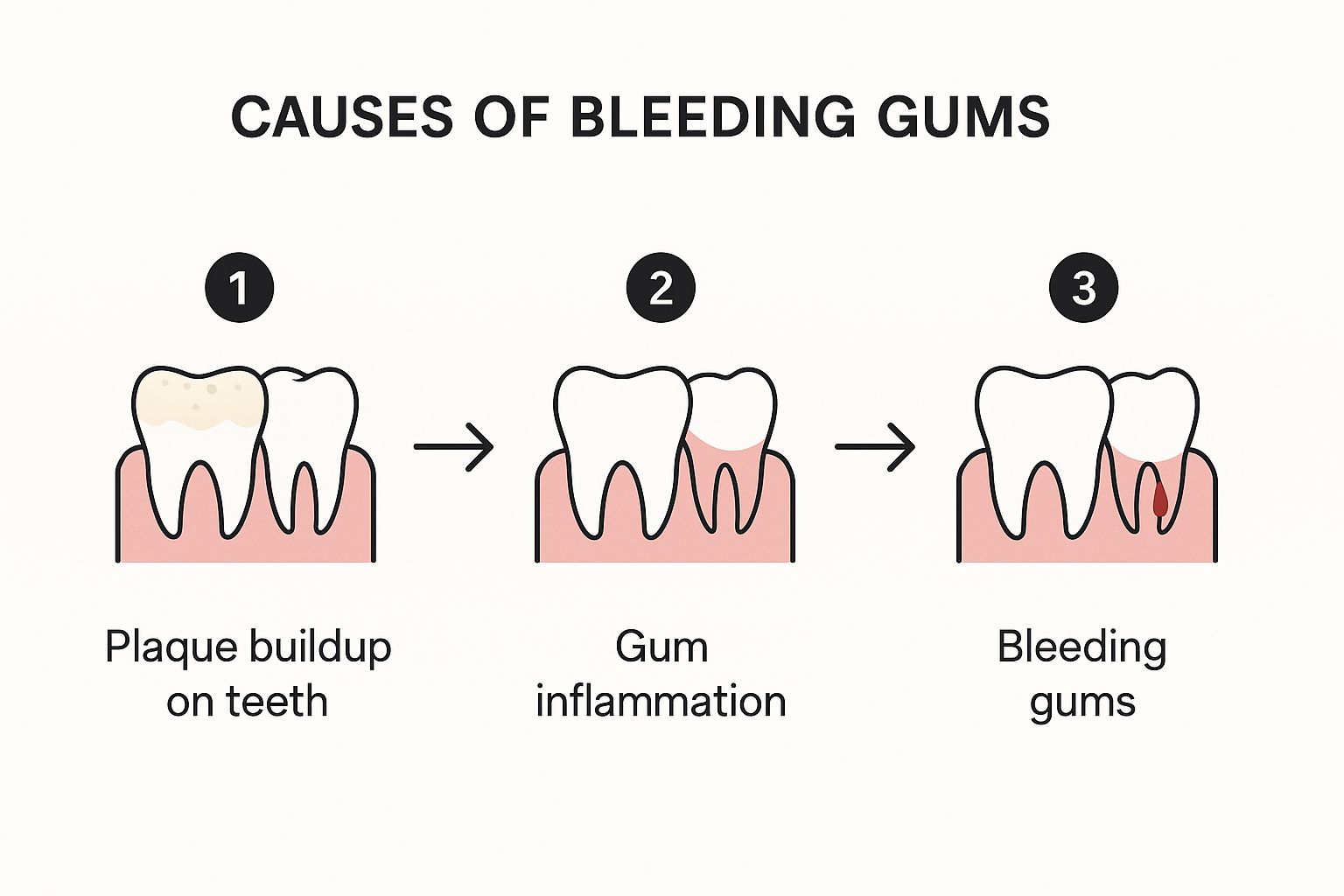
As you can see, stopping this cycle starts with effectively removing that plaque.
Master the Art of Flossing
Flossing is a must if you want healthy gums. It’s the only way to clean the 40% of your tooth surfaces that your brush can’t reach.
I know flossing might seem strange if your gums are already bleeding, but avoiding it only lets more bacteria build up.
When you first start flossing regularly, a little bleeding is normal. Stick with it! This should stop within a week as your gums get healthier. For a step-by-step guide, check out our post on how to floss correctly.
Soothing Rinses for Immediate Relief
While you improve your brushing and flossing, you can give your gums some comfort with simple rinses. These can help reduce bacteria and calm down inflammation.
A warm salt water rinse is a classic for a reason—it works. Just dissolve half a teaspoon of salt in a glass of warm water, swish it gently for 30 seconds, and spit it out. It’s great for reducing swelling.
Another option is an antiseptic mouthwash designed to fight gingivitis. Using it after you brush helps kill bacteria and gives your gums extra protection.
Here's a simple checklist to help you stay on track. Consistency is key when you're trying to get your gums back in shape.
Daily Gum Health Checklist
| Action Item | Frequency | Why It Helps |
|---|---|---|
| Gentle Brushing | Twice a day | Removes plaque from tooth surfaces. |
| Correct Flossing | Once a day | Cleans between teeth where a brush can't reach. |
| Antiseptic Mouthwash | Once or twice a day | Kills bacteria and helps reduce gum inflammation. |
| Warm Salt Water Rinse | As needed for comfort | Soothes irritated gums and reduces swelling. |
Following this gentle approach is the best way to stop bleeding gums and build a foundation for long-term oral health.
Lifestyle Habits That Support Gum Health
Your daily brushing and flossing routine is the foundation of good oral health, but your overall lifestyle plays a huge role too. Your choices can either strengthen your gums' defenses or leave them weak. Thinking about how to stop bleeding gums means looking beyond your bathroom sink.
What you eat directly affects your gum health. A balanced diet is essential for building strong gum tissue. The right nutrients help your gums heal and fight off infection.
Fuel Your Gums With The Right Nutrients
Think of your diet as a repair kit for your body. When it comes to your gums, a couple of vitamins are critical for keeping them healthy.
Adding these to your meals can make a real difference:
- Vitamin C: This vitamin helps produce collagen, the protein that gives your gums their strength. You'll find it in citrus fruits, bell peppers, broccoli, and strawberries.
- Vitamin K: This is crucial for blood clotting, which helps stop bleeding. Leafy greens like spinach, kale, and collard greens are great sources.
By eating more of these foods, you’re helping your gums stay firm and less likely to bleed. For more ideas, check out these 5 tips to prevent gum disease.
Habits That Harm Your Gum Health
Just as some habits build you up, others can cause problems. Certain lifestyle choices can make gum problems worse.
Smoking is one of the worst things for your gums. It restricts blood flow, which makes it harder for them to heal from inflammation. This is why smokers are more likely to get advanced gum disease.
Research shows that from 1990 to 2021, the number of new periodontal disease cases grew by over 76% worldwide. You can read the full research about these findings.
Also, high stress can weaken your immune system, making it harder for your body to fight the bacteria that cause gingivitis. For residents in Surprise and Sun City West, making these positive lifestyle changes can support your professional dental care and lead to healthier gums.
Knowing When to See a Dentist in Surprise, AZ
A good at-home routine is your best first defense, but sometimes your gums need professional help. Knowing how to stop bleeding gums often means knowing when it's time to let your dental team take over. If you’ve been brushing and flossing gently for a week but still see blood, it's time to call us.
Home care is great for soft plaque, but it can’t remove tartar. Once plaque hardens into tartar, only a dental professional can safely remove it. This stubborn buildup is a major cause of gum irritation, and leaving it there makes it almost impossible for your gums to heal.
Red Flags That Signal a Dental Visit
Think of your gums as a warning system. It's important for our patients in Surprise and neighboring communities like El Mirage and Peoria to recognize these signs early.
Here are definite signs you should schedule an appointment:
- Bleeding Lasts More Than a Week: If good home care doesn't stop the bleeding within 7-10 days, a professional needs to take a look.
- Swollen, Tender, or Dark Red Gums: Healthy gums are firm and light pink. Puffy, sensitive, or dark red gums are a classic sign of inflammation.
- Persistent Bad Breath: If bad breath doesn't go away after brushing, it can point to an infection below the gumline.
- Receding Gums: If your teeth look longer, it could be gum recession. This can expose the sensitive tooth root and is a sign of more advanced gum disease.
- Loose Teeth: Any feeling of looseness in your teeth is a serious symptom that needs immediate professional evaluation.
Catching gum issues early is the best way to prevent them from becoming bigger, more expensive problems. An exam allows us to find the cause and get your health back on track.
What to Expect During Your Visit
We understand that visiting the dentist can be nerve-wracking. Here at West Bell Dental Care, our team is friendly, warm, and reassuring.
When you come in, we’ll start with a calm chat about your concerns. Then, we'll do a gentle but thorough exam of your teeth and gums. We'll check for inflammation and measure the small pockets between your teeth and gums to check the health of the underlying tissue.
Often, a professional cleaning is all that’s needed to remove the irritating tartar and give your gums a fresh start. If you need help finding the right dental partner, our article on how to choose a dentist can offer some tips.
Professional Treatments That Stop Gum Bleeding

Sometimes, even with great brushing and flossing, your gums need a professional reset. If gingivitis has been around for a while, plaque can harden into tartar, which you can't remove at home. This is where professional treatments are essential for stopping the bleeding.
At West Bell Dental Care, we know that hearing you need more than a standard cleaning can be worrying. Our team in Surprise, AZ, is here to walk you through every step, ensuring your experience is comfortable and stress-free. Our goal is to get your oral health back on track.
Scaling and Root Planing: A Deep Cleaning
The first line of defense is often scaling and root planing, also known as a "deep cleaning." It’s a two-part process that gives your gums a clean slate so they can heal.
Here’s a simple breakdown:
- Scaling: We carefully remove all the plaque and tartar from your teeth, especially the deposits hiding below your gumline. We use special tools to clean out the pockets that have formed between your teeth and gums.
- Root Planing: After the tartar is gone, we gently smooth out the roots of your teeth. This step is very important because it helps your gums reattach firmly to your teeth and makes it harder for new bacteria to stick.
This procedure is one of the most effective non-surgical ways to treat early gum disease. By removing the source of the irritation, we give your gums the chance to heal and stop bleeding.
Your Comfort Is Our Priority
The idea of a "deep cleaning" can sound intense, but we make sure it isn't. We typically use a local anesthetic to numb the area, ensuring you stay comfortable. Our team always prioritizes gentle care, so you’ll know exactly what to expect.
Investing in your gum health with a treatment like this is one of the best things you can do for your smile. For our patients in Sun City and Peoria, it’s a critical step in preserving healthy teeth for life. You can learn more in our guide to periodontal therapy.
Frequently Asked Questions
Is it normal for my gums to bleed when I start flossing again?
It's very common, but not "normal" for healthy gums to bleed. If you've just started flossing again, you might see a little bleeding for the first week as your gums get healthier. If it continues for more than a week, it’s a good idea to schedule a visit with us at our Surprise, AZ office.
Can bleeding gums go away on their own?
In the very early stages of gingivitis, improving your daily brushing and flossing can sometimes stop the bleeding within one to two weeks. However, if the bleeding is heavy, painful, or doesn't stop with better home care, it will not go away on its own and needs professional attention.
How often do I need a cleaning to prevent bleeding gums?
For most of our patients in the Surprise and Sun City area, we recommend a professional dental cleaning every six months. These visits are essential for removing hardened tartar that you can’t get at home. Regular cleanings are one of the best ways to prevent gum problems from starting.
Can stress make my gums bleed?
Yes, it can. High levels of stress can weaken your immune system, making it harder for your body to fight off the bacteria that cause gum inflammation. Stress can also lead to teeth grinding, which puts extra pressure on your gums and can contribute to bleeding.
Does West Bell Dental Care offer emergency appointments for gum problems?
Absolutely. We consider sudden or persistent gum bleeding an urgent issue that needs to be addressed quickly. If you live in Surprise, Peoria, or the surrounding communities and are worried about your gums, please call our office right away. We will do our best to see you as soon as possible.
Don't let bleeding gums keep you from a healthy, confident smile. The team at West Bell Dental Care is here to provide the gentle, expert care you deserve.
Contact our Surprise, AZ, office today to schedule your appointment and get your oral health back on track.