
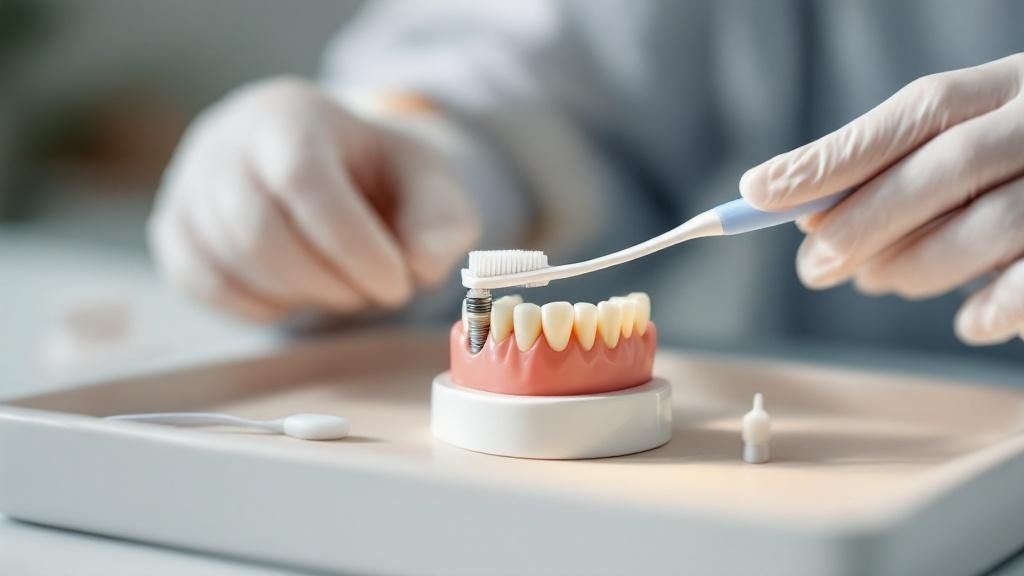
Getting dental implants is a fantastic investment in your health and confidence. The secret to making them last a lifetime? It all comes down to a simple, consistent cleaning routine.
Proper daily care is all about removing plaque from both the implant crown and the gum tissue right around it. This is what prevents inflammation and protects the bone underneath, making sure your new smile stays strong and healthy for decades.
Why Implant Care Is A Lifelong Commitment
Think of your dental implant like a strong, beautiful tree planted in a garden. The tree itself is incredibly sturdy, but it needs healthy soil to stay upright and thrive. In this analogy, your implant is the tree, and your gums and jawbone are the soil.
Unlike natural teeth, the implant post and the crown on top of it can't get cavities. That's a huge plus! However, the living tissues that hold the implant in place are still vulnerable to bacteria and plaque. If you don't clean that away every day, it can lead to serious issues that put your whole investment at risk.
Understanding The Risks
Two main threats can compromise a dental implant, and both are caused by plaque building up along the gumline. The good news is they are entirely preventable with the right at-home care and regular professional cleanings at our Surprise, AZ, office.
- Peri-implant Mucositis: This is stage one of implant-related gum trouble. You might notice red, swollen, or tender gums that bleed a little when you brush. It’s basically gingivitis for an implant. With better cleaning habits, this is often completely reversible.
- Peri-implantitis: If mucositis isn't addressed, it can worsen and turn into this more severe condition. The infection spreads from the gums down to the bone, causing the bone that anchors your implant to slowly deteriorate. This can make the implant feel loose and could eventually lead to it failing.
These issues are more common than you might think, but they don't have to be your reality. Peri-implant mucositis affects about 43% of patients with implants, while the more serious peri-implantitis impacts roughly 22% of cases (NCBI). Protecting your investment starts with a commitment to daily hygiene. Here at West Bell Dental Care, we give all our patients in Surprise, AZ, personalized guidance on how to care for their new teeth. If you're looking into dental implants in Surprise, know that we’ll be your partners in keeping them healthy for years to come.
Assembling Your Daily Implant Care Toolkit
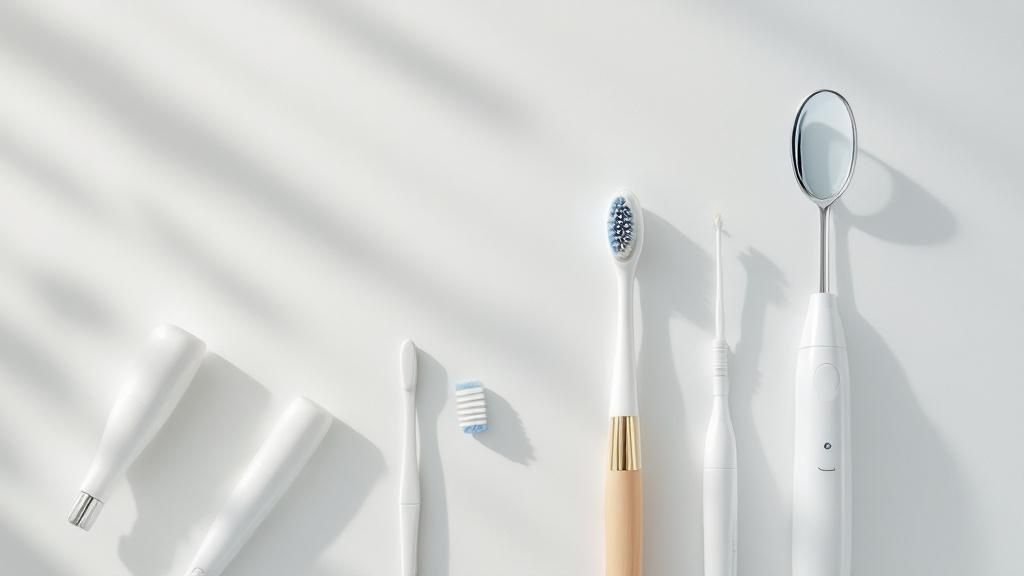
To keep your dental implants in top shape, you need the right tools for the job. Think of this as putting together a personalized cleaning kit that will protect your investment and keep your smile healthy for a lifetime. It's simpler than you might think.
Your standard toothbrush probably needs an upgrade. A soft-bristled manual toothbrush is a must-have, but an electric one with a sensitive setting works great, too. The key is to avoid hard bristles and abrasive toothpastes, like those with lots of baking soda or aggressive whitening agents. These can create tiny scratches on your implant crown, giving plaque a perfect place to hide.
Your Essential Implant Cleaning Toolkit
Building the right at-home care routine starts with having the proper tools. We've put together this quick guide to help you assemble the perfect kit for keeping your implants, gums, and surrounding teeth perfectly clean.
| Tool | Why It's Essential for Implants | Pro-Tip from West Bell Dental Care |
|---|---|---|
| Soft-Bristled Toothbrush | Gentle on the crown's surface, preventing micro-scratches where bacteria can gather. | An electric toothbrush with a pressure sensor is a fantastic investment. It stops you from brushing too hard, which protects both the implant and your gums. |
| Water Flosser (Oral Irrigator) | Uses a stream of water to flush out food particles and plaque from hard-to-reach areas, especially around the base of the implant. | Start on the lowest pressure setting and angle the tip toward the gumline. This gently cleans without causing irritation. |
| Interproximal Brushes | These small, specialized brushes are perfect for cleaning the tight spaces between your implant and natural teeth. | Make sure you have the right size. It should fit snugly but not feel forced. We can help you pick the perfect one during your visit. |
| Implant-Specific Floss | Features a stiff end for easy threading and a spongy section to effectively scrub the area where the implant meets the gumline. | This is non-negotiable for cleaning under implant-supported bridges or around single implants. It's the best way to disrupt plaque in that critical zone. |
Each of these tools plays a specific role in a complete cleaning routine. Used together, they provide the best defense against inflammation and potential implant issues. The goal isn't just to polish the visible part of the tooth. It's all about disrupting the bacteria along the gumline where the implant post sits.
Feeling a bit lost in the dental aisle? We get it. For a little more guidance on picking products that are safe and effective for your specific needs, check out our guide on the best oral hygiene products. Here at West Bell Dental Care, we’re always happy to help our patients in Surprise and Sun City find the exact tools they need for a healthy, confident smile.
Mastering Your Daily Implant Cleaning Routine
Now that you have your specialized toolkit ready, it's time to put it to work. Creating a solid daily cleaning routine is, without a doubt, the best way to protect your investment. The goal is to make these steps feel like second nature, not a chore.
The foundation of any good oral hygiene plan is brushing. Grab your soft-bristled brush and use gentle, circular motions around the entire implant crown. You’ll want to pay close attention to the area where the crown meets your gums—this is a magnet for plaque.
The image below shows the proper 45-degree angle for brushing along the gumline. This simple adjustment is key to disrupting plaque without irritating your gums.
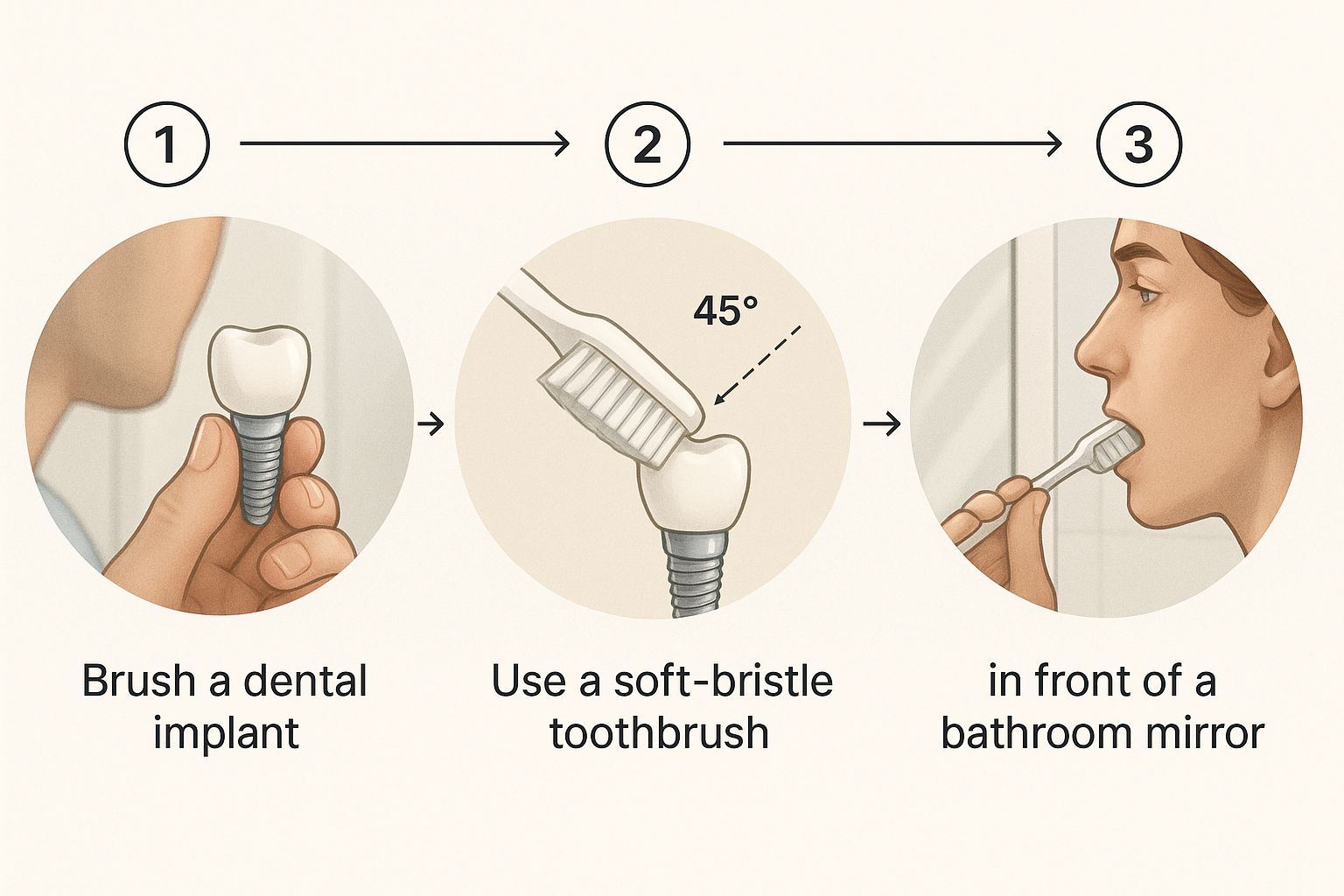
Seeing the technique helps drive home how a small change in your brush angle can make a huge difference in how clean you get your implants.
Cleaning Between and Around Your Implants
Brushing is only half the job. The most crucial part of cleaning dental implants is tackling the spaces your toothbrush just can't reach. This is where tools like interproximal brushes and water flossers become your best friends.
Recent dental studies have shown just how much tool selection matters. You can read more about these findings on how different tools impact implant hygiene. A water flosser is another fantastic tool, using a pulsating stream of water to flush out stubborn food bits and bacteria from the base of the implant.
The goal isn't just to polish the part of the crown you can see. It's to meticulously clean the junction between the implant and your gum tissue. Breaking up plaque here every single day is what prevents gum inflammation (mucositis) and protects the bone underneath.
Here at West Bell Dental Care, we want to empower all our patients, from Surprise to Sun City West, with the skills to confidently maintain their implants. If you ever feel unsure about your technique, just ask us at your next appointment. We're always here to help you master your routine.
Why Professional Implant Maintenance Is Non-Negotiable
Your daily home care is the solid foundation of implant health, but professional cleanings are the essential safety net that ensures their long-term success. Think of it like maintaining a car: you handle the daily upkeep, but you still need a skilled mechanic for regular service to keep it running perfectly.
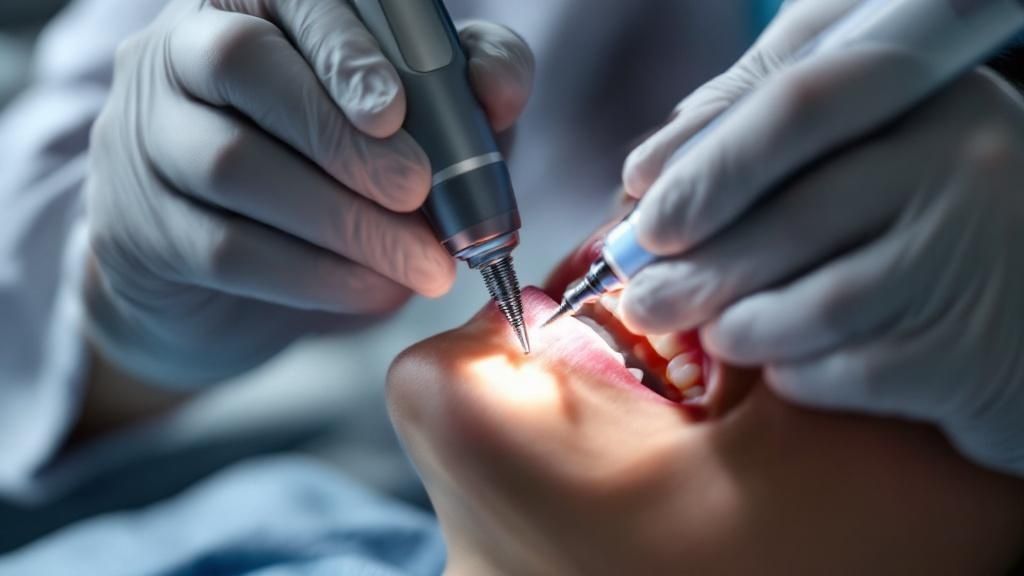
A professional implant maintenance visit at West Bell Dental Care is different from a standard teeth cleaning. We use specialized tools, like smooth plastic or resin scalers, designed to clean your implant thoroughly without scratching its delicate surface. Even a microscopic scratch can become a prime spot for harmful bacteria.
Advanced Tools for a Superior Clean
Our team is trained to meticulously remove hardened tartar (calculus) and stubborn bacterial biofilm that your at-home routine simply can't touch. We use gentle yet powerful techniques to clear away plaque and stains from every last nook and cranny. Understanding the essential hygiene protocols every dental clinic owner should know is key to providing the highest standard of care.
Research backs up this advanced approach. A comprehensive review showed that professional techniques are particularly effective at reducing bleeding around implants—a major red flag for inflammation. If you're interested in the science, you can learn more about these professional implant care findings from the study.
These regular check-ups with our Surprise, AZ, team are also about more than just cleaning. They're vital for monitoring the health of your gums and the bone levels around the implant. Using digital X-rays and careful measurements, we can spot potential issues long before you would ever notice them.
Think of us as your dedicated partners in safeguarding your smile. By combining your daily efforts with our specialized care, we can help keep your implant healthy for a lifetime. Learn more about our professional dental cleaning in Surprise, AZ on our services page.
Adapting Your Care for Different Implant Types
Not all dental implants are the same, so your cleaning routine needs to be tailored to the specific type of restoration you have. This ensures you’re hitting all the right spots to stop plaque from building up.
A patient with a single implant crown faces a different cleaning puzzle than someone with a full arch of new teeth. For single implants, the main challenge is cleaning the tight spaces where the implant crown sits next to your natural teeth.
Cleaning Single Implants vs. Bridges
With a single implant, meticulous flossing is non-negotiable. You’ve got to clean the sides of that implant crown just as thoroughly as you would a natural tooth. Tools like an interproximal brush or a water flosser can make a world of difference here.
When you have an implant-supported bridge or a full-arch solution like an All-on-4, the game changes. Your main priority becomes cleaning underneath the prosthesis—that space where it rests against your gums. This area is a huge plaque trap and requires special tools.
Pro-Tip from West Bell Dental Care: Please don't assume a quick brush-over is good enough for bridges or full-arch implants. That hidden space between the restoration and your gums must be cleaned every single day to prevent inflammation.
Tools for Full-Arch Restorations
For our patients in Sun City or El Mirage who have these larger, full-arch restorations, we always recommend a few specific tools to make the job easier and more effective:
- Floss Threaders: These help you guide a special, spongy floss underneath your bridge to clean the underside.
- Larger Interproximal Brushes: These are designed to gently scrub the underside of the restoration where a regular toothbrush can't reach.
- Water Flossers: An oral irrigator is fantastic for flushing out food particles and debris from beneath the bridge with minimal effort.
Getting familiar with the differences between tooth replacement options, like dentures, bridges, or implants, helps you understand why each one needs its own unique cleaning strategy. Our team here at West Bell Dental Care is committed to giving all our patients this kind of personalized, hands-on guidance.
Frequently Asked Questions
When you get dental implants, it's natural to have questions. Here are some straightforward answers from the West Bell Dental Care team to help you feel confident in your routine.
How often should I get my dental implants professionally cleaned?
For most of our implant patients in Surprise, AZ, and the surrounding areas, we recommend a professional maintenance visit every three to six months. This schedule allows our team to remove any stubborn buildup and monitor the health of your gums and bone, protecting your investment for the long term.
Can I use any toothpaste or mouthwash on my implants?
No, it's best to be a bit selective. We strongly recommend using a low-abrasive, non-whitening toothpaste to avoid scratching the crown's surface. For mouthwash, choose an alcohol-free, antimicrobial rinse to support gum health without causing dryness.
What are the first warning signs of an implant problem?
Be on the lookout for red, swollen, or bleeding gums around the implant site. Other early signs can include a persistent bad taste, bad breath, or any sensation of the implant or crown feeling loose. If you notice any of these symptoms, please call our Surprise office right away for a check-up.
Is it normal for my gums to bleed when cleaning around a new implant?
A small amount of bleeding can be normal for the first week when you begin a more thorough cleaning routine, especially if there's existing inflammation. For tips on proper technique, check out our guide on how to floss correctly. If bleeding persists after a week of gentle, consistent care, it's a sign you should contact us.
How can I make my implant maintenance affordable?
At West Bell Dental Care, we believe excellent dental care should be accessible to our community in Surprise, Sun City, and Peoria. We offer various financing options and are happy to discuss them with you. Our friendly front office team is here to help you find a solution that fits your budget.
Your smile is a significant investment in your health, and our team is committed to helping you protect it. For personalized advice on how to clean dental implants or to schedule your professional maintenance, contact West Bell Dental Care today. You can book your appointment online by visiting us at https://westbelldentalcare.com.