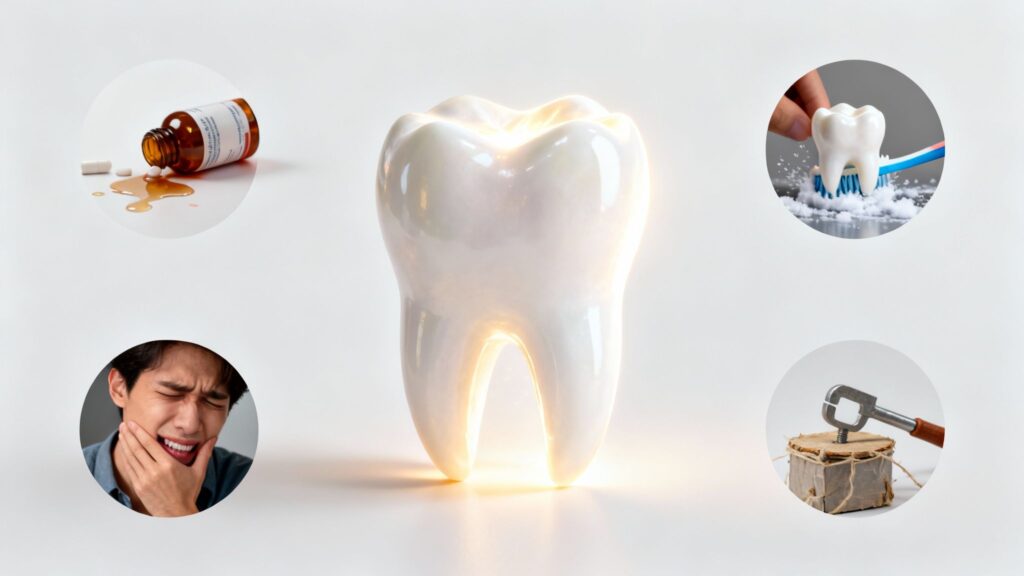
A throbbing tooth is more than just an inconvenience. It's your body's alarm system signaling that something is wrong. With our busy lives, it's easy to handle dental pain the wrong way. Recent data shows a sharp increase in emergency dental visits for issues like broken teeth and severe pain, especially around school breaks and holidays.
In fact, a 2024 study revealed that 61% of dental appointments were booked within just eight days of the patient first feeling pain. For residents in Surprise, AZ, from Marley Park to Sun City Grand, getting fast, effective relief is a top priority. Ignoring the signs or trying to tough it out can quickly turn a minor issue into a major, costly procedure.
This guide will walk you through the top 4 tooth pain mistakes to avoid in 2026. By understanding these common pitfalls, you can address the root cause of your pain effectively and prevent serious complications down the road.
1. Ignoring Early Warning Signs and Delaying Dental Visits
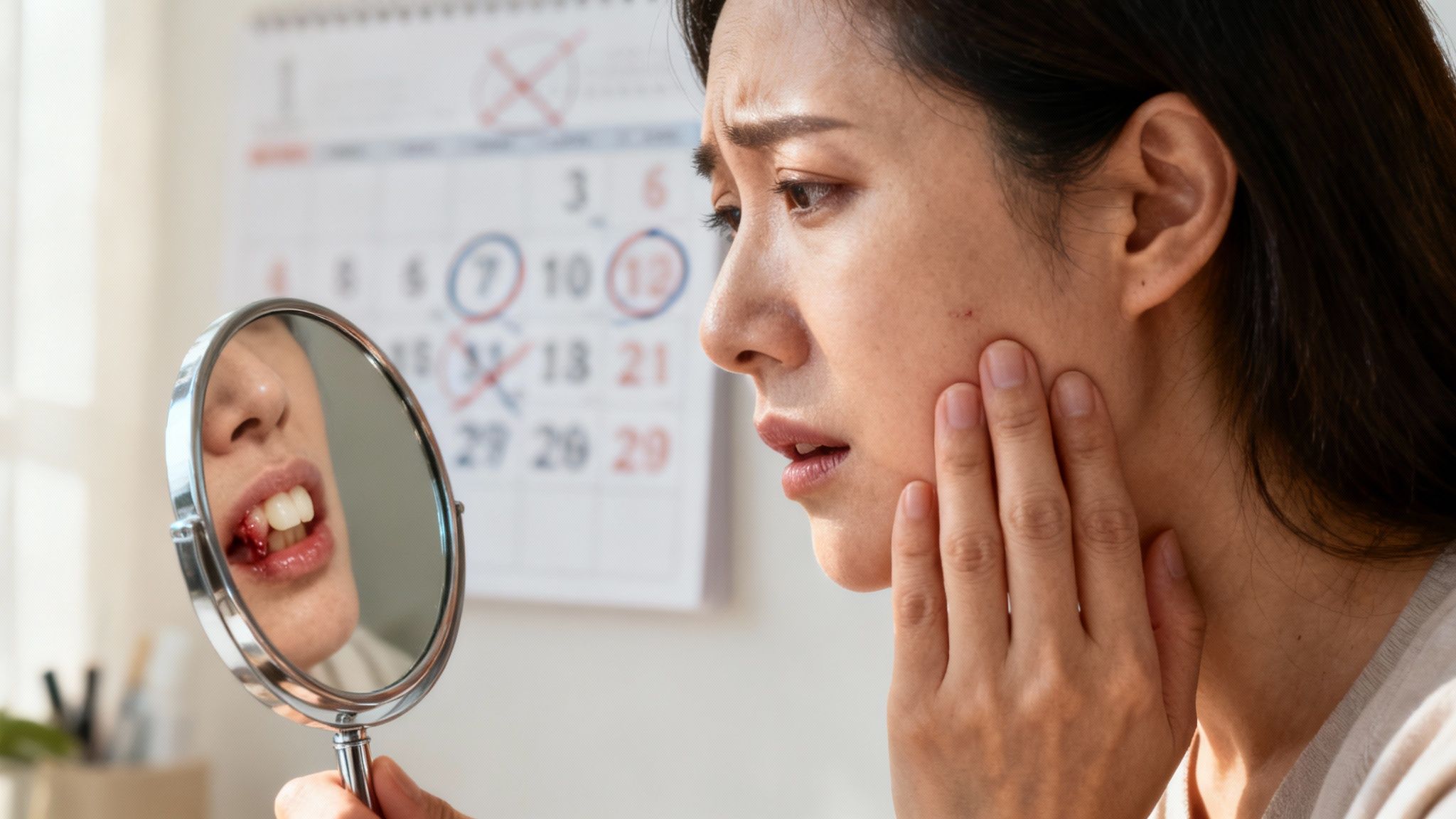
One of the biggest mistakes people make is dismissing subtle symptoms and putting off a visit to the dentist. What starts as a minor inconvenience can quickly escalate into a major dental emergency. Think of early warning signs like a quiet alarm bell for your mouth.
Symptoms like sensitivity to hot/cold, swollen gums, or a lingering toothache are not “wait-and-see” issues. Ignoring these signs gives problems like cavities, gum disease, or hidden infections time to get worse. This common mistake often comes from dental anxiety, cost concerns, or the belief that the pain will go away on its own.
Why Delaying Care Is a Recipe for Disaster
Putting off a dental check-up is never a good idea. The American Dental Association (ADA) consistently shows that preventive care is far less expensive than reactive treatment. Delaying care allows a small, manageable issue to grow into a complex, painful, and costly one.
Here are a few scenarios we see at West Bell Dental Care:
- The Sensitive Tooth: A patient in Surprise notices a tooth is sensitive to hot coffee. They ignore it, and a simple cavity digs deep into the tooth’s nerve. What could have been a routine filling now needs a root canal and crown.
- The Bleeding Gums: A Sun City resident sees pink in the sink when brushing. This minor gum inflammation (gingivitis) is left untreated and turns into a serious infection that can lead to tooth loss.
- The Minor Ache: A small, occasional ache is dismissed. Under the surface, a cavity grows until it creates a painful abscess, turning into a dental emergency that requires immediate care.
"Ignoring tooth pain is like ignoring the check engine light in your car. The longer you wait, the more serious and expensive the repair is likely to be."
How to Stay Ahead of Tooth Pain
To avoid dental procrastination, it's important to be proactive. Here are a few practical steps:
- Schedule Regular Check-ups: The best thing you can do is visit your dentist every six months, even if you feel no pain. We can catch issues before they cause symptoms. To ensure patients don't delay vital dental care, implementing effective strategies like advanced patient appointment reminders can significantly improve attendance.
- Listen to Your Body: If you feel sensitivity or discomfort, note what triggers it (hot, cold, sweet) and how long it lasts. This information helps your dentist.
- Address Sensitivity Immediately: Don't write off sensitivity as normal. Contact West Bell Dental Care to have it checked. It could be the first sign of a cavity or a cracked tooth.
2. Over-Relying on Painkillers Without Addressing the Root Cause
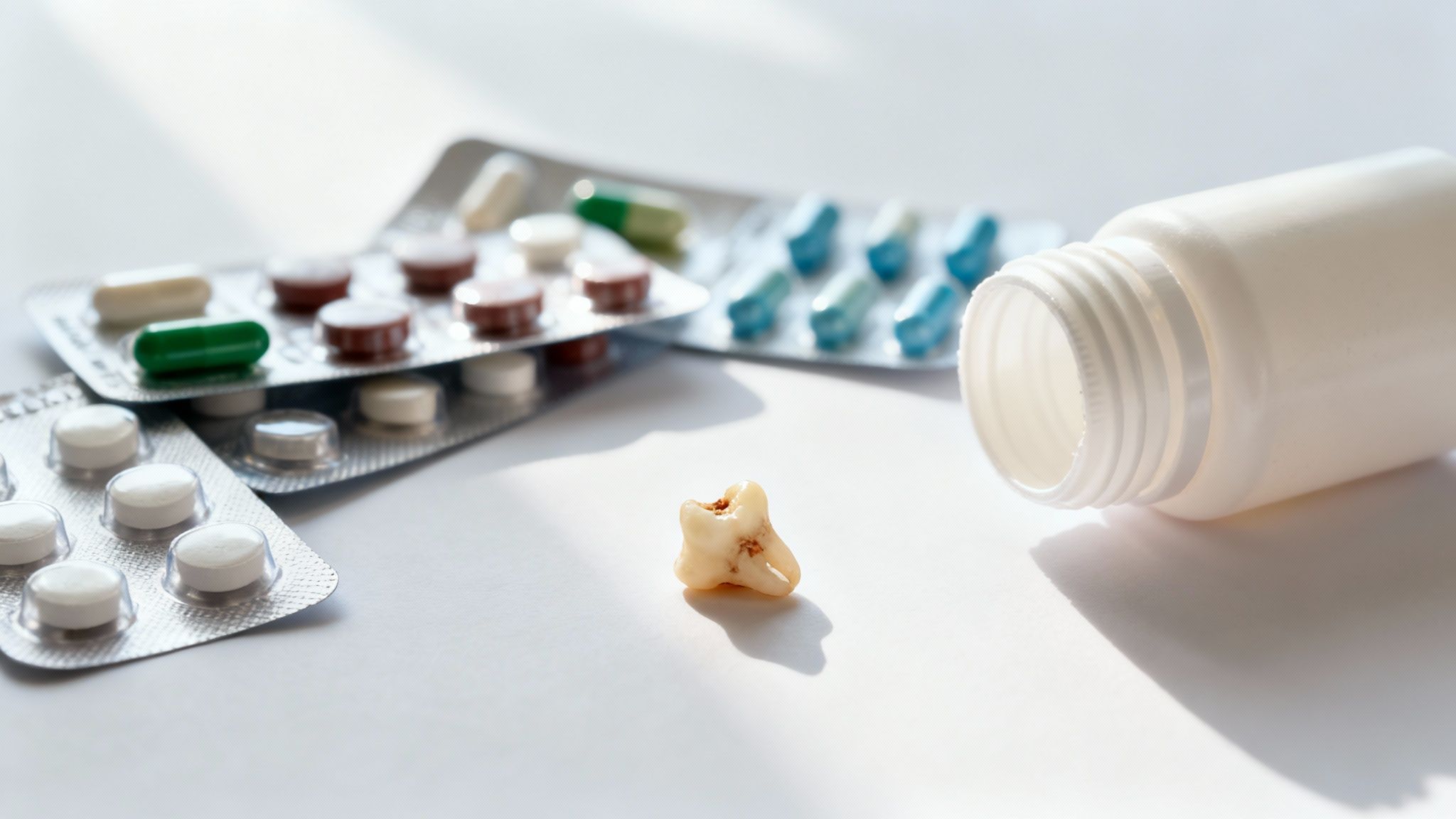
When a tooth hurts, reaching for a pain reliever is a common first step. While over-the-counter (OTC) medicine can provide temporary relief, relying on it long-term is a dangerous mistake. It's like silencing a fire alarm while the fire continues to spread.
Masking the pain allows the real problem—an infection, cavity, or cracked tooth—to get much worse. What starts as a manageable issue can spiral into a severe dental emergency that is more painful and expensive to treat.
Why Masking Symptoms Is a Problem
Using pain medication without a diagnosis from a dentist is a gamble with your health. Delaying professional care gives infections time to go deeper into the jawbone or even enter the bloodstream. A dental abscess can become a serious medical emergency if left untreated.
Here are some common situations we see at West Bell Dental Care:
- The Masked Infection: A Sun City West patient uses numbing gel and ibuprofen for a toothache. An abscess is forming, and the temporary relief allows the infection to spread, leading to facial swelling and a trip to the emergency room.
- The Expanding Cavity: A busy professional in Surprise, AZ, takes pain relievers for months to manage a toothache. By the time they seek treatment, a small cavity has destroyed much of the tooth, now requiring a root canal.
- The Worsening Crack: A patient ignores the sharp pain from a cracked tooth by taking painkillers. Over time, the crack deepens below the gum line, making the tooth impossible to save.
"Pain is your body’s signal that something is wrong. Using medication to turn it off without finding the cause is like cutting the wires to your car's check engine light. The problem is still there, and it's getting worse."
How to Use Pain Relief Safely
To avoid this common mistake, treat OTC medication as a temporary bridge to professional care, not a solution.
- Use the 48-Hour Rule: Never rely on OTC pain relievers for a toothache for more than two days without scheduling a dental appointment. If the pain is bad enough for medicine, it's bad enough for a dentist.
- Schedule an Appointment Immediately: As soon as you feel tooth pain, contact West Bell Dental Care. Since 60% of dental bookings are now made on mobile devices, we make it easy to schedule online and get seen quickly.
- Follow Professional Advice: Once you have a diagnosis, follow the recommended treatment plan. This is the only way to permanently fix the pain and protect your long-term oral health.
3. Neglecting Daily Oral Hygiene and Preventive Care
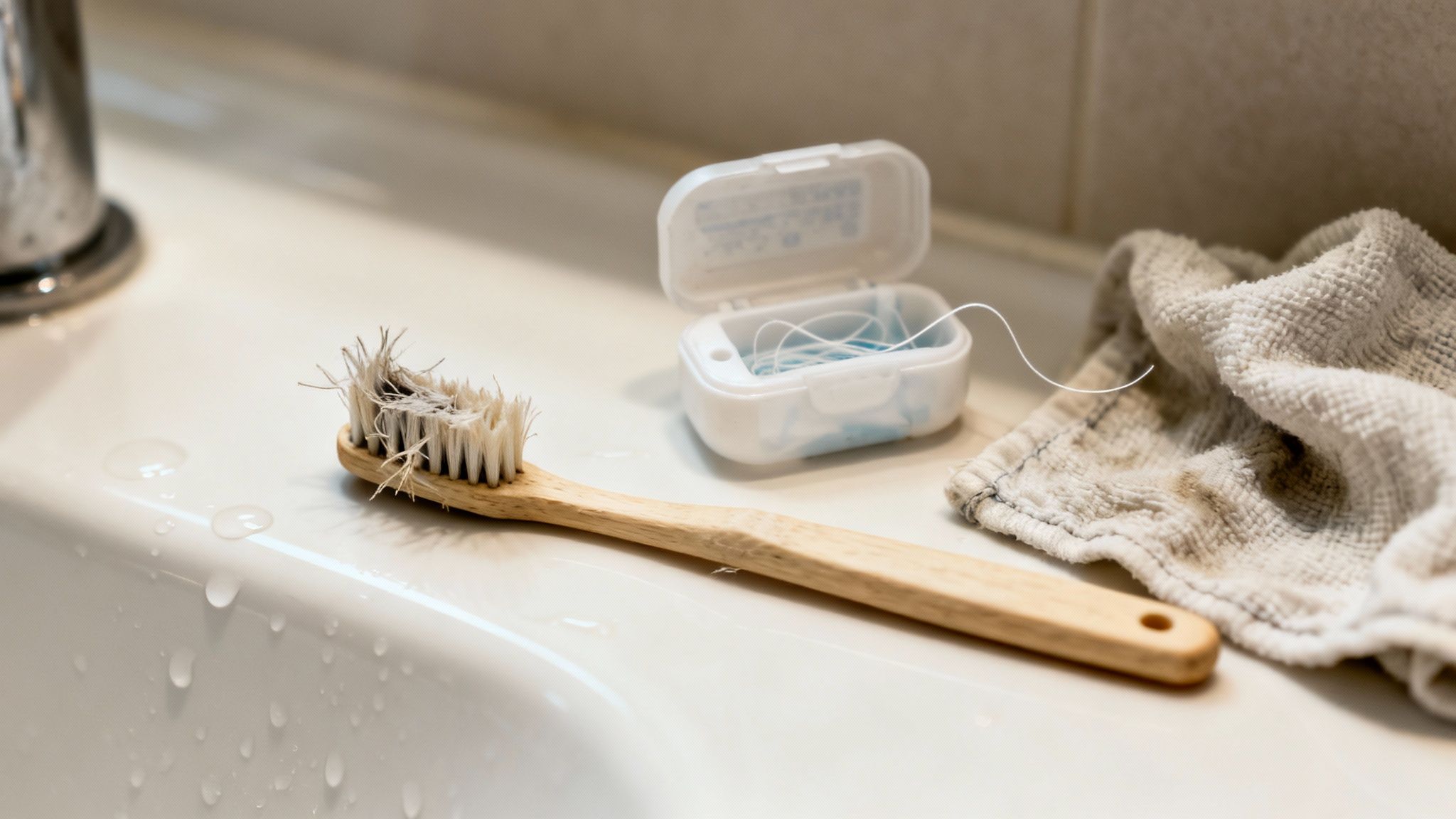
One of the most common mistakes is failing to maintain a consistent daily oral hygiene routine. This includes the correct techniques for brushing and flossing. Poor oral hygiene is the main cause of most dental issues, leading to cavities, gum disease, and pain.
This mistake often comes from not realizing how important technique is. Many people brush too hard, use a hard-bristled toothbrush, or don't brush for the full two minutes. These small habits can cause big problems over time, like gum recession and worn-down enamel.
Why Poor Hygiene Is a Problem
Not committing to daily preventive care is like neglecting basic home maintenance. Eventually, small problems lead to major, costly repairs. The American Dental Association (ADA) has shown that a good daily routine is the best defense against dental pain.
Consider these scenarios we often see at West Bell Dental Care:
- The Infrequent Flosser: A patient in Surprise only flosses when food is stuck. Plaque hardens into tartar between their teeth, leading to painful gum disease that requires a deep cleaning to fix.
- The Aggressive Brusher: A Sun City West resident scrubs their teeth with a hard-bristled brush. This wears down their enamel and causes their gums to recede, leading to major sensitivity and pain.
- The Missed Cleanings: Someone skips professional cleanings for a few years. Tartar builds up below the gumline, causing chronic inflammation that can destroy the bone supporting the teeth and lead to tooth loss.
"Your daily oral hygiene routine is your first line of defense. Five minutes a day can save you from hours in the dental chair and prevent the kind of pain that disrupts your life."
How to Master Your Oral Hygiene
To avoid the consequences of neglect, adopt a correct and proactive approach to daily care.
- Perfect Your Brushing: Brush twice a day for a full two minutes using a soft-bristled toothbrush and fluoride toothpaste. Use gentle, circular motions.
- Make Flossing a Daily Habit: Floss at least once a day, curving the floss in a "C" shape around each tooth and sliding it gently below the gumline.
- Schedule Professional Cleanings: Visiting West Bell Dental Care every six months for a professional cleaning is essential. We remove hardened tartar that you can't remove at home.
4. Ignoring How Lifestyle and Diet Affect Your Teeth
Many people treat tooth pain as an isolated event without connecting it to their daily habits. This is a big mistake because what you eat, drink, and even how you manage stress can directly cause or worsen dental problems. Your lifestyle choices create the environment inside your mouth.
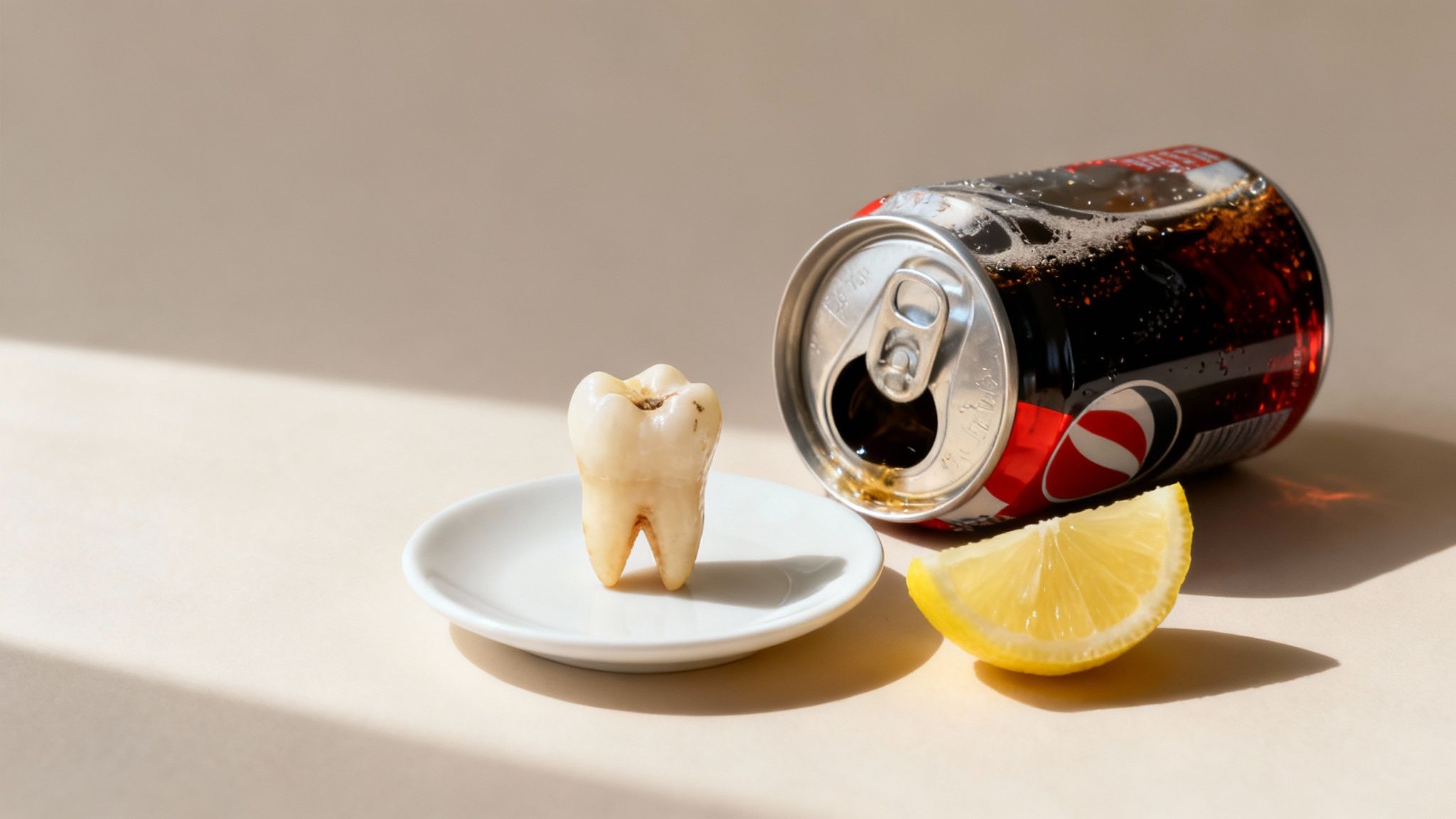
Failing to see these connections means you might be fixing a symptom while the root cause continues to create new issues. Common culprits include sugary diets, acidic drinks that erode enamel, and stress-induced teeth grinding (bruxism). This is one of the top tooth pain mistakes to avoid because it traps you in a cycle of recurring dental pain.
Why Your Habits Can Lead to Pain
Your daily routines have a huge impact on your oral health. The American Dental Association often warns about the dangers of enamel erosion from acidic foods and drinks. Continuing these habits is like trying to patch a leaky roof during a rainstorm—you're not fixing the source of the problem.
Here are a few common situations we see at West Bell Dental Care:
- The Chronic Soda Drinker: A patient in Surprise enjoys several sodas a day. The constant acid exposure wears away their tooth enamel, leading to severe sensitivity. This now requires extensive work like crowns or veneers.
- The Stressed Professional: A busy person in Sun City West grinds their teeth at night due to stress. They experience headaches, jaw soreness, and flat teeth. This can lead to cracked teeth and jaw disorders if not addressed.
- The High-Sugar Diet: A patient brushes well but frequently eats sugary snacks. The sugar feeds harmful bacteria, leading to multiple cavities. Their hygiene habits can't overcome the constant fuel for decay.
"Your mouth is a direct reflection of your lifestyle. Treating tooth pain without adjusting the habits that cause it is only a temporary fix."
How to Protect Your Teeth from Your Lifestyle
Making small, consistent changes to your daily habits can dramatically reduce your risk of tooth pain.
- Mind Your Diet: Limit acidic foods and drinks like soda, citrus fruits, and wine. When you have them, use a straw and rinse your mouth with water afterward. Wait 30 minutes before brushing.
- Reduce Sugar Intake: Be mindful of sugary foods and sweetened drinks. Drink plenty of water throughout the day to help rinse away sugar and food particles.
- Manage Stress: If you think you grind your teeth, talk to us at West Bell Dental Care about a custom night guard. Also, explore stress-reduction techniques like exercise or meditation.
- Quit Tobacco: Smoking weakens your immune system, making you more likely to get gum disease. It also slows healing after dental procedures.
Your Next Step to a Pain-Free Smile in Surprise, AZ
Navigating dental health in 2026 requires a proactive approach to prevent pain before it starts. By understanding these common mistakes, you can sidestep the errors that turn minor issues into major emergencies. The goal is to build a strong oral health foundation that lasts a lifetime.
The message is simple: your dentist is your partner. Ignoring early warning signs, relying on temporary pain relief, and letting preventive care slide are habits that lead to more painful and costly outcomes. By recognizing these patterns, you can take control of your dental health.
Don't Wait for Pain to Get Worse
The most important takeaway is that timely professional help is a must. Tooth pain is your body's alarm, and ignoring it is a bad idea. At West Bell Dental Care, we know that when this alarm sounds, you need help fast. Recent trends show that most patients want appointments within days, not weeks, and we’ve built our Surprise practice to meet that need.
We offer same-week availability to get you the expert evaluation you deserve without a long wait. With over 60% of dental bookings now made on mobile devices, our online scheduling system allows you to book a visit in minutes. Whether you live in Sun City Grand, Ashton Ranch, or Marley Park, our compassionate team is here to provide gentle, effective relief. For anxious patients, especially seniors or those needing urgent care, we provide sedation options like nitrous oxide to make your experience comfortable and stress-free.
Ready to leave tooth pain behind? Contact West Bell Dental Care today to schedule a fast, gentle visit. Let us be your trusted partner in achieving lasting oral health in Surprise, AZ.
Frequently Asked Questions
1. What are the most common signs that I should see a dentist for tooth pain?
You should see a dentist if you have lingering sensitivity to hot or cold, sharp pain when biting down, constant dull aches, or swollen gums around a specific tooth. These are signs that the problem needs professional attention and won't go away on its own.
2. Does West Bell Dental Care offer emergency dental appointments in Surprise, AZ?
Yes, we do. We understand that dental emergencies happen, and we offer same-week availability for patients in Surprise, Sun City, and nearby areas. Contact our office right away for prompt and gentle emergency care.
3. I have severe dental anxiety. What can you do to help me?
We understand and are here to help. At West Bell Dental Care, we offer compassionate solutions like nitrous oxide (laughing gas) and oral sedation to help anxious patients feel relaxed and in control during treatment. Your comfort is our top priority.
4. How quickly can I get an appointment for my toothache?
We know that when you're in pain, you want relief fast. In 2024, 61% of dental appointments were booked within 8 days of the issue arising. We strive to see patients with urgent needs as quickly as possible, often within the same week.
5. Is it safe to get dental work done if I am pregnant?
Yes, it is not only safe but also recommended to maintain your oral health during pregnancy. The American Dental Association (ADA) confirms that preventive and restorative care is safe. Let us know you are expecting, and we will take all necessary precautions.