
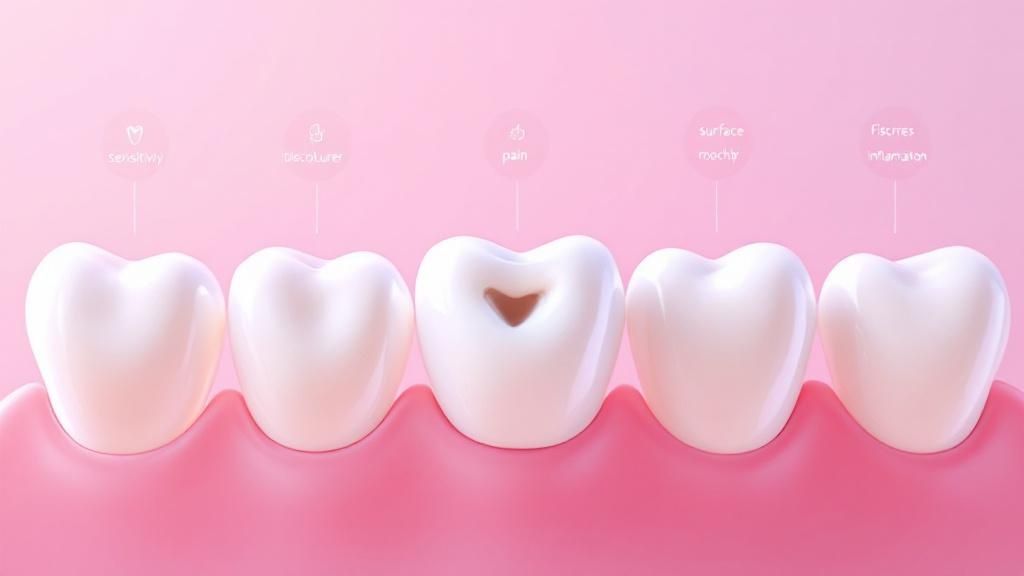
A radiant smile is a sign of good health, but sometimes our teeth send subtle signals that something is amiss. Tooth decay, also known as cavities, is one of the most common health problems worldwide, affecting people of all ages, from young children to retirees in Sun City West. According to the Centers for Disease Control and Prevention (CDC), over 90% of adults have had at least one cavity.
Ignoring the early signs of tooth decay can lead to more significant, painful, and costly problems down the road. But how do you know what to look for? Many families in Surprise, AZ, and the surrounding communities often wait until they feel pain, but decay can start long before that. Understanding these early warnings is the first step toward protecting your family’s oral health and preserving your smiles for years to come.
This guide will walk you through the seven most common signs, helping you become a proactive partner in your dental care. At West Bell Dental Care, we believe patient education is key to prevention, empowering you to spot potential issues before they escalate. Let's explore the crucial signs of tooth decay that you should never ignore.
1. Tooth Pain and Sensitivity
Tooth pain and sensitivity are often the first and most recognizable early warning signs of tooth decay. This common symptom acts as your body's alarm system, signaling that the protective outer layer of your tooth, the enamel, has been compromised.
When plaque acids erode this barrier, they expose the more porous dentin layer underneath. This layer contains thousands of microscopic tubules that lead directly to the tooth's sensitive nerve pulp, creating a pathway for pain.
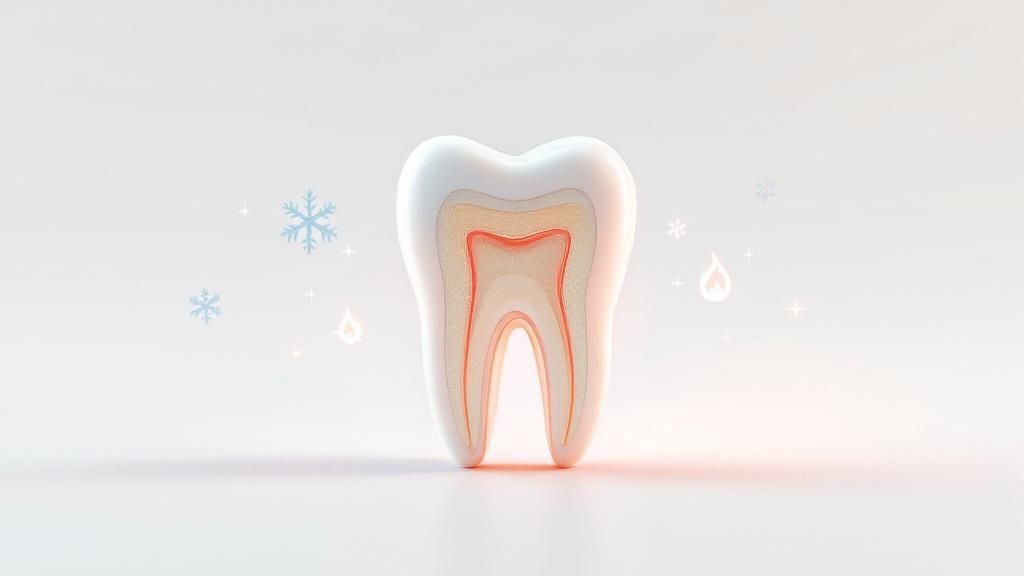
This sensitivity can manifest in various ways, from a sudden, sharp jolt to a persistent, dull ache. For many in Surprise, AZ, it's a familiar feeling when enjoying a cold drink on a hot day or sipping a warm coffee. Ignoring this crucial warning allows the decay to progress deeper into the tooth, potentially leading to more severe pain and complex treatments.
Common Triggers for Tooth Sensitivity
You might notice this discomfort when consuming:
- Hot or Cold Foods and Drinks: A sharp pain when drinking ice water or eating hot soup.
- Sweet or Acidic Foods: A lingering ache after enjoying a piece of candy, a soda, or even citrus fruits.
- Pressure: A wince of pain when biting down on something firm, like an apple or a crunchy snack.
What to Do About Tooth Pain
If you're experiencing persistent sensitivity, it's a clear signal to take action. While you wait for your dental appointment, you can find temporary relief by using a desensitizing toothpaste and avoiding foods at extreme temperatures.
Actionable Tip: Keep a simple 'pain diary' on your phone or in a notebook. Note what you were eating or drinking when the pain occurred, how long it lasted, and what it felt like. This information is incredibly valuable for your dentist, as it helps pinpoint the exact cause.
Ultimately, tooth pain is not something that resolves on its own. It's one of the most critical signs of tooth decay that requires professional attention. Contacting West Bell Dental Care promptly allows us to address the issue before it worsens.
2. Visible Holes or Pits in Teeth
While tooth sensitivity is an early alarm, a visible hole or pit is a definitive, physical sign that tooth decay has progressed significantly. These are what dentists call cavities or caries. They are literal holes that form when bacterial acids have eaten through the protective enamel and have begun to destroy the underlying tooth structure.
What may start as a tiny, almost invisible chalky spot can grow into a noticeable pit if left untreated.
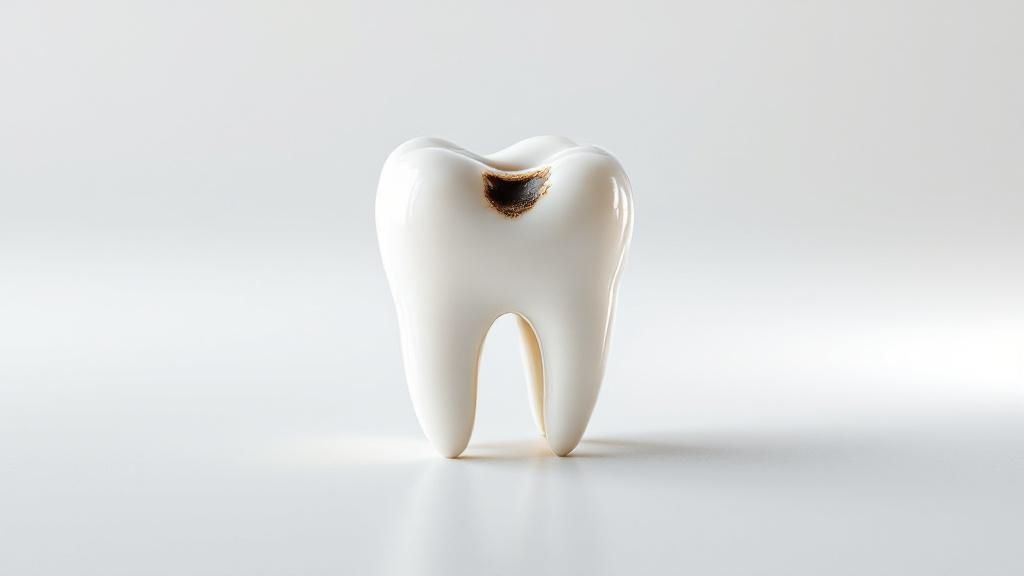
For families in Surprise, AZ, spotting one of these on a child's molar or even your own tooth is a clear call to action. These pits not only weaken the tooth but also create a perfect trap for food particles and bacteria, which accelerates the decay process. Ignoring these visible signs of tooth decay allows the damage to penetrate deeper, risking infection, severe pain, and the potential need for more complex procedures like a root canal or even extraction.
Common Places to Spot Holes or Pits
You can often see or feel these defects with your tongue. Look out for:
- Dark Spots: Small brown or black spots on the chewing surfaces of your back teeth (molars).
- Noticeable Holes: Obvious depressions or holes you can feel with your tongue, often on the front or back of teeth.
- Food Traps: A specific area where food, like meat fibers or popcorn hulls, consistently gets stuck after eating.
- Floss Snagging: If your dental floss consistently shreds or catches in the same spot between two teeth, it could indicate a cavity forming there.
What to Do if You Find a Hole in Your Tooth
Discovering a cavity requires immediate professional attention to prevent it from worsening. Do not attempt to "clean it out" with a sharp object, as this can damage the tooth further. It’s best to keep the area as clean as possible with gentle brushing until your dental visit.
Actionable Tip: Use a small dental mirror and a bright light (like your phone's flashlight) to perform a self-check of your teeth once a month. Pay close attention to the hard-to-see surfaces of your back molars and the areas along your gumline. This simple habit can help you spot potential issues early.
A visible hole is a non-negotiable reason to see a dentist. It will not heal on its own and will only grow larger over time. Contacting West Bell Dental Care allows our team to assess the extent of the decay and provide a filling to restore your tooth's strength and function.
3. Tooth Discoloration and Staining
Beyond pain, changes in your tooth's color are some of the most visible signs of tooth decay. When harmful bacteria in your mouth consume sugars, they produce acids that leach vital minerals from your tooth enamel. This demineralization process is the first stage of a cavity, and it often appears as a noticeable spot on your tooth's surface.
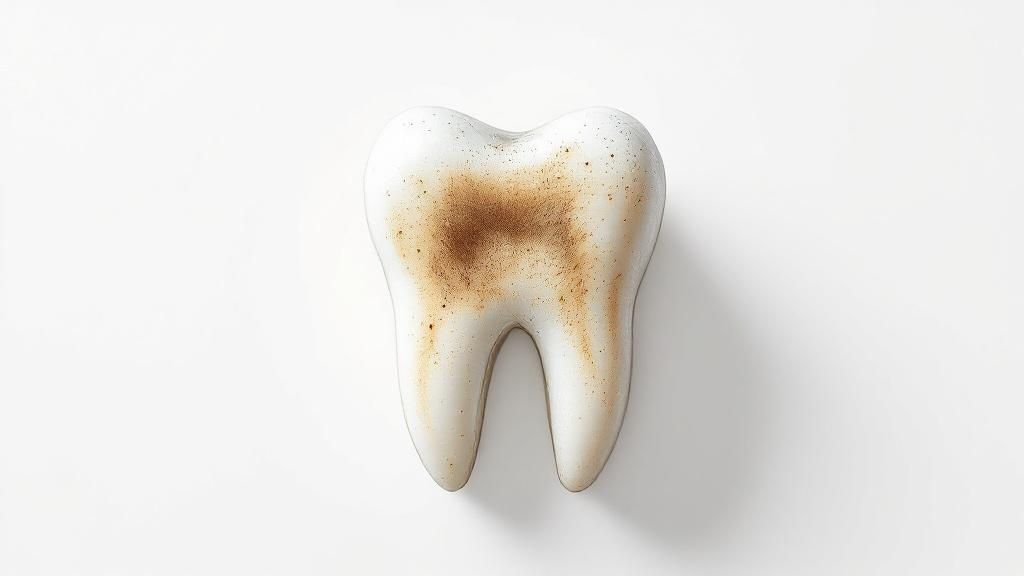
These spots can vary in color, with each shade indicating a different stage or severity of decay. A chalky white spot signals early demineralization, while brown or black spots suggest the decay has progressed and damaged the tooth structure more significantly. For many families in Surprise and Peoria, noticing these stains on a child's tooth or in their own mirror is a clear signal that it's time for a professional evaluation.
Common Types of Decay-Related Discoloration
Not all stains are created equal. It's important to distinguish between surface stains from coffee or tea and discoloration linked to decay, such as:
- Chalky White Spots: Often the earliest sign, indicating mineral loss. These are sometimes noticeable after orthodontic braces are removed.
- Brown or Tan Stains: Typically appear on the chewing surfaces of molars or in the grooves of teeth where plaque accumulates.
- Dark Gray or Black Spots: These signal that a cavity has formed and the decay process is advanced. They can appear as small dots or larger, more obvious areas.
What to Do About Tooth Discoloration
If you notice new or changing spots on your teeth, it is crucial not to ignore them. Don't try to cover them with whitening products, which can increase sensitivity on a weakened tooth. A professional cleaning and exam are the best first steps.
Actionable Tip: Take a well-lit, close-up photo of the discolored tooth with your smartphone every week. This creates a visual record of any changes in size, shape, or color. This documentation can be incredibly helpful for your dentist to assess the speed of the decay's progression.
Discoloration is one of the most direct signs of tooth decay because it provides a visible warning that your tooth's integrity is compromised. Contacting West Bell Dental Care allows us to diagnose the cause of the staining and, if it's early decay, we can sometimes reverse it with fluoride treatments before a filling is needed.
4. Bad Breath (Halitosis)
Persistent bad breath, clinically known as halitosis, can be more than just a social inconvenience; it is often one of the more subtle signs of tooth decay. This occurs because the bacteria responsible for decay feed on leftover food particles in your mouth.
As they break down these particles, they release foul-smelling sulfur compounds, creating an odor that brushing and flossing alone can't eliminate. When decay forms cavities, these pockets create new, hard-to-clean areas for odor-causing bacteria to hide and multiply.
This isn't just ordinary morning breath that disappears after your morning routine. It's a chronic issue that lingers throughout the day, often noticed by family or friends. For residents in Surprise and El Mirage, ignoring this sign allows the underlying decay to worsen, which can lead to more significant dental problems.
Common Examples of Decay-Related Halitosis
You might recognize this specific type of bad breath if you experience:
- A persistent odor that returns shortly after brushing and using mouthwash.
- A sweet or strangely fruity smell, which can sometimes indicate advanced decay.
- A metallic taste in your mouth, even when just drinking water.
- Comments from others about your breath, even when you feel you've been diligent with hygiene.
What to Do About Persistent Bad Breath
If you're dealing with breath that won't go away, it's time to investigate the root cause rather than just masking the symptom. While you wait for your appointment at West Bell Dental Care, be sure to stay well-hydrated, as a dry mouth can make odors worse.
Actionable Tip: Before your visit, try to rule out other factors. For a few days, avoid strong-smelling foods like garlic and onions and track if the odor persists. This helps your dentist determine if the cause is dietary or more likely related to a dental issue like a cavity.
Ultimately, chronic bad breath is a critical sign that something is wrong. It's one of the most common signs of tooth decay that warrants a professional evaluation to find and treat the source.
5. Increased Plaque and Tartar Buildup
While plaque is a constant presence in every mouth, a noticeable increase in its accumulation is a major red flag. This sticky, colorless film of bacteria is the primary culprit behind tooth decay. When you consume sugars and starches, these bacteria produce acids that attack and weaken your tooth enamel.
If not removed, plaque hardens into tartar (or calculus), a rough, porous deposit that makes it even easier for more plaque to accumulate. Areas with heavy tartar are essentially decay hotspots, where the enamel is under constant assault. For many families in Surprise, AZ, noticing stubborn buildup that regular brushing doesn't remove is the signal that a professional cleaning and checkup are overdue.
Common Signs of Plaque and Tartar Overload
You might see or feel this buildup in several ways:
- Visible Deposits: A yellow or brownish film, especially along the gum line of the lower front teeth or on the surfaces of back molars.
- Rough Texture: Your teeth may lose their smooth, slick feeling, and you might feel a rough surface with your tongue.
- Rapid Reformation: You notice a thick, fuzzy feeling on your teeth shortly after brushing.
- Food Trapping: Rough tartar surfaces can catch and hold food particles, further feeding the bacteria.
What to Do About Plaque and Tartar
Controlling plaque is the cornerstone of preventing cavities. If you're seeing significant tartar, it's impossible to remove it at home and requires professional intervention. A consistent home care routine is your best defense against its return.
Actionable Tip: Upgrade your oral hygiene toolkit. Consider switching to an electric toothbrush, which is clinically proven to remove more plaque than a manual brush. Also, try using plaque-disclosing tablets once a week to visually show you the spots you're missing.
Ultimately, heavy plaque and any visible tartar are direct signs of tooth decay in progress. They indicate that your current oral hygiene routine isn't enough to combat the bacteria in your mouth. Scheduling a professional cleaning at West Bell Dental Care is essential to remove the hardened tartar and assess for any underlying decay.
6. Swelling and Tenderness in Gums
While often associated with gum disease, localized swelling and tenderness in your gums can be one of the more serious signs of tooth decay. This symptom typically indicates that the decay has advanced significantly, allowing bacteria to cause inflammation or a serious infection at the tooth’s root, known as a dental abscess.
Your body’s immune system responds to this bacterial invasion by sending blood and defensive cells to the area, resulting in visible swelling, redness, and tenderness.
This swelling is not just a surface-level issue; it's a critical warning that an infection from a decaying tooth is affecting the surrounding bone and soft tissues. For families in Surprise, AZ, noticing a swollen spot near a tooth is a clear signal that the problem has moved beyond a simple cavity. Ignoring it can lead to severe pain, bone loss, and the potential for the infection to spread.
Common Signs of Gum Swelling from Decay
You may notice this problem as:
- A Tender Spot: A specific area of your gum near a particular tooth feels sore or tender to the touch.
- Localized Swelling: Your gum appears puffy or swollen directly around one or two teeth.
- Pus or an Abscess: A small, pimple-like bump (abscess) forms on the gum, which may release pus if pressed.
- Bleeding When Brushing: The gums around a specific tooth bleed easily, even with gentle brushing.
What to Do About Gum Swelling
Swollen gums caused by decay require immediate professional evaluation, as this often signals an infection. While you arrange to see your dentist, you can use a warm salt water rinse to soothe the area. It is crucial not to attempt to pop or drain any abscess yourself, as this can worsen the infection.
Actionable Tip: If you notice gum swelling, especially if it's accompanied by a bad taste in your mouth, a fever, or throbbing pain, contact West Bell Dental Care immediately. This is considered a dental emergency.
Gum inflammation is a key indicator that your oral health needs attention. Prompt treatment is essential to resolve the underlying infection and save the tooth.
7. Changes in Bite and Tooth Alignment
A change in how your teeth fit together can be a subtle yet significant symptom of advanced tooth decay. This often-overlooked sign indicates that decay has progressed enough to weaken the tooth's structure, causing it to shift, chip, or break down. As the tooth loses its original shape, it no longer aligns properly with the opposing teeth, leading to an uneven or uncomfortable bite.
This structural failure can disrupt the harmony of your entire mouth. It might feel like one side of your mouth is "off" when you chew, or you might notice your jaw shifting slightly to compensate. For families in Surprise, AZ, this could mean difficulty chewing certain foods or persistent discomfort.
Common Examples of Bite Changes
You might notice this issue manifesting in several ways:
- Uneven Contact: Your upper and lower teeth no longer seem to meet evenly or in the same way they used to.
- Food Traps: Food consistently gets wedged between the same two teeth, a new problem that wasn't there before.
- Chewing Preference: You find yourself subconsciously favoring one side of your mouth to avoid discomfort or an odd feeling on the other.
- Jaw Discomfort: You experience a new clicking sound or a feeling of strain in your jaw when biting down.
What to Do About a Changing Bite
If you notice any sudden or gradual changes in your bite, it’s a critical indicator that professional evaluation is necessary. This is not a symptom that will resolve on its own; it points to underlying structural damage that requires attention. While waiting for your appointment, try to chew on the opposite side of your mouth and avoid hard, crunchy, or sticky foods.
Actionable Tip: Pay close attention to exactly what feels different. Does one specific tooth hit first when you bite? Do you have to move your jaw to the side to make your teeth fit comfortably? Sharing these specific details with your dentist provides crucial diagnostic clues.
Ultimately, a change in your bite is one of the more serious signs of tooth decay, signaling that a tooth is in a fragile state. Contacting West Bell Dental Care right away allows us to intervene, restore the tooth's structure, and prevent more complex jaw and alignment issues down the road.
Don't Wait—Take Action for Your Oral Health in Surprise, AZ
Recognizing the subtle and overt signs of tooth decay is the first, most crucial step in preserving your smile for a lifetime. From the initial twinge of sensitivity to visible discoloration or changes in how your teeth fit together, each sign is a critical message from your body. Ignoring these warnings allows decay to progress, turning a simple fix into a more complex and costly problem.
The most important takeaway is that early detection is your strongest defense. A small cavity today is far easier to address than an infected root canal or a potential extraction down the road. At West Bell Dental Care, we are committed to being your community-trusted provider, helping families and retirees in Surprise, Sun City, and Peoria stay healthy.
Take Control of Your Oral Health Today
Once you've identified one or more of these signs, the next step is to seek a professional evaluation. Here are the most impactful actions you can take right now:
- Schedule a Professional Evaluation: Don’t wait for pain to become severe. An early check-up can confirm whether a suspicious spot is a cavity and allows for the most conservative treatment.
- Recommit to Your Home Care Routine: Brush twice daily with fluoride toothpaste, floss at least once a day, and consider an antibacterial mouthwash to reduce plaque-causing bacteria.
- Document Your Symptoms: Keep a brief log of what you're experiencing. This information is invaluable for your dentist.
At West Bell Dental Care, our compassionate team serves our neighbors with a gentle, patient-first approach. We believe that an informed patient is a healthy patient, and we are committed to being your partners in health. Take control of your oral wellness today; your future self will thank you. For anyone needing assistance navigating dental care options, helpful resources like guidance on obtaining dental assistance can offer support.
Frequently Asked Questions
1. Can early tooth decay be reversed?
Yes, the earliest stage of tooth decay, called demineralization, can often be reversed. This stage appears as a chalky white spot on the tooth. With professional fluoride treatments at our Surprise office and improved home care, you can help the enamel remineralize and stop a cavity before it forms.
2. How often should I get checked for signs of tooth decay?
We recommend that most patients in the Surprise, AZ area visit West Bell Dental Care for a check-up and cleaning every six months. Regular visits allow us to spot early signs of decay that you might not see or feel, helping you avoid more extensive treatments later.
3. Does a cavity always hurt?
No, a cavity does not always cause pain, especially in its early stages. Many cavities develop without any symptoms at all. This is why regular dental X-rays and exams are so important—they help us find and treat decay before it ever becomes a painful problem.
4. Is West Bell Dental Care a good choice for families with children?
Absolutely. We pride ourselves on being a family-friendly practice for residents of Surprise, El Mirage, and surrounding communities. We create a warm, welcoming environment to help children feel comfortable and build positive associations with dental care from a young age.
5. I'm afraid of the dentist. How do you help anxious patients?
We understand that dental anxiety is very real. Our team is trained to be empathetic and reassuring, and we take the time to explain every step of the process. We prioritize your comfort and work at your pace to ensure your visit is as stress-free as possible.
Don't let the early signs of tooth decay dictate your future oral health. The friendly and experienced team at West Bell Dental Care is here to provide a clear diagnosis and a gentle, personalized treatment plan. Schedule your appointment today and take the most important step toward a healthy, confident smile.