
Direct Answer: A first appointment for anxious patients focuses on comfort first, slow pacing, frequent check-ins, and amenities like weighted blankets and Netflix. You won’t be judged for how long it’s been.
If the thought of sitting in a dental chair makes your heart race, you are not in a small group. A 2025 NYU study found that 72.6% of U.S. adults report some level of dental fear, and 26.8% describe that fear as severe. That is more than one in four people walking around Surprise, Marley Park, and Sun City Grand quietly dreading a phone call they know they need to make.
For many people, the fear is not just about the procedure. It is the worry about being judged for how long it has been. It is not knowing what will happen once you are in the chair. It is the feeling that once it starts, you cannot stop it. Those are real concerns, and a first visit at a practice that takes anxiety seriously should address every one of them.
This article walks through what an anxiety-forward first appointment actually looks like from start to finish, what to say before you arrive, what comfort options exist, and how a good team structures the visit differently for someone who is nervous.
The Fear No One Talks About: Being Judged for Staying Away
We hear this more than almost anything else. Someone fills out a form or calls the office and mentions, almost apologetically, that it has been a few years. Sometimes it has been ten. Sometimes longer. And the first thing they want to know is not about the procedure, it is whether anyone will make them feel bad about it.
The answer at a genuinely judgment-free practice is simple: no one will comment on the gap. A good dental team understands that people avoid the dentist for real reasons, cost, fear, a bad experience somewhere else, life getting in the way. Our job is not to lecture anyone about the past. It is to figure out where you are now and help you move forward.
One patient who left a review recently described arriving a little nervous and said that “you can tell they really care about their patients.” Another said it was “the first time ever that I’m not terrorized by going to a dentist.” Those outcomes do not happen by accident. They happen when a team makes a conscious decision to lead with patience instead of pressure.
If you have been avoiding the dentist because you are embarrassed, please know this: we have seen everything, and we are not here to judge any of it. We are here to help.
What to Say Before You Even Walk In
One of the most useful things an anxious patient can do is say so before the appointment begins. Most people do not realize they have this option. You do not have to wait until you are already in the chair.
When you call or fill out a new patient form, mention your anxiety directly. You can say something as simple as:
- “I have dental anxiety and haven’t been in a while, can you note that?”
- “I’d like to go slowly and have things explained before they happen.”
- “Is it okay if I signal the team to pause if I need a break?”
These are not unusual requests. We hear them often, and flagging anxiety ahead of time lets the whole team prepare. The hygienist will know to narrate each step before starting. The provider will know to check in more frequently. The front desk can give you a quieter intake experience if the waiting room is busy.
Establishing a pause signal is especially worth asking about. Many anxious patients do not know they can raise a hand or use a simple word to stop the appointment for a moment. Knowing that exit exists makes the whole experience feel less locked-in, and that feeling alone reduces anxiety for a lot of people.
You can also ask the team to skip the TV in the operatory if it is distracting, or request a specific hygienist if you have heard good things about someone. These small personalizations add up, and a practice that takes anxiety seriously will honor them.
The Comfort Amenities That Actually Make a Difference
A lot of dental practices list “comfort amenities” in their marketing without explaining what those things actually do. So let me walk through the ones that consistently come up in patient feedback and why they help.
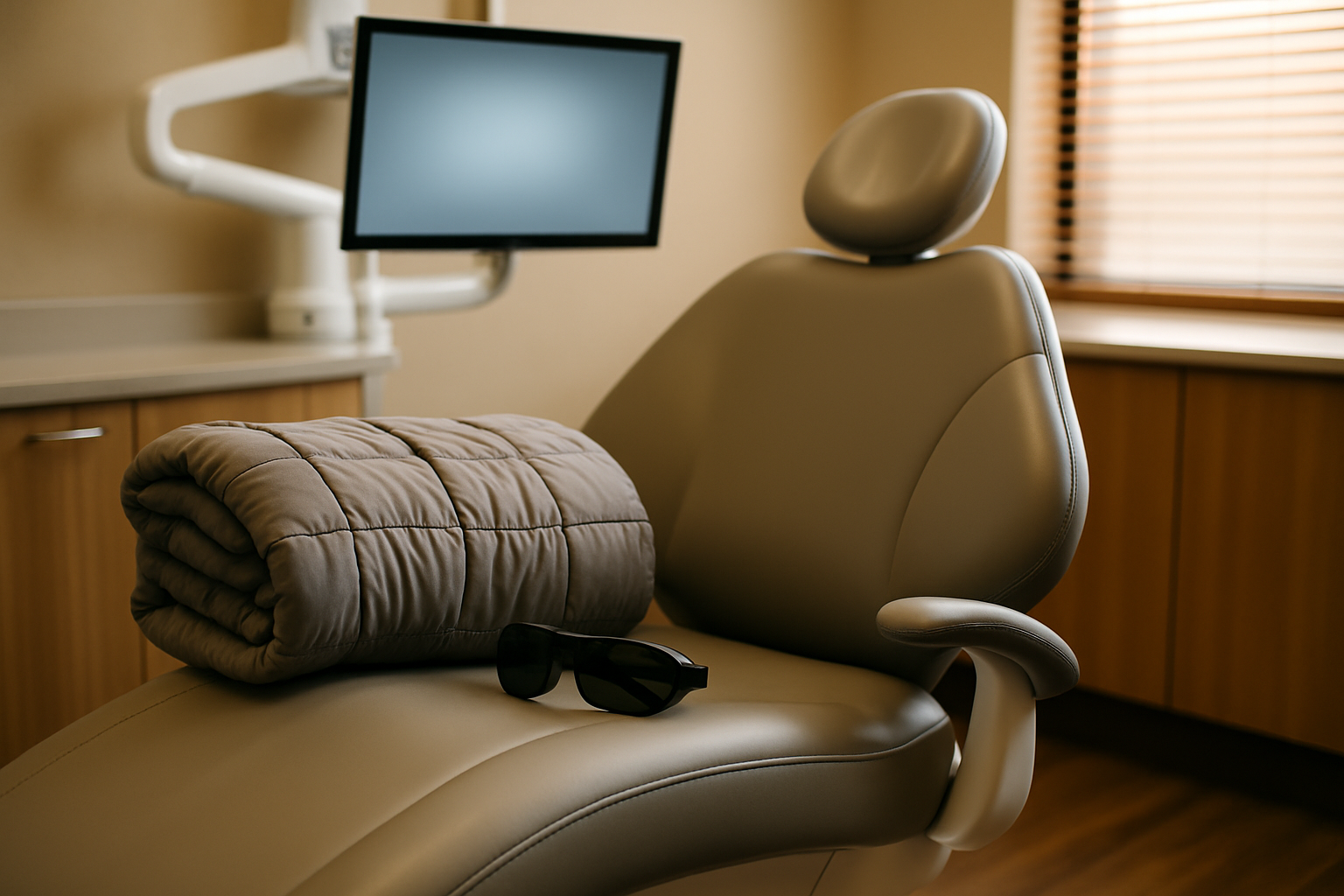
Weighted blankets work on the same principle as a firm hug. The gentle pressure activates the parasympathetic nervous system, the part that calms the body down. For patients whose anxiety lives in the body as much as the mind, having something to hold onto physically can shift the whole experience.
Dark sunglasses soften the overhead operatory light, which is one of the more disorienting parts of being in the chair. The bright light angled directly at your face can feel exposing and clinical. Swapping it out for a filtered view makes the space feel less interrogative.
Netflix on an overhead screen gives your brain somewhere else to go. Procedural focus requires your body to be still but your mind does not have to follow along with every sound and sensation. A familiar show running above you provides just enough cognitive anchor to take the edge off.
Music during treatment works similarly, it fills the auditory space that would otherwise be occupied by instrument sounds that many patients find triggering.
One patient described her experience this way: “They offered things like blankets, Netflix as a distraction while they worked, dark sunglasses to make the lights not as harsh and more.” Another noted she was “offered many things like blankets, music, water to help me be comfortable.”
These are not luxury touches. They are practical tools with a real effect on how nervous patients experience treatment.
How an Anxiety-Forward First Appointment Is Structured
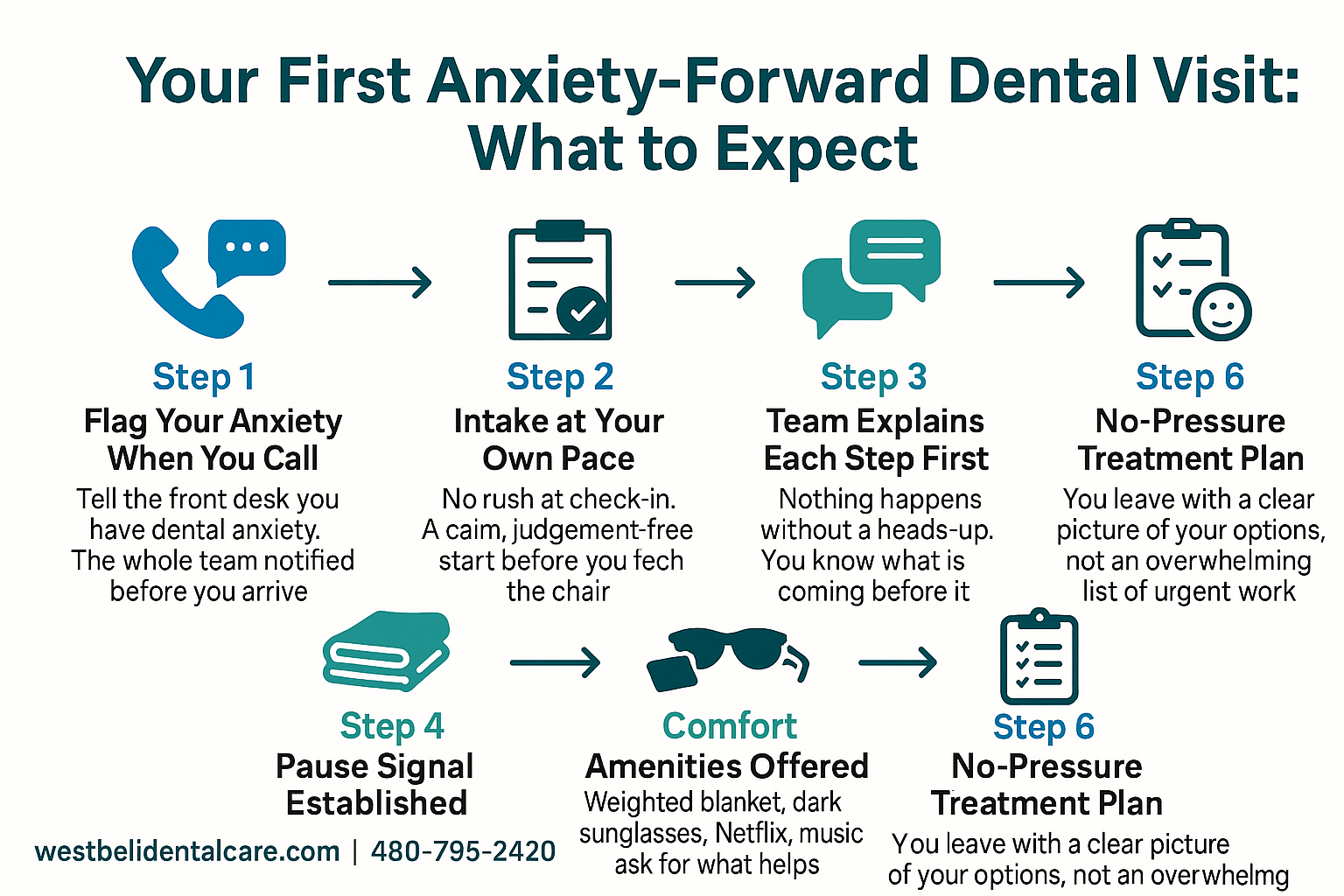
This overview shows how a first visit is designed differently when dental anxiety is part of the picture, from the first phone call through the end of treatment planning.
How the Appointment Itself Is Structured Differently
A standard dental visit follows a fairly predictable script: X-rays, exam, cleaning, treatment recommendations. An anxiety-forward visit follows the same general path, but the pacing and communication look different at every step.
Before anything starts, the provider or hygienist will typically introduce themselves, ask how you are feeling, and confirm that they know anxiety is a factor. This is not a formality. It is a reset, a signal that this appointment is not on autopilot.
During the exam, a good team narrates. Instead of reaching for an instrument silently, they say what it is and what they are checking. This sounds small, but for an anxious patient, the unknown is often scarier than the actual sensation. Knowing what is happening, in plain language, not clinical shorthand, makes an enormous difference.
At the end, treatment planning for anxious patients should not feel like a fire hose. If there are multiple things that need attention, a thoughtful provider will prioritize and sequence them rather than presenting everything at once. The goal is for you to leave feeling informed and in control, not overwhelmed by a list of everything that needs to happen.
For patients whose anxiety is significant enough that even a calm conversation and comfort amenities are not enough, sedation dentistry is an option worth asking about. Our team can walk you through what is available based on your specific needs and the procedure involved.
Common Anxiety Concerns and How to Address Them Before Your Visit
These are the questions and worries we hear most often from anxious patients, and the practical step that actually helps with each one.
| The Worry | What It Actually Means | What You Can Do |
|---|---|---|
| Fear of being judged for skipping years of care | Shame about the gap, not the procedure itself | Say it out loud when you call, a good practice will never comment on the timeline |
| Not knowing when something will hurt | Loss of control over sensation and surprise | Ask for a narrated appointment where each step is explained before it starts |
| Feeling trapped in the chair once it starts | Anxiety about not being able to stop | Request a pause signal, a raised hand or a simple word, before the appointment begins |
| Bright overhead lights and clinical environment | Sensory overload in an unfamiliar space | Ask for dark sunglasses; most comfort-focused practices have them ready |
| Sounds and smells triggering past bad experiences | Sensory memory from a previous difficult visit | Ask for music or use headphones; Netflix overhead gives your brain a focal point away from sounds |
| Fear of a long list of required work | Overwhelm at the end of the visit | Ask the provider to prioritize and stage treatment, you do not have to decide everything on day one |
A Note on Sedation, When Comfort Amenities Are Not Enough
For most anxious patients, the combination of good communication, comfort amenities, and a team that actually listens is enough to get through a first visit. But for some people, especially those with a history of traumatic dental experiences or very strong physical anxiety responses, that may not be sufficient.
Sedation dentistry exists for exactly this situation. It is not a last resort, it is a legitimate tool for making necessary care possible. Our team offers sedation options for patients who need them, and talking about it openly is something we welcome. If you think you might fall into this category, mention it when you call or when you fill out your new patient paperwork.
Sedation does not mean you will be unconscious. Depending on the option and the procedure, it can range from something that takes the edge off to something that allows you to complete more involved work without distress. The right choice depends on your specific situation, and we will explain the options honestly rather than defaulting to whatever is most convenient.
According to the American Dental Association, sedation in dentistry is used safely across a wide range of procedures when patient anxiety or procedure complexity warrants it, and it has helped millions of people access care they otherwise would have postponed indefinitely.
Frequently Asked Questions About Dental Anxiety and Your First Visit
What if I haven’t been to the dentist in five or ten years, will anyone say something about it?
No. A judgment-free practice will not comment on the gap, and ours is no exception. We understand that people stay away for real reasons, fear, cost, a bad experience, life circumstances. When you come in, we start from where you are now, not from where you should have been.
Can I ask to slow down or stop the appointment if I need to?
Absolutely, and you should ask for this before the appointment starts rather than waiting until you feel overwhelmed. Establishing a pause signal at the beginning, something as simple as raising your hand, means you stay in control the whole time. A lot of anxiety comes from the feeling that once it starts, you cannot stop it. That feeling goes away when you know the exit is always available.
What comfort options are available for anxious patients?
Our patients regularly mention weighted blankets, dark sunglasses to soften the overhead light, Netflix on the overhead screen, and music during treatment. These are available on request, just mention when you call that you have anxiety and the team will have them ready. For patients who need more than amenities, sedation options are also available.
Do I have to decide on all my treatment the same day?
No. If there are several things that need attention, we will walk you through what matters most and help you prioritize. You are not required to commit to a full treatment plan on your first visit. The goal is for you to leave with a clear picture of your options, not a list that feels impossible to manage.
How do I bring up my anxiety without feeling embarrassed about it?
Just say it plainly when you call or in your new patient paperwork. Something like “I have dental anxiety and would like to go slowly” is completely enough. You do not need to explain or justify it. Our front desk and clinical team hear this regularly, and flagging it ahead of time actually helps us serve you better, it is not a burden to us.
Is dental anxiety common enough that practices are actually set up for it?
Far more common than most people realize. A 2025 NYU study found that 72.6% of U.S. adults report some dental fear, and more than one in four describe it as severe. Practices that see a lot of patients in communities like Sun City Grand and Surprise Farms know this well, anxiety is not a fringe concern. A good practice is already structured for it.
Suggested Internal Links — add real URLs before publishing:
- sedation dentistry options — Overview of sedation options available at West Bell Dental Care for anxious or complex-procedure patients
- general dentistry services — What a routine dental exam and cleaning involves at West Bell Dental Care
- dental membership club — West Bell Dental Care’s in-house membership plan for patients without insurance
- new patient information — What new patients need to know before their first visit, including forms and insurance questions
- same-day emergency dental care — How West Bell Dental Care handles urgent and same-day dental needs in Surprise, AZ
Ready to Take That First Step?
If dental anxiety has kept you out of the chair for longer than you planned, you are not alone, and you are not behind the point where we can help. Our team at West Bell Dental Care in Surprise, AZ serves patients from across the West Valley, including many in Sun City Grand, Ashton Ranch, and Marley Park who came in nervous and left with a plan they actually felt good about. If you want to talk through your concerns before scheduling, give us a call at 480-795-2420 or visit westbelldentalcare.com, we are open Saturdays from 8:00 AM to 3:00 PM and evenings through the week for patients who need a time that fits their life.