
Direct Answer: When a tooth is lost, the jaw bone beneath it begins to shrink because it no longer receives stimulation from chewing. This bone loss starts within months and gets worse over time.
Most people think a missing tooth is mainly a cosmetic problem. You cover it with your hand when you smile, you adjust how you chew, and you move on. But underneath the gum line, something much more significant is already happening.
Your jaw bone is actively changing — and not in a good way. Within the first six to twelve months after a tooth is lost, the bone in that area can shrink by as much as 25 percent. That’s not a slow process. It starts fast and compounds over time.
Whether you’re a retiree in Sun City Grand who lost a back molar years ago, or a working professional in Marley Park who just had an extraction, understanding what’s actually happening in your jaw helps you make a smarter decision about what to do next.
Why Your Jaw Bone Shrinks After a Tooth Is Lost
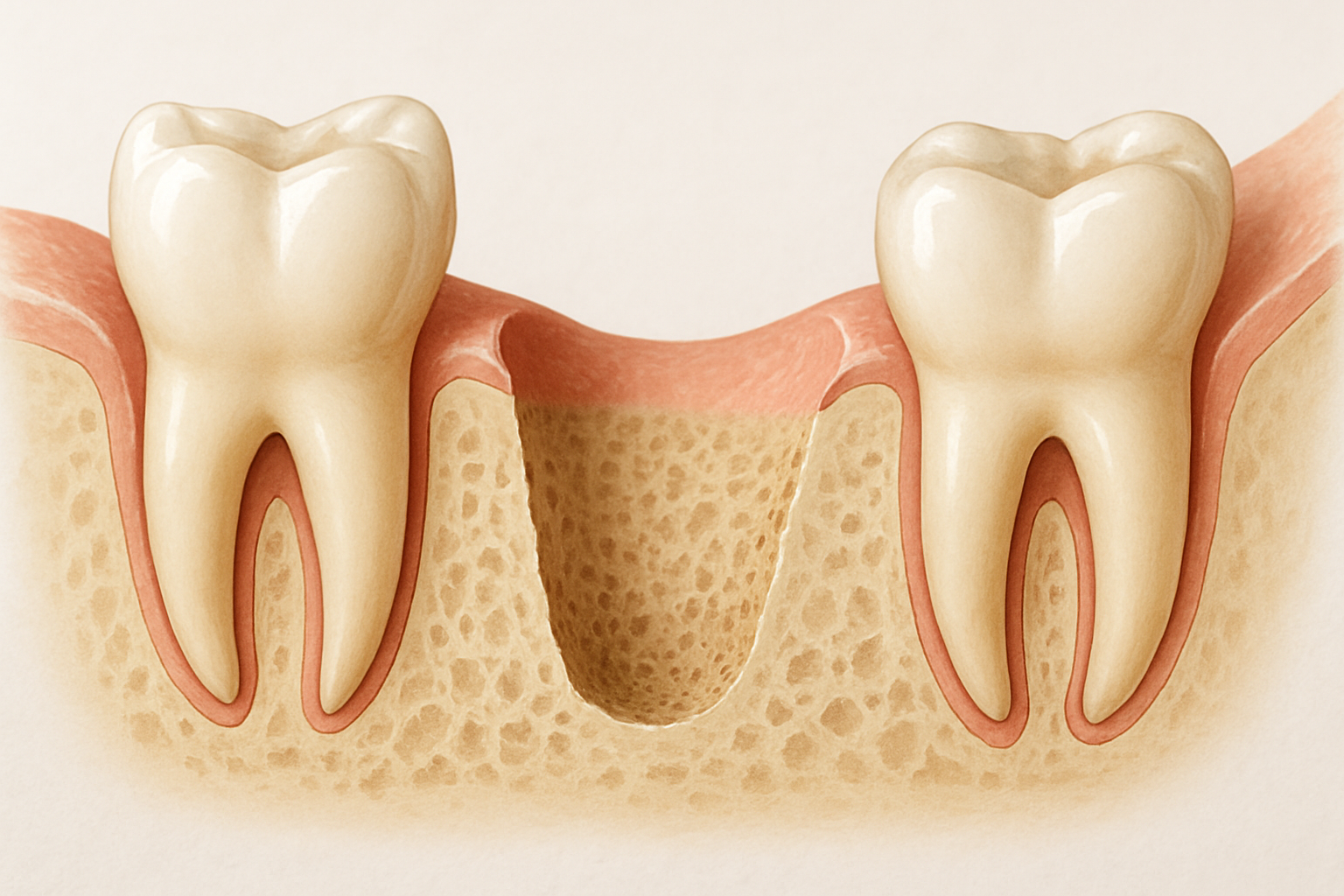
Your jaw bone — specifically the alveolar bone, which is the ridge that holds your teeth in place — only stays healthy when it’s being used. Every time you bite and chew, the roots of your teeth transmit pressure down into the bone. That constant stimulation signals the bone to keep rebuilding itself.
When a tooth is gone, that signal disappears. The bone in that spot no longer has a job to do, so the body gradually reabsorbs it. In dentistry, this process is called bone resorption, and it’s completely normal — which also means it’s predictable and, in many cases, preventable.
Here’s what the timeline tends to look like:
- First 3 months: The bone begins losing density at the extraction site
- 6 to 12 months: Visible shrinkage in the jaw ridge; gum tissue may appear sunken
- 1 to 3 years: Neighboring teeth may begin shifting into the gap
- 3+ years: Significant bone volume loss; facial structure around the jaw can start to change
The exact rate depends on which tooth was lost, your age, and whether you smoke or have conditions like diabetes. But the direction is always the same — the bone shrinks until it’s given a reason to stop.
How a Missing Tooth Changes Your Bite and Your Neighboring Teeth
Bone loss is just one part of the story. What happens above the gum line — to your bite and your remaining teeth — creates its own set of problems.
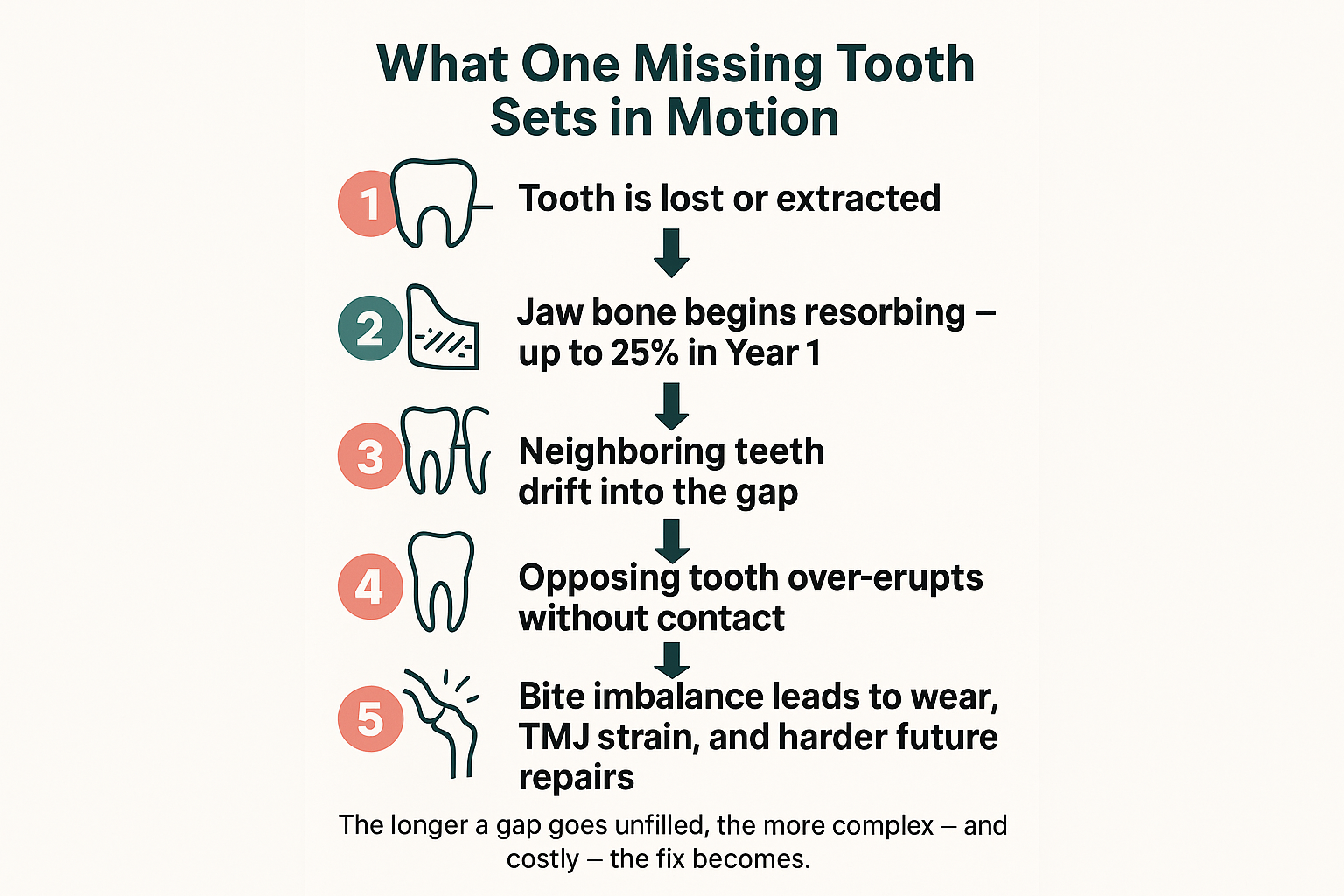
Teeth aren’t anchored rigidly. They’re held in place partly by the pressure from adjacent and opposing teeth. When one is removed, that balance shifts. The teeth on either side of the gap tend to drift toward the open space. The tooth directly above or below the missing one (called the opposing tooth) can begin to over-erupt, meaning it slowly grows longer because it has nothing to press against.
Over time, this causes:
- Uneven bite pressure, which increases wear on specific teeth
- Jaw joint strain, sometimes leading to TMJ discomfort or clicking
- Crowding or spacing changes that make future dental work more complicated
- Increased cavity risk in teeth that have shifted, because they’re harder to clean properly
For patients in communities like Surprise Farms or Ashton Ranch who’ve had a back molar missing for several years, this is often why they start noticing jaw soreness, headaches, or sensitivity in teeth they thought were fine. The missing tooth didn’t cause those symptoms directly — but the chain reaction it started did.
And here’s what makes this frustrating: by the time these problems show up, the original gap has often become significantly harder to restore. More bone loss means more complex treatment.
The Chain Reaction of a Missing Tooth
This infographic shows how one missing tooth sets off a sequence of changes in your jaw, bite, and surrounding teeth over time.
What Actually Stops Bone Loss — and What Doesn’t
This is where patients often get surprised. Not every tooth replacement option stops bone loss.
A removable partial denture or a flipper (a temporary removable tooth) replaces what’s visible above the gum line. But it sits on top of the gum — it doesn’t go into the bone. That means the bone underneath continues to shrink even while you’re wearing the replacement. Dentures don’t prevent resorption; they just fill the cosmetic gap.
A dental bridge does a better job restoring chewing function, and it prevents neighboring teeth from drifting. But the bone beneath the missing tooth still lacks stimulation from a root, so some degree of bone loss continues under the bridge over the years.
The one replacement option that actually preserves bone is a dental implant. An implant is a small titanium post placed directly into the jaw bone, and it mimics what a natural tooth root does — it transmits chewing pressure into the bone, which tells the bone to stay. Studies consistently show that implants halt bone resorption at the implant site.
For many patients, especially active adults in Sun City Grand or Desert Oasis who want a long-term solution they won’t have to rethink in ten years, that bone-preservation benefit is worth understanding before making a decision.
Tooth Replacement Options: What Each One Does for Your Jaw
Each replacement option works differently when it comes to preserving jaw bone, restoring function, and cost. Here’s a straightforward comparison.
| Option | Prevents Bone Loss? | Approximate Cost Range | Best For |
|---|---|---|---|
| Dental Implant | Yes — most effective | $3,000–$5,500 per tooth (all-in) | Long-term single tooth replacement |
| Fixed Dental Bridge | Partial — prevents shifting, not bone loss | $2,500–$6,000 for a 3-unit bridge | When adjacent teeth need crowns anyway |
| Removable Partial Denture | No | $1,200–$2,500 | Multiple missing teeth, budget-conscious cases |
| Full Denture | No — accelerates ridge shrinkage over time | $1,500–$3,500 per arch | Full arch tooth loss |
| No Treatment | No — bone loss continues unchecked | $0 now, more expensive later | Not recommended |
When Is It Too Late to Get an Implant?
This is one of the most common questions we hear from patients who’ve had a missing tooth for years. The honest answer: it depends on how much bone is left.
If significant bone volume has been lost, a bone graft may be needed before an implant can be placed. A bone graft rebuilds the jaw ridge by adding bone material to the area — either from synthetic sources, donor tissue, or sometimes from another area of your own mouth. It adds time and cost to the process, but it doesn’t make implants impossible.
For patients who come in after several years with a gap, the conversation typically goes one of two ways:
- Enough bone remains — an implant can often still be placed, sometimes with a minor graft
- Bone loss is significant — a more involved bone graft is needed first, which extends the timeline by four to six months before implant placement
The takeaway is that waiting longer doesn’t eliminate your options — but it does tend to make those options more involved. A conversation with your dentist about current bone levels (which a simple digital X-ray or cone beam scan can show) gives you the clearest picture of where you stand.
Patients in Rancho Gabriela or Greer Ranch North who’ve been putting this conversation off often find the situation is more manageable than they expected once they actually sit down and ask.
Frequently Asked Questions About Missing Teeth and Jaw Health
How long do I have before bone loss becomes a real problem?
Bone loss starts within the first three to six months after a tooth is removed. The most significant changes happen in the first year. That doesn’t mean you need to rush a decision you’re not ready for — but it does mean sooner is better than later when it comes to at least evaluating your options.
I had a tooth pulled years ago and never replaced it. Is it too late?
Probably not. Many patients come in after five or ten years with a gap and still have enough bone for an implant, especially with a bone graft if needed. A digital X-ray or 3D scan gives us a clear picture of what’s actually there. The earlier you come in for that evaluation, the more straightforward the path forward tends to be.
Does losing a back molar matter as much as losing a front tooth?
In some ways, back molars matter more — they carry the majority of your chewing load. Losing a back molar affects how you distribute bite force across your entire jaw, and the bone loss and tooth shifting that follows can create problems throughout the mouth. Just because it’s not visible doesn’t mean it’s not causing changes.
Will a denture stop my jaw from changing shape over time?
No. A denture replaces the visible tooth but doesn’t go into the bone, so bone resorption continues underneath. Over time, this is why dentures that fit well initially may become loose — the ridge they sit on is slowly shrinking. It’s one of the reasons many patients eventually consider implant-supported options.
Does dental insurance cover implants or bone grafts?
Coverage varies widely. Many plans treat implants as a cosmetic procedure and don’t cover them, though some cover a portion of the crown or the bone graft component. It’s worth calling your insurance provider directly and asking specifically about implant placement, bone grafting, and implant crowns — those are billed as separate codes. Our team can also help you review your benefits before treatment.
Not Sure Where You Stand? A Conversation Is a Good Place to Start
If you’ve been living with a missing tooth — whether it’s been six months or six years — the most useful thing you can do is get a clear picture of what’s happening in your jaw right now. Our team at West Bell Dental Care in Surprise sees patients from across the West Valley, including many who’ve been putting off this conversation longer than they’d like to admit. There’s no judgment here — just honest answers and a realistic look at your options. You can reach us at 480-795-2420 or visit westbelldentalcare.com to request an appointment, including Saturday availability.